Linus Tech Tips Reviews the Flipper Zero

The Flipper Zero is an affordable handheld RF device for pentesters and hackers. It is not based on SDR technology, however it uses a CC1101 chip, a digitally controlled RX/TX radio that is capable of demodulating and modulating many common digital modulations such as OOK/ASK/FSK/GFSK/MSK at frequencies below 1 GHz. 

What sets it apart from most of the other CC1101 devices is the high level of software support built into it, the enthusiastic community and of course the branding. 

Back in August 2020 we initially posted about the Flipper Zero starting its crowdfunding campaign on Kickstarter. Since then, despite major business problems like PayPal freezing 1.3M of its cash, and US customs temporarily seizing its shipments, then passing a $70,000 bill on to them for storage fees, Flipper has gained huge popularity through social media video sites like TikTok, where people show off its capabilities, often in ways that could be considered mischievous.

Recently over on YouTube, Linus from the most popular technology YouTube channel Linus Tech Tips reviewed the Flipper Zero. In the video Linus discusses the legally and morality of the Flipper Zero, and discusses some use cases around RFID and NFC.
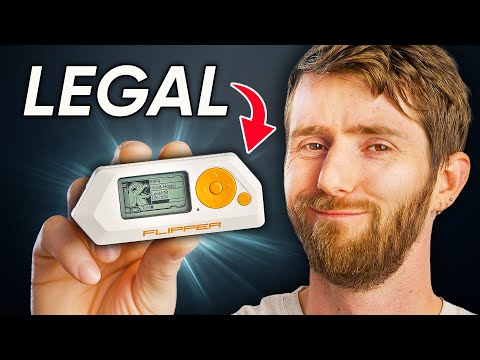
This Makes Hacking TOO Easy - Flipper Zero

SDRplay RSP1A Metal Enclosure Upgrade Set Reduced in Price

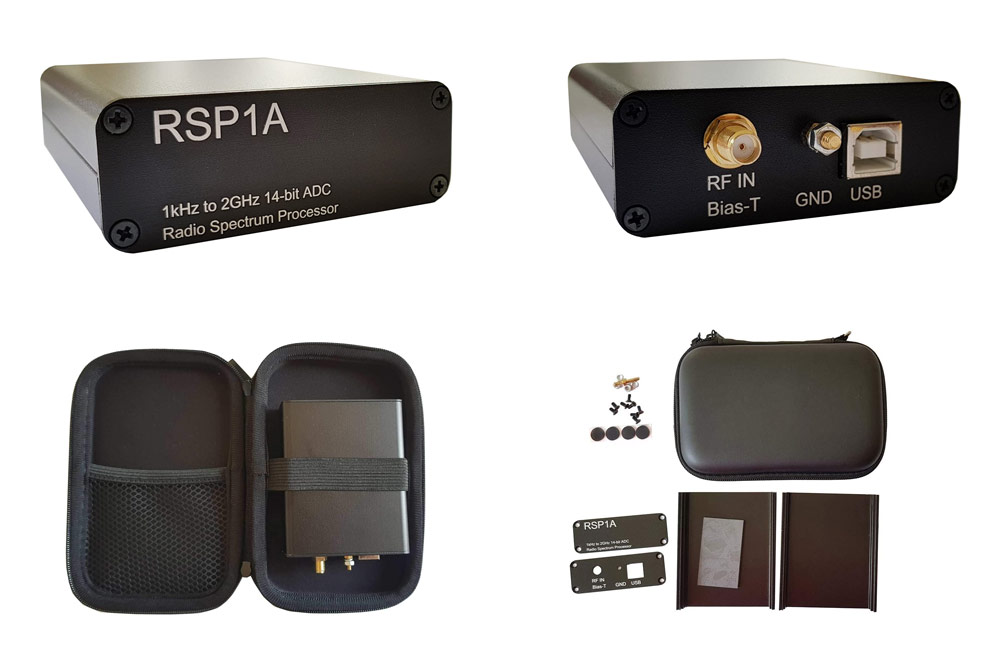
Over on our store we've just reduced the price of the remaining stock of our RSP1A metal enclosure upgrade set. The price reduction brings it down to US$29.95 including free shipping to most countries.

This is a premium aluminum metal upgrade enclosure for the SDRplay RSP1A. It helps block RF interference and protects the RSP inside the sturdy enclosure. This is most likely to be our last production of this enclosure at least for a long period of time.

The kit includes 1x black aluminum metal enclosure with two labelled side panels, 1x black semi-hardshell carry case, 1x thermal pad to keep the RSP1A cool and mechanically stable inside the enclosure, 1x accessory set including enclosure screws, GND lug bolt set and 3M anti-slip rubber feet.

Please note that the set does NOT include the RSP1A.

The sale will only be available while stocks last. There are less than 50 units available from our international platforms, and less than 130 available at Amazon USA. So get in quick before they are all sold!

RSP1A Metal Case Upgrade

RSGB 2022: The UK Meteor Beacon Project

During last years Radio Society of Great Britain (RSGB) 2022 convention, Brian Coleman (G4NNS) presented a talk about the UK Meteor Beacon Project. The idea behind the project is to use a transmit beacon and a network of user-run receivers to help detect and study meteors. The talk has recently been uploaded to YouTube.

Radio signals can reflect off the meteor and the ionized trail left behind when it enters the atmosphere. This trail is highly RF reflective, so it can allow distant radio stations to be briefly received.

In the talk Brian explains the meteor detection, and explains the project in more detail.

The UK meteor beacon project is a collaborative project between the amateur radio and radio astronomy communities to collect data on meteor events over the UK. Phase I has been to establish a transmit beacon and Phase II is to create a network of receivers to monitor the radio echoes from meteors and stream data over the internet to support the study of meteor events and their impact on the ionosphere. Another key objective is to make possible a range of accessible radio-related STEM projects building on the interest in space and astronomy.

RSGB 2022 Convention presentation - The UK Meteor Beacon Project

TXAdvance: An RF Transmitter Manager Android App that uses RTL-SDR

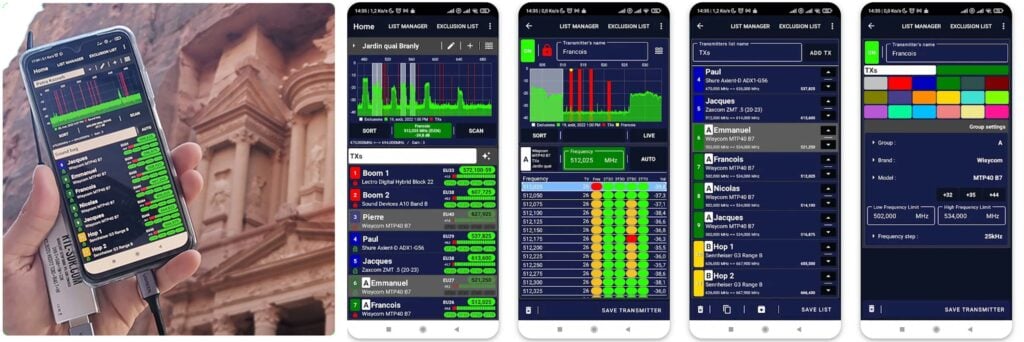
Recently we came across a new RTL-SDR app on the Google Play store called TXAdvance which appears to be designed for professional sound engineers working in TV/film/stage/music production industry. The app uses an RTL-SDR to display the RF spectrum, helping sound engineers manage the RF spectrum for all their wireless sound recording devices, ensuring there is no overlapping signals, interference or intermodulation from other transmitters that could corrupt audio.

More information about the app can be found on their website at www.compasseur.com and the app itself can be purchased from the Google Play Store.

TXAdvance RTL-SDR Android App for Profressional Sound Engineers
TXAdvance RTL-SDR Android App for Professional Sound Engineers

Building a 315 MHz Jammer with an Arduino

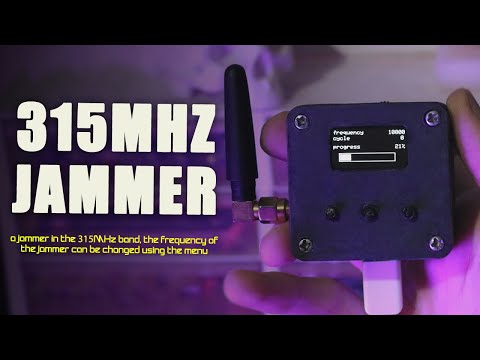
Over on YouTube CiferTech has uploaded a video showing how to create a low cost 315 MHz jammer using an Arduino and a cheap 315 MHz transmitter circuit. The 315 MHz band is used in some countries by short range wireless devices such as garage door openers, tire pressure sensors, hone security systems and car keyfobs. Some wireless home security systems have been shown to be vulnerable to jamming, as jamming can stop an alarm activation signal being received by the base unit. 

We want to note that building a jammer in most countries is completely illegal and the use of a jammer can result in severe penalties such as jail time.

On a related note, we also wanted to point out this recent tweet by Naomi Wu (@realsexycyborg), a popular Technology YouTuber who is based in China. Her tweet pointed out that some local market scammers in China use rigged weighing scales which can force the scale to display an artificially high value by using a wireless handheld remote. To combat this handheld jammers are sold so that shoppers can prevent the scammer's remote control from communicating with the scale. Although jamming is still most likely illegal in China, this could be considered an ethical use of a jammer.

Receiving TPMS Tire Pressure Data from a Mazda CX 5 with an RTL-SDR

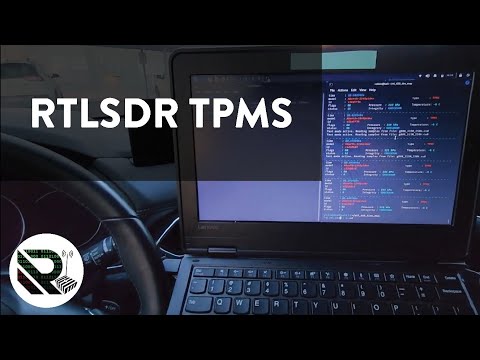
Over on YouTube Robert from the Robert Research Radios channel has uplaoded a video showing how he has been using an RTL-SDR and rtl_433 to measure his Mazda CX5's wireless tire pressure sensors. The Mazda CX5 comes with TPMS tire pressure sensors in each tire, however when there is a low pressure warning, it does not actually tell you which tire in particular is low.

Robert used his RTL-SDR, rtl_433 and a custom script to read the wireless TPMS data coming from his tires and then matched the ID from each reading to the correct tire.

To go along with the video, Robert has uploaded a blog post explaining his setup and script.

RTLSDR Mazda CX 5 TPMS

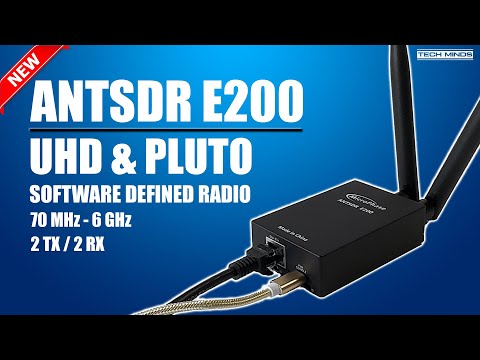
TechMinds: Reviewing the ANTSDR E200

A few days ago we posted about the upcoming crowdfunding campaign of the MicroPhase AntSDR E200, an SDR that is very similar to the PlutoSDR, but with a much larger FPGA and more stable TCXO. One interesting feature is that it can run PlutoSDR or USRP firmware, allowing it to work with software that supports either hardware.

Over on YouTube Matt from the TechMinds YouTube channel has received an early unit and uploaded a video review.

In the video Matt explains the features and specifications of the ANTSDR E200, shows how to set it up with either the PlutoSDR or USRP firmware, and then demonstrates it working in SDR Console and SDR Angel as an emulated PlutoSDR. He goes on to show how to install and run the USRP UHD firmware, where the ANTSDR emulates an USRP b205mini.

MicroPhase ANTSDR E200 UHD USRP & PLUTO SDR SUPPORT

An OpenWebRX fork with additional built in decoders

Thank you to Stefan for letting us know about a relatively modern OpenWebRX fork by luarvique that comes with additional built in decoders and features, such as SSTV, AIS, CW, RTTY, an MP3 recorder and SSTV image browser.

OpenWebRX is an open source web based SDR receiver program that allows you or others (if you allow them to), to access your SDR over the internet. It is compatible with KiwiSDR, RTL-SDR, Airspy, SDRPlay and many other software defined radio hardware. It was originally developed by Andras Retzler, but since abandoned by him, with a semi-official fork being maintained at openwebrx.de. However, other forks like luarvique can exist that implement a new set of features.

The full set of additions and improvements reads as follows:

This is the package repository for the improved version of the OpenWebRX online SDR. The new and original features available in this version of OpenWebRX:

  • Built-in SSTV decoder with background decoding.
  • Built-in AIS decoder.
  • Built-in CW decoder.
  • Built-in RTTY decoder.
  • Built-in MP3 recorder for received audio.
  • Image browser for received SSTV images.
  • Adjustable noise filtering based on spectral subtraction.
  • Adjustable tuning step.
  • Improved touch screen operation, with panning and zooming.
  • Improved scroll wheel support, with tuning and zooming.
  • Improved tuning in CW mode.
  • Bandpass filter adjustable with scroll wheel.
  • More reliable SDRPlay devices operation.
  • Better map information, with distances.
  • Better APRS map information, with weather.
  • Configurable session timeout, with a policy page.
  • HTTPS protocol support (requires SSL certificate).

The code comes packaged for Ubuntu 22.04 (amd64, arm64) and Debian 11 (amd64 arm64, armhf). There is also a ready to use Pi 4 SD card image available, linked on the GitHub readme. The original forked code can be found at https://github.com/luarvique/openwebrx.

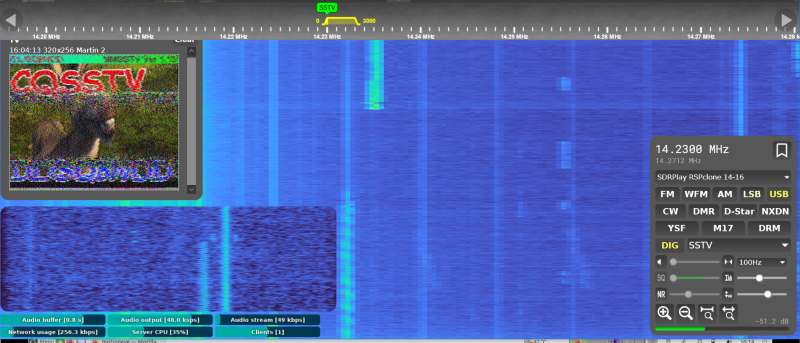
According to discussion over on the OpenWebRX groups.io, the fork also runs on a Pi 3. In the image Neil Howard from the groups.io forum demonstrates an SSTV image he received with an SDRplay clone using the luarvique fork of OpenWebRX.

SSTV Image received by the luarvique fork of OpenWebRX. Credit: Neil Howard

Stefan also notes:

The maker of OpenWebRX+ Marek and also the maker of the original version of OpenWebRX Jakob are reachable via a Telegram channel: https://t.me/openwebrx_chat