Tagged: GOES

Amateur Weather Satellite Reception Beyond NOAA POES

With the recent decommissioning of NOAA POES (NOAA-15, NOAA-18, NOAA-19), many amateur weather satellite hobbyists might be asking themselves if the hobby is now dead.

While NOAA POES satellites were the easiest stepping stones into amateur weather satellite reception, the hobby has seen massive strides in enabling easier reception of other satellites over the past few years. Furthermore, in the near future, various new satellites are scheduled for launch, which should be receivable by amateurs.

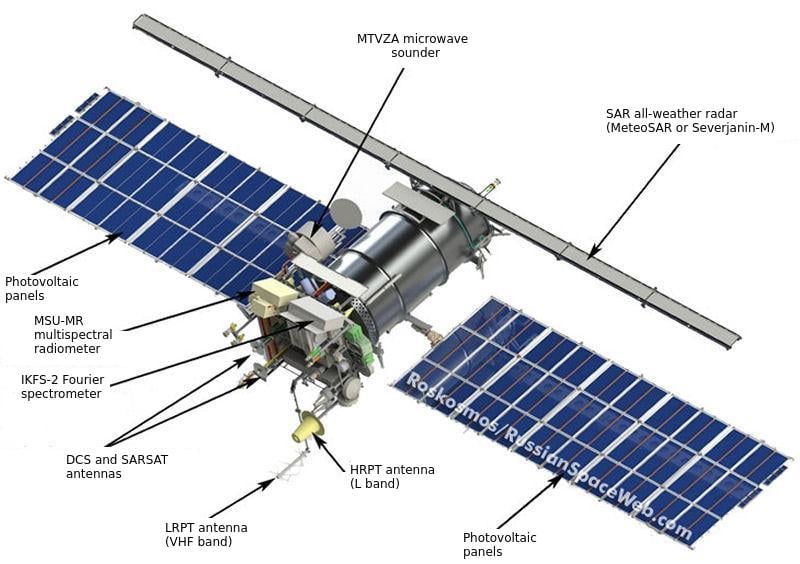
Over on his blog, Jacopo has created a detailed post showing what satellites amateur hobbyists can still receive on the L-band and S-band. Some receivable satellites include Meteor-M,  Metop, Arctic Weather Satellite (AWS), STERNA, Elektro-L, GOES, EWS-G, Jason-3, UVSQSat-NG, DMSP, HINODE, ISS DATV and Proba 2.

While almost all of these satellites (apart from Meteor-M's LRPT 137 MHz signal) require a satellite dish and L-band, S-band, or X-band feed, recent products like our Discovery Dish can make setting up an L-band or S-band system significantly easier.

The Meteor-M series of satellites

AI Cloud Detection for GOES Weather Satellite Images on a Raspberry Pi

Over on his blog account at Hackser.io Justin Lutz has uploaded an article describing how he uses AI object detection to automatically detect clouds on weather satellite images that he's downloaded from GOES satellites via an RTL-SDR.

Lutz's blog post first describes and shows his RTL-SDR GOES reception setup. Then, it explains how he used Edge Impulse on his Raspberry Pi 4 to create an AI model that automatically detects the clouds in the image.

The process begins by importing 100 images into Edge Impulse, manually labelling the clouds in each image, training the model, and testing it. The result was an average detection accuracy of 90%.

IEEE Spectrum Article on Discovery Dish

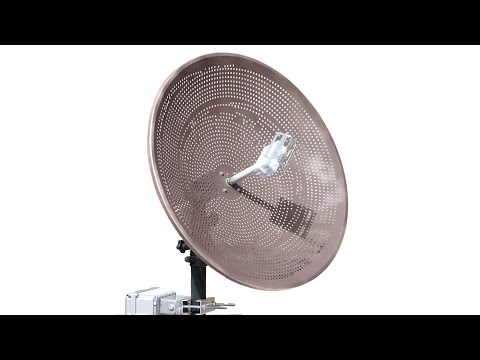
Electrical engineering magazine IEEE Spectrum has recently posted an article about our Discovery Dish product, which was successfully crowd-funded on CrowdSupply and delivered to initial backers early this year. Discovery Dish is a 70-cm aluminum satellite dish with an active filtered feed. It is designed for receiving real-time weather data from GOES HRIT, GK-2A LRIT, FengYun LRIT, NOAA HRPT, Metop HRPT, Meteor M2 HRPT, and other weather satellites that operate around 1.69 GHz. There are also feeds for Inmarsat satellites, Hydroden Line observation, and S-band satellites.

In the article, Stephen Cass introduces the Discovery Dish, highlighting its practical uses and the convenience of disassembling it for easy packing in a suitcase during travel. He also shares his experience using the Discovery Dish to successfully receive images from the GOES-East satellite from the rooftop of his New York City apartment.

Finally, he mentions how he tested the hydrogen line feed as well, successfully seeing a hydrogen line peak when pointing at the galaxy.

Image from the IEEE Spectrum Article on Discovery Dish

Saveitforparts: Building a Satellite Antenna from an Emergency Blanket and a Rotator from an old Security Camera Mount

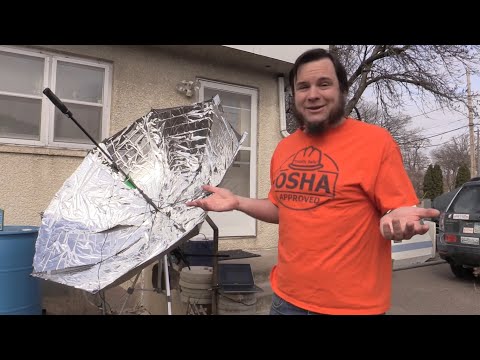
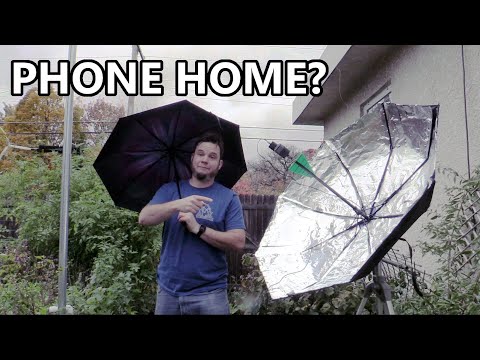
Over on his YouTube channel, 'saveitforpaarts' has uploaded two new videos. The first shows how he was able to build a very cheap satellite antenna for GOES satellites out of an umbrella and a metallic emergency blanket. The blanket is simply spread over the inside of the umbrella, creating an RF reflective surface. Then a linear feed with LNA and amplifier is placed at the feed point. The makeshift dish works, though the SNR is marginal, and he is only able to receive slightly corrupted images from GOES satellites.

Satellite Antenna Made From Emergency Blanket

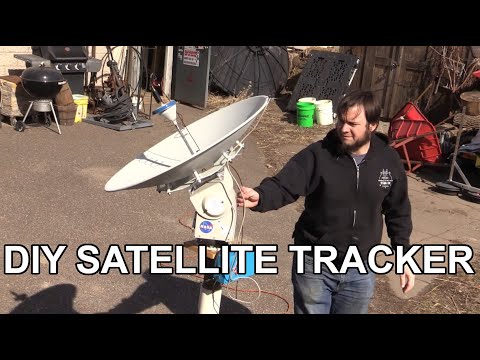
In his second video saveitforparts builds a satellite dish rotator out of an old thrown away security camera pan/tilt mount. The mount is hacked to be controllable via an Arduino microcontroller. 

I Built A Cheap Satellite Tracking System From Spare Parts

Crowd Supply Discovery Dish Teardown Session: Thursday 30 November Noon PST

Crowd Supply is hosting Teardown Session 38 on Thursday 3- November at Noon PST time which will feature the Discovery Dish. Join us for this livestream where I will be talking about and showing the Discovery Dish prototype.

Discovery Dish is currently being crowd funded over on Crowd Supply. It is designed to be an easy entry to the world of L-band weather satellites, hydrogen line radio astronomy, and Inmarsat reception. The Discovery Dish aims to be the start of an ecosystem of hardware designed to get users set up with satellite reception, including a planned companion light-duty antenna rotator.

Remember to click on the “Notify me” button on the YouTube link in order to be reminded about the stream!

Teardown Session 38: Discovery Dish

Modifying a 2.4 GHz WiFi Grid Antenna for Improved 1.7 GHz Reception + DIY Rotator Instructions

People have had much success in receiving L-band weather satellites like GOES and polar orbiting HRPT satellites using 2.4 GHz WiFi grid dishes, even though their 1.7 GHz signals are considered out of band for the WiFi grid dish feed. While this works most of the time, reception can be sometimes weak and borderline.

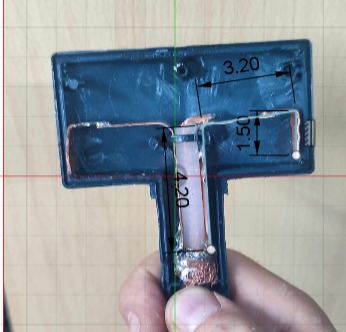
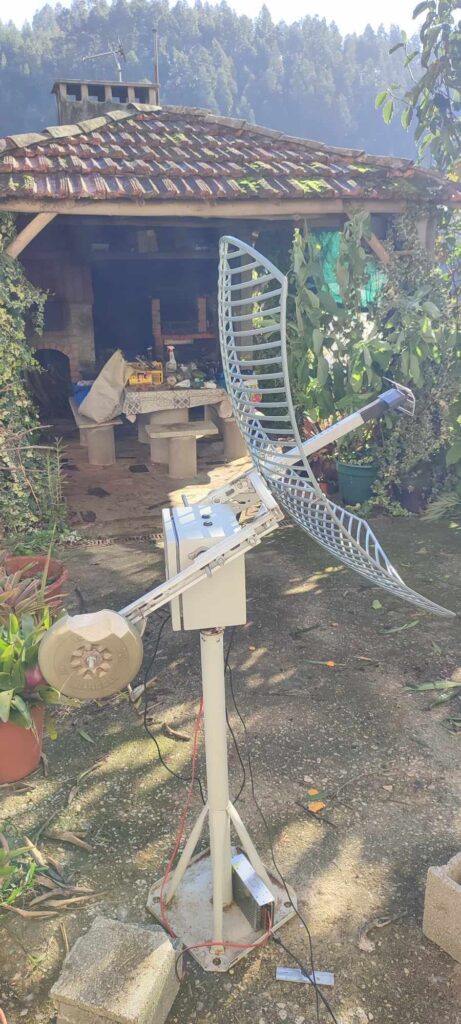
Over on Facebook and usradioguy.com, António Pereira has been sharing his mod which optimizes a 2.4 GHz feed for 1.7 GHz instead. The mod involves removing the enclosure of the feed which requires a heat gun to remove the glue, extending the feed's dipole by soldering on copper extension strips, tuning the dipole with a VNA, and finally tweaking the focal point. This results in an optimized L-band weather satellite antenna.

António Pereira has also shared instructions for creating an antenna rotator from an ESP32, Arduino Nano, two NEMA 23 stepper motors, two stepper controllers, two 50:1 worm gearboxes, and two optical homing switches, as well as power supplies for the motors and circuits. He also shares the Arduino code that he's written.

We also note that we currently are crowd funding for our Discovery Dish, which will be a ready to use satellite dish system for L-band weather satellites, as well as Inmarsat and hydrogen line radio astronomy. Check it out on Crowd Supply.

Modified dipole feed on a 2.4 GHz WiFi grid antenna feed
A DIY antenna rotator for the modified 1.7 GHz WiFi grid dish.

Saveitforparts: Building an L-Band Satellite Antenna out of an Umbrella

Over on his YouTube channel "saveitforparts" has uploaded a video where he uses an umbrella, pin tin and tin foil tape to create a simple dish antenna for receiving GOES, NOAA and METEOR HRPT satellites.

The full build consists of an umbrella covered in tin foil tape, a helical wire feed on a pie tin, a filtered LNA, an RTL-SDR and an Android phone running SDR++. While he did have initial success at receiving, he soon decided to swap out the helical wire feed for a PCB linear feed instead which worked much better as helical feeds can be very difficult to get right.

Through the video saveitforparts goes over the failures he had, in the end noting that it's not a great antenna, but it's something that can be used in a pinch.

We've also seen the umbrella satellite dish used a few times in the past, where here it was used for NOAA APT reception, and here for Hydrogen Line radio astronomy.

We also want to remind readers that we are currently Crowd Funding for our Discovery Dish, which will be a low cost way to get into L-band satellite reception.

Can I Get Satellite Data With An Umbrella?

Discovery Dish Now Available for Crowd Funding! A Lightweight Dish and Feed for L-Band Weather Satellites, Hydrogen Line and Inmarsat

Today our Crowd Funding campaign for the Discovery Dish has gone live! Thank you to anyone who supports this project and our goal of bringing affordable products that make getting into various radio projects easier.

Our launch announcement reads:

We decided to develop Discovery Dish because we were disappointed by the lack of ready-to-use, low-cost, lightweight dish antennas on the market that are suitable for software-defined radio projects like receiving L-Band geostationary and polar-orbiting weather satellites, as well as for 1.5 GHz Inmarsat reception and 1.42 GHz hydrogen line radio astronomy. With excellent open source weather satellite decoding software, like SatDump, now available, it’s time for a complementary, easy-to-use hardware solution.

Through testing over several years, we chose 65 cm as the diameter, as we found that 60 cm is close to the minimum diameter required for perfect GOES weather satellite reception at 24° elevation, so this size should be suitable for most of the world that has GOES reception available. For LRPT satellites like GK-2A, and HRPT polar-orbiting satellites, it is more than large enough. We combined the dish with a carefully tuned feed that has a built-in low-noise amplifier (LNA) and dual filtering, which means there is no loss from feed to LNA. This also means we can use thinner and less stiff coax cable, which is a lot easier to handle and route. Finally we ensured that the entire dish and feed system is waterproof.

The only other ready-to-use dish offering we found is based on a modified 2.4 GHz grid Wi-Fi dish, which is still in our opinion too big and heavy. Size and weight is especially the important if you want to be able to use a low-cost, light-duty antenna rotator, which typically can only handle less than 1 kg in weight. We found that the grid Wi-Fi dish offering also has no solution for waterproofing the LNA, so the LNA needs to be placed indoors and very thick and unwieldy coax is used to avoid feed to LNA losses.

Other ways to receive these weather satellites and carry out hydrogen line experiments typically involve modifying a 2.4 GHz Wi-Fi grid antenna, or an old satellite TV dish. But these modifications can be time-consuming and difficult to get right, and even 60 cm satellite TV dishes are too heavy for light-duty antenna rotators.

Finally, we developed Discovery Dish with an eye toward it being used with a low-cost antenna rotator, and we are in the process of prototyping our own rotator design. Our antenna rotator is not ready for crowdfunding yet, as there are still some things to work out and long-term stress testing to be done, but please keep an eye out for it in 2024! An antenna rotator is a great addition if you want to use a dish antenna to decode images from the polar-orbiting HRPT weather satellites.

Note that you don’t need an antenna rotator to receive geostationary satellites like GOES, or to do drift hydrogen line observations. For polar-orbiting HRPT satellites, the lightweight nature of Discovery Dish also makes tracking the satellites by hand a much easier prospect.

Learn more about Discovery Dish on our main campaign page. Thank you to everyone who supports the Discovery Dish project in any way!
Discovery Dish: Simplified system for weather satellite reception and hydrogen line radio astronomy