Tagged: kickstarter

Antennaut: A Browser-Based RTL-SDR and HackRF Receiver with ADS-B, AIS, FT8, LoRa and More Decoders Built In

Thank you to Eduardo Moraton for writing in and sharing Antennaut, a web app that drives an RTL-SDR or HackRF directly from Chrome or Edge over WebUSB. The app is free, and a beta that requires no account is already open to try. Eduardo has also launched a Kickstarter campaign for Antennaut with a €2,500 goal, running until January 22, 2027, to fund a user accounts and sync feature. Currently, all data stays in the browser it was created in, and accounts and sync will let users access things like their logbook and settings from other computers.

Antennaut has a receiver with a wide waterfall display and a scanner that Eduardo says can tell voice, carriers, and DMR apart. Decoders for ADS-B, AIS, APRS, ACARS, FT8, SSTV, POCSAG, RS41 radiosondes, 433/868 MHz sensors and LoRa (Meshtastic, MeshCore and raw) all run inside the browser tab. It also includes an offline map, propagation and satellite pass predictions, a logbook, and translations in 20 languages.

Eduardo is upfront that Antennaut is closed-source and in beta. It has been tested with an RTL-SDR Blog V4 and a HackRF One, and support for other receivers is written but untested. Antennaut reminds us of Mayhem Mobile and OFFgrid-SDR, which are open source options that bring RTL-SDR reception and decoders to the browser over WebUSB.
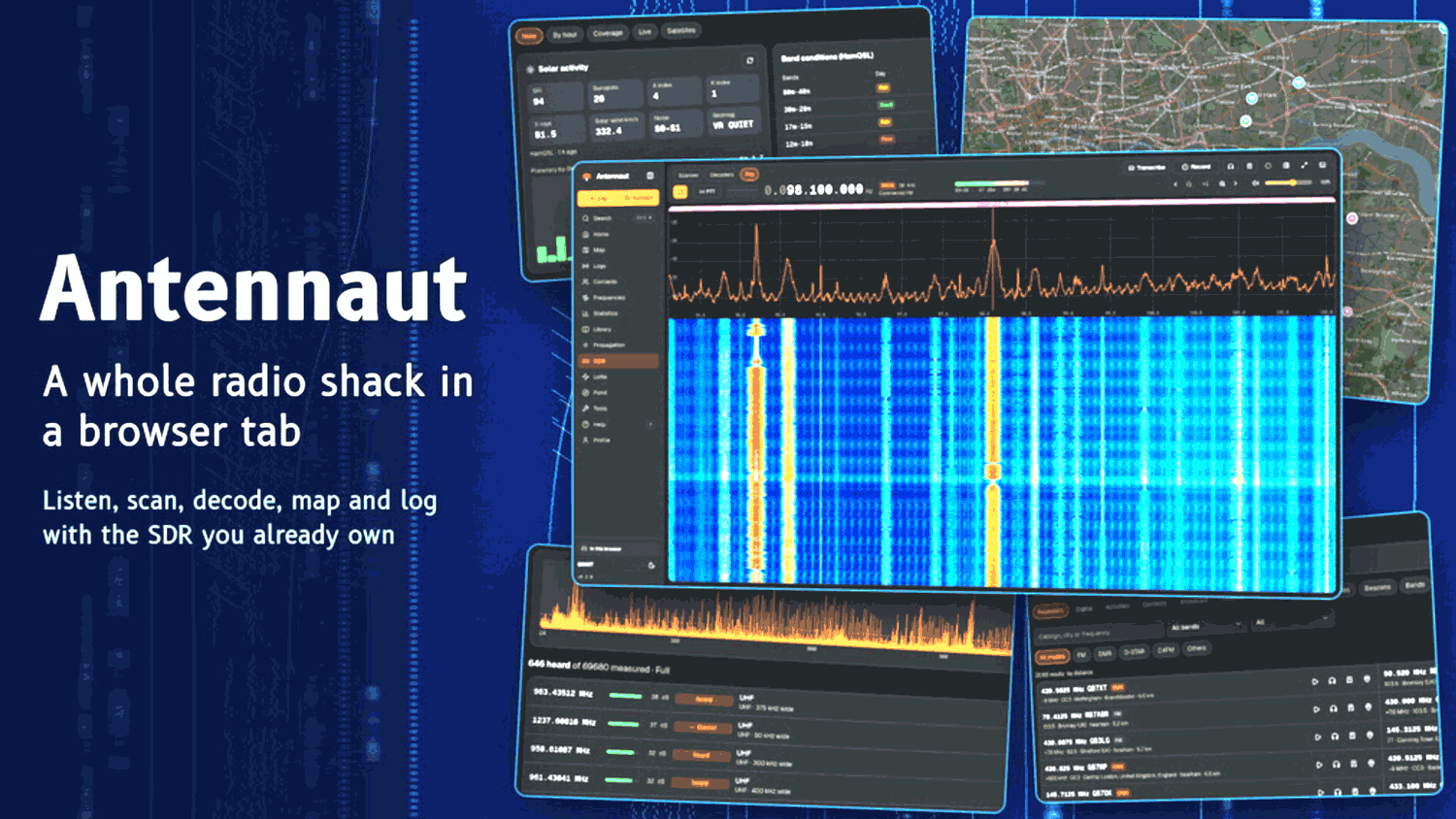
Antennaut Running in the Browser

AI Disclaimer: Eduardo notes that Antennaut was written with the help of an AI coding assistant.
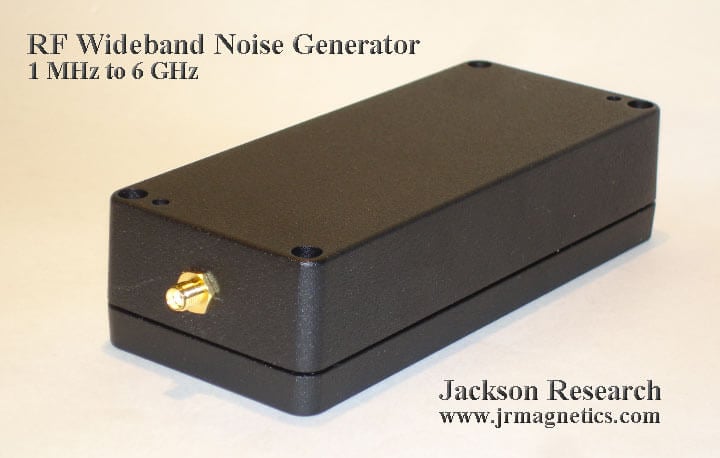
Kickstarter for a Lower Cost Laboratory Grade RF Broadband Noise Generator

UPDATE: John wanted to add the following clarification:

In the article you wrote, you suggest that the two noise generators are equivalent. This is not the case. The noise generator you mentioned generates "Thermal Noise". Mine generates "Shot Noise".

The Zener in the generator you mentioned, contributes zero noise in the Gigahertz spectrum. Whereas mine generates Shot Noise roughly 20 db higher than the thermal noise floor all across the range.

The physics and the mathematics are as different as night and day.

Thank you to John Jackson from Jackson Research for writing in and sharing his Kickstarter for a laboratory grade RF broadband noise generator. John notes that he's discovered a semiconductor that is much cheaper than the expensive avalanche diodes used in other high end noise sources. This semiconductor has allowed him to create a noise source that works from 40 MHz up to 6 GHz. The target output power is 0 dB, with a flatness of less than 2 dBm over the entire bandwidth.

A noise source is useful for SDR/radio experiments as it is used in many applications such as scalar network analyzers, filter response measurements, satellite tuning, cellphone network tuning, antenna VSWR measurements, amplifier noise measurements and in jammers. If you're interested we have a previously posted tutorial about using an RTL-SDR and noise source for filter characterization and antenna VSWR measurements.

John is fundraising via Kickstarter in order to help fund development of the final product. The pricing is currently US$500. This might seem high, but John notes that comparable professional noise sources start at US$3,500 and go up to US$30,000. John writes:

There are a number of laboratory grade RF Noise generators on the market. They are all extremely expensive ranging in the thousands of dollars. This is beyond the reach of most individuals. In contrast, there are some low cost RF noise generator schematics floating around the Internet which are all based upon Zener diodes.

The problem with Zener diodes is the noise bandwidth. All the circuits I have seen have cutoff frequencies in the Megahertz range. The one noise circuit I saw used in the Gigahertz range was actually amplifier noise and had problems due to the several stages of amplification.

The alternative to Zener diodes is the avalanche diode specifically designed as a RF noise generator. These devices are difficult to acquire and have very high prices which often exceed the entire cost of all the parts and components needed to build the instrument.

Professor Jackson at Jackson Research has discovered a semiconductor that generates RF noise like an avalanche noise diode into the Gigahertz range, but at Zener diode prices. He has raw laboratory data and now needs to build up a professional grade instrument. To achieve this goal, he has launched a new KickStarter fund raiser to build up a number of units.

Jackson Research Laboratory Grade Broadband RF Noise Source

HackRF Now for Sale

HackRF is now for sale on Kickstarter, and it has already reached it’s $80,000 USD goal in less than half a day. If you didn’t already know, HackRF is an open source Software Defined Radio that can receive and transmit between 30 MHz and 6 GHz. HackRF has a 20 MHz bandwidth which when compared to the RTL-SDRs 3.2 MHz maximum is a lot.

There have already been 500 HackRF beta units sent out so the hardware should be fairly stable by now.

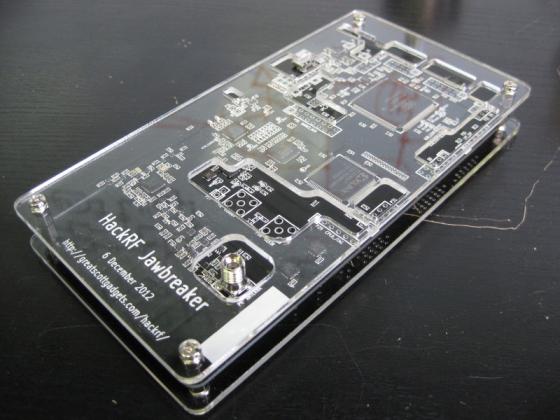
The basic package which includes a fully assembled HackRF board and enclosure is selling for $275. For $315 you can get a HackRF, enclosure and a Ham-It-Up upconverter as well, which is commonly also used with the RTL-SDR and will allow you to receive the HF bands between 0 – 30 MHz.

HackRF Jawbreaker Board with Enclosure

If you are interested in some videos, here is a video showing the HackRF transmitting wideband FM using GNURadio.

Here, showing 20 MHz of the GSM band

HackRF smoke testing: GSM tower

Here, 20 MHz of the broadcast FM band

HackRF smoke testing: Full FM broadcast band