Tagged: passive radar

A Multi-Channel Coherent RTL-SDR Product: For Passive Radar, Direction Finding and More

Coherent-receiver.com is a company which is a customer of our RTL-SDR V3 dongle and they have been working on creating a multi-channel coherent receiver product based on the RTL-SDR. An RTL-SDR multi-channel coherent receiver is at its most basic, two or more RTL-SDR dongles (multi-channel) that are running from a single clock source (coherent). A multi-channel coherent receiver allows signal samples from two different antennas to be synchronized against time, allowing for all sorts of interesting applications such as passive radar and direction finding.

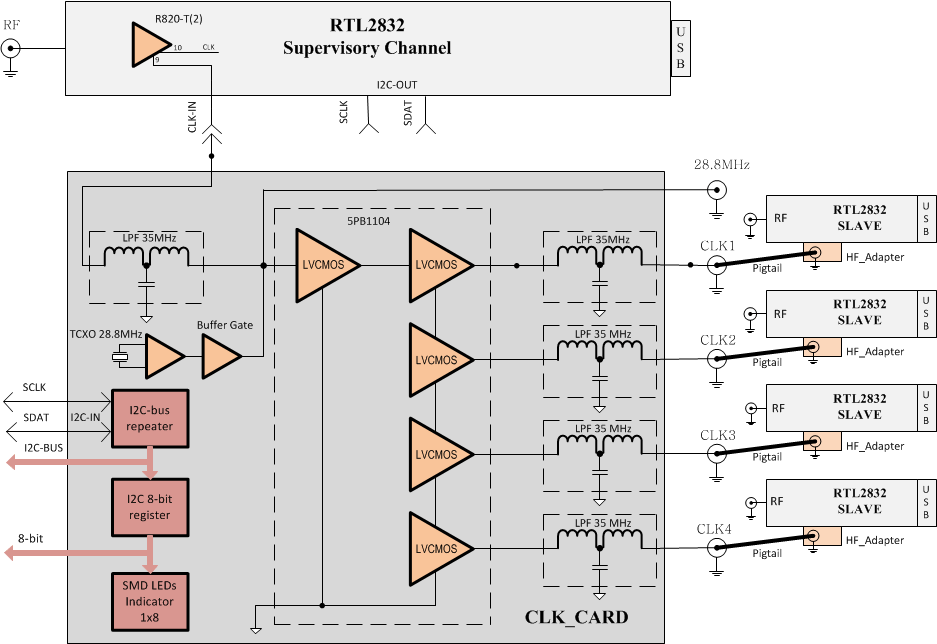
The team at coherent-receiver.com have used the new expansion headers on our V3 dongles to create their product. In their receivers they attach a control board which has a buffered 0.1 PPM TCXO (buffered so it can power multiple RTL-SDR’s). They also added an 8-bit register and I2C connection capabilities which allows for control of future add-on boards. The I2C capability is useful because it means that several RTL-SDR dongles can be controlled and tuned from the same control signal. More information on the registers and build of the receiver control board can be seen on their technical support page.

A ten channel RTL-SDR coherent receiver.
The Coherent Receiver block diagram.

One example application of a multi-channel coherent receiver is passive radar. Coincidentally, we’ve just seen the release of new GUI based Passive Radar software by Dr. Daniel Michał Kamiński in yesterdays post. Passive radar works by listening for strong signals bouncing off airborne objects such as planes and meteors, and performing calculations on the signals being received by two antennas connected to the multi-channel coherent receiver.

A second example is direction finding experiments. By setting up several antennas connected to a multichannel coherent receiver calculations can be made to determine the direction a signal is coming from. An interesting example of direction finding with three coherent RTL-SDRs can be seen in this previous post. A third example application is pulsar detection which we have seen in this previous post

Coherent-receiver.com sent us a prototype unit that they made with four of our V3 dongles. In testing we found that the unit is solidly built and works perfectly. We tested it together with Dr. Kamiński’s passive radar software and it ran well, however we do not have the correct directional antennas required to actually use it as a passive radar yet. In the future we hope to obtain these antennas and test the coherent receiver and the software further.

Currently they do not have pricing for these models as it seems that they are first trying to gauge interest in the product. If you are interested in purchasing or learning more they suggest sending an email to [email protected]. It seems that they are also working on additional RTL-SDR ecosystem products such as filters, downconverters, antennas and LNAs.

We hope that the release of this product and Dr. Kamiński’s software will give a boost to the development of coherent multi-channel receivers as we have not seen much development in this area until recently.
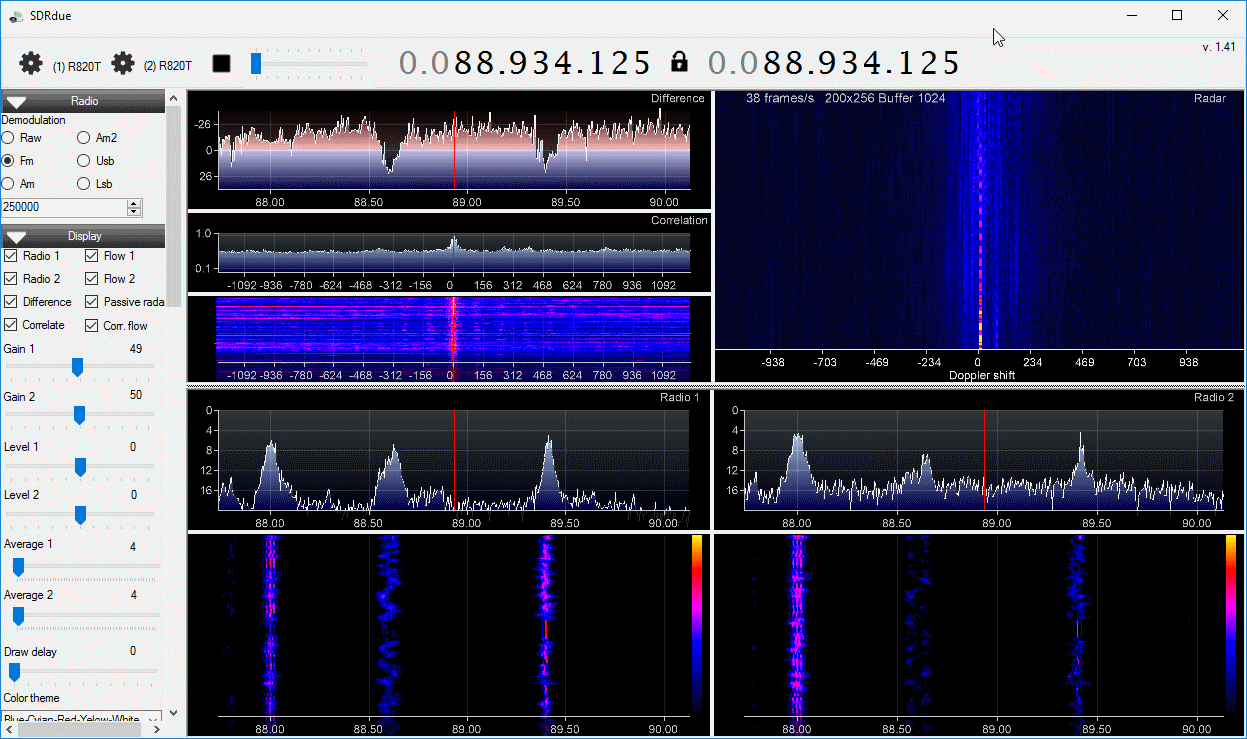
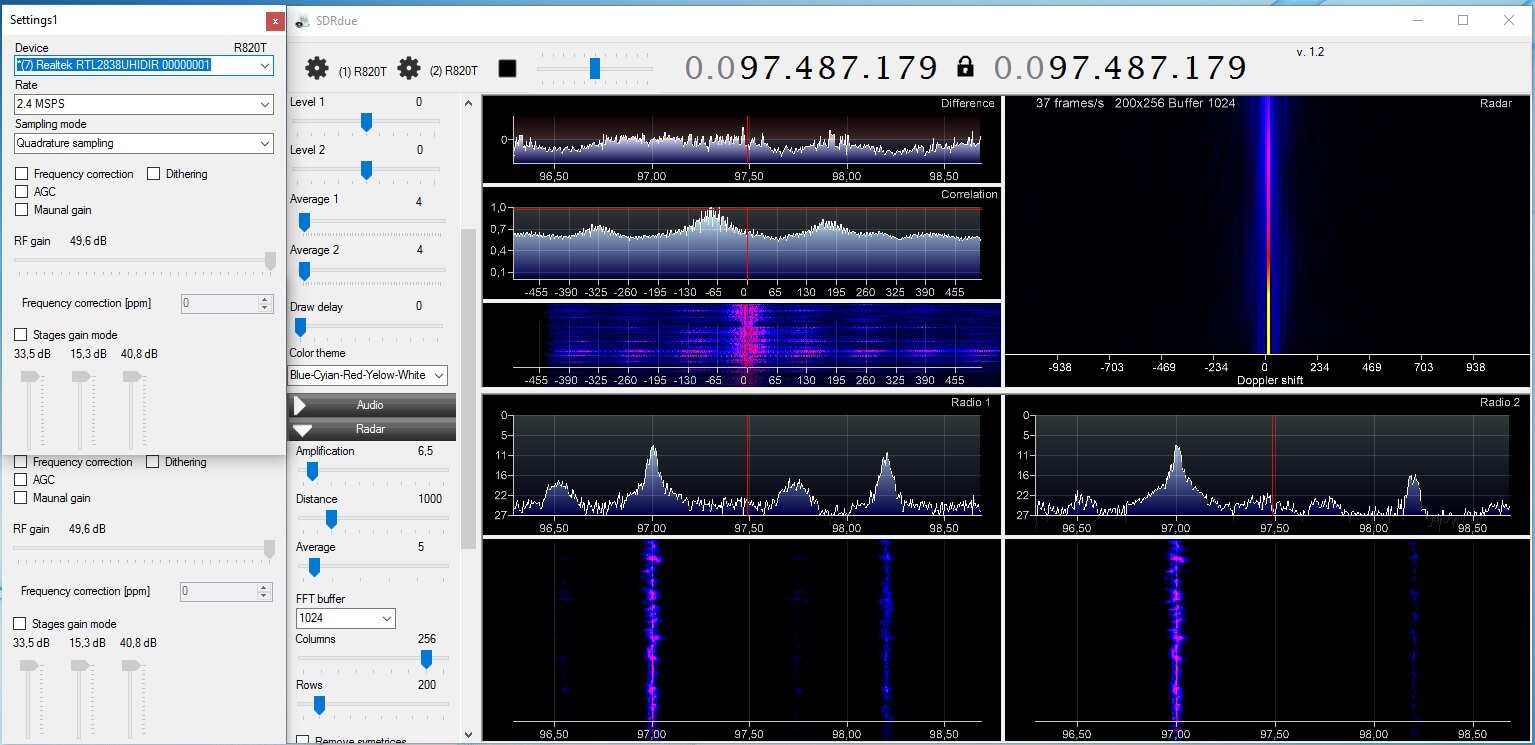
SDRDue running on the coherent-receiver.com unit.

SDRDue: New Software for Passive Radar with Two Coherent RTL-SDR Dongles

UPDATE March 2019: Daniel's site has gone down, but the downloads are still available here.

Dr. Daniel Michał Kamiński, author of two SDR# plugins has recently released a new passive radar program for the RTL-SDR called "SDRDue". Passive radar is a technique that makes use of signals from strong distant transmitters. The idea is that these signals can be reflected off the fuselage of aircraft or other flying objects, and the reflection can be observed by a passive radar receiver. By correlating data from two receivers and two antennas, more accurate positional data can be obtained.

For passive radar to work properly the receivers should be coherent, meaning that they run from the same clock and have synchronized samples. The RTL-SDR can be made coherent by connecting two dongles to a single clock source.

The software runs on multi-threaded C# code, and uses Microsoft XNA 4.0 for the graphical operations. It also supports GPU parallel calculations if you have OpenCL and an AMD graphics card.

Please note that we attempted to run the program, but it would not even open on our PC. We've contacted the author to ask if there is any known problems. If anyone gets it running please report back in the comments section of this post. EDIT: Daniel has updated the software and it appears to be functioning normally now. You will need to install it into a SDR# folder, and run SDR# first with both dongles before the software will recognise the dongles in SDRDue. We also had better luck with using the rtlsdr.dll_ file, rather than the default rtlsdr.dll file. Just delete the original rtlsdr.dll and rename rtlsdr.dll_ to rtlsdr.dll.

For more information on passive radar we recommend looking at this previous post where we showed the work of Juha Vierinen who used RTL-SDR's to build a passive radar.

The SDRDue Passive Radar Software

Two New SDR# Plugins for Passive Radar and IF Signal Averaging

March 2019 Update: Website appears to be down now. But the DropBox download links are still active.

Passive Radar Plugin: https://www.dropbox.com/sh/tqjycu9nxdfhk0u/AAA9KSE6-mRUwV10s0F9v7Jpa?dl=0

IF Average Plugin: https://www.dropbox.com/sh/tqjycu9nxdfhk0u/AAA9KSE6-mRUwV10s0F9v7Jpa?dl=0

Recently Dr. Daniel Kaminski wrote into RTL-SDR.com to let us know about two very interesting new SDR# plugins that he has developed to use with the RTL-SDR dongle. The first plugin is called "Passive Radar". Passive Radar allows you to use an existing strong transmitter such as an FM station to detect reflections from things like aircraft and meteors. Dr. Kaminski writes about his plugin:

The first one is Passive Radar which bases on the signal from only one dongle. The ambiguity function is the same as in advanced projects with the difference that  I implemented self-correlate function instead of cross-correlate one which is used in 2 dongles projects. Such solution theoretically should works as can be found in internet. It should be noticed that for proper work of such passive radar the direct signal should be comparable in strength to the reflected  one. This plugin is still under development.

In the future he hopes to be able to support two dongle passive radar as well.

The Passive Radar plugin by Dr. Kaminski in SDR#.
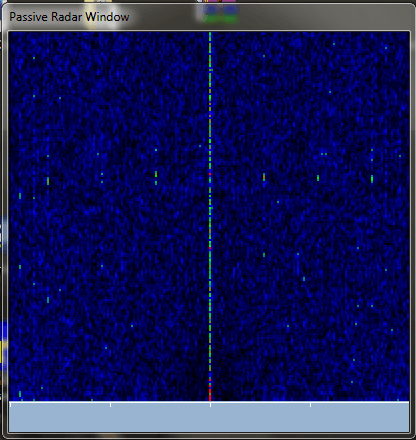
The Passive Radar window.

The second plugin is called "IF Average". This plugin allows the IF signal (the entire active bandwidth is what he seems to be referring to) to be averaged which is useful for many applications including radio astronomy projects such as detecting the Hydrogen line. He writes:

The second plugin which is finished is for IF signal averaging. It is important in case of radio-astronomical observations. It allows to cumulate signals (up to 10000 samples in real time), present them in friendly way and save for further work.

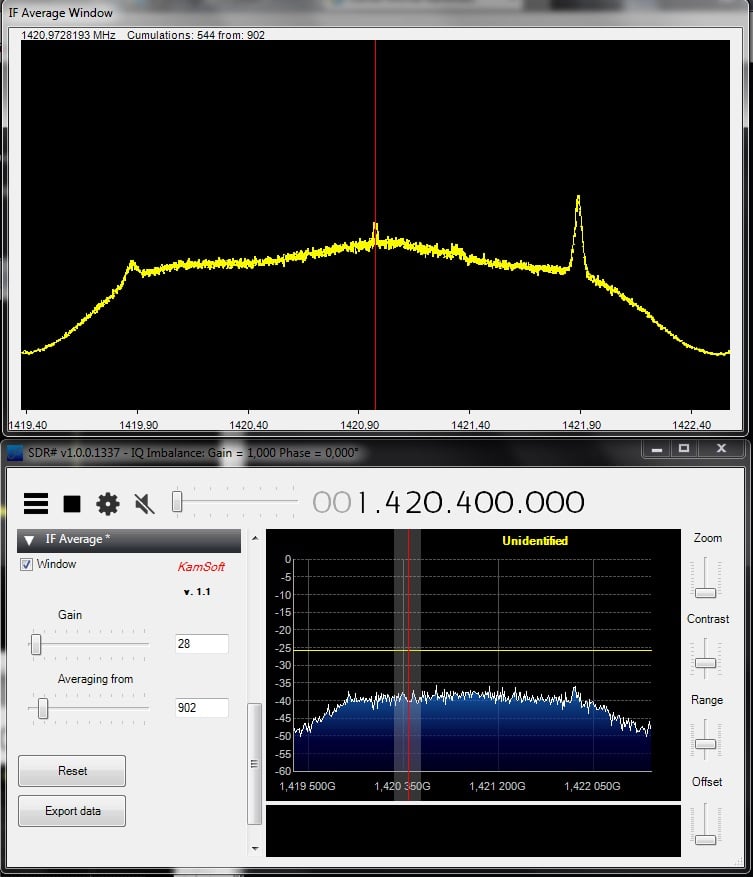
The IF Average plugin by Dr. Kaminski.

The plugins require the installation the XNA Framework Redistributable 3.1.

Building a Passive Radar System with RTL-SDR Dongles

Back in 2013 we posted about Juha Vierinen’s project in which he created a passive radar system from two RTL-SDR dongles, two Yagi antennas, and some custom processing code. Passive radar can be used to detect flying aircraft by listening for signals bouncing off their fuselage and can also be used to detect meteors entering the atmosphere. The radar is passive because it does not use a transmitter, but instead relies on other already strong transmitters such as FM broadcast radio stations. Juha writes:

A passive radar is a special type of radar [that] doesn’t require you to have a transmitter. You rely on a radio transmitter of opportunity provided by somebody else to illuminate radar targets. This can be your local radio or television station broadcasting with up to several megawatts of power. 

How passive radar works

His previous write up was brief, but now over on Hackaday Juha has made a detailed post about his RTL-SDR passive radar project. In the post he explains what passive radar is, shows some examples of his and others results, shows how it can be done with an RTL-SDR dongle, and finally briefly explains the signal processing required. In his next post Juha aims to go into further detail on how passive radar works in practice.

Below we show a video that shows an example of one of his passive radar tests that was performed with a USRP software defined radio and two Yagi antennas. 

This video shows a lot of airplanes around the New England area detected using a simple passive radar setup, consisting of: one USRP and two yagi antennas, a quad core linux PC. Every now and then an occasional specular meteor echo is observed too.

In his other tests shown on YouTube Juha also used two RTL-SDR dongle’s with a shared clock and was able to get similar results.

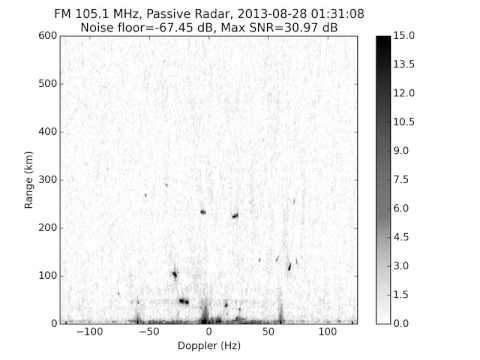
FM Radio Passive Radar, WWLI 105.1 MHz

RTL-SDR Based Passive Aircraft Radar

Over on YouTube we’ve discovered a video from earlier in the year showing the RTL-SDR being used as a passive aircraft radar. This is different to ADS-B which is a type of active radar. A passive radar works by using a very strong radio signal from a readily available source such as a TV or FM radio transmitter and detecting the reflections from aircraft.

A RTL-SDR based passive radar system can be built by connecting two RTL-SDR dongles to a single clock source and by using two directional antennas.

We’ve also posted about RTL-SDR based passive radar being used to track aircraft here and here in the past. Another post about coherent multichannel RTL-SDR receivers can be found here.

RTL-SDR based Passive Multistatic RADAR used to Track Aircraft

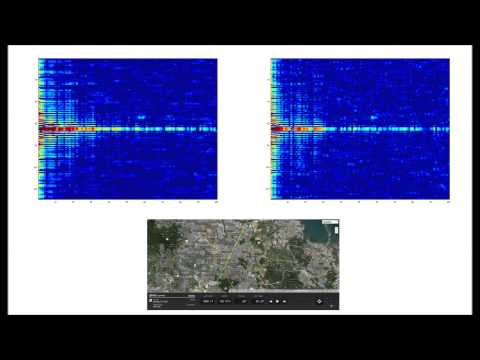
Over on YouTube user Ben Silverwood has uploaded a video showing the results of his RTL-SDR passive radar. The passive radar works using two RTL-SDR dongles receiving a DAB radio tower’s radio waves that are reflected off the aircraft. On the video you are able to see the aircraft radar blip on the animated Matlab plots.

Previously we posted about another similar passive radar project in this post.

Low cost RTL-SDR passive multistatic DAB radar.

Detecting the Perseids Meteor Shower with an RTL-SDR Passive Radar

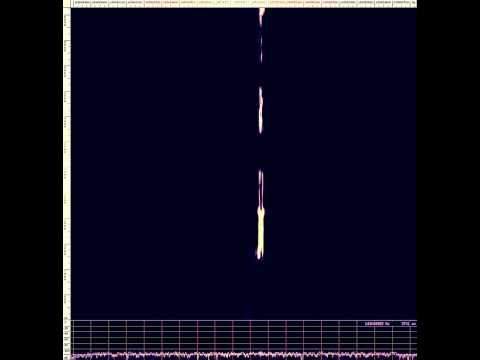
Amateur radio hobbyist EB3FRN has made a post on his blog showing how he was able to use an RTL-SDR to act as a passive radar and detect meteors from the Perseids meteor shower. To do this he tuned to 143.050 MHz which is the the frequency of the Graves radar, a French space surveillance radar used to spot satellites and detect their orbits. He then used the Baudline software to record the radar signal scatters which occur when a meteor reflects the Graves radar signal.

Graves Radar - 2013 Perseids Meteor Shower

Passive RADAR With a Dual Coherent Channel RTL-SDR

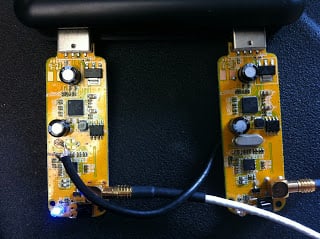
Juha Vierinen from the Kilpisjarvi Atmospheric Imaging Receiver Array has been working on a Dual Coherent Channel RTL-SDR modification. This modification essentially involves using the same clock source for two RTL-SDR dongles, which can be done by desoldering and removing the clock on one dongle, and then using a cable to connect the clock from another dongle to the clock input of the desoldered dongle.

RTL-SDR Dual Coherent
Dual Channel Coherent RTL-SDR Receiver

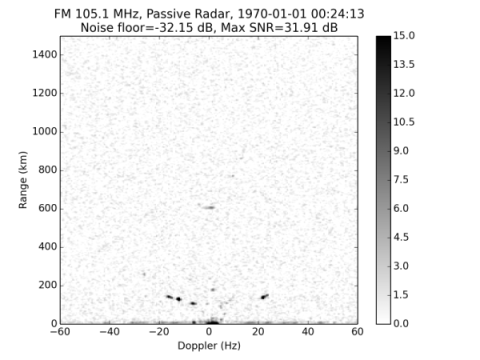
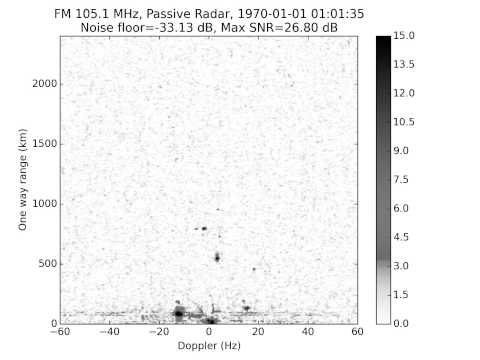
Juha then was able to use his new dual coherent channel RTL-SDR to create a passive RADAR system. To do this, he connected the two RTL-SDRs to two log periodic Yagi antennas. From this setup he was able to detect airplanes and meteor echoes. An image cap and video showing RADAR detections over time is shown below.

Passive RTL-SDR RADAR
Longer rtlsdr fm radio passive radar video