Over on YouTube user oh2ftg has uploaded a video apparently showing an RTL-SDR transmitting a low power signal at 1270 MHz. His explanation as to how it is possible to transmit with an RTL-SDR is that the local oscillator in the RTL-SDR is leaky, so it can be abused as a low power transmitter.
We aren’t sure how he enabled the transmissions or if it even is transmitting a real signal or just noise, but we hope someone can let us know in the comments. At the moment we think its just noise which changes its tune as the oscillator tunes to different frequencies.
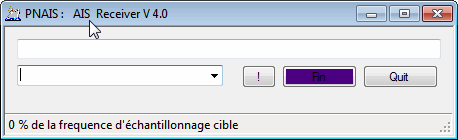
Over on our Forums xynium has told us about his recently released an AIS decoder called PNAIS which appears to directly connect to the RTL-SDR and decode AIS data. After decoding it then outputs the decoded NMEA data via UDP, which could then be received and used in map plotting software such as OpenCPN.
AIS is and acronym for Automatic Identification System and is a system used by ships to broadcast position and vessel information.
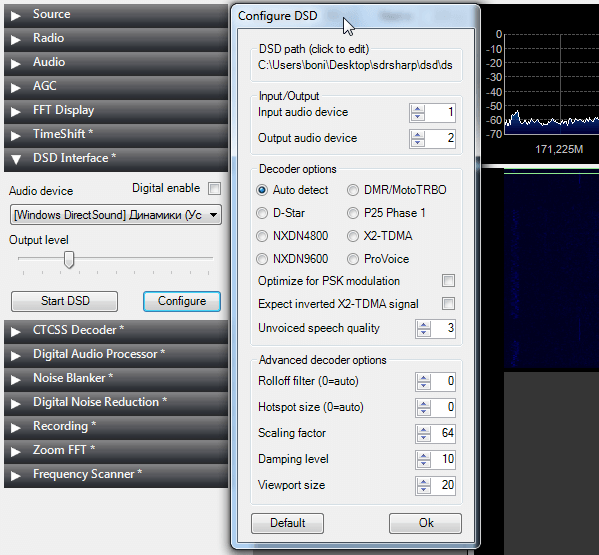
The developer over at rtl-sdr.ru has released a new plugin for SDR# (note in Russian – use Google translate) which allows the digital voice decoder DSD+ to be controlled via a GUI interface from SDR#. To use this plugin you will need to have a copy of DSD+ already downloaded as you will need to point the plugin to the DSD+ install directory. You will also need to have virtual audio cable software such as VAC or VBCable setup.
Information on downloading and setting up DSD+ can be found here.
FLARM signals are transmitted at 868 MHz and are effectively weaker by 100-1000 times compared to standard ADS-B signals. The project recommends use of a high gain collinear antenna for receiving the weak FLARM signals. The open glider network project wiki contains information on how to set up their Linux based FLARM decoder that relies on the RTL-SDR for various embedded devices.
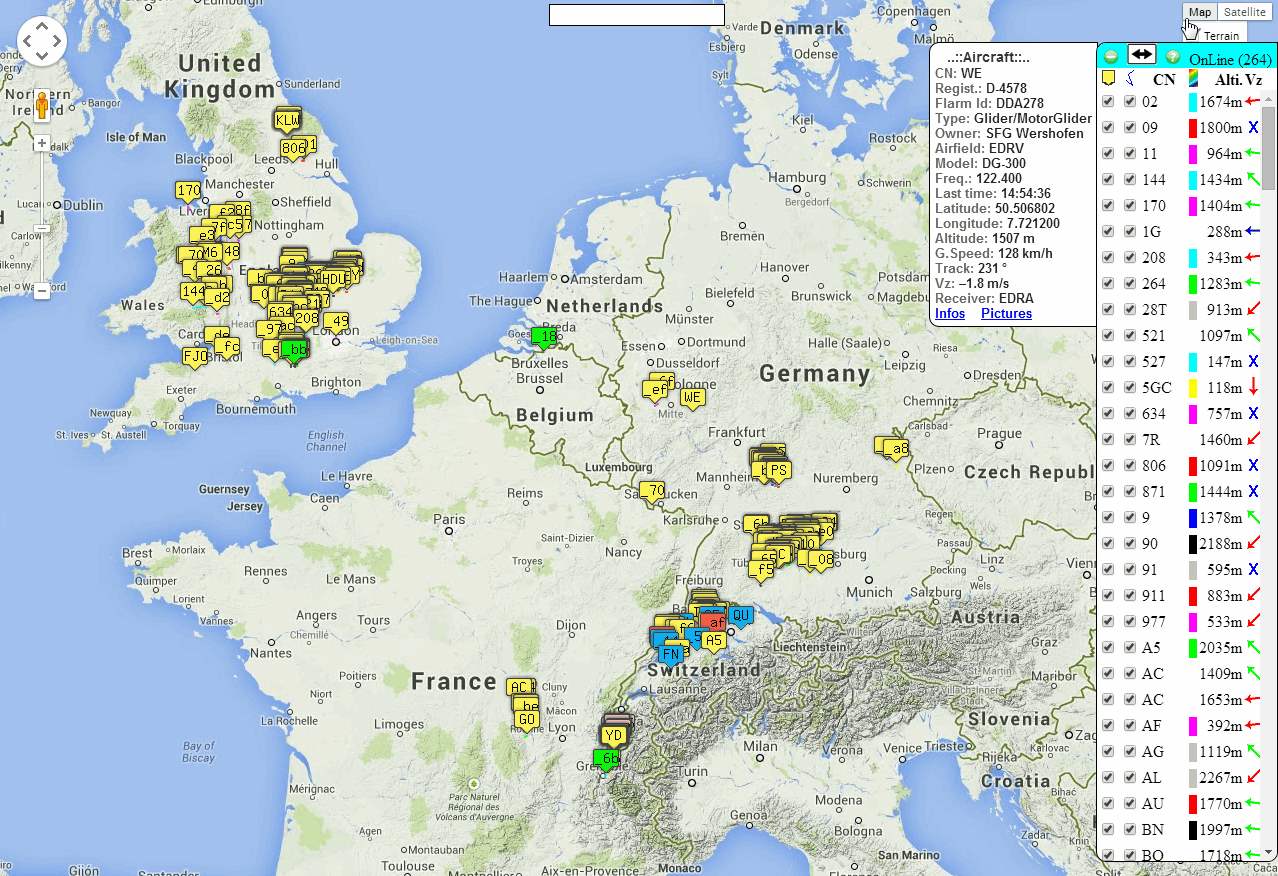
Once the software is up and running, the received and decoded FLARM packets can be seen on http://cunimb.fr/live/ as real time glider positions (also at http://cunimb.fr/live/3D/ in a 3D Google Earth).
FLARM Gliders received with the RTL-SDR shown in real time on a map
At Tel-Aviv University in Israel, two students undertook a class project where they were able to use an RTL-SDR to record a garage door opener signal and then use a Texas Instruments (TI) Chronos watch to retransmit a copy of the signal. Their report can be found here (pdf). The TI Chronos is a wrist watch with a built in programmable ISM band RF transmitter.
The students report contains an analysis of the signal which may be of use to anyone interested in decoding their own ISM band signals and they also describe a method used to automatically obtain the required parameters for programming the TI Chronos with the signal to be copied. The abstract of their report is as follows
We present a simple and affordable way of copying remote controls widely used for parking lot gates, garage doors and other simple systems. These simple remote controls usually use a fixed code (as opposed to the more secured rolling code used for car keys remote controls) and a simple On-Off Keying (OOK) modulation, over 433.92MHz in the ISM band. We suggest the use of the TI-Chronos wrist-watch platform for the emulation of the remote control, as this platform transmits in the same band, and can be programmed to emulate different modulations and to send user pre-defined signals.
In this report we show the complete process for copying a remote control into the Chronos platform. This process utilizes only a standard PC and low-cost hardware (less than $75 all together), alongside free software, and additional software developed by us. The process starts with recording the original remote control RF signal. It continues with automatic analysis of the recording, extracting the needed parameters of the signal. Finishing the process, we set the Chronos with those parameters. We demonstrate the copy process using a 4-channel remote control and its receiver board.
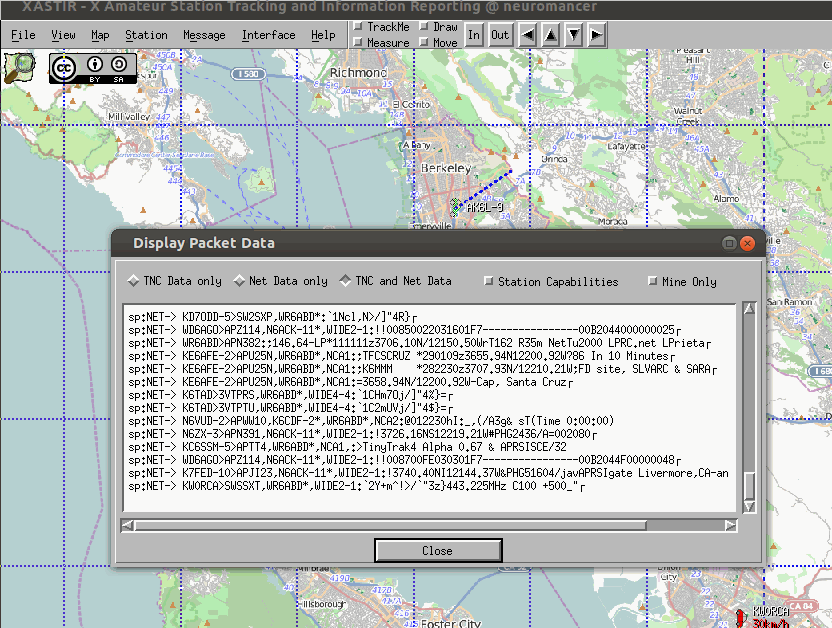
Xastir is a Linux based program that is used for plotting Automatic Packet Reporting System (APRS) data on a map. APRS is is type of packet radio system used by ham radio for real time local area digital communications. It is often used for sending messages, plotting positions on a map or providing weather station data.
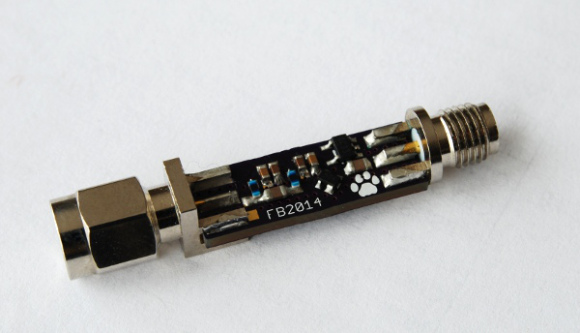
Recently a reader named Fabio wrote in to let us know about his new Low Noise Amplifier (LNA) design for the RTL-SDR. Fabio writes that his design is similar to the LNA4ALL, but is small enough to fit inline with an antenna. An LNA can help improve reception especially if you have long runs of coax cable between the antenna and RTL-SDR.
Fabio’s design requires that the LNA be powered inline with a bias-tee power injector circuit which can be easily built from an inductor and capacitor. But instead of building an external bias-tee he modified the RTL-SDR dongle itself to provide the required 5V output power from the USB bus. He writes that with this modification the RTL-SDR could also be used to power an active antenna.
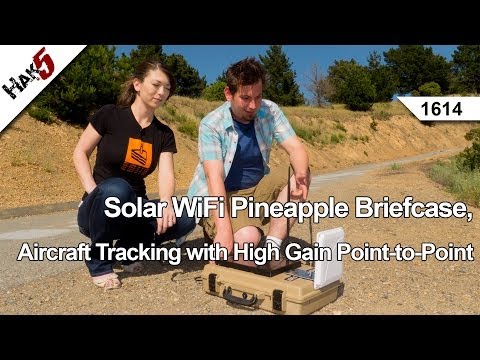
Over on YouTube Hak5, a popular electronics enthusiast channel has uploaded a video showing their project which involves creating a remote solar powered ADS-B receiver with the RTL-SDR. They used a WiFi Pineapple which is a mini Linux based embedded computer as a remote PC and sealed it in a weather tight briefcase with a lead acid battery and solar panel. They also used a high gain directional WiFi antenna on both the transmitting and receiving ends. With this setup the WiFi Pineapple is capable of running indefinitely transmitting ADS-B data using just the solar panel and battery.
They took their setup to the top of a hill near to their office and pointed the transmitting WiFi antenna towards their offices. Then back in the comfort of their offices they were able to remotely connect to the WiFi Pineapple and start a dump1090 webserver and connect to it using Virtual Radar Server.
Solar WiFi Pineapple Briefcase, Aircraft Tracking with High Gain Point-to-Point, Hak5 1614