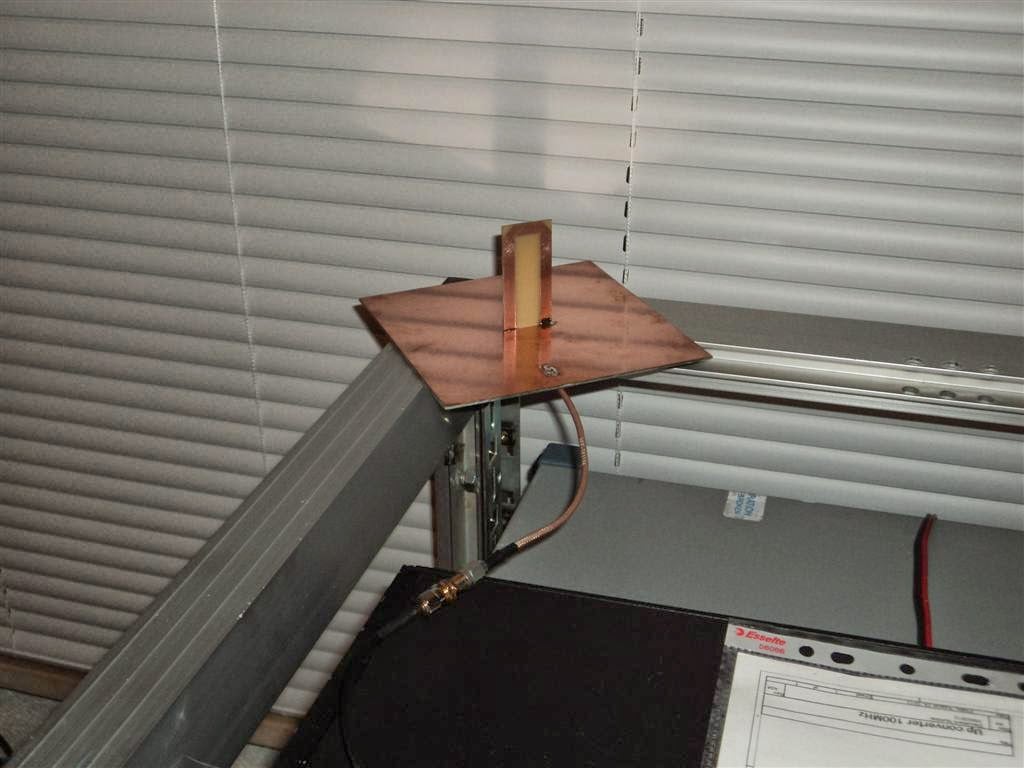
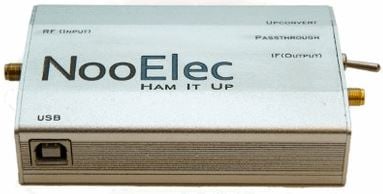
Adam, manufacturer of the LNA4ALL and LNA4HF is putting out an interest check for an ADS-B folded monopole antenna. The antenna can efficiently cover the 1030 MHz to 1090 MHz frequencies that are used by ADS-B.
The major advantage to Adams antenna is that it uses a DC grounded design, eliminating static build up problems that can potentially fry your LNA or RTL-SDR dongle.
If there is sufficient interest, Adam will sell the antenna for 20 Euros.
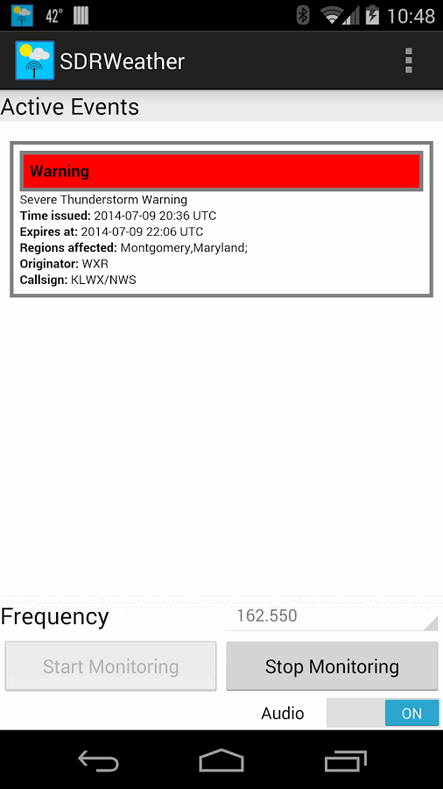
A new RTL-SDR Android app called SDRWeather has appeared on the Google Play Market. The new app allows you to listen to weather radio and decode EAS (Emergency Alert System) alerts. The app will only work in the US and Canada. More information about the app and its open source code can be found at http://sdrweather.thecongers.org.
This software along with a supported USB software defined radio turns your Android device to a portable weather radio.
Current Features:
* Listen to weather radio in the US/Canada.
* Decode EAS Alerts US/Canada
* Selectable Pre-defined Frequencies
* Alert Notifications
* Widget to display alerts
* Option to unmute audio when alert recieved
* FIPS and CLC Location Code Databases
* Event Code Database
* No internet connection required
Possible future features
* Switch to using rtl_tcp_andro
* Option to only show alerts if you are currently in the affected region
* Affected region map
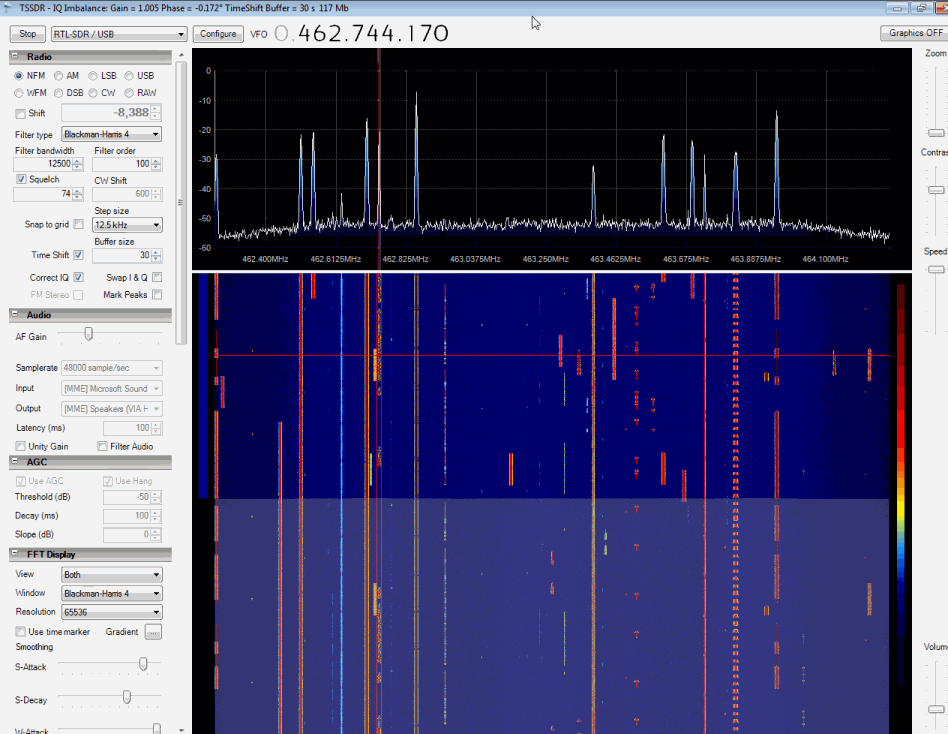
Last month two new SDR# plugins where released on rtl-sdr.ru. The first is TimeShift SDR. This plugin creates a buffer which allows you to listen to any signal at any point in time on the waterfall within the buffer time. It is very useful for catching signals that you might have otherwise missed by being too slow to click on them. Update: Turns out Timeshift SDR isn’t exactly new. But it has recently been updated to work on the latest SDR# releases.
Timeshift SDR# Plugin
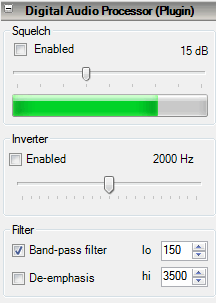
The second plugin is a Digital Audio Processor which adds in a squelch slider bar, an audio inverter, an audio band-pass filter and a de-emphasis filter.
Michele from Michele’s GNSS blog has posted his results with using a modified R820T RTL-SDR with Temperature Controlled Oscillator (TCXO) for GPS reception and decoding. The RTL-SDR is capable of tracking GPS even without TCXO but improved performance can be expected with a more stable oscillator. He notes that the R820T with it’s 3.57 MHz IF is ideally suited for GPS reception when combined with an active GPS antenna. Using this setup he was able to track GPS satellites and the Galileo E1B/C GNSS satellites as well.
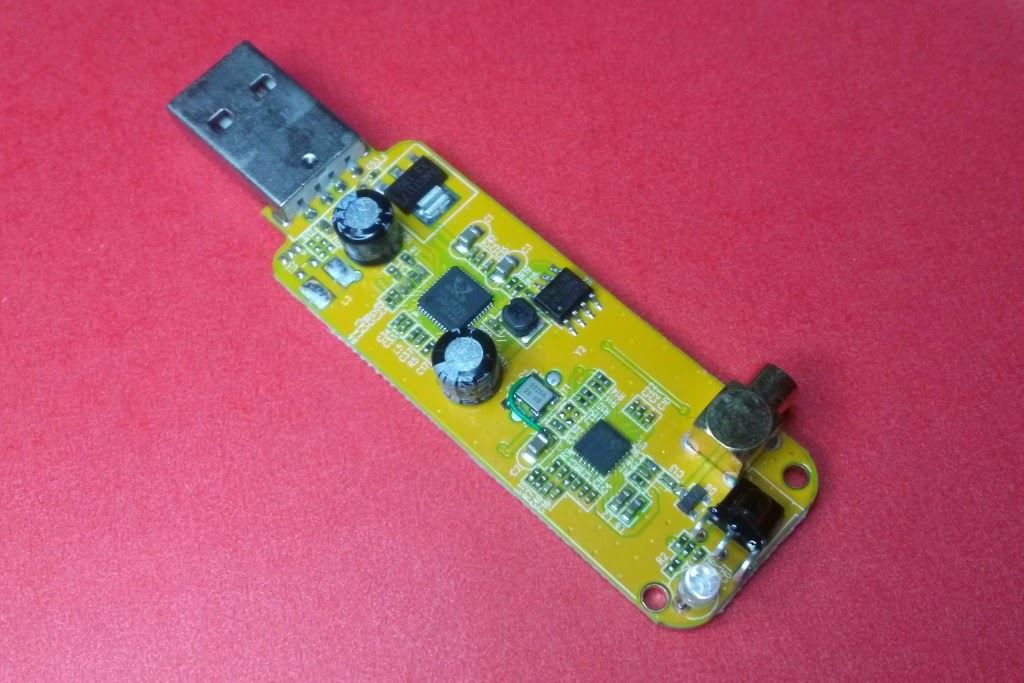
Michele modified his R820T RTL-SDR with a 28.8 MHz TCXO he obtained from a friend. It is however possible to purchase modified TCXO R820T dongles directly from the 1090mhz webstore.
Modified TCXO R820T RTL-SDR used for GPS reception.
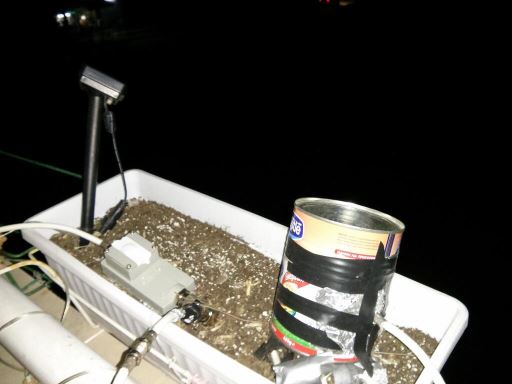
The Tiangong-1 station transmits a signal at 2232.15 MHz. To get this signal into a range receivable by the RTL-SDR gat3way used a LNB (Low Noise Block) to downconvert the frequency into one that the RTL-SDR can receive. Using this setup he was able to get a decent signal copy.
Cantenna setup for receiving the Tiangong-1 Chinese Space Station
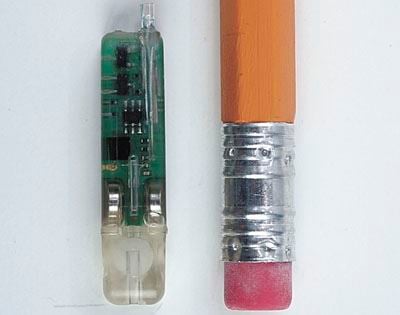
Blogger Dolske has recently posted about how he was able to receive and decode signals coming from inside his body. The signals originated from a Bravo Ph Esophageal monitor which is a small wireless sensor that is attached inside your body by a doctor. It is used to monitor pH levels within the body to help diagnose esophageal problems such as acid reflux. The monitor remains in the body for a number of days continually sending data to an external monitoring device which records and logs the pH data.
Bravo pH Esophageal Monitor
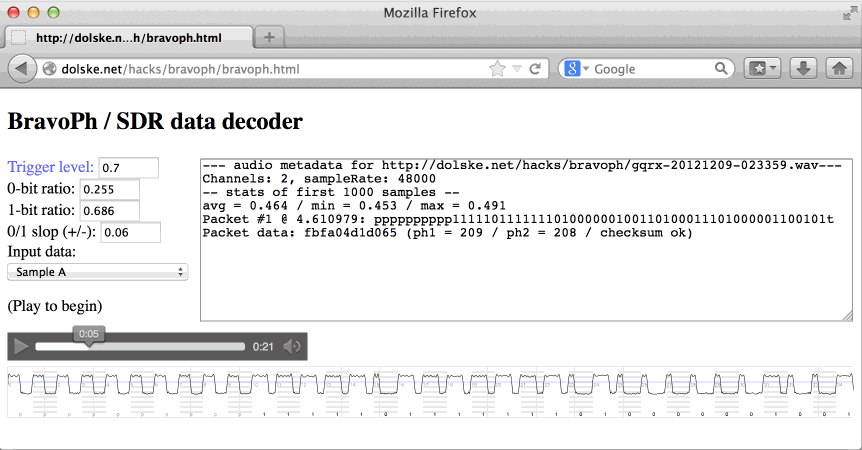
Using his RTL-SDR, Dolse was able to capture the wireless monitors signal using information he found about the monitor online. He found that the monitor used amplitude-shift keying and transmitted at 433.92 MHz. After capturing some signals with the RTL-SDR, he looked at the captured waveform in Audacity and was able to decode a few packets by hand. Finally, he went even further and wrote a Firefox browser based decoder which decodes and displays the pH data on screen.
Web Interface for Showing Decoded pH data from the Esophageal monitor.
Over on YouTube user Orlando Lima shows reception of the SO-50 Saudisat 1C satellite. Saudisat is an amateur radio satellite with an FM radio repeater. Orlando listened to the downlink frequency at 436.795 MHz using an RTL-SDR, Yagi antenna and Orbitron software to track the downlink frequency in SDR#.