Over on YouTube user Shortwave Bavaria has uploaded a video that demonstrates HFDL reception. HFDL is short for High Frequency Data Link and is a signal used by aircraft to communicate short messages with ground stations over long distances. It is often used in place of VHF ACARS when flying over oceans.
In his video Shortwave Bavaria uses a 26.5m end fed wire, and a Cloud-IQ SDR. But we note that any HF capable SDR can be used to receive HFDL. SDR-Console V3 is used as the receiver, and MultiPSK Professional edition as the decoder. Many HFDL messages contain location data, so aircraft can be plotted on a map and he demonstrates this using Google Earth. In the video he notes how amazing it is that flights from across the globe can be received with his set up.
Amazing Decoding HFDL reception with SDR over central Europe
The Hermes-Lite is able to be very low cost (less than $300) because it is based on the AD9866 chip which is a mass produced RF front end (LNA + ADC & DAC) used in cable modems. Because it is a mass produced commodity, the chip only costs approx. US$35-$25 on Mouser depending on quantity. The chip has a 12-bit 80 MHz ADC and DAC, meaning that if used without any analog mixer front end (like in the Hermes-Lite) it can receive the entire spectrum between 0.1 to 38 MHz all at once.
The Hermes-Lite is also a lot more than just the RF chip, as it contains a set of switched RF filters and a 5W power amplifier for TX. It also interfaces with a PC via Ethernet and has a built in FPGA for DSP processing.
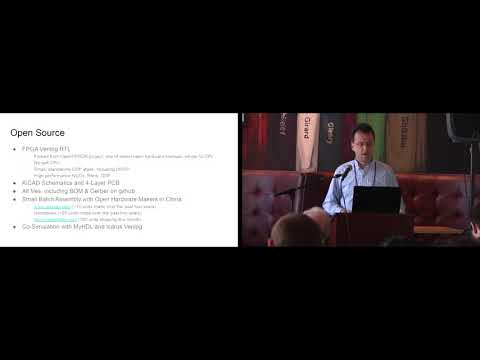
Recently Steve presented at the FOSSi Foundation Latch-Up conference on May 4-5, and a YouTube recording of his presentation is shown below.
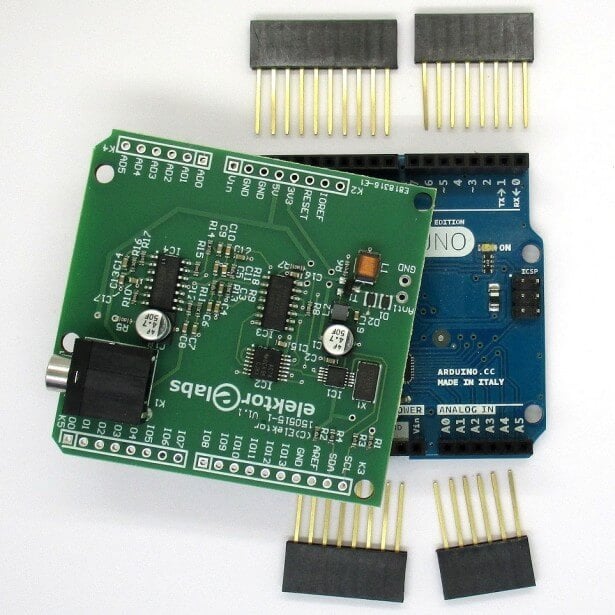
Elektor is a popular electronics magazine and hobbyist kit store. Recently they have published a book titled "SDR Hands-on Book" written by Burkhard Kainka. The book is intended as a companion to their Arduino SDR shield kit, which is a low cost module that allows you to turn an Arduino into a 150 kHz to 30 MHz capable SDR. It is based on the G8JCFSDR, which is an RF front end downconverter that allows a PC soundcard to be used as an SDR analog to digital converter.
Kainka's book goes over introductory topics such as shortwave reception, explains signal to noise ratio and interference, different types of antennas, software, digital modes, SDR measurements, receiving and finally WSPR and QRP transmission. If you're interested Jan Buiting also recently reviewed the book on the Elektor website.
Elektor are currently running a promotion and are selling the book + Arduino shield for a reduced price of €49.90.
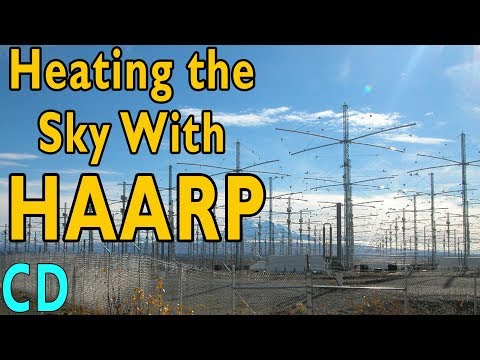
The famous HAARP (High Frequency Active Auroral Research Program) antenna array will be transmitting again from March 25 - March 28, 2019. HAARP is an antenna array which is used to perform experiments on the Earth's ionosphere and thermosphere by transmitting HF RF energy into it. With an HF capable receiver like the RTL-SDR V3 it is often possible to receive these transmissions from some distance away. As HAARP only rarely transmits, it is an interesting signal to catch when it is transmitting.
HAARP (High Frequency Active Auroral Research Program)
Ghosts in the Air Glow is an ionospheric transmission art project using the HAARP Ionospheric Research Instrument to play with the liminal boundaries of outer space.
Pairing air glow experiments in the ionosphere—false auroras creating soft, glowing spots in the sky—with SSTV images, audio and image signals articulated by artist Amanda Dawn Christie will be received and decoded via SDR (Software Defined Radio) equipment by amateur radio operators around the world, and streamed live online for audiences who do not have the equipment or expertise for reception.
“The facility, which was used by the military, has an air of mystery about it and has been the subject of many conspiracy theories over the years — that’s something I reflected upon when creating the piece.”
Ghosts in the Air Glow will consist of an hour-long transmission containing eight movements, each created for a specific frequency and intended to explore different concepts related to radio science and the HAARP site itself.
From Arctic wolves meeting the aurora to poetic texts written in Morse code and the NATO phonetic alphabet, the motifs covered by this transmission art work address issues related to military research, surveillance, political territories, ionospheric science, and conspiracy theories.
The first art transmission was sent earlier today, and if you missed it Amanda live streamed the signals being received on YouTube and the recording is available here. Future live streams will be available here. DK8OK has also posted about his reception on his blog.
Further transmissions are scheduled every day until March 28, and the transmissions schedule is available here. Each transmission consists of several 'movements', which consist of differing antenna array arrangements, frequencies being used, and signals being transmitted. If the text formatting of the movements is a bit difficult to read, Reddit user
grink has formatted it into a nice table in his post. To follow the transmissions it would be also wise to follow Amanda on Twitter, where she is posting the most up to date transmission frequencies.
The idea for the project came about when Christie met Christopher Fallen, the chief scientist at HAARP, at a hackers conference earlier this year. Fallen, who is an amateur radio operator, was intrigued by Christie’s proposition to use the IRI to create site-specific transmission art.
He agreed to open the facility to her, and when she gained backing from the Canada Council for the Arts, Ghosts in the Air Glow officially became the first Canadian-funded project to take place at HAARP.
“Art and science are often seen as separate efforts but they actually share many of the same inspirations and techniques. I’m excited to see HAARP, a unique scientific instrument, used for a comparably unique artistic performance,” says Fallen.
“Amanda’s project will be a valuable contribution to the 50-year collection of scientific work in the field of ionosphere radio modification, and also to the brand new collection of artistic work using powerful high-frequency radio transmitters and the upper atmosphere — it’s art directed from the ground but created in space!”
Interdisciplinary artist Amanda Dawn Christie. Photo by Concordia University
If you prefer a video explanation of the project, YouTube user OfficialSWLchannel has prepared a video which is shown below.
HAARP tests and Ghost in the Air Glow from Amanda Dawn Christie
Vacuum tubes are not typically found in software defined radios, but this interesting mix of old and new technology by Mirko Pavelski uses one in it's front end. The way it works is that the analogue radio circuit receives a small range of spectrum, and then the tube acts as a mixer, converting that spectrum down into audio frequency range which can be heard by a computer sound card.
The sound card acts as the ADC, digitizing the signal, and then the "SDRadio" software performs the final filtering and demodulation of a narrowband signal in software. This is the same concept used by other HF sound card SDRs such as the Softrock, although those of course do not use tubes in their design. Mirko writes:
Simple to build receiver made according to the instructions of Burkhard Kainka : http://www.b-kainka.de/bastel100.htm. I made it with EF80 tube instead EL95 and it works great. It is powered by a 7.4V lithium-ion battery followed by a 7806 stabilizer, so we get 6v for tube heating and there are no problems with 50 Hz hum. Тhe resonant circuit is made of strong coil with 20 turns of 1.5 mm thick wire wound on a PVC tube with 18 mm diameter. At the cold end of the resonant circuit is an antenna coil with two turns. At the output of the radio, I connecт 2 transistor preamplifier and cheap amplifier module in D class. So we get battery powered tube АМ radio. Using the potentiometer we can select between AM or SDR mode of operation.
In SDR mode, we need to connect the output of the radio to "line in" in sound card of the computer. Then we use some of the free software for example "SDRadio" from Alberto I2PHD. Тhe receiver has very good frequency stability which drifts less than 1 Hz per minute. Тhis is important if we want to decode DRM signals. In good HF propagation conditions I receive BBC World service DRM radio (3995MHz) with 16dB SNR here in Ohrid (41.1231° N, 20.8016° E). This little radio, with a long wire antenna and good grounding, gives us a lot of fun.
YouTuber jmhrvy1947, has recently uploaded a number of videos giving an overview of how he built his own HF SDR transceiver using what he calls the “Lego build method”. The idea of the Lego build method was to build a transceiver with parts picked and pulled from eBay so that it could be easily reproduced by others. There are a few scratch made components however those designs are available on his GitHub page. The SDR only functions within about 100 kHz of spectrum at a time however for amateur radio HF work this is more than sufficient. Bare bones the radio puts out a mere 100 mW and although the output power is small, he’s made contacts up to 450 miles away using CW (Morse code). You also have the option of adding an amplifier on your output if you are looking for more power than that. His final revision currently puts out 100 Watts.
Using modified versions of fldigi and Quisk he is able to easily work various digital modes and sync the transmitter and receiver together. The only real down side to this radio is that you must switch out your receive and transmit filters whenever you wish to operate on different bands, a process that really only takes a moment or two.
Check out his videos on the project – it’s really amazing to see what can be done with a small budget these days in radio and with how far software defined concepts have brought us.
DIY SDR CW Xcvr Project
In the video below you’ll see an explanation of the software involved in this build.
Over on his blog, DXer OH2-2192 was frustrated by lots of local electrical noise showing up on the HF bands on his Airspy + Spyverter SDR receiver. He discovered that the majority of the noise he was seeing was coming from the switch mode power supplies that power the electronic devices used in his setup. Switch mode power supplies are very common in the modern world, with almost every electronic device using one to efficiently convert wall AC into DC power. However, they convert power by rapidly switching on and off, and these on/off square wave pulses cause a lot of RF noise especially on the HF spectrum.
Instead of changing to noise free linear regulators which are expensive, very heavy and big, OH2-2192 decided that he'd try creating a Faraday cage shield out of metal mesh to enclose all his switch-mode power supplies. Using a simple AM loop antenna and Airspy's Spectrum Spy software he measured the amount of noise produced by a switch-mode supply placed inside and outside of the cage. The results he saw were very promising with the shielded supply eliminating the noise almost entirely.
Faraday Cage Shield for Switch Mode Power Supplies (Right image shows the results of a switching supply placed outside and inside the Faraday cage)
The SDR is advertised to cover HF + 6m (50MHz) and includes two 16 bit 50 ohm input ADCs and two 14 bit outputs. Based on the Xililinx Zynq 7020 FPGA running an ARM cortex A9 processor it’s plenty powerful to handle the various modes frequently seen in the amateur bands and then some while supporting an impressive 122.88 MS/s sample rate.
The RedPitaya – 3D Rendering
This hardware is also fully compatible with the HPSDR software platform which is an open source project for amateur radio SDR operation.
While this radio is built with amateur operation in mind, it is still a very capable platform that could be used for experimentation albeit with a more restricted frequency range that what you may be used to with traditional software defined radios.
The radio retails for $499 euros and will be available for pre-order from RedPitaya until March 31st of 2019.