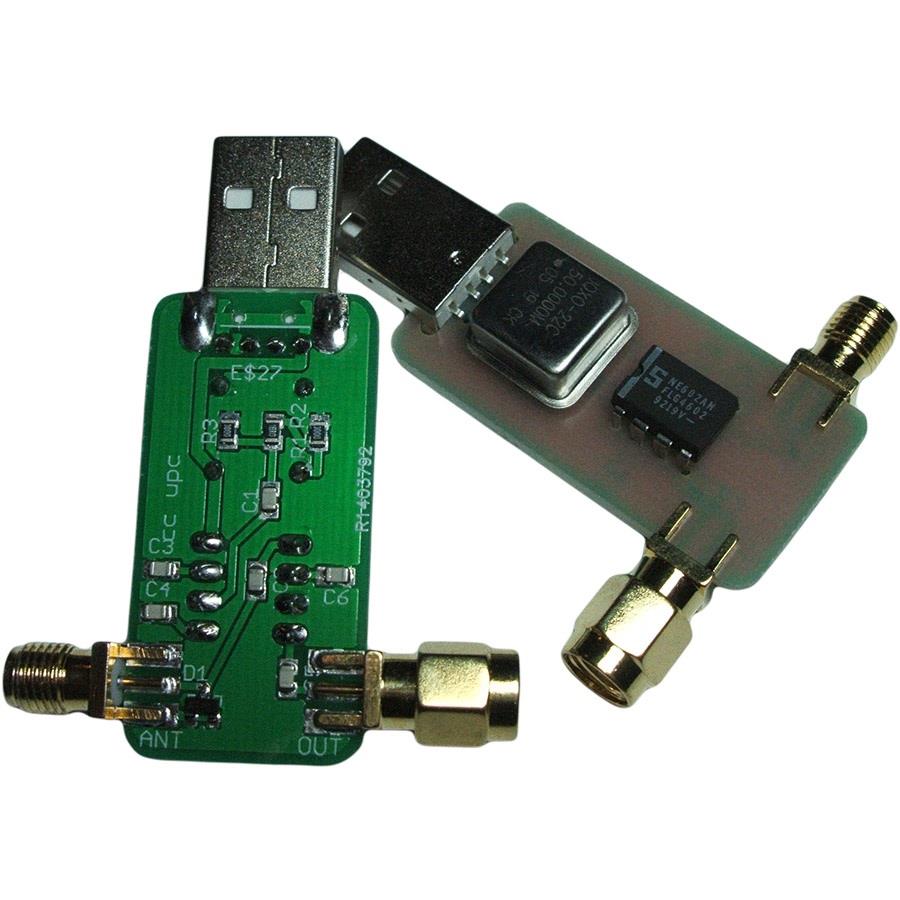
A new super budget HF upconverter has appeared over on cosycave.co.uk, a UK based trading site. It is currently priced at £9.99. The budget HF upconverter uses a 50 MHz oscillator and an NE602AN double balanced mixer and oscillator integrated circuit. It is only suitable for use on the R820T and is incompatible with the E4000.
This circuit appears to have no preselection or filtering circuits.
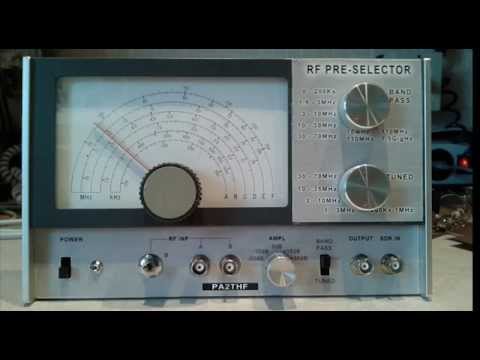
Over on YouTube user Theo Faber has uploaded a video showing his adjustable multiband HF preselector project for his RTL-SDR dongle. The preselector covers the entire HF band. Theo designed and built his own homemade upconverter for this project as well.
Preselectors on the RTL-SDR can vastly improve reception quality. Without preselection, noise and strong images of other nearby stations can cause strong interference.
My project ‘pre selector’ for wideband radios and in particular the popular tv-sticks than can be used for SDR reception. The sticks are very cheap and the software free available on the internet. SDR Sharp in this case, is operating stable under XP and W7. Sticks are sensitive, however the input level can only vary +- 20dB. The sticks are easely overloaded and will produce cross and intermediation. So you need in front of the stick / converter band pass or tunable filters. Hopefully this inspired you to build your own set of filters, to fully benefit from the perfect performing of this affordable SDR.
for more info contact me on: t.faber87__AT__upcmail.nl
kind regards and 73’s
Over on YouTube user mutezone has posted a video comparing the RTL-SDR with upconverter against a Softrock Ensemble II software defined radio. The Softrock Ensemble II is an SDR dedicated to the HF frequencies and is thus expected to have better performance for that purpose. Mutezone writes
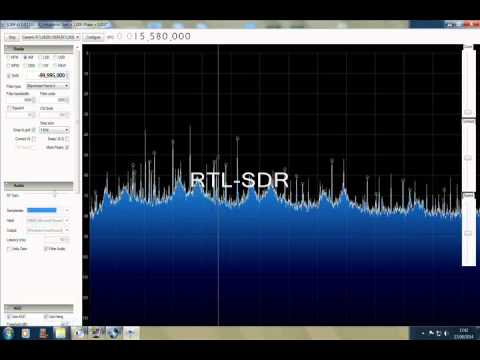
A performance between the Softrock Ensemble II vs the RTL-SDR (R820T) on shortwave. Here we are trying to see which one is best at receiving AM broadcasters. Both SDRs were using the same longwire antenna connected to an ATU (Antenna Tuning Unit).
Although I know this comparison is somewhat unfair, since the RTL-SDR is not meant for shortwave & the Softrock is, it is to show that there is a difference in performance, even though the RTL-SDR has a much wider frequency range & cannot be beaten when it comes to value for money. My opinion is that if you want an SDR that should deliver on HF / Shortwave performance, then go for a dedicated one like the Softrock, Afedri, SDR-IQ or any others that do the same job on the market. Even when using a decent HF Upconverter, the RTL-SDR will still not match the performance of more upmarket HF SDRs.
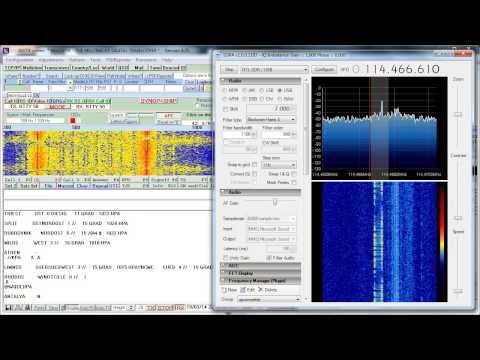
Over on YouTube user k2nccvids has posted two videos showing how he was able to decode High Frequency Data Link (HFDL) packets using the RTL-SDR, Ham-it-up upconverter, MultiPSK and HFDL Display. HFDL is a service similar to ACARS but sent over HF frequencies. It is used to sent short messages to and from aircraft and ground stations.
In the first video k2nccvids uses MultiPSK with the RTL-SDR directly and also uses the add on software HFDL Display to more clearly view received HFDL packets. In the second video he uses SDR-CONSOLEv2 to monitor three HFDL frequencies simultaneously, with MultiPSK and HFDL Display still being used for decoding and display.
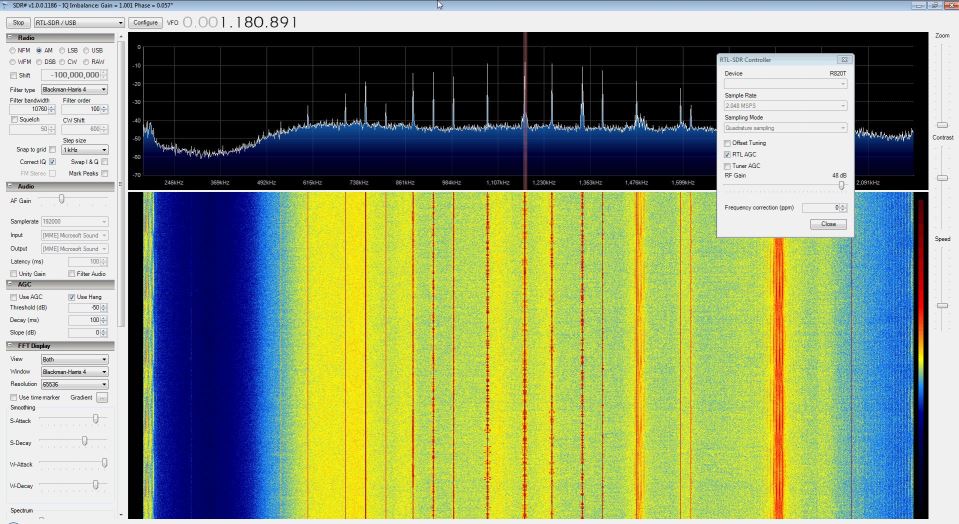
The direct sampling mod is a hardware modification to the RTL-SDR which allows it to receive HF frequencies between 0-14.4 MHz without the need for an upconverter. It works by connecting an antenna directly to the RTL2832U chip, thus bypassing the tuner. Teejez’s modification tells the RTL-SDR to bypass the tuner in software, allowing antennas to be connected to the normal antenna port. HF reception with the experimental driver is very poor in comparison to the direct sampling hardware mod or an upconverter, but even so Jengal was able to receive AM Radio, an SSB ham radio signal and an HF weather report with a simple longwire antenna.
To use the modified dll, simply download it from this link, rename it to rtlsdr.dll, and replace the original rtlsdr.dll in the SDR# folder. Then connect an HF antenna to the normal antenna port and in SDR# tune to a frequency between 0-14.4 MHz. Next turn ON the RTL AGC option in the configure menu. Jengal replaced the function of the RTL AGC option with the direct sampling mod. He found that best reception occurred when he set the gain to 48 dB.
No Hardware Mod Direct Sampling in SDR# Receiving AM Radio
YouTube user Tiago Sousa shows how he was able to receive weather Radioteletype (RTTY) data using the RTL-SDR, an upconverter and MultiPSK. Weather RTTY is broadcast by weather services such as the Deutscher Wetterdienst (DWD) which is broadcast from Hamburg, Germany. It is intended for people at sea.
Tiago used an RTL-SDR with upconverter and an 11 meter long wire antenna. For the software he used SDR# and piped the audio to MultiPSK.
Weather RTTY - DWD Hamburg heard in Portugal
Tiago has also uploaded a second video showing him receiving Weatherfax with the same setup. Weatherfax is a signal that transmits a fax image showing weather patterns.
Adam the manufacturer of the LNA4HF has recently uploaded a video showing how to easily build an upconverter from the LNA4HF. The LNA4HF is a low noise amplifier intended for use with SDRs like the RTL-SDR. The video shows how to connect up two components, the Mixer and Oscillator which are required to create the upconverter.
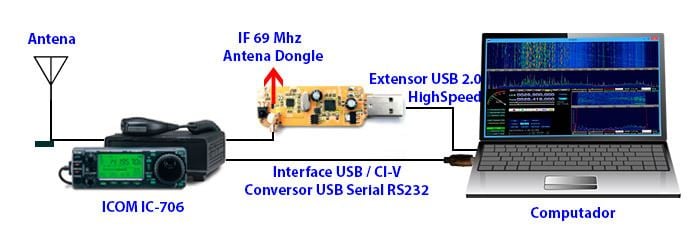
He shows instructions on how to perform the required modification to get the IF output of the ICOM, and also shows how to interface the PC with the ICOM so that it may be controlled directly via HDSDR.