Back in November last year we posted about the possibility of an “LNA4HF” low noise amplifier (LNA) for the HF bands being made available for sale. The LNA4HF is now available for purchase.
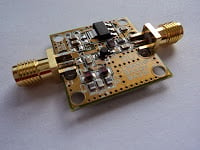
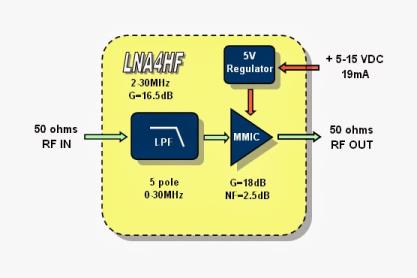
The LNA4HF is a low noise amplifier with built in low pass filter that runs on a 6-12 V power supply and covers a frequency range of 150khz to 30MHz, with a 18-20 dB gain and 1-2 dB noise figure. It costs 20 Euros. The low pass filter can also be disabled with a small board modification which will allow the amplifier to be useful at up to 2 GHz.
LNA4HFLNA4HF Block Diagram
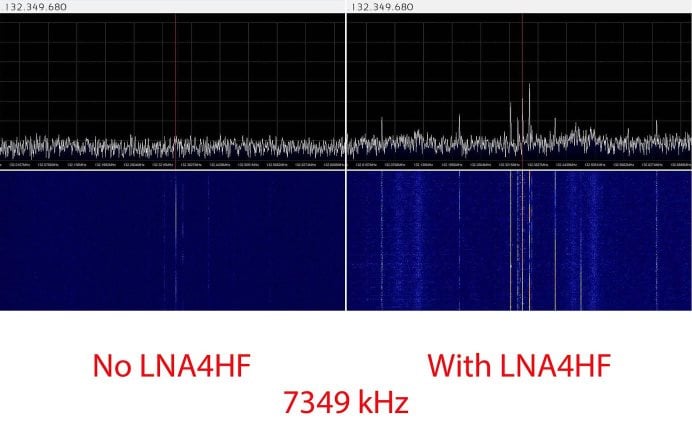
Akos from the SDR for Mariners blog has reviewed the LNA4HF on his latest post. His results show that the low pass filter significantly reduces broadcast FM interference and that the amplifier also increases signal strength by around 20 dB as advertised.
A few days ago we had a post about a modified RTL-SDR dongle for sale which has the low quality 28.8 MHz oscillator replaced with a high quality 28.8 MHz temperature controlled oscillator.
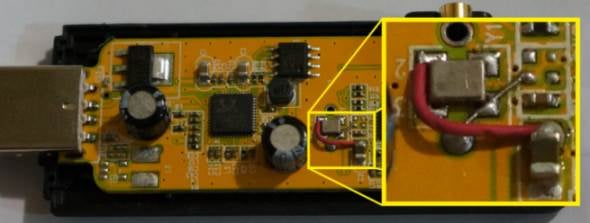
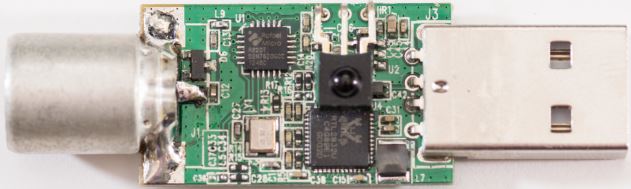
Nobu Saitou, the creator of these dongles has sent us a sample to review. On the inside of the dongle the 28.8 MHz crystal has been removed, and replaced with a 28.8 MHz temperature controlled oscillator. The desoldering of the old oscillator and soldering of the new TCXO appears to be neatly and professionally done.
TCXO RTL-SDR Dongle Photo
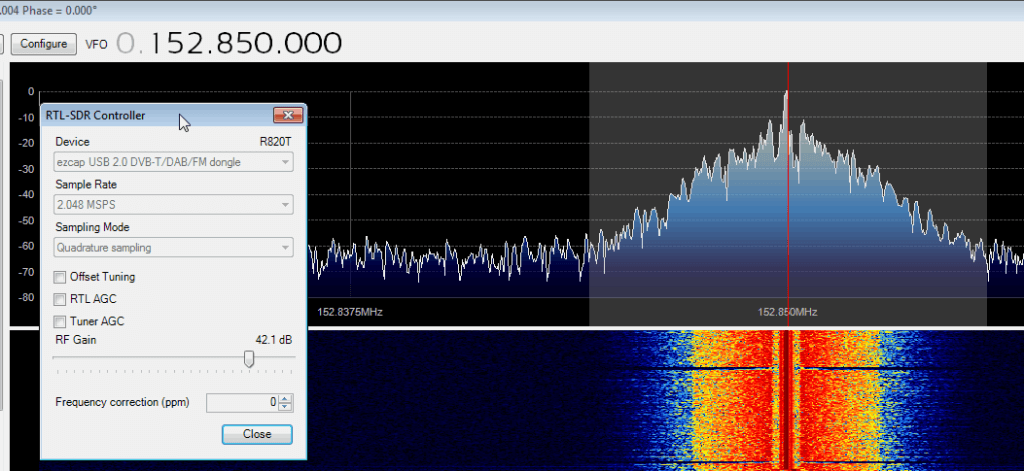
After plugging in the dongle and firing up SDR#, we tuned to a known trunking control channel at 152.850 MHz and measured the frequency offset. It turns out that with the TCXO no frequency correction was required at all. I believe that from Nobu’s blog post, this oscillator can have a max deviation of +-2 PPM, which is incredibly small.
TCXO Dongle with Zero PPM correction required
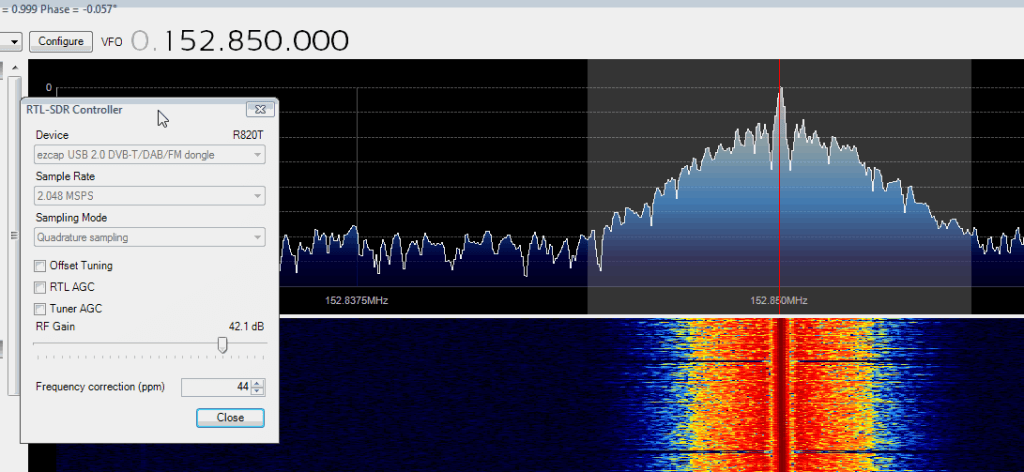
We compared this result to a standard dongle with the original oscillator and found the frequency offset required to be 44 PPM.
Standard Dongle Frequency Offset
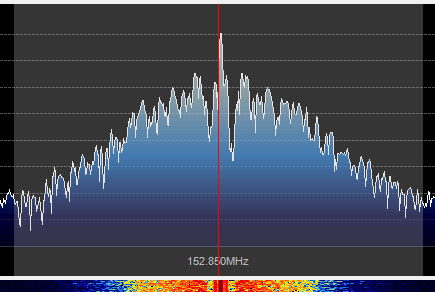
As the dongle heats up from use, the oscillator will experience thermal drift, causing the frequency offset to change. The TCXO should be immune to this problem due to it’s temperature compensation circuitry. To test the temperature compensation, we cooled both a TCXO dongle and a standard dongle down in a refrigerator first to simulate cool climate conditions. We then measured the change in PPM offset after 30 minutes of dongle operation. As expected, the TCXO had almost zero drift after 30 minutes (<<1 PPM), whereas the standard dongle had a drift of about 6-7 PPM (approx. 1 KHz drift).
TCXO Oscillator: Frequency drift after 30 minutesStandard Oscillator: Frequency drift after 30 minutes
The results of this simple test show that the TCXO used in these modified dongles is an accurate and stable frequency source as was expected. If you want one of these dongles they are for sale at the creators Amazon Store (direct link to TCXO product here). Currently it seems that Saitou’s products cannot be sent abroad outside of Japan, but he recommends this agent service for ordering internationally.
Edit: The TCXO can now be bought internationally from 1090mhz.com
One dongle uses the FC0013 tuner, and the other uses the R820T chip. Gough opens the dongles up and inspects their electronics and gives his opinions on the design.
One of the alternative R280T models with a PAL antenna connector
Akos from the SDR for mariners blog has written a review on the SDR UP-100 upconverter. The SDR UP-100 is a 50 USD upconverter for the RTL-SDR and similar software defined radios which is made by the same person behind the LNA4ALL low noise amplifier. Upconverters allow the RTL-SDR to receive between 0 and 30 MHz, where ham radio, military, marine and many other interesting signals exist.
In the review Akos tests the SDR UP-100 with a 6 meter random wire antenna and an RTL-SDR. His results show that the upconverter works well as expected. In the future he hopes to compare the SDR UP-100 with the Ham-It-Up Upconverter from Nooelec.
His results show that the LNA works very well. Akos tested the LNA4ALL on multiple frequencies and applications including commercial radio, airband, NOAA weather satellites, AIS and ADSB. As an example of the improvement, his ADSB reception was improved from 83km to 94km. In his review Akos also shows how to provide power to the LNA, and puts the LNA through some simple stress tests.