Category: SDRplay

Using the SDRplay and SDRTouch on an Android Mobile Phone

A few months ago the popular SDRTouch software for Android added support for the SDRplay RSP. The RSP is a $149 USD software defined radio with a tuning range of 100 kHz to 2 GHz and a 12 bit ADC.

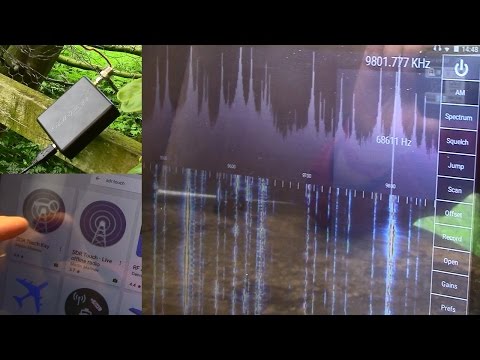
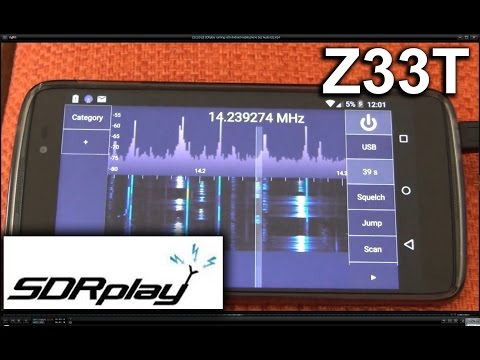
Over on YouTube user Mile Kokotov has uploaded a video showing the SDRplay RSP running in SDRTouch. He uses it to listen to the 14 MHz ham band in SSB mode and finds that reception is clear and that it is fairly easy to tune around.

In order to use the RSP with an Android device you will need a fairly modern phone and a USB OTG cable. Ideally try to get a USB OTG cable with an external power port as the battery can drain quite fast when using the SDR. SDRTouch also supports the RTL-SDR.

SDRplay running with Android mobile phone

SDRplay receiving a WPX CW CQ Contest

Over on YouTube user Mile Kokotov has uploaded a video showing him receiving a WPX CQ CW (morse code) contest on his SDRplay RSP. The SDRplay RSP is a $149 USD software defined radio with a tuning range of 0.1 – 2000 MHz, 8 MHz maximum bandwidth and 12-bit ADC.

In the video Mile shows that the SDRplay is capable of receiving many strong closely spaced CW signals at the same time as weaker ones without overloading. He uses the HDSDR software and a large 43.1m long delta loop antenna strung up in his backyard.

SDRplay receiving WPX CW Contest 2016

Leif SM5BSZ’s Testing of the SDRplay

Over on YouTube Leif (SM5BSZ) has uploaded two videos showing some of his tests with the SDRplay. Leif is fairly well known within the SDR community for writing the program Linrad and for doing various tests on different SDR’s on YouTube and his website.

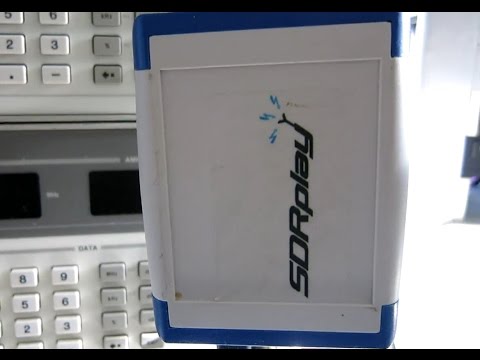
In his first video he first shows that the SDRplay has some susceptibility to USB noise and FM broadcast coming in through the USB cable which can cause some problems. He first shows that a quick fix is to simply coil up the USB cable to create a choke, and that a better fix is to wrap the SDRplay in aluminum foil. Later in the video he also tests dynamic range and reciprocal mixing.

In his second video he shows how he modifies his SDRplay unit to be properly shielded to avoid the USB and broadcast FM interference.


RTLSDR4Everyone Review: SDRplay RSP vs RTL-SDR

Akos of the rtlsdr4everyone blog has recently written up a comparison of the RTL-SDR and SDRplay. The SDRplay is a $149 USD software defined radio with a 100 kHz to 2 GHz frequency range, a 12-bit ADC, and up to 8 MHz of bandwidth. It now competes heavily with the $99 Airspy Mini which is a similarly specced SDR.

Akos compares the two units and comes to the conclusion that the RTL-SDR is still the best choice for beginners, but that the SDRplay is definitely a good choice if you have good antennas in place and if the receiver is the major bottleneck in your setup.

In his review he goes over several points covering the costs involved, aesthetics, customer support, PC hardware requirements, setup, operation and finally reviews the performance of the SDRplay. His results show that the SDRplay generally receives much better than the RTL-SDR, but has some problems with broadcast FM imaging.

Also check out our own previous review which compared the SDRplay, Airspy and HackRF here.

Akos' test shows that the RSP has some problems with FM broadcast imaging.
Akos’ test shows that the RSP has very good reception, but has some big problems with strong signal imaging.

SDRplay Updates: Android Support, ADS-B Decoder Upgrades and Acquisition of Studio1 Software

The SDRplay team have been hard at work during the last few weeks. First they announced beta support for Android via SDRtouch, then they announced an improved ADS-B decoder, and finally they have just announced their acquisition of Studio1. 

The SDRplay is a 12-bit software defined radio with tuning range between 100kHz – 2 GHz. Many consider it along with the Airspy to be the next stage up from an RTL-SDR dongle. 

Android Support

The author of SDRTouch on Android recently announced support for the SDRplay. SDRTouch is a Android program similar in operation to PC based software like SDR#. To access the beta you can sign up at this link. Currently there is support for up to 2 MHz of bandwidth.

SDR Touch demo on Android device using SDRplay RSP

Improved ADS-B Decoder

Back in March the SDRplay team released ADS-B decoder software for their SDR with the promise of improving its performance in the near future. 

Recently the SDRplay team released an updated version of their ADS-B decoder for the Raspberry Pi which now fully utilizes the full 12-bits of the ADC and takes advantage of the full 8 MHz bandwidth. Jon, the head of marketing at SDRplay writes the following:

We now have an updated beta version of ADS-B for both the Raspberry Pi 2 and 3. This is based upon the 16bit Mutability version of dump1090 developed by Oliver Jowett and unlocks the full 12 bit performance of the RSP1. People should see a significant performance improvement over the dump1090_sdrplus version, which was based upon 8 bit code. The latest beta version can be downloaded in binary form from http://www.sdrplay.com/rpi_adsb.html . Should anyone have questions or feedback, please contact [email protected]

We plan to eventually compare the SDRplay with the Airspy and RTL-SDR on ADS-B performance. If you are interested we previously did a review of the SDRplay, Airspy and HackRF here, but as the SDRplay did not have ADS-B back then, that particular test was not done.

Acquisition of Studio1 SDR Software

The last major piece of news is that SDRplay have now acquired the Studio1 SDR software. Studio1 is a paid SDR program, similar in nature to SDR#/HDSDR/SDR-Console. Like HDSDR, Studio1 is a spinoff from the old WinRad software. Their press release reads:

SDRplay Limited has today announced that it has reached an agreement with Sandro Sfregola, (formerly CEO of SDR Applications S.a.s.) to acquire all Rights, Title and Interest in Studio 1 a leading software package for Software Defined Radio applications.

Jon Hudson, SDRplay Marketing Director said: “We are delighted to have reached this agreement with Sandro to acquire Studio 1. Studio 1 is the perfect complement to our SDR hardware products and gives us the ideal platform to deliver a complete class leading SDR solution for our customers. We look forward to working with Sandro and further developing Studio 1 to unlock the full capability of our current and future products”.

Hudson added: “Studio1 has established a strong customer base with users of many other SDR hardware products. Studio 1 will continue to be available as a stand-alone product from WoodBoxRadio http://www.woodboxradio.com/studio1.html for the foreseeable future , but we also look forward to further developing Studio 1 to specifically benefit present and future owners of our products”

Sandro Sfregola added: “I am very pleased to have reached this agreement with SDRplay. The long term future for SDR lies in complete end to end solutions and I feel the SDRplay RSP combined with Studio 1 software gives users an outstanding combination of performance and affordability”.

About Studio 1:

Studio1 was developed in Italy by SDR Applications S.a.s. and has hundreds of happy customers around the world.Studio 1 is known for its user friendly stylish GUI, CPU efficiency and advanced DSP capabilities, including features notavailable on other SDR software packages.

www.sdrapplications.it

About SDRplay:

SDRplay limited is a UK company and consists of a small group of engineers with strong connections to the UK Wireless semiconductor industry. SDRplay announced its first product, the RSP1 in August 2014

www.sdrplay.com

We believe that this is a good move for SDRplay, as one of the major issues with the RSP SDR was the lack of decently supported software.
Studio1_banner2


Comparing the FunCube Dongle Pro+, Airspy/SpyVerter and SDRplay on Shortwave

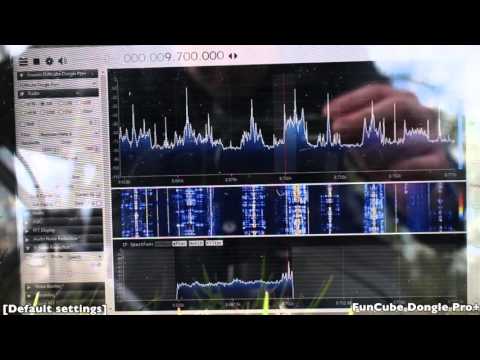
Over on YouTube user London Shortwave has uploaded a video showing a comparison of the FunCube Dongle Pro+, Airspy with SpyVerter upconverter and SDRplay on shortwave reception. The Funcube, Airspy and SDRplay are all $150 – $250 USD software defined radios that have much higher performance compared to the RTL-SDR.

In the video he tests the reception of Radio New Zealand International (RNZI) at 9400 kHz using a 6m copper wire dipole and 9:1 matching balun raised 2m off the ground. He did not use any external antenna preselectors. The RNZI station is weak and appears to be almost blocked by a stronger station so reception of the station is difficult.

In his results it appears that the FunCube and Airspy/SpyVerter are able to clearly receive the RNZI station, but the SDRplay has trouble with images of other stations mixing into the signal.

If you are interested in a comparison of the Airspy, SDRplay and HackRF we previously did our own review here.

Portable SDR Shootout Part 1

ADS-B Decoder for the SDRplay RSP Now Available

A new ADS-B decoder for the SDRplay RSP has recently been released by the SDRplay programmers. The SDRplay is a $149 USD software defined radio with a 0.1 – 2000 MHz range, 12-bit ADC and up to 8 MHz of bandwidth. In a previous review we compared it against the Airspy and HackRF.

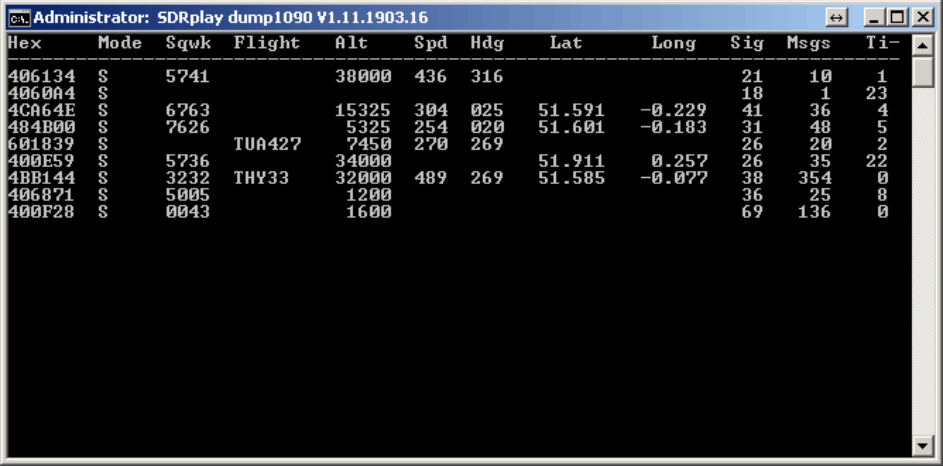
The SDRplay team have based their new decoder on the multi-platform compatible dump1090 code, which is an ADS-B decoder that was originally written for the RTL-SDR. The Windows version can be be downloaded from http://www.sdrplay.com/windows.html, and the code for other platforms can be downloaded from https://github.com/SDRplay.

To help with the installation procedure the SDRplay has also provided a manual (pdf) which shows exactly how to download and set up the required ADS-B software on a Windows system. They also write that the software is fairly new and is still being optimized for best performance.

In the future after the software is further optimized we hope to compare the RSP against the RTL-SDR and Airspy on ADS-B reception.

The SDRplay compatible version of dump1090 deceiving ADS-B data.

Shielding the SDRplay RSP with Copper Tape

The SDRplay RSP is a $149 USD software defined radio that many consider as a next step upgrade from the RTL-SDR. See our recent review for a comparison between the Airspy, SDRplay RSP and HackRF.

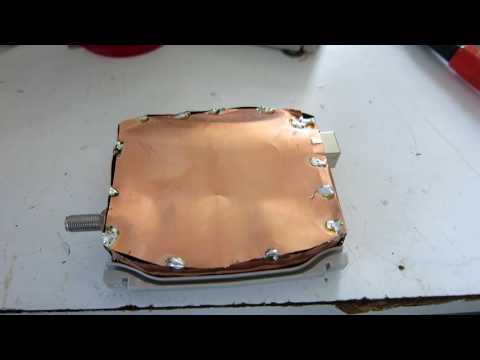
One problem with the SDRplay RSP is that it comes in an unshielded plastic enclosure. This means that strong interfering signals can pass through the enclosure and cause interference, making any filtering done on the antenna less effective. Recently Tom Naumovski wrote in to us to let us know that he has been experimenting with a simple fix that involves shielding his RSP with adhesive copper tape. (Tom carefully notes that doing this may void the warranty). Tom simply wraps the plastic enclosure with conductive copper tape, making sure that electrical contact is made between the copper shielding and RSP ground (e.g. making sure the RSP USB and SMA ports make electrical contact with the copper tape)

Copper tape shielding for the RSP.

After shielding the RSP, Tom tested the shielding effectiveness by using his shielded RSP with no antenna connected to try and pick up an interfering tone transmitted by his HackRF SDR. He collected the results in a pdf file. The results clearly show that the shielded RSP does not pick up, or significantly reduces the power of the HackRF's interfering tone.

If you want to try this yourself, Tom writes that copper slug barrier tape found on eBay is the tape he used. Tom also points out the discussion on the Facebook SDRplay group thread he posted where other users have been using aluminium tape or alternative copper tape products.

We note that this same shielding technique can also be used to improve unshielded RTL-SDR dongles.