RTL-SDR Based Passive Aircraft Radar

Over on YouTube we’ve discovered a video from earlier in the year showing the RTL-SDR being used as a passive aircraft radar. This is different to ADS-B which is a type of active radar. A passive radar works by using a very strong radio signal from a readily available source such as a TV or FM radio transmitter and detecting the reflections from aircraft.

A RTL-SDR based passive radar system can be built by connecting two RTL-SDR dongles to a single clock source and by using two directional antennas.

We’ve also posted about RTL-SDR based passive radar being used to track aircraft here and here in the past. Another post about coherent multichannel RTL-SDR receivers can be found here.

Updates to Shielding the RTL-SDR with an Aluminium Case

A few weeks ago we posted about will1384 who had bought an aluminium case from Ebay and was using it to shield his RTL-SDR. After running multiple tests, will1384 discovered that the aluminium case was actually not helping with shielding performance at all. Oddly his results showed that the aluminium case was actually increasing the amount of noise received. Will has been updating his imgur album with noise analysis results from rtl_power scans over the entire spectrum.

In his latest tests he tried a metal outlet box as the case and saw improved results over the aluminium case. His conclusions seem to indicate that the aluminium box is not a good EMI shield. We’re not sure why he found these results, but one theory might be that because the aluminium case is anodized, it has a non-conductive surface, which might cause poor grounding.

RTL-SDR in a Metal Outlet Box

Reverse Engineering a Wireless Alarm with the HackRF

Wireless alarms consist of multiples devices such as sensors and detectors which all communicate to a central control box via RF signals. Blogger “fun over ip” decided that he wanted to understand the design and security measures used by his Verisure wireless alarm by reverse engineering the system.

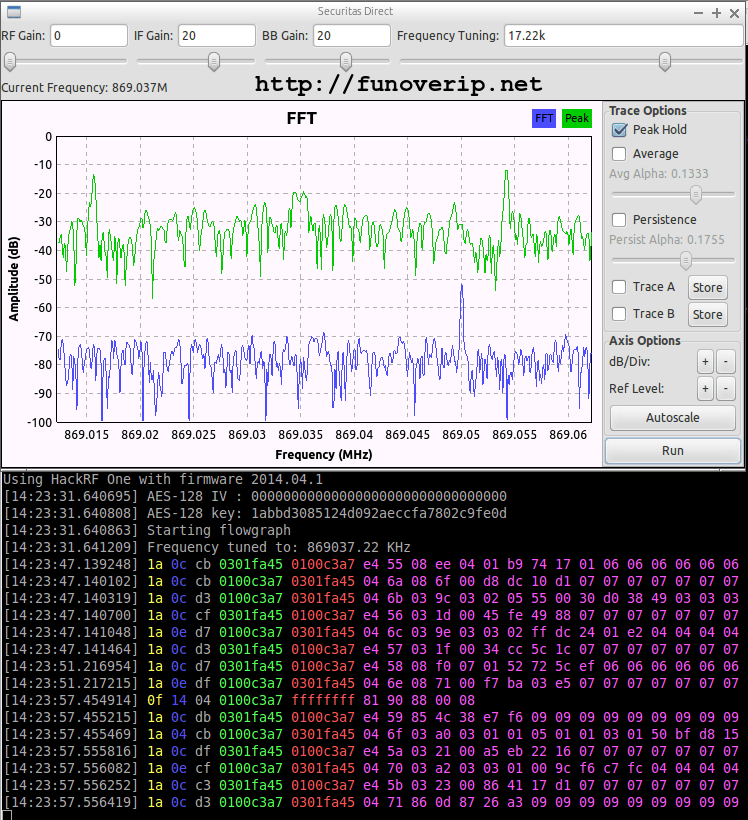
First, he took his HackRF software defined radio and monitored the 433 MHz and 868 MHz ISM bands whilst pushing keys on his alarms remote control. In the 868 MHz band he found a corresponding signal that had two spikes in the RF spectrum, indicating that it was likely a 2-FSK (frequency shift keyed) signal.

Next he created a GNU Radio program to demodulate the 2-FSK signal into a binary sequence. He then used Audacity to view and analyze the binary sequence, decoding it into 0’s and 1’s and determining the sync word (or access code). With further analysis he also determined the symbol rate and samples per symbol. With all this information gathered, he was then able to expand his GNU Radio program to automatically detect and decode packets sent by the various wireless devices connected to the alarm system.

His post goes into good detail about the steps that he took and is a great aide in understanding how to reverse engineer wireless protocols.

Decoding Wireless Alarms

RTL-SDR As a Spectrum Analyzer

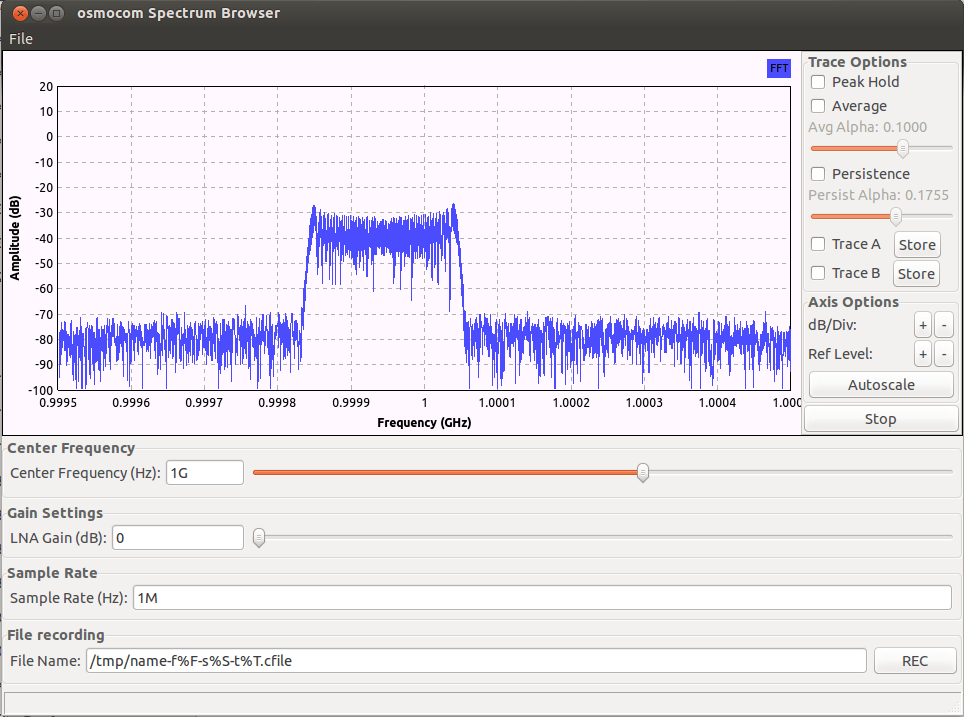
Hackaday has brought to attention a blog post by Kerry Wong which shows how the RTL-SDR can be used as a simple and inexpensive spectrum analyzer. In the past we’ve already posted numerous examples of the RTL-SDR being used as a spectrum analyzer but Kerry’s post discusses some of the do’s and don’ts that you need to think about when using a SDR as a spectrum analyzer and also provides some measurements.

During his tests he discovered that popular software like RTLSDR Scanner and SDR# either distort the spectrum or don’t display the signal amplitude correctly. Only GQRX and osmocom_fft seemed to give an accurate depiction of the spectrum.

Kerry also discusses how to calibrate the spectrum display to show proper power levels, how to set the gain for spectrum analysis and discusses some thoughts on LO leakage.

Using an RTL-SDR as a spectrum analyzer with osmocom_fft

Improving HF Reception By Disconnecting the Switching Power Supply on the RTL-SDR

By using an upconverter, direct sampling mod, or experimental software driver the RTL-SDR can be used for HF reception. However, a problem with HF reception and the RTL2832U chip is that it uses a switching power supply in its design. This switching power supply causes significant amounts of noise spurs to appear in the HF spectrum.

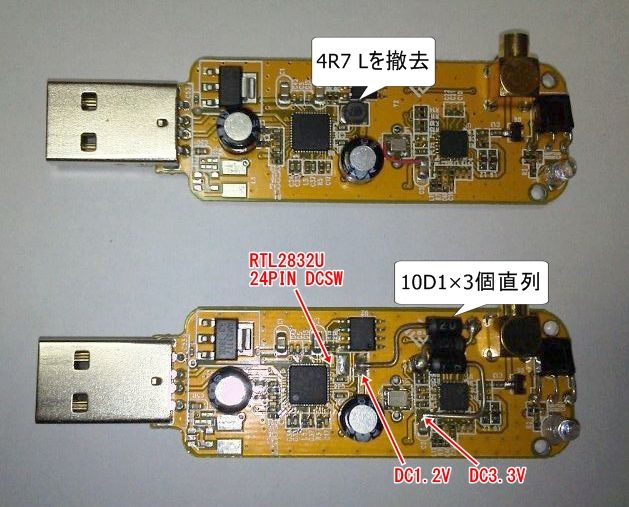
Japanese RTL-SDR experimented ttrftech has recently posted about a modification to the RTL-SDR which he performed (note in Japanese, use Google translate to read). The purpose of the switching power supply in the RTL2832U is to step 3.3v down to 1.2v. In his modification, ttrftech disconnected the switching power supply and instead stepped 3.3v down to 1.2v by using three diodes. This works as each diode has a voltage drop across it of 0.7v.

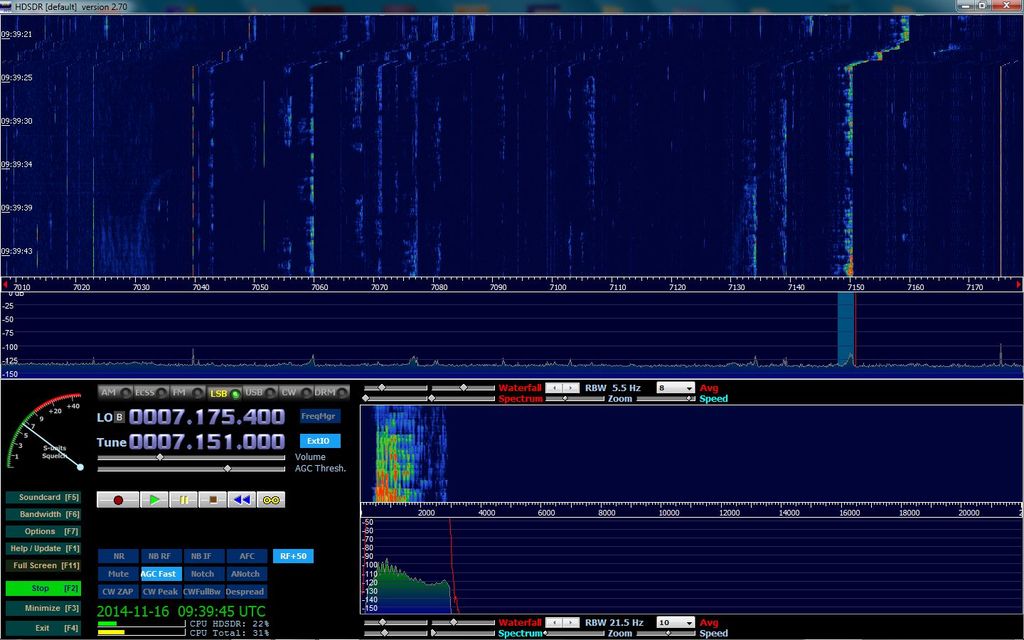
His results show that there is a significant reduction in noise spurs at HF frequencies.

Switching power supply replaced by three diodes.
Unmodded reception at 7 MHz
Modded reception at 7 MHz

Watching a VHS Tape using a RTL-SDR

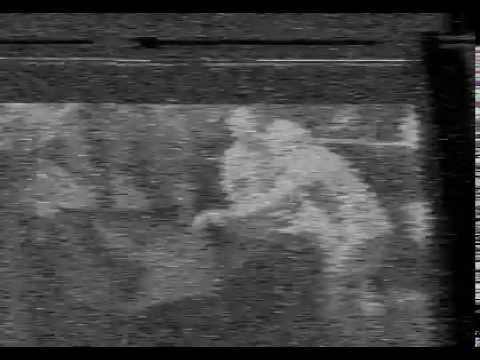
Over on YouTube user DogsRNiceMineCraft has uploaded a video showing a VHS tape being played using an RTL-SDR. To do this he connected the RF out port on his VHS tape player by wrapping the RTL-SDR stock antenna cord around the RF out cable from the VCR. He then used the TV Sharp software to view the VHS tape.

The playback quality is very poor, but the concept works!

viewing a vhs tape on a computer using sdr

SatNOGS – Hackaday Prize Winner uses RTL-SDR in Design

The popular Hackaday blog recently announced the winner of their grand competition to win a trip to space or $200k. The goal of the competition was to design and build the best example of “an open, connected device”. The winner of the competition is SatNOGS, a system that hopes to enable a low cost network of satellite ground stations thus enabling greater access to satellite data. The radio receiver used in the SatNOGS hardware is a standard RTL2832U R820T RTL-SDR dongle.

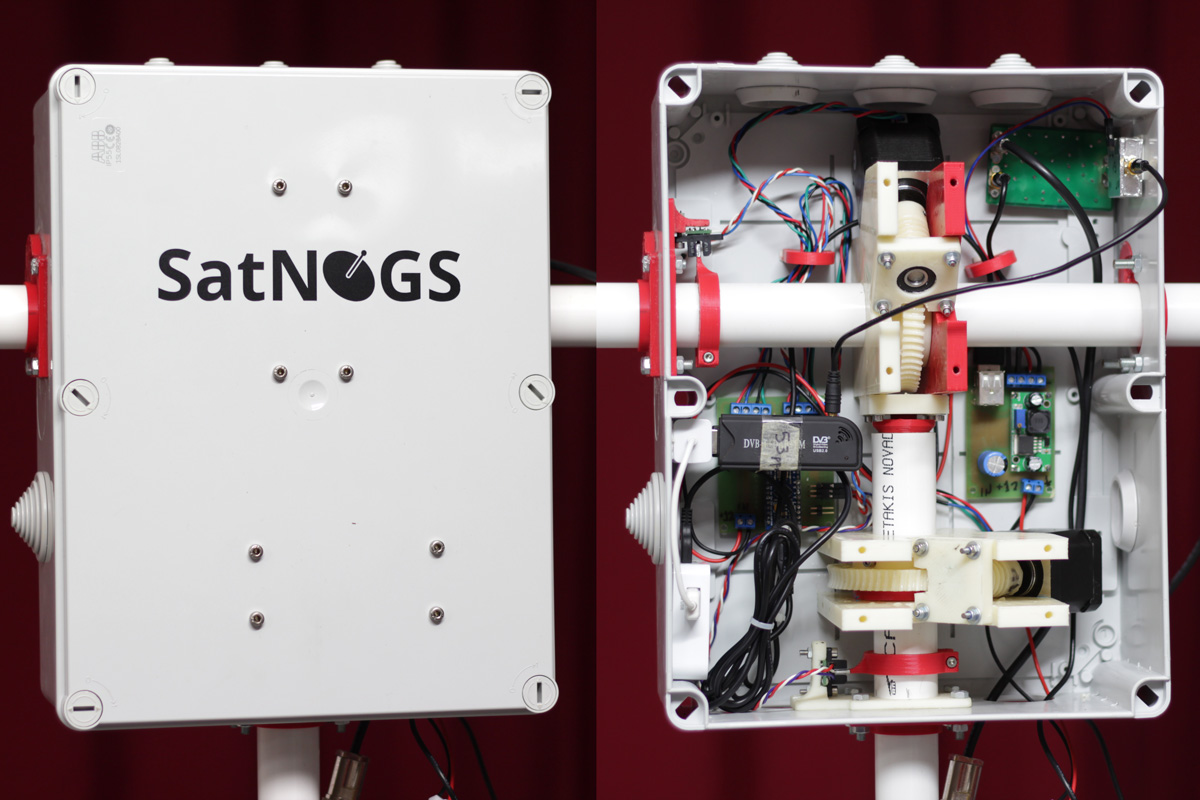
The SatNOGS hardware is a system that uses high gain antennas, tracking motors, a RTL-SDR and a PC running GNU Radio and other software to automatically track, receive and record satellites as they pass over head. The open source software works to automatically schedule observations and record them to an online database.

More information about SatNOGS can also be found on their website https://satnogs.org/.

The third prize winner of the Hackaday prize was the ‘PortableSDR’, which we posted about previously.

SatNOGS Hardware Tracking a Satellite
SatNOGS Hardware with RTL-SDR Dongle Visible
SatNOGS Project - THP Finals

ADS-B Onboard a 737 with Realtime Primary Flight and Navigation Display

Recently we found this video from 2013 on YouTube by user carcharias04 showing an RTL-SDR being used for ADS-B on board a 737-800 commercial jet. In the video he uses a custom program that interfaces with RTL1090 and XHSI, which is a navigation display program for the popular flight simulator known as X-Plane.

With his RTL-SDR, RTL1090, his custom software and XHSI running he is able to see a real time display of the primary flight and navigation displays which are the same or similar to the instruments used by the pilots in the cockpit.

Unfortunately, it seems like the uploaders custom interface program is not available anywhere that we know of.

Update 1: The software is this interface available on GitHub. Schumann-resonance from the comments section has uploaded a precompiled binary file here http://www57.zippyshare.com/v/49667810/file.html.

Update 2: To get it to work you need to first set the Table 2 name in RTL1090 to “tableb”, then run RTL1090 first before opening RTL1090-XHSI. Then enter the ICAO of the flight you’d like to use in the text box at the top of the interface window. Now data should begin to appear in the RTL1090-XHSI Window. Now you can open XHSI and it should automatically begin using the ADS-B data.

RTL1090 ADSB live on board Boeing 737-800