Horn Antenna for RTL-SDR Radio Astronomy

Rishi Patel has written on his blog about his radio astronomy project which involves an RTL-SDR and an impressive homemade horn antenna.

The horn antenna is constructed from cardboard foam and aluminium foil and is mounted on a telescopic mount. The horn then connects to a waveguide feed which is constructed out of a large metal can. The antennas waveguide then connects to a microstrip filter and LNA before finally connecting to an RTL-SDR. Rishi then uses a simple python program to gather the IQ samples from the RTL-SDR, and then draw the power spectral density plots.
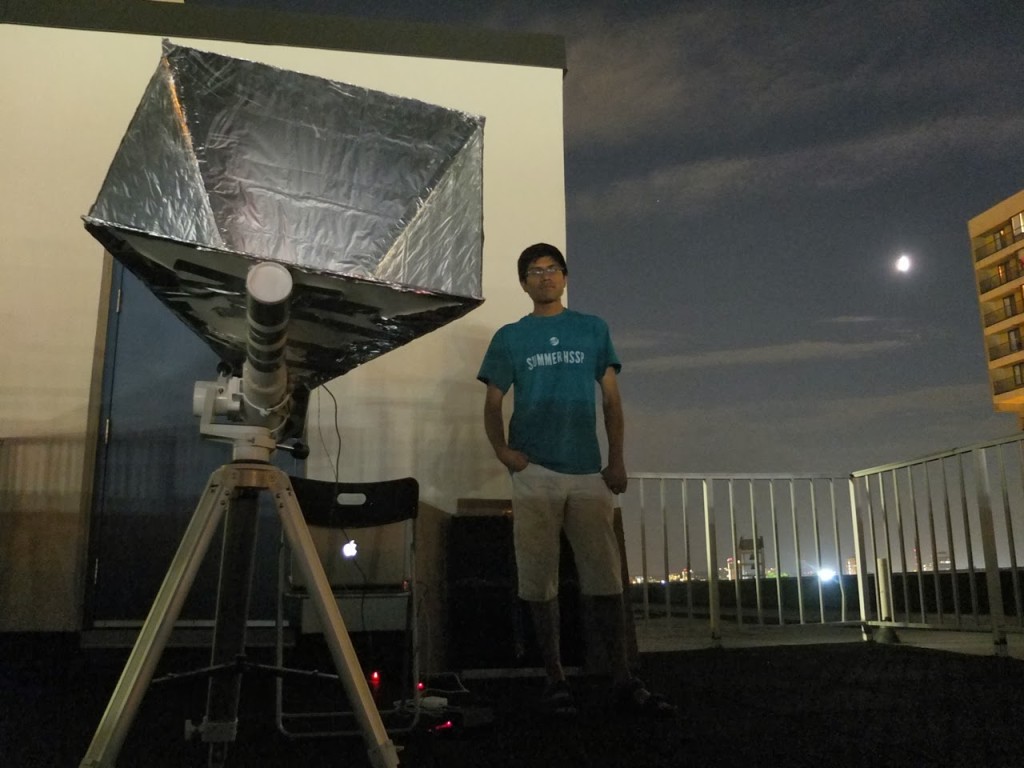
Horn Antenna
Homemade Horn Antenna for Radio Astronomy

With this setup Rishi was able to detect the Hydrogen line. Rishi also used a second even larger horn with a different design to plot the spectrum shown below of the Cygnus (red), Cassiopeia (green), and Cepheus (blue) constellations.
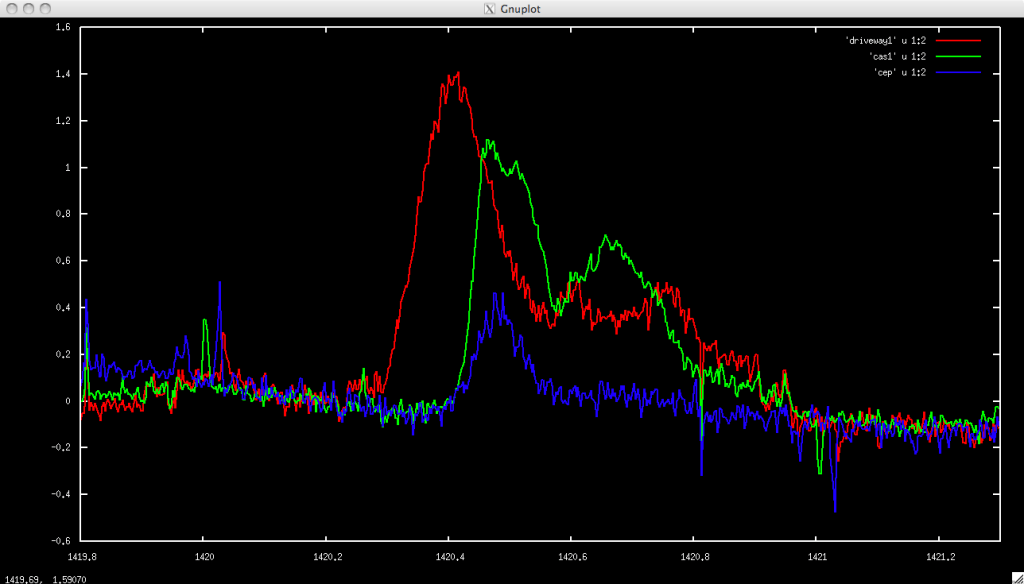
largeHornSpectra
Spectral Plots of Cygnus (red), Cassiopeia (green), and Cepheus (blue) constellations.

Receiving, Decoding and Decrypting GSM Signals with the RTL-SDR

A while back we did a small write up on receiving and analyzing cellular GSM signals with the RTL-SDR. Now blogger Domi has taken it further and has done an excellent big write up on his blog showing how to receive, decode, and also decrypt your own cell phone GSM signals with the RTL-SDR.

Domi’s big write up is split into four posts. It starts with an introduction to GSM, then focuses on setting up the environment and required software, then uncovering the TMSI (step to be released later), and then finally shows how to actually receive and decrypt your cell phone data such as voice and SMS messages.

GSM Decoding with Airprobe and Wireshark and RTL-SDR
GSM Decoding with Wireshark

Detecting the Perseids Meteor Shower with an RTL-SDR Passive Radar

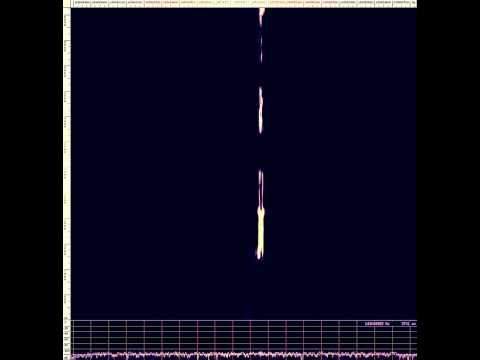
Amateur radio hobbyist EB3FRN has made a post on his blog showing how he was able to use an RTL-SDR to act as a passive radar and detect meteors from the Perseids meteor shower. To do this he tuned to 143.050 MHz which is the the frequency of the Graves radar, a French space surveillance radar used to spot satellites and detect their orbits. He then used the Baudline software to record the radar signal scatters which occur when a meteor reflects the Graves radar signal.

Graves Radar - 2013 Perseids Meteor Shower

SDR Touch 1.7 Public Beta Released

The programmer of the Android based software defined radio app SDR Touch has released a public beta of version 1.7. The programmer writes that the new features include

New multi-threaded core, native audio support, experimental x86 support is included as well. Although most changes are under the hood (the release is build for performance boosts), probably the most obvious non-performance enhancement is FM STEREO.

If you intend to install the beta you will need to first uninstall your existing version of SDR Touch, which will cause you to loose any presets you may have set. The programmer warns that this version may be unstable as it is in beta.

You can download the beta from http://sdr.martinmarinov.info/beta/AndroSDR17beta.apk

Beginners Antenna Guide

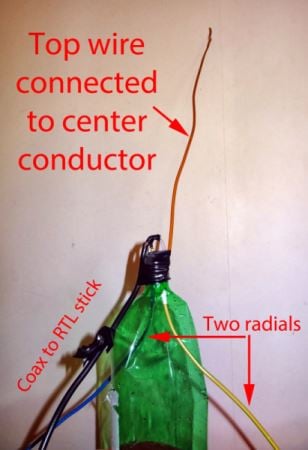
Akos from the SDR for mariners blog has just written another post that is a guide on constructing and buying beginner level antennas for the RTL-SDR. The post shows how to build a simple ground plane antenna out of wire coat hangers, and also discusses monopoles, telescopic antennas, rubber duckys and discone antennas.

Simple Coat Hanger Groundplane
Wire coat hanger ground plane Antenna

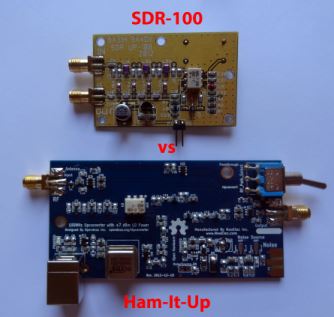
Upconverter Comparison: Nooelec Ham it Up vs SDR Up 100

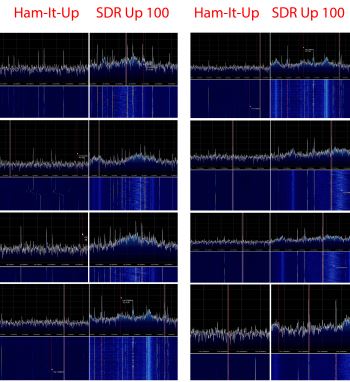
A few weeks ago Akos from the SDR for Mariners blog did a review of the SDR Up 100 Upconverter, and he promised to compare it with the Nooelec Ham-it-up Upconverter when it arrived. He has now done the comparison, and written about it on his blog.

For each test he used a gain of 0dB and the same 20 foot random wire antenna. Interestingly, his results show that the SDR Up 100 significantly outperforms the Ham-it-up upconverter. We believe that this may be as the SDR Up 100 has an LNA built into it whereas the Ham it up does not.

Update: Akos has now included comparisons with various RTL gain settings.

upconverterCompare
SDR Up 100 vs Ham It Up
Nooelec vs Up 100 comparison
Comparison Images

Passive RADAR With a Dual Coherent Channel RTL-SDR

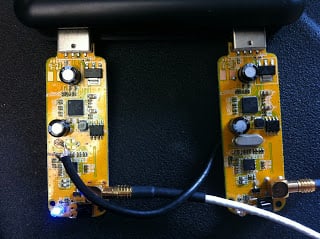
Juha Vierinen from the Kilpisjarvi Atmospheric Imaging Receiver Array has been working on a Dual Coherent Channel RTL-SDR modification. This modification essentially involves using the same clock source for two RTL-SDR dongles, which can be done by desoldering and removing the clock on one dongle, and then using a cable to connect the clock from another dongle to the clock input of the desoldered dongle.

RTL-SDR Dual Coherent
Dual Channel Coherent RTL-SDR Receiver

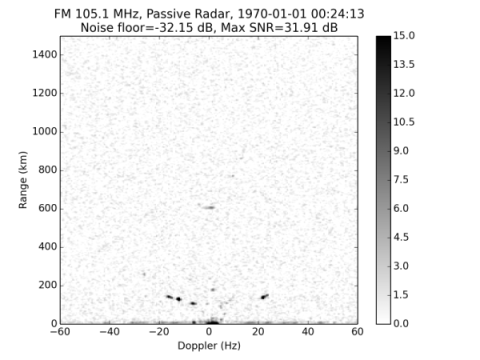
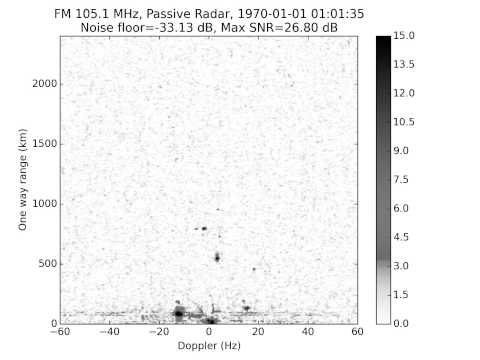
Juha then was able to use his new dual coherent channel RTL-SDR to create a passive RADAR system. To do this, he connected the two RTL-SDRs to two log periodic Yagi antennas. From this setup he was able to detect airplanes and meteor echoes. An image cap and video showing RADAR detections over time is shown below.

Passive RTL-SDR RADAR
Longer rtlsdr fm radio passive radar video

SDRLab: An RTL-SDR Interface to LabVIEW for Educational Purposes

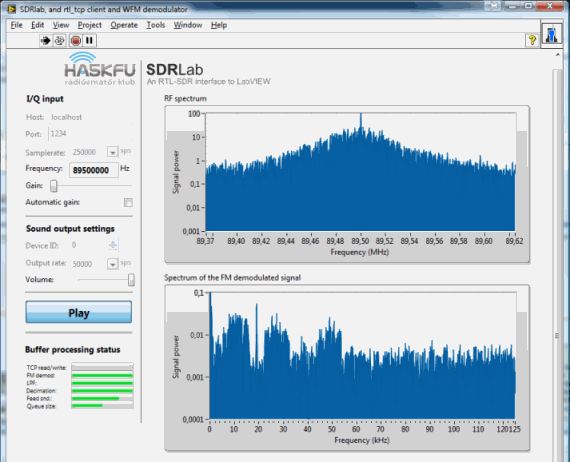
If you’re familiar with the LabVIEW software, there is now an RTL-SDR interface called SDRLab by Beküldte Andris. The software is able to capture the I/Q data from the RTL-SDR, and with that you can do educational experiments in LabVIEW, which is great for students. The author has also implemented a FM demodulator.

ha5kfu_sdrlab_release