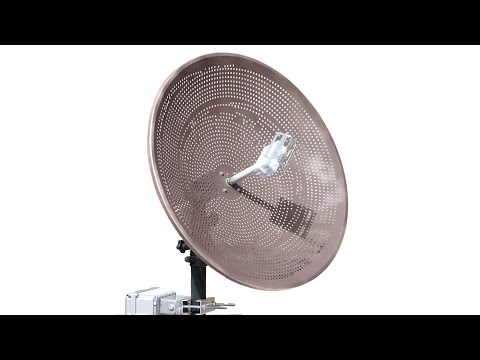
Modifying a 2.4 GHz WiFi Grid Antenna for Improved 1.7 GHz Reception + DIY Rotator Instructions

People have had much success in receiving L-band weather satellites like GOES and polar orbiting HRPT satellites using 2.4 GHz WiFi grid dishes, even though their 1.7 GHz signals are considered out of band for the WiFi grid dish feed. While this works most of the time, reception can be sometimes weak and borderline.

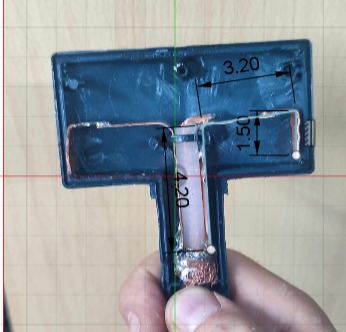
Over on Facebook and usradioguy.com, António Pereira has been sharing his mod which optimizes a 2.4 GHz feed for 1.7 GHz instead. The mod involves removing the enclosure of the feed which requires a heat gun to remove the glue, extending the feed's dipole by soldering on copper extension strips, tuning the dipole with a VNA, and finally tweaking the focal point. This results in an optimized L-band weather satellite antenna.

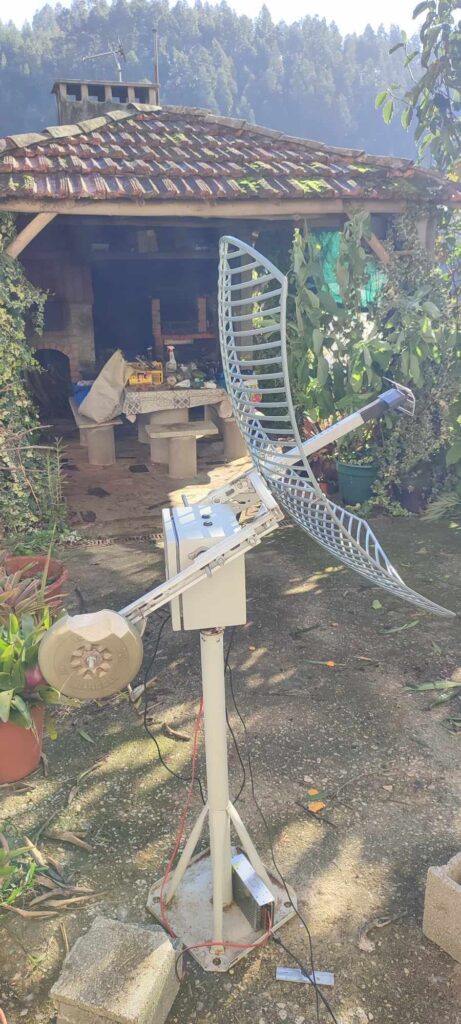
António Pereira has also shared instructions for creating an antenna rotator from an ESP32, Arduino Nano, two NEMA 23 stepper motors, two stepper controllers, two 50:1 worm gearboxes, and two optical homing switches, as well as power supplies for the motors and circuits. He also shares the Arduino code that he's written.

We also note that we currently are crowd funding for our Discovery Dish, which will be a ready to use satellite dish system for L-band weather satellites, as well as Inmarsat and hydrogen line radio astronomy. Check it out on Crowd Supply.

Modified dipole feed on a 2.4 GHz WiFi grid antenna feed
A DIY antenna rotator for the modified 1.7 GHz WiFi grid dish.

A Technical Overview of the Watch Duty Wildfire Monitoring Project Powered by RTL-SDRs

Previously in 2022 we posted about Watch Duty, a nonprofit organization aiming to improve access to live public safety information regarding wildfires in California. Several populated regions of California are extremely prone to wildfires, and it's important that residents get timely notifications about nearby wildfires so they can evacuate early and/or prepare their defensible spaces.

The system works by using RTL-SDRs to monitor public safety radio channels, and ADS-B aircraft positions of firefighting aircraft in order to gather information in real time about how wildfires are moving. Volunteers monitor this information and distribute anything of importance via a smart phone app to the public. Often the information is significantly more timely compared to official channels.

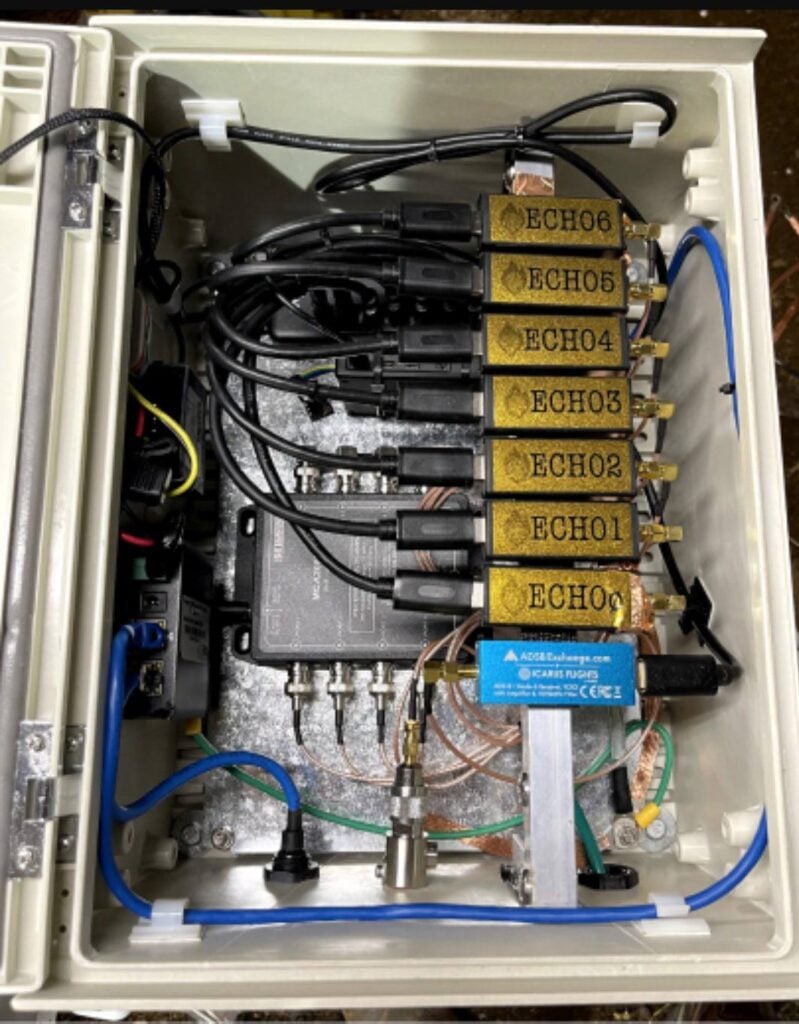
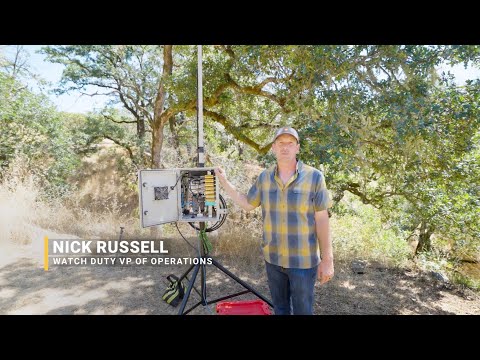
Recently Nick Russel, the VP of Operations at Watch Duty sent us a link to a technical overview blog post explaining how their 'Echo' remote monitoring devices work. The post describes how Echo devices consist of a Raspberry Pi and multiple RTL-SDR Blog dongles, with all the electronics being powered via Power over Ethernet (PoE). For the antenna a wideband Discone is used. 

Inside the Watch Duty 'Echo'

The rest of the post explains how their voice monitoring system works, how "tone out detection" works, which are orders for engines, strike teams, and other heavy equipment, how they make use of ADS-B data and how they are able to remotely maintain and update the system.

Importantly, Watch Duty note that they rely on volunteers and donations from the community, so please consider donating via the Watch Duty app.

Watch Duty | Echo Radio Project | Fixing emergency radio dead zones

RTL-SDR Blog V4 now in stock at Amazon USA

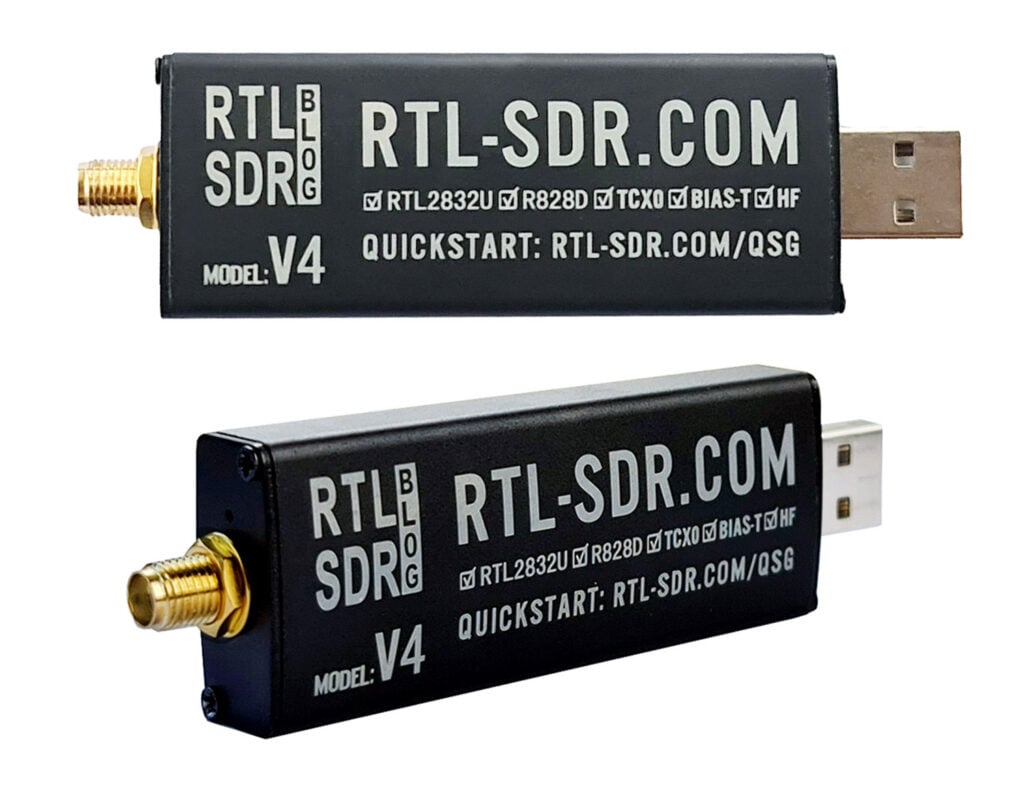
Just a quick note for those waiting to confirm that the RTL-SDR Blog V4 is now in stock at Amazon USA. We have linked both the dongle + antenna set, and dongle only listings below. For customers outside of the USA please check our international purchasing links at www.rtl-sdr.com/store.

With the demand being high, if you were waiting please order soon as the next shipment most likely won't be in until January. To learn more about the RTL-SDR Blog V4, please see our product release post.

The RTL-SDR Blog V4 Dongle

SDRplay Black Friday Deals on Ham Radio Outlet

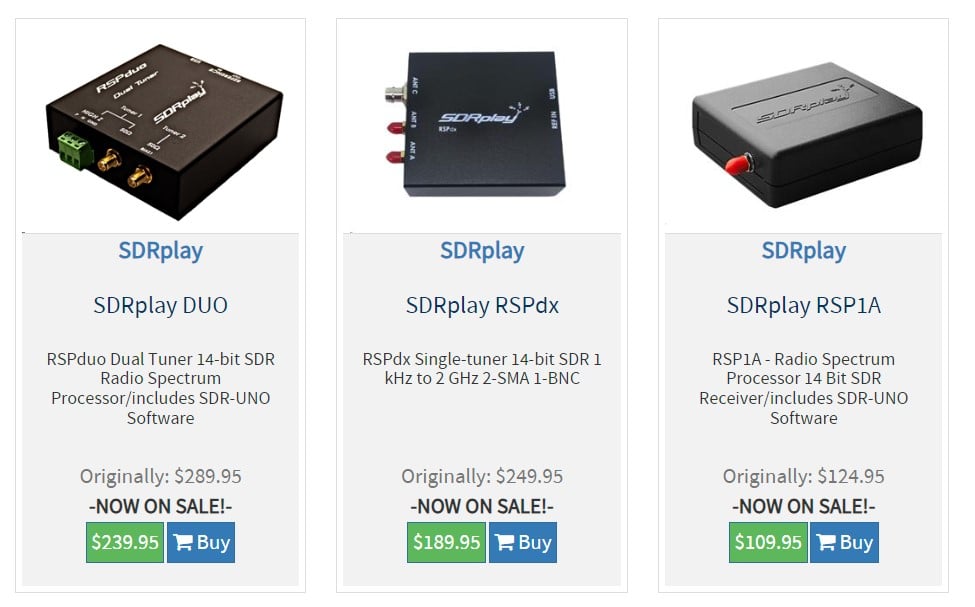
Ham Radio Outlet in the USA is currently offering discounted SDRplay products for Black Friday. The discounts are as follows:

Although this year they are not running a sale on their direct sales platform, make sure to check their direct sales pricing if you are outside the USA, as it may end up cheaper to ship directly from SDRplay in the UK.

SDRplay Sale at Ham Radio Outlet

KrakenSDR Black Friday Sale 15% Off on Crowd Supply

Over on Crowd Supply our KrakenSDR is currently reduced by 15% for Black Friday. The sale lasts until November 30, or while stocks last. This brings the price of the KrakenSDR down to US$424, down from the regular US$499 pricing. The companion antenna set is also reduced from US$199 down to US$169.

If you weren't already aware, KrakenSDR is our 5-channel coherent radio based on RTL-SDRs, and it can be used for applications like radio direction finding.

The Latest Progress on Discovery Dish

Over on Crowd Supply we are currently crowd funding for the Discovery Dish, a system that aims to help make satellite dish based radio projects more accessible for use with low cost software defined radios like the RTL-SDR. We've recently posted an update which we pasted below.

Discovery Dish: Simplified system for weather satellite reception and hydrogen line radio astronomy

The Latest Progress on Discovery Dish

First, we want to thank everyone who has purchased a Discovery Dish! We are about two weeks into the campaign now and we’ve reached over 30% of our goal. Please help us get there by sharing the campaign with anyone you think might be interested!

Progress Report

Here are the latest updates:

  • We’ve been working on getting manufacturing of the molds and electronics ready to go once we receive funding. We’re finalizing our CAD files and double checking everything so we’ll be ready to go once the campaign ends. We put six months as our target before shipping, but we’re hoping to actually get the product out sooner than that. The main delays in the timeline will be the Chinese New Year holidays early next year and the time it will take to sea freight our bulk production runs.
     
  • For the enclosure, we’ve begun getting samples of the general electronics mounting board. It will be made out of a conductive metal which is important for grounding RF noisy electronics to the enclosure, and will also allow heat to transfer out of the enclosure via a thermal pad underneath the board. Once we get our prototypes we will share more images.
 
  • We've also began considering how we might implement a 2.2 GHz S-Band feed for the Discovery Dish. The return-loss characteristics of the feed were designed to be good at 2.2 GHz, so we probably don't need to change much of the core feed design. The main question will be if it's feasible to implement a downconverter for use with RTL-SDRs (which have a maximum frequency limit of 1.766 GHz), or if it's better to just use a HackRF for this band. Updates on our investigations will be provided as we test further.
  • We are also actively working on our rotator prototype which we hope to release next year as a companion product to the Discovery Dish in order to make reception of polar orbiting satellites easier and more accessible. We don't want to release too much information on the rotator at the moment as things could still change a lot, but currently we are ordering samples of some custom parts that we need to test a production version. We are also developing the microcontroller firmware so that it will be compatible with the EasyComm II rotctl protocol.

Customer Questions

Finally, we’ve received a few questions from customers which we’ll answer publicly below:

Inmarsat is circularly polarized. Is the Inmarsat feed circularly polarized?

Our feeds are all linearly polarized. But this actually does not matter much for Inmarsat because our dish is more than large enough for Inmarsat, and Inmarsat signals are relatively strong. Using a linear feed on a circularly polarized signal results in a 3dB loss which is relatively insignificant in this case. With a small patch antenna such a difference is significant, but not so with a larger dish.

Will this work with a SatNOGs rotator?

Yes, the Discovery Dish comes with a standard pole mount which can be used to mount it on the SatNOGS rotator arms.

What is the amplifier/filter architecture like in the feed?

The signal chain is as follows: Feed -> QPL9547 LNA -> SAW -> QPL9547 -> SAW -> SMA Output. So our feeds are dual-amplified and dual filtered.

Can the coax on the feed be swapped out for longer and lower loss coax?

Yes, the feed uses an SMA connector so you can swap out the coax cable if you like. Thicker cables may require different sized strain-relief at the end of the feed arm, though.
 

Airspy and YouLoop 2024 Black Friday Sale 20% OFF

Airspy is holding their annual Black Friday sale, this year offering 20% off their range of products. The sale is active at all participating resellers, which includes our own store where we have the YouLoop on sale for US$31.96 including free shipping to most countries in the world, instead of the usual US$39.95. Please note that due to EU VAT collection laws, EU customers must purchase the discounted YouLoop from our eBay or Aliexpress stores. 

The YouLoop is a low cost passive loop antenna for HF and VHF. It is based on the Möbius loop design which results in a high degree of noise cancelling. However the main drawback is that it is a non-resonant design, which means that it works best when used with ultra sensitive receivers like the Airspy HF+ Discovery. 

Some good reviews include the YouTube videos done by Frugal Radio where he reviews HF reception and VLF & LF reception with an Airspy HF+, and later tests it with an RTL-SDR Blog V3 using direct sampling. Techminds also has an excellent review on his YouTube channel. We also have a product release overview on this post from March 2020.

During the sale the price of Airspy SDRs and their upconverters are:

  • Airspy R2: $160.00 $135.20
  • Airspy Mini: $99.00 $79.20
  • Airspy HF+ Discovery: $169.00 $135.20
  • Airspy SpyVerter: $49.00 $39.20

FOSDEM 2024 Call for Participation: Software Defined Radio & Amateur Radio Devroom

FOSDEM (Free and Open Source Developer’s Meeting) is a yearly conference that this year will take place in Brussels, Belgium on 3 - 4 February 2024. This conference will also feature a track on FOSS-powered radio, and there will be a combined Amateur Radio and SDR Devroom.

FOSDEM have issued a call for participation and have noted that slots are still open, so please submit any proposals for talks now if you are interested in presenting. The recommended topics include:

Topics discussed in the devroom include, but are not limited to:

  • SDR frameworks and the tools that make them useful
  • New SDR-based developments in ham radio modes
  • Cellular/telecom software
  • Amateur radio operator software tooling
  • Free / Open radio hardware
  • Wireless security research
  • Entertaining wireless hacks
  • SDR & ham radio in mass and higher education
  • Satellite, spacecraft and interplanetary communication

Software-Defined Radio is the technology of enabling radio signals to be processed and generated algorithmically, typically within general purpose processors, but also within FPGAs and GPUs; Free and Open Source (FOSS) Software Radio allows these algorithms to be inspectable and improvable. With the advent of ubiquitous IoT, sky-filling satellite megaconstellations and 5G/6G as standards designed with commercial Software Radios in mind, wireless is an exploding field of interest in the FOSS realm.

Ham Radio, also known as amateur radio, is more than just a hobby orbiting the usage of radio communication – it’s a passion that merges the realms of electronics, human interaction, and communication. At its core, ham radio is about establishing connections: with people, with technology, and with the world at large. It is a free and open community effort at heart!