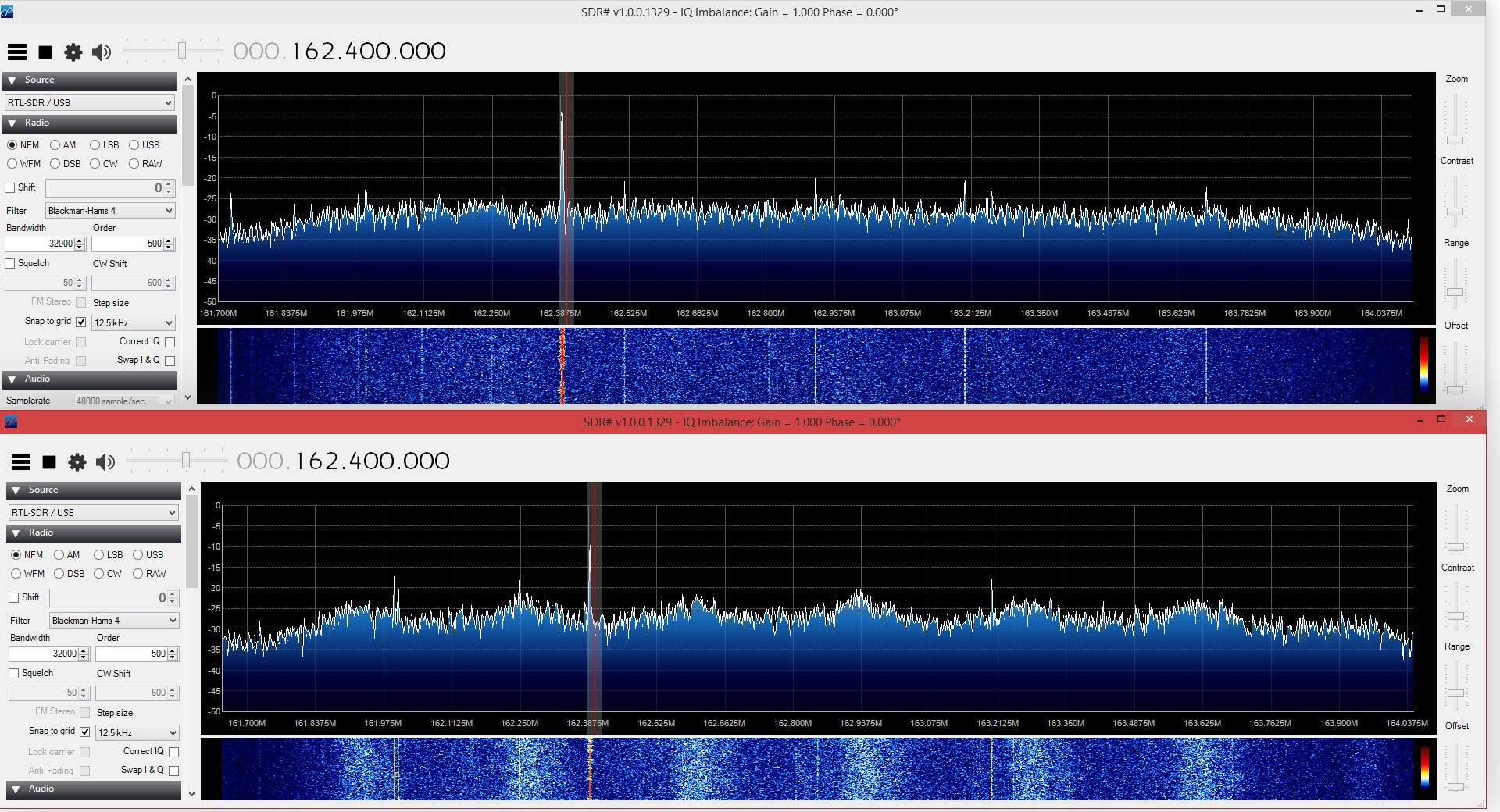
In the post the author compares the two tuners by simultaneously running both with SDR# and the same antenna type and comparing the results. From his results the author writes that although not night and day, there is a noticeable difference in sensitivity between the two tuners. He also writes that for ADS-B the R820T2 performed much better, reporting significantly more packets and further distances compared to the R820T.
Comparison between the R820T2 and R820T on a NOAA weather station. (R820T2 Top, R820T Bottom)
NOTE: There is now a plugin available for SDR# that will decode TETRA fairly easily. It is still in beta and misses a few features found in telive. Check it out in this post.
TETRA is a trunked radio communications system that stands for "Terrestrial Trunked Radio". It is used heavily in many parts of the world, except for the USA. Recently, a software program called Tetra Live Monitor (telive) was released on GitHub. This software can be used along with the (patched) Osmo-TETRA software to monitor and listen to unencrypted TETRA communications.
Below we show a tutorial on how to listen to TETRA communications using a RTL-SDR RTL2832U software defined radio. This tutorial is based heavily on the telive_doc.pdf file that is written by the author of telive and included in the telive git download. Please refer to that pdf file for further details on how the software works. We have modified their tutorial slightly to make it a little easier to understand. As this code is still under heavy development if you have trouble please check their PDF file for modifications to the procedures.
Most of this tutorial is performed in Linux and we assume that you have some decent Linux experience. We also assume you have some experience with the RTL-SDR dongle and have a decent antenna capable of picking up TETRA signals in your area. If you don't have a RTL-SDR dongle yet see our Buy RTL-SDR dongles page.
Note: As of October 2016 there is now a Windows port of the Telive decoding software available. This may be an option for you if you prefer to run in Windows. More information here.
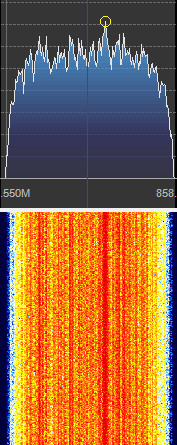
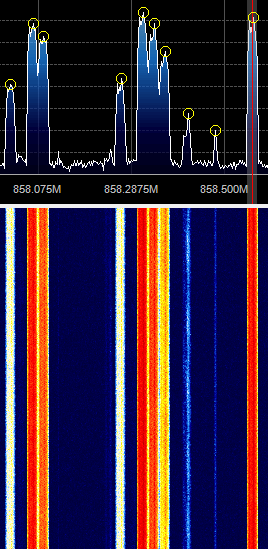
First, we will need to find some TETRA signals. The easiest way to do this is to open SDR# or another program like GQRX and look for them. TETRA signals are continuously broadcasting with a bandwidth of around 25 kHz. In most European countries they can be found at 390 - 470 MHz. In some countries they may be found around 850 MHz or 915 - 933 MHz. There may be several TETRA signals grouped in close proximity to one another. See the example images below.
A Zoomed in TETRA Signal
A Grouping of TETRA Signals Zoomed Out
An example audio clip of a TETRA signal recorded in NFM mode is shown below.
Once you have found some TETRA signals, record their frequencies. Now close SDR#, or whatever software you were using and boot into Linux. In this tutorial we use a 32-bit Ubuntu 14.04 virtual machine running on VMWare Player as our Linux system. Some of the commands may vary if you are using a different system.
Over on YouTube we’ve discovered a video from earlier in the year showing the RTL-SDR being used as a passive aircraft radar. This is different to ADS-B which is a type of active radar. A passive radar works by using a very strong radio signal from a readily available source such as a TV or FM radio transmitter and detecting the reflections from aircraft.
A RTL-SDR based passive radar system can be built by connecting two RTL-SDR dongles to a single clock source and by using two directional antennas.
We’ve also posted about RTL-SDR based passive radar being used to track aircraft here and here in the past. Another post about coherent multichannel RTL-SDR receivers can be found here.
In his latest tests he tried a metal outlet box as the case and saw improved results over the aluminium case. His conclusions seem to indicate that the aluminium box is not a good EMI shield. We’re not sure why he found these results, but one theory might be that because the aluminium case is anodized, it has a non-conductive surface, which might cause poor grounding.
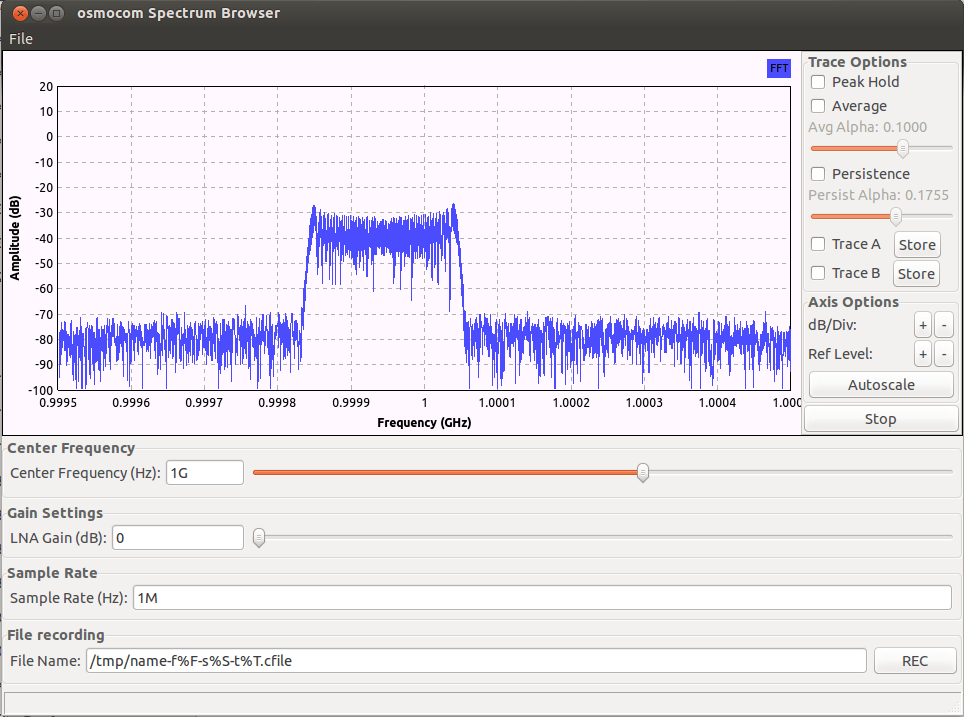
Hackaday has brought to attention a blog post by Kerry Wong which shows how the RTL-SDR can be used as a simple and inexpensive spectrum analyzer. In the past we’ve already posted numerous examples of the RTL-SDR being used as a spectrum analyzer but Kerry’s post discusses some of the do’s and don’ts that you need to think about when using a SDR as a spectrum analyzer and also provides some measurements.
During his tests he discovered that popular software like RTLSDR Scanner and SDR# either distort the spectrum or don’t display the signal amplitude correctly. Only GQRX and osmocom_fft seemed to give an accurate depiction of the spectrum.
Kerry also discusses how to calibrate the spectrum display to show proper power levels, how to set the gain for spectrum analysis and discusses some thoughts on LO leakage.
Using an RTL-SDR as a spectrum analyzer with osmocom_fft
By using an upconverter, direct sampling mod, or experimental software driver the RTL-SDR can be used for HF reception. However, a problem with HF reception and the RTL2832U chip is that it uses a switching power supply in its design. This switching power supply causes significant amounts of noise spurs to appear in the HF spectrum.
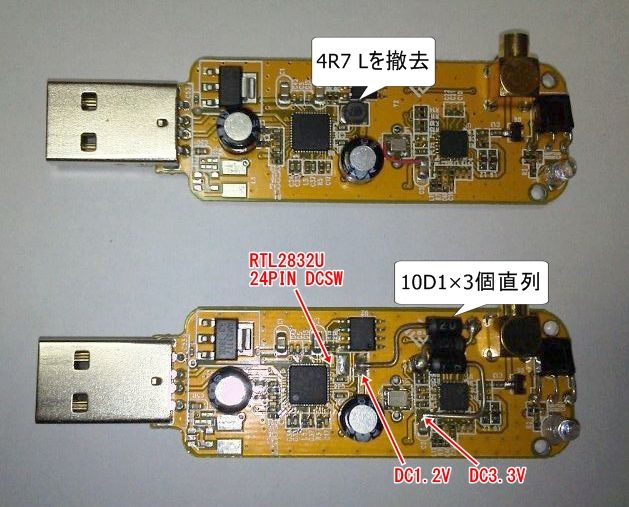
Japanese RTL-SDR experimented ttrftech has recently posted about a modification to the RTL-SDR which he performed (note in Japanese, use Google translate to read). The purpose of the switching power supply in the RTL2832U is to step 3.3v down to 1.2v. In his modification, ttrftech disconnected the switching power supply and instead stepped 3.3v down to 1.2v by using three diodes. This works as each diode has a voltage drop across it of 0.7v.
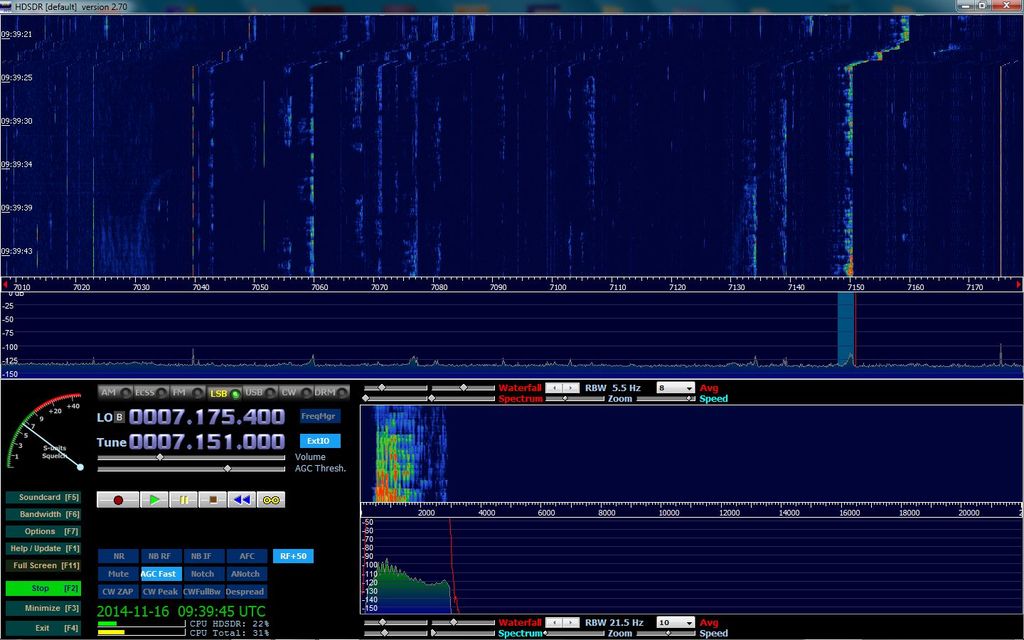
His results show that there is a significant reduction in noise spurs at HF frequencies.
Switching power supply replaced by three diodes.Unmodded reception at 7 MHzModded reception at 7 MHz
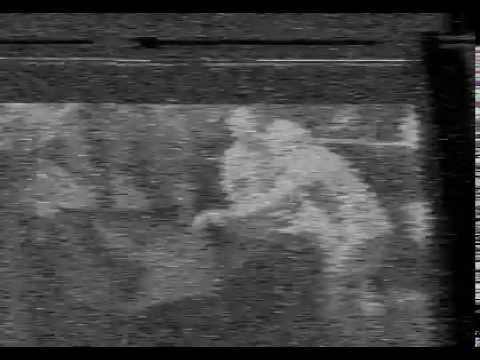
Over on YouTube user DogsRNiceMineCraft has uploaded a video showing a VHS tape being played using an RTL-SDR. To do this he connected the RF out port on his VHS tape player by wrapping the RTL-SDR stock antenna cord around the RF out cable from the VCR. He then used the TV Sharp software to view the VHS tape.
The playback quality is very poor, but the concept works!
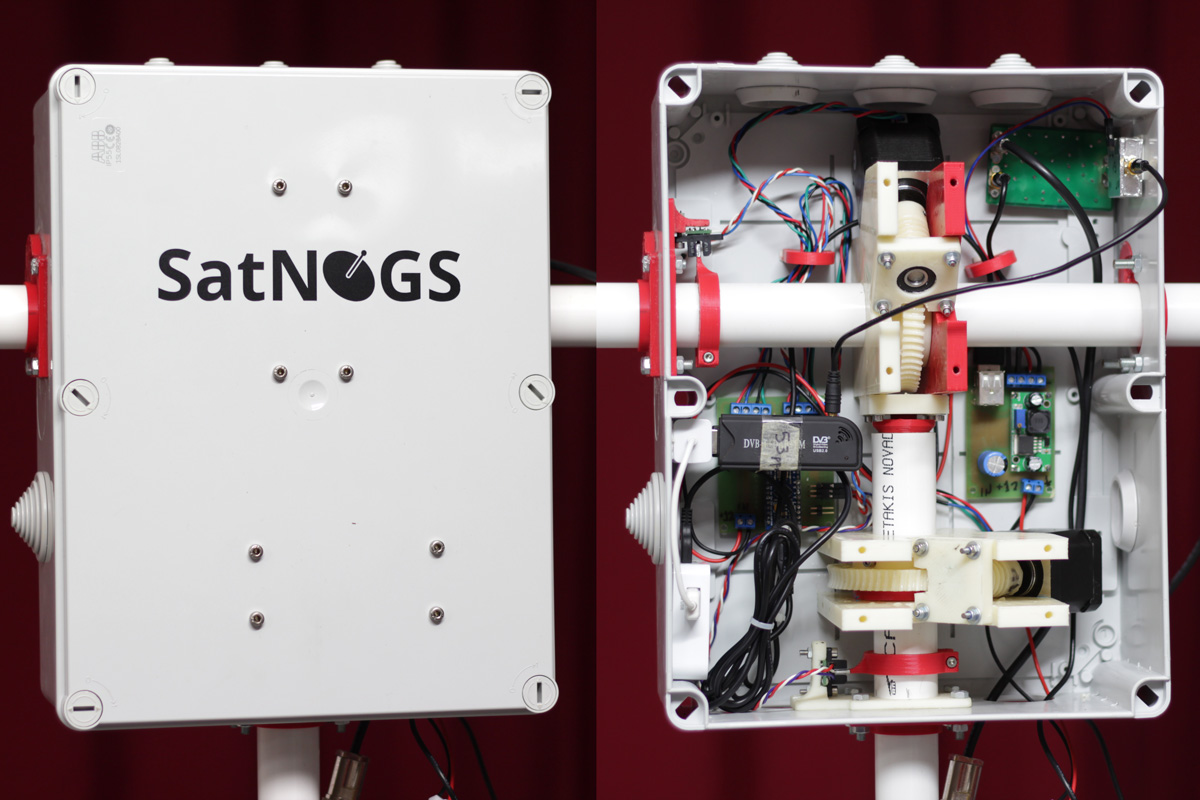
The popular Hackaday blog recently announced the winner of their grand competition to win a trip to space or $200k. The goal of the competition was to design and build the best example of “an open, connected device”. The winner of the competition is SatNOGS, a system that hopes to enable a low cost network of satellite ground stations thus enabling greater access to satellite data. The radio receiver used in the SatNOGS hardware is a standard RTL2832U R820T RTL-SDR dongle.
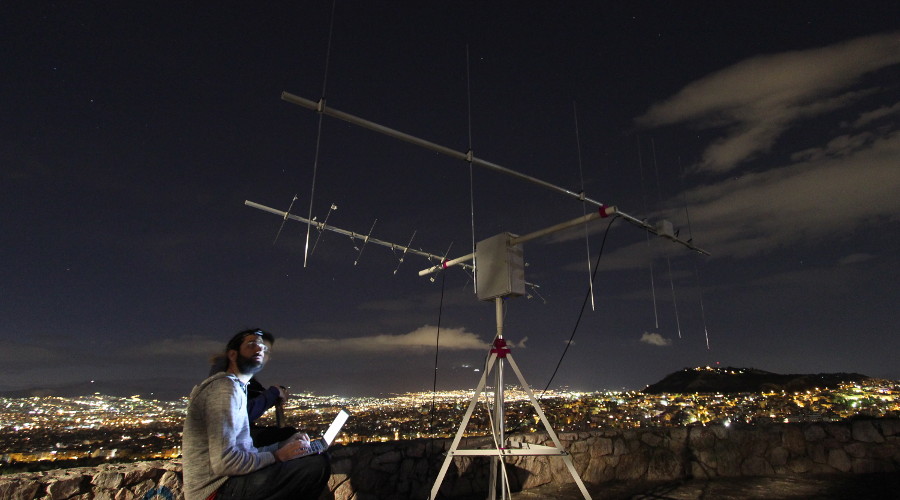
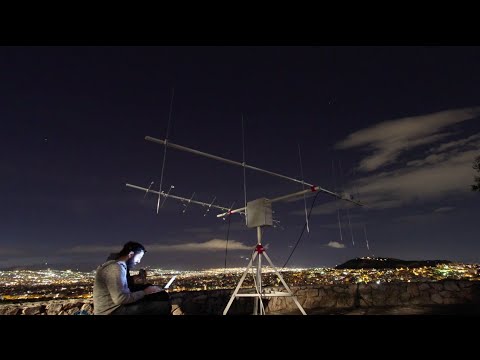
The SatNOGS hardware is a system that uses high gain antennas, tracking motors, a RTL-SDR and a PC running GNU Radio and other software to automatically track, receive and record satellites as they pass over head. The open source software works to automatically schedule observations and record them to an online database.
More information about SatNOGS can also be found on their website https://satnogs.org/.
The third prize winner of the Hackaday prize was the ‘PortableSDR’, which we posted about previously.
SatNOGS Hardware Tracking a SatelliteSatNOGS Hardware with RTL-SDR Dongle Visible