Tagged: rtl2832

Updates to Removing the 1.2V Switching Power Supply on the RTL-SDR

A few months ago we posted about how a Japanese RTL-SDR modder disconnected the noisy 1.2v switching power supply on the RTL-SDR and replaced it with three diodes. The diodes reduced the voltage from the 3.3v line to 1.2v. It seems that most of the improvements seen from the previous post were inconclusive, as soon after he realized that there are minor dongle to dongle variations in sensitivity, so he could not be certain if the improvement was due to his modifications.

However, he has continued to modify the RTL-SDR using the same principal (Japanese, use Google Translate). He discovered that to fully suppress the 1.2v switching regulator pin 27 on the RTL2832U chip must be connected to ground. Once this is done the switching noise present at 1 MHz disappears, although there does not seem to be any significant improvement in noise anywhere else.

The first screenshot shows an unmodded dongle with the switching regulator still connected. There is some noise present at around 1.026 MHz. The second image shows a modded dongle, the noise at 1.026 MHz is gone.

Switching regulator on. Noise can be seen at around 1.026 MHz.
Switching regulator off. Noise at 1.026 MHz is gone.
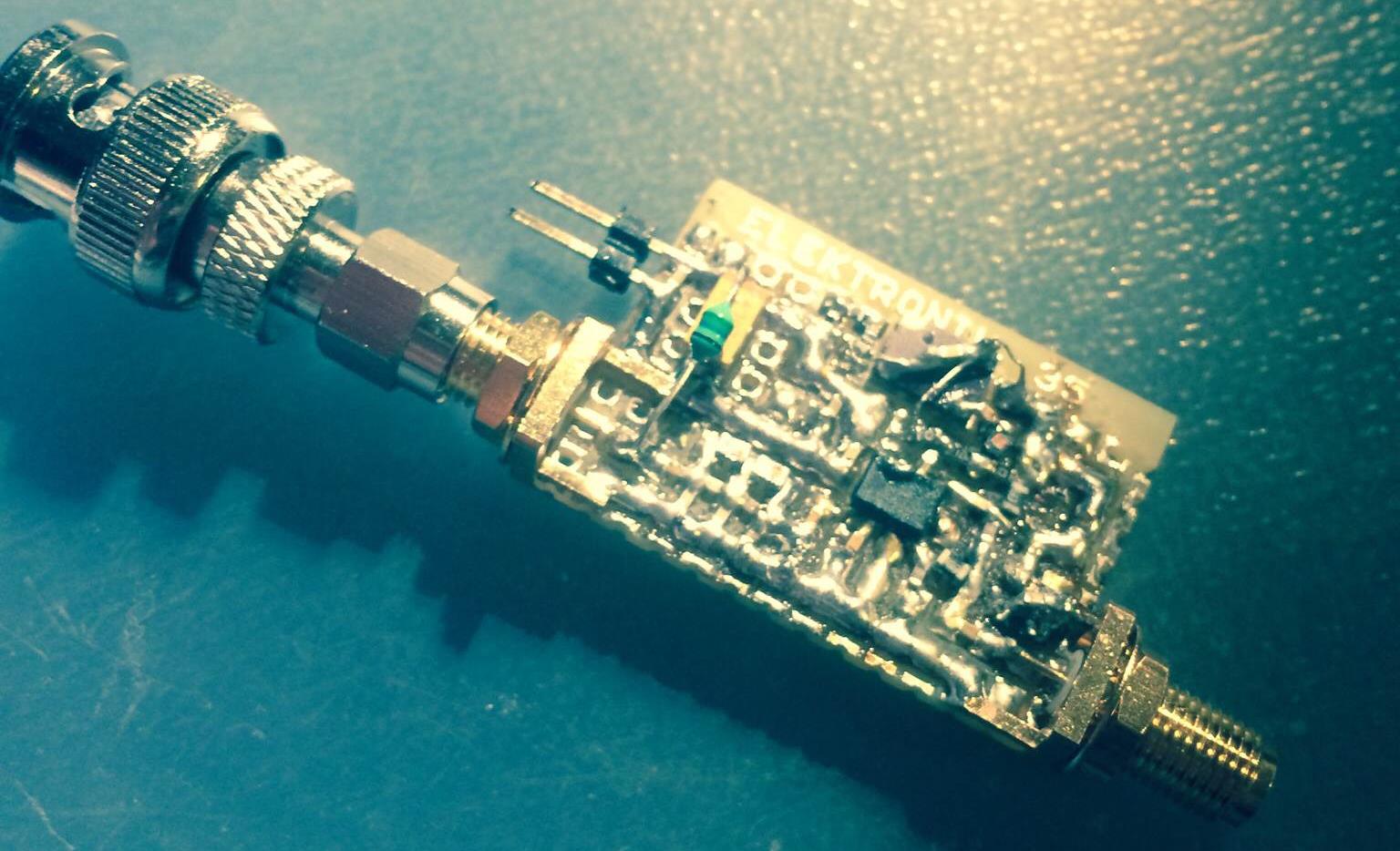
The 3 diode mod.
The three diode mod.

Listening to Trunked Radios with One RTL-SDR

Usually to listen to trunked radio systems, two RTL-SDR dongles are required. One for decoding the trunking control channel and another for listening to the audio channel. However if the audio channels are within the same chunk of received bandwidth as the control channel it is possible to use just one dongle to follow trunked conservations.

Recently Pawel of pewusoft wrote in to RTL-SDR.com to let us know about a tutorial he uploaded showing how to get trunking to work with just one RTL-SDR dongle. His method uses Unitrunker and SDR# together with the AuxVFO plugin and a new plugin that he wrote for interfacing with Unitrunker.

Although there is already a Unitrunker interface plugin for SDR#, Pawel wrote a new plugin based on serial port commands as he found that the original interface plugin did not work properly for him.

Unitrunker Serial Port Interface SDR# Plugin

Listening to NXDN with SDRSharp, the AuxVFO Plugin and DSD+

Over on YouTube user John Miller has uploaded a video showing how he receives NXDN digital audio using a combination of SDR#, the AuxVFO plugin and DSD+. He writes:

I have it set with 5 auxiliary VFO’s one for each channel of the Christian Co NXDN system from the Kelly Towers. I use VAC to route the audio from each VFO to DSD+ each VFO has it own DSD+ running. I then have all the DSD+ go into one output VAC and use that to run a feed on Broadcastify, The secret to running multiple DSD+ is to have separate install of it, so I have 5 DSD+ folders.

Reducing USB Shield Interference on RTL-SDR Dongles

Leif, the programmer of Linrad has recently uploaded a video to YouTube showing how he shields his RTL-SDR dongles to prevent the USB shield from acting as an antenna and picking up unwanted signals. In the video he also measures how well various other SDRs are at avoiding USB shield interference.

From the video we can see that Leif’s shielding method uses the following steps:

  • The metal box is RF tight and held together by many screws.
  • The USB shield and external antenna connector shields are both connected to the box.
  • The USB 5V line is decoupled to the GND line.
  • The USB 5V line has a ferrite on it.
  • The internal coax connection between the external connector and RTL-SDR antenna connection has a ferrite on it.
  • The USB cable has a ferrite where it enters the box.

With this shielding effort the interference is significantly reduced.

New Notch Filter Plugin for SDR#

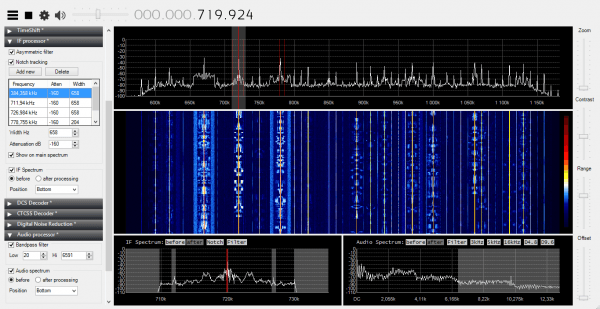
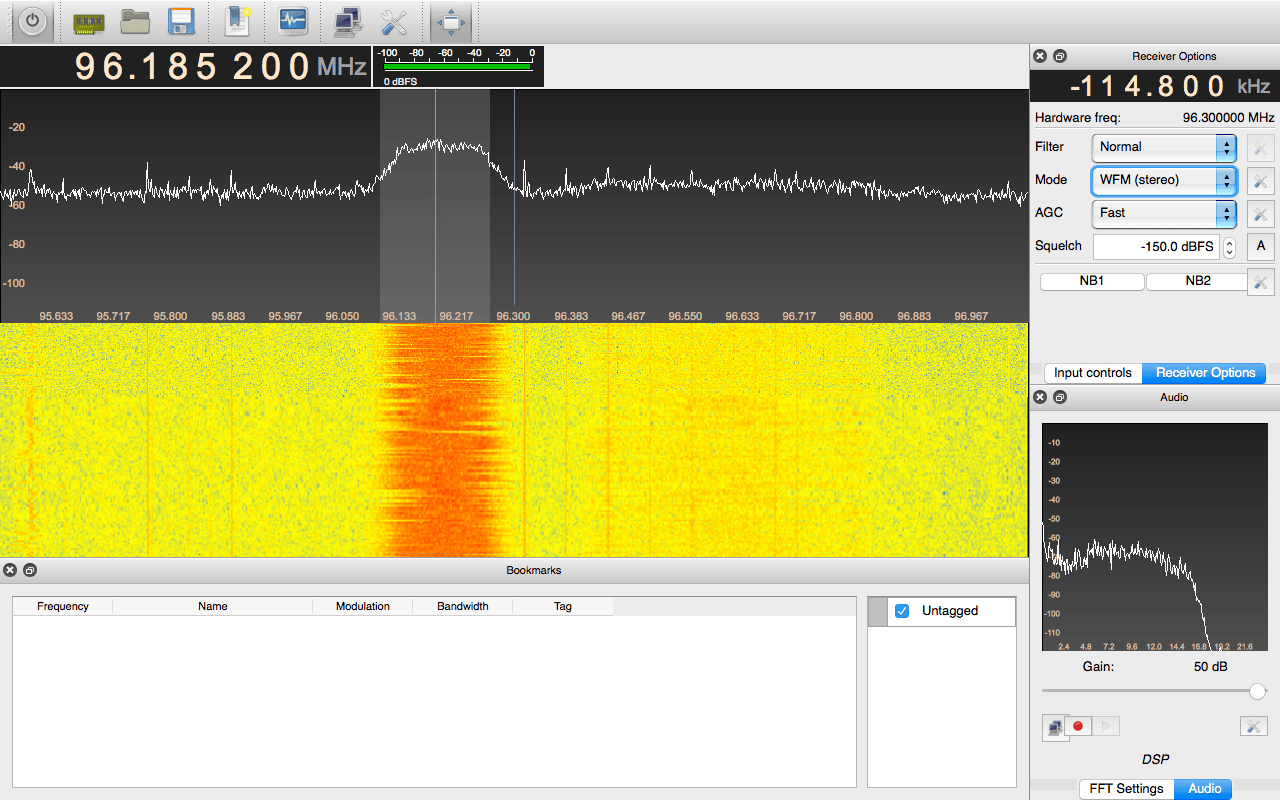
SDR# plugins programmer Vasili Beliakov has recently published a new notch filter plugin for SDR#. A notch filter will allow you to remove interfering signals that appear on top of a signal of interest. An example is shown in the image below first posted on Twitter by Youssef, the main developer of SDR#. In this image there is an interfering signal within the AM signal of interest. The notch filter removes the interferer without the need to remove the entire sideband.

The plugin also has VFO tracking which allows you to save preset notch filters for particular frequencies.

The plugin can be downloaded from https://t.co/dkEaWaQSmT. New Link: https://dl.dropboxusercontent.com/u/43061070/ifnotch.zip

Notch Filter Plugin Example

Listening to SCA with HDSDR, SDR# and an RTL-SDR

In the USA and Canada a subcarrier called SCA (Subsidary Communications Authority) is used to add additional services to a broadcast FM signal. Some examples of the extra services provided are live financial stock telemetry, audio books for the blind, specialized audio radio programs for doctors etc and background music for supermarkets and stores. These SCA signals are modulated into standard broadcast FM radio signals, but require a special radio to receive them. Subcarrier signals can easily be spotted in the audio/baseband waterfall and spectrum plots available in most SDR software.

Over on the new RTL-SDR DX blog, the author (Jay Moore) has uploaded an article showing how to use an RTL-SDR dongle to listen to audio SCA signals. The process involves using HDSDR to receive the broadcast FM signal, then using Virtual Audio Cable to pipe the audio into SDR#, where it is then possible to tune to the audio SCA signal. The same process could also be used to receive different subcarriers used in other countries such as Finland where a subcarrier is used to transmit DARC encoded bus stop sign telemetry.

SCA audio received via a combination of HDSDR and SDR#
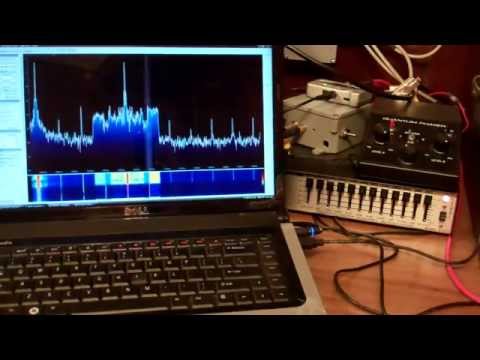
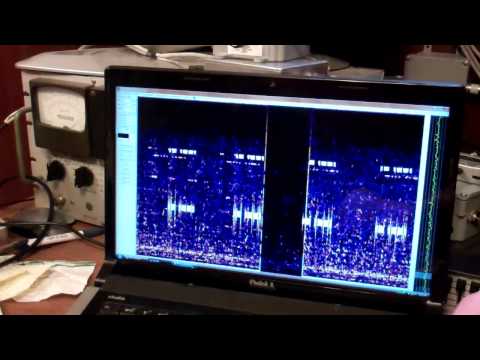
Decoding SCA with HDSDR and SDR#

RTL-SDR Panadapter Using Hardware Radio Receiver IF Stages

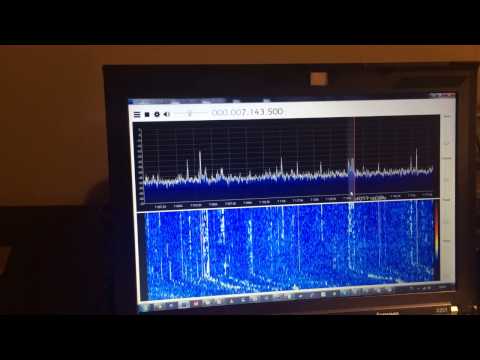
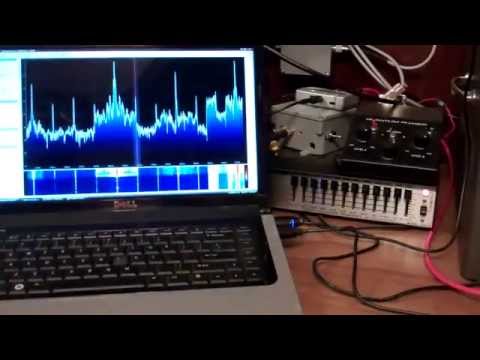
Over on YouTube user Jay Moore has uploaded a video explaining how to connect an RTL-SDR dongle to the IF stage of a hardware radio in order to create a panadapter. In the video Jay briefly explains how a radio with an IF stage works and then shows how he tapped into his Sansui 2000 hardware radio’s IF stage directly from the circuit board. The IF stage then connects to a ham-it-up upconverter which connects to the RTL-SDR.

By connecting the IF stage of a hardware radio to the RTL-SDR it is possible to use the hardware radio as the receiver while using the RTL-SDR to still maintain the benefits of a spectrum display. Most purpose built hardware radios will have better reception than the RTL-SDR.

RTL-SDR on receiver IF stages

Updates to the Power Line Noise Detector “Driveby” System

A few days ago we posted about Tim Havens “driveby” project, which is a RTL-SDR based system he developed to help create heatmaps of power line noise in his neighborhood. Upon doing further research, Tim discovered that the main source of power line interference was appearing at a frequency of 44.252 MHz. Then by using his driveby system to create a heatmap of his area at this frequency and also by using a hand held radio he was able to pinpoint a massive source of power line noise.

The noise appears to be coming from a faulty and unsafe power pole near a local school. He writes that the power poles primary ground line has been severed and that a wire from the AC line is simply dangling in the air, ready to be grabbed by school children.

Heatmap showing sources of powerline interference
The faulty power pole
The faulty power pole with dangling AC line
Severed grounding line