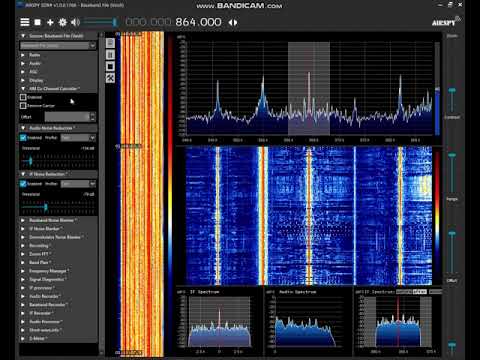
In this episode Frugal Radio explores the differences between three RTL-SDR dongles. In the video he compares a generic RTL-SDR, a Nooelec SMART and one of our RTL-SDR Blog V3 units. Initially the specifications are compared, and then he moves on to testing them on real signals with SDR#. Overall the RTL-SDR Blog V3 comes out with the highest final score thanks to it's additional features and low price.
2020 SDR Guide Ep 3 : Beginner Budget SDR Shootout (Generic vs Nooelec vs RTL-SDR v3) cheap SDRs!
Over on YouTube Sarah from SignalsEverywhere has uploaded a new tutorial video showing how to use two RTL-SDR dongles with the free SDRTrunk software to create a P25 Police scanner.
In the video she first shows how to install SDRTrunk in Windows and Linux, then how to install the JMBE codec required for decoding audio. She goes on to show how to import trunked system network data from a (paid) RadioReference subscription, how to blacklist unwanted talkgroups, and how to optimize operation with two RTL-SDR tuners. Finally she also shows how to set up the system manually if you don't have a RadioReference subscription.
SDRTrunk The FREE P25 Police Scanner! Windows and Linux Tutorial
A 15 year old Australian teenager has been accused of leaking sensitive COVID-19 patient data such as the phone numbers and addresses of people in quarantine, and conversations between health officials and doctors about COVID-19 patients. The leak occurred via a public web page that he had set up to share decoded POCSAG pager data that he received from his home.
Pagers are still typically used in many parts of the world by hospitals. It is a tried, tested and very reliable system for messaging, however most systems in the world send data out in unencrypted plain text for all to see. Anyone with a cheap scanner radio or $20 SDR and freely available software can decode every single message sent via paging from almost anywhere in a city as the signals are often extremely strong. Pagers are intended to be reserved for urgent infallible messaging, as paging is more reliable compared to mobile SMS since SMS messages do not always get through, or can be delayed by several minutes. Alternative secure communication channels such as SMS should be used for private information, however this protocol is not always followed due to the additional hassle.
The teen appears to have used either a Baofeng or RTL-SDR to receive the POCSAG pager signal available in his hometown in Western Australia. The pager signal was decoded with multimon-ng, and displayed via the PagerMon software. PagerMon creates a web page that displays pager messages in an easily readable format, and the page can be made accessible to the internet if desired. It seems that the teen is a scanner enthusiast, and did not intend to purposely leak patient data, however others found his PagerMon page and brought it to the attention of the media. His site has now been shut down, and officials have decided to shut down the pager system in favour of a double SMS system.
Some of the leaked pager messages via 9 News Perth
This is a story that repeats often all around the world. In the past we've seen whistleblowers report on patient data breaches in Vancouver, Kansas, and via an art installation in New York that continuously printed out pager messages.
In order to use SDR++ on Windows you will first need to have installed PothosSDR for the SoapySDR and volk support. To do this you can follow the instructions here. Thanks to the SoapySDR support it is able to run with most SDRs including the RTL-SDR.
To start the program, select your SDR from the source menu, change the sample rate (which is set to the minimum value by default), then click the play button. We tested it with both an RTL-SDR and HackRF, and both units worked just fine, although at lower sample rates the waterfall was a bit choppy. We do note that the software is very much in the alpha phase with only a few features implemented, and most menu items do not work yet. But the main features including WFM, FM, AM, SSB, CW demodulation as well as the spectrum and waterfall are all functional. Unfortunately there do seem to be a few stability issues as we experienced frequent crashes on our PC.
We'll be watching this software with interest to see how it progresses.
Current Features
Uses SoapySDR for wide hardware support
Hardware accelerated graphics (OpenGL + ImGui)
SIMD accelerated DSP (parts of the DSP are still missing)
Cross-platform
Full waterfall update when possible. Makes browsing signals easier and more pleasant
Coming soon
Multi-VFO
Plugins
Digital demodulators and decoders
Quick replay (replay last n seconds, cool if you missed a short signal)
Small things to add
Switchable bandwidth for demodulators
Switchable audio output device and sample rate
Recording
Light theme (I know you weirdos exist lol)
Waterfall color scheme editor
Switchable fft size
Bias-T enable/disable
other small customisation options
Save waterfall and demod settings between sessions
"Hide sidebar" option
Input filter bandwidth option
Known issues (please check before reporting)
Random crashes (yikes)
Gains aren't stepped
The default gains might contain a bogus value before being adjusted
Clicks in the audio
In some cases, it takes a long time to select a device (RTL-SDR in particular)
Min and Max buttons can get unachievable values (eg. min > max or min = max);
In Frugal Radio's latest video he explores how you can use an Airspy or RTL-SDR dongle to scan the entire military UHF airband spectrum in a few seconds via SDR#. Frugal Radio notes that there are often many signals in the UHF milair band, but they can be difficult to find without a scanner.
In the first video he compares his Uniden BCT15X hardware radio scanner against an Airpsy, noting that his Uniden takes 1:10 minutes to scan the entire band, whereas the Airspy running SDR# with the frequency scanner community plugin can scan the same bandwidth in less than 2.5 seconds. Faster scanning means that you are less likely to miss an active signal. In the second video he tries scanning with an RTL-SDR and notes that it can scan the band in 9 seconds.
How to use Frequency Scanner to Search UHF MilAir in 2.3 seconds in SDR# using AirSpy R2
$25 RTL-SDR v3 Military Air band search in under 10 seconds! Frequency Scanner SDR Sharp plugin test
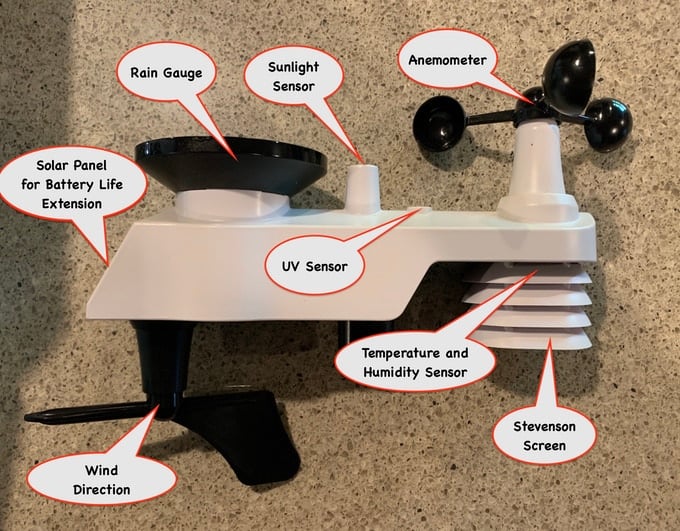
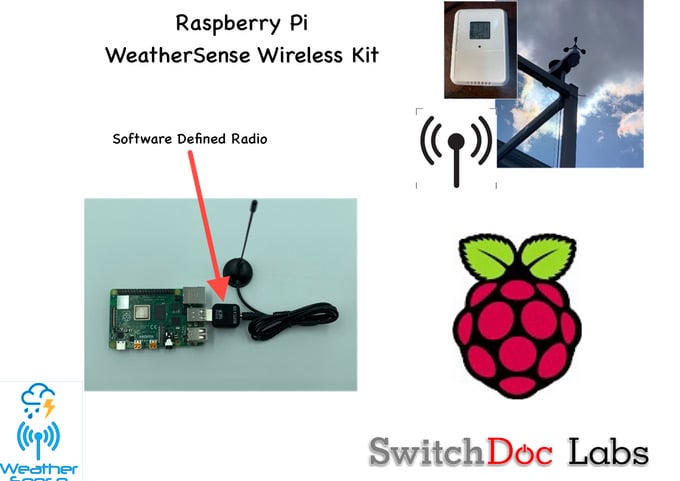
Nimrod makes his own sourdough and wanted a way to track the temperature and humidity of the bread making environment. To do this he's set up a system involving rtl_433 on a Raspberry Pi which live streams all of his home temperature/humidity sensor data into InfluxDB. The program rtl_433 is software for the RTL-SDR that allows users to receive data from many different brands of home weather/temperature sensors, as well as many other wireless ISM band devices. InfluxDB is a type of database that specializes in storing and displaying time series data from sources like sensors.
The chain of data starts with rtl_433 which collects the temperature sensor data via an RTL-SDR. The output of rtl_433 is sent to Mosquitto, an MQTT messaging protocol server. A program called Telegraf then subscribes to the MQTT queue, and parses and transmits the metrics to InfluxDB. InfluxDB finally records the data, and provides graphical plots.
Nimrod's post is a full tutorial showing how to download and set up each of the programs used in the system, and how to view the data collected with InfluxDBs graphing system.
Over on his YouTube channel Frugal Radio has released the second episode in his 2020 SDR Guide series. In this video, Frugal Radio shows how to connect to remote SDRs such as KiwiSDR OpenWebRX, WebSDR, SDR-Console v3 Servers, and SDR# SpyServers. He shows how to use these remote SDRs to monitor long range aviation channels, amateur radio operators, and VHF Public Safety channels in the US. He also demonstrates how to decode HFDL signals from aircraft using WebSDR and free software, and verifies the aircraft locations via online tracking sites.
2020 SDR Guide Ep 2 : How to use over 500 remote SDRs free online (webSDR, KiwiSDR & HFDL decode)
Sivan and his collaborators developed inexpensive 434 MHz band tracking tags for bats that emit radio pings every few seconds. These pings do not contain any location data, however the location is accurately tracked by several USRP SDRs with high accuracy GPSDO oscillators set up around the target tracking area. A radio direction finding technique known as "time difference of arrival" or TDoA is used to pinpoint the location of each tag. Sivan writes:
A wildlife tracking system called ATLAS, developed by Sivan Toledo from Tel-Aviv University in collaboration with Ran Nathan from the Hebrew university, enabled a science breakthrough reported in an article in Science that was published yesterday.
The system uses miniature tracking tags that transmit radio pings in the 434 MHz bands and SDR receivers (Ettus USRP N200 or B200). Software processes the samples from receivers to detect the pings and to estimate their time of arrival. The overall system is a "reverse-GPS" system, in the sense that the principles and math are similar to GPS, but the role of transmitters and receivers is reversed. A youtube video explains how the system works. SDR-RTL dongles can certainly detect the pings, but their oscillators are not stable enough to accurately localize the tags.
The system has been used to track 172 wild bats (in batches, some consisting of 60 simultaneously-tagged bats). The results showed that bats can make novel shortcuts, which indicates that they navigate using a cognitive map, like humans. The system, and other ATLAS systems in the Netherlands, England, Germany, and Israel are also tracking many different animals, mostly small birds and bats.
The video below shows the bats being tracked on a map accelerated to 100x.
434 MHz Tracking Devices that Attach to Wild Bats
The Science article itself is mostly about the discoveries on bat behaviour that were made by the system. However the YouTube video embedded below explains a bit more about how the technical radio side works.
A Technical Overview of the ATLAS Wildlife Tracking System