Tagged: rtl-sdr

Khanfar Software: Analog Radio Hunter

Recently, M. Khanfar released a new free program, "Analog Radio Hunter," described as a "professional RF analysis and monitoring application built around GNU Radio and Fosphor." The software currently supports RTL-SDR, Airspy, and HackRF. Khanfar writes:

Analog Radio Hunter is a professional RF analysis and monitoring application built around GNU Radio and Fosphor.

It is designed to scan large RF spans, quickly lock onto active signals, and monitor analog transmissions with NFM, AM, or WFM audio demodulation.

  • Real-time FFT + waterfall spectrum display
  • Fast scan with dwell, pause-on-squelch, and skip-ignored channels
  • Detection list with hits, timestamps, and smart deactivation
  • Favorites profiles with monitor and favorites-only scan modes
  • Built-in recorder with auto-record and event log
  • Dedicated WFM broadcast receiver with presets
  • Multi-SDR device support (RTL-SDR, Airspy, HackRF) with auto-detect and device switching
  • NFM and AM audio demodulation (in addition to WFM)
  • Peak-follow in span (auto-tune to strongest signal inside the current MS/s window)
  • Frequency list filtering to skip/mute ignored channels
  • Scan and detection profiles (save/load named presets)
  • PPM correction for RTL-SDR calibration
  • Spectrum interaction controls (cursor readout, click-to-tune, wheel step, drag-pan)
  • Recorder options (record when muted, timestamp/frequency in filename, beep on favorite)
  • WFM de-emphasis selection (50/75 µs) and preset management
  • Audio Output menu with refresh (route audio to speakers, VB-Cable, or USB output)
  • Signal Stability Filter with Min Open + Grace timing and per-target routing
  • Histogram IQ Rec with live IQ follow controls and inspectrum integration
  • Auto Squelch Calibrate (noise floor + margin) for faster field setup
  • Smart Deactivate dual-layer logic (time-based + hit-rate busy rule)
  • Favorites cooldown auto-reactivation for busy channels
  • Favorite TX tones (Tone 1-9), edge selection, and tone test buttons
  • Learning Mode hover guidance for faster onboarding
  • Status bar live metrics for Last, Active, Favorite, Peak SNR, and Level
Unique scanning and detection approach: Traditional sweep scanners only see the center frequency they step to. Analog Radio Hunter monitors an entire chunk of spectrum at once and reacts to peaks inside it. That is a major differentiator.
 

High-Impact Capabilities

  • Wide-span reactive scan engine that hunts activity across a full chunk, not one center point at a time.
  • One-click IQ capture and histogram visualization with follow and idle flow controls.
  • Carrier-resilient channel management using Smart Deactivate + favorites cooldown logic.
  • Field-ready setup speed using Auto Cal squelch and persistent live status metrics.
  • Operator-selectable audio routing to speakers, VB-Cable, or USB audio output devices.
  • Operational clarity from GUI color heatmaps, scan debug reasons, and learning-mode tips.

Signal Stability Filter: Logic and Tuning

  • Purpose: reject short squelch flicker and noisy open/close chatter before actions trigger.
  • Min Open (ms): raw squelch must stay open this long before stable-open is accepted.
  • Grace (ms): stable-open is held briefly after raw close to avoid tiny dropouts.
  • Apply targets: Detection, Rec+Alerts, Scan Hold, and optional Audio Out gating.
  • Start values: Min Open 150-250 ms, Grace 40-80 ms, then tune by channel behavior.

Like his other software, which we previously covered, it is free but not open source. Anti-virus programs may flag the software as suspicious due to heuristics. We believe this to be a false position, but please proceed at your own risk.
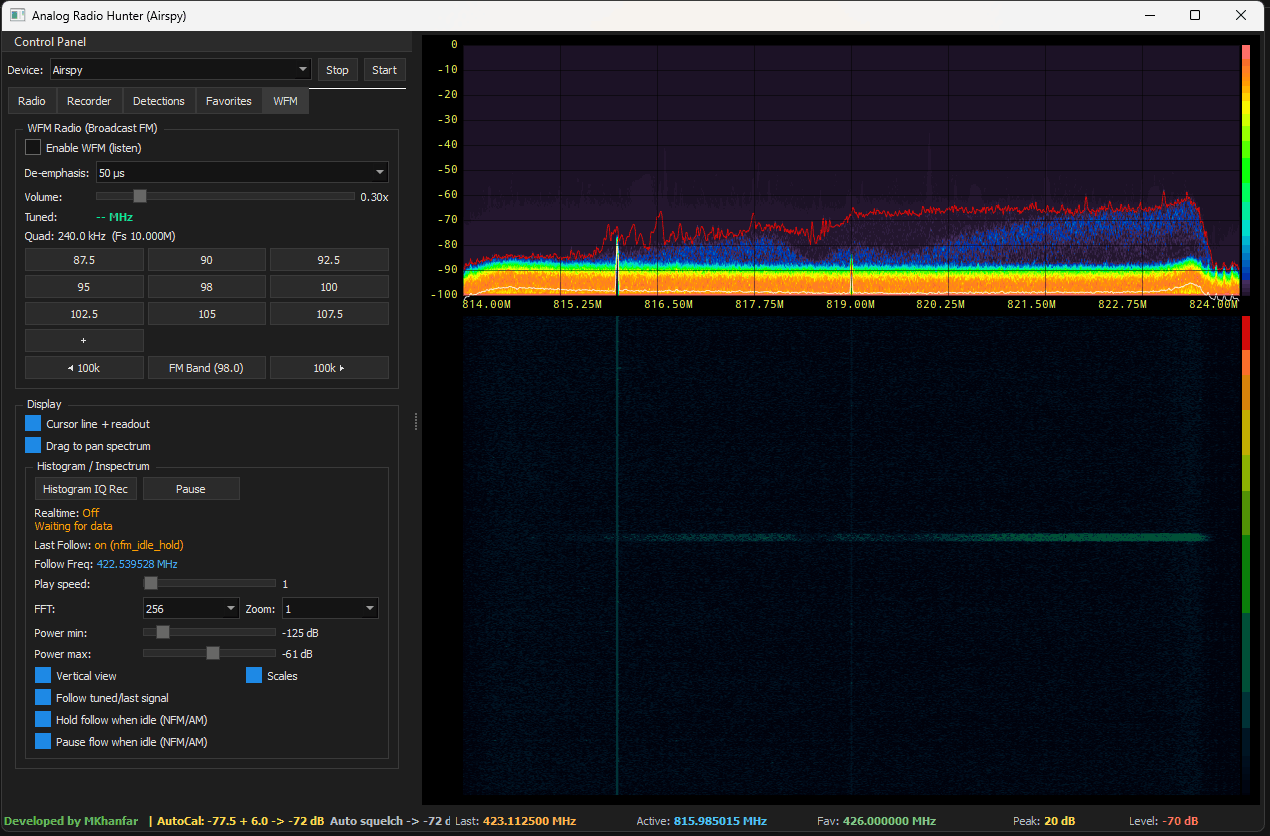
M Khanfar Analog Radio Hunter

Iridium-Sniffer: A Standalone Iridium Satellite Burst Detector and Demodulator

Thank you to Aaron, who is most well known for creating the DragonOS distribution, for writing in and sharing with us a new open-source program he's recently released over on GitHub.

The program is called 'Iridium-Sniffer', and it is a standalone Iridium satellite burst detector and demodulator written in C. Typically, gr-iridium has been used for Iridium demodulation in the past, but it can be clunky and slow on lower-power embedded systems like the Raspberry Pi, as it requires the large GNU Radio dependency.

The program is compatible with iridium-toolkit, which performs the actual decoding and analysis of the Iridium packets demodulated by iridium-sniffer.

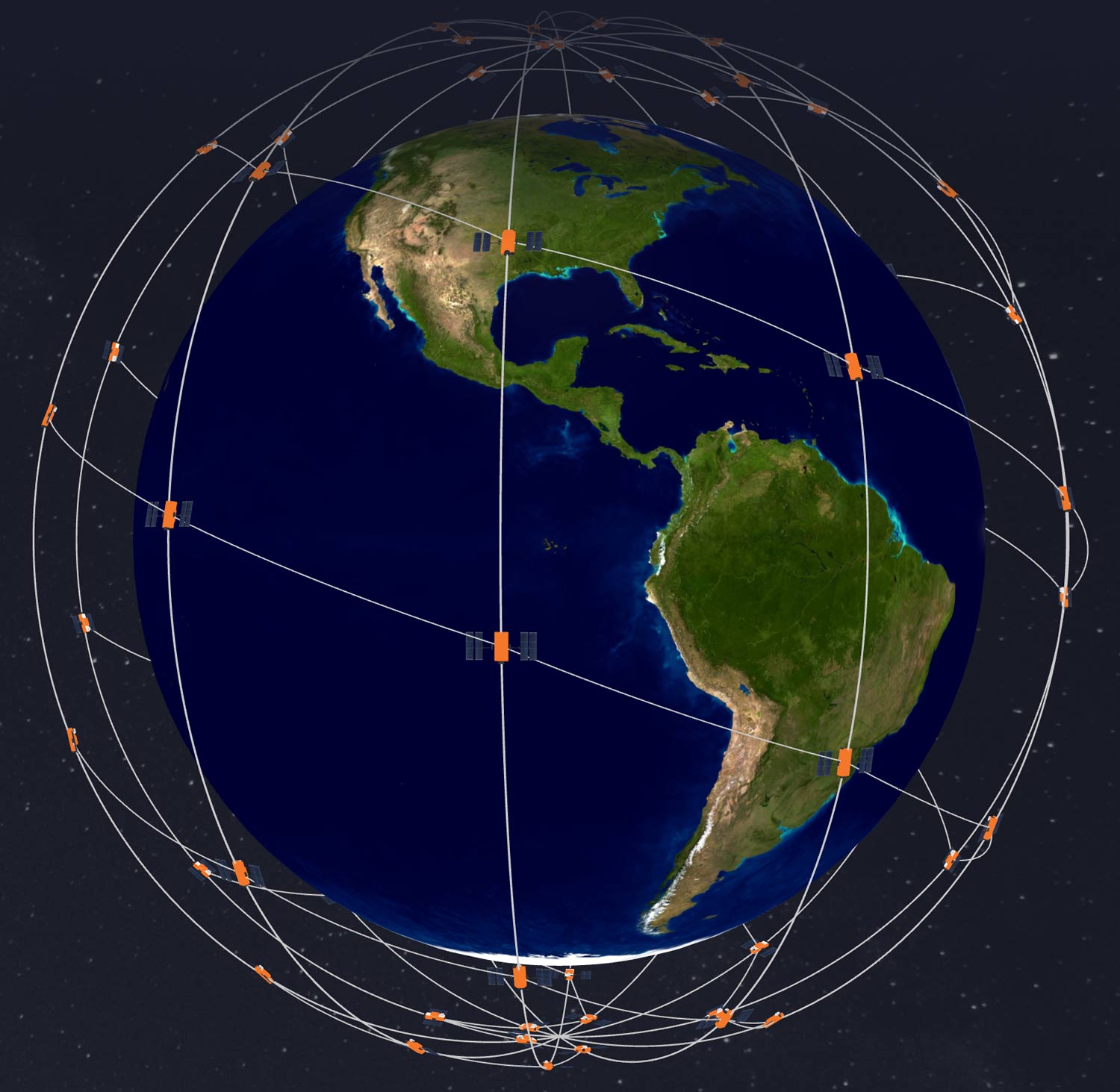
If you're not familiar with it, Iridium is a large global communications satellite constellation that provides services such as voice, messaging, and data. An antenna like our RTL-SDR Blog Active Patch antenna, combined with an SDR, can be used to receive these signals. Some data on Iridium is encrypted, but there is some unencrypted data that can be decoded when combining tools like iridium-sniffer and iridium-toolkit.

Iridium-sniffer is compatible with the HackRF, BladeRF, USRP (UHD), and SoapySDR (which includes RTL-SDR). Note that higher-bandwidth SDRs can receive much more of the ~30 MHz Iridium band, and therefore decode more data at once.

The Iridium Satellite Constellation

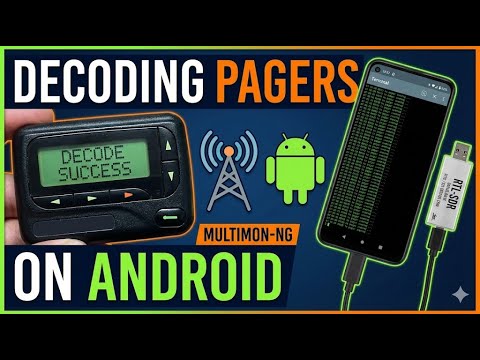
Multimon Pager Decoding on Android

Sarah (aka SignalsEverywhere) has recently released another open-source Android app that enables the multi-signal decoder Multimon-ng to be used on Android. Multimon-ng is a commonly used decoding app, that supports various protocols such as POCSAG/FLEX pagers, as well as DTMF, ZVEI, EAS and more.

The app requires the SDR++ Android app to be running in the background with an SDR like an RTL-SDR connected. The role of SDR++ is to receive the signal and send the demodulated audio over a network connection to the Multimon-NG app, which performs the final decoding.

The app APK can be downloaded from Sarah's website via a minimum $0 donation, or alternatively, built and installed from source.

Multimon-ng on Android!

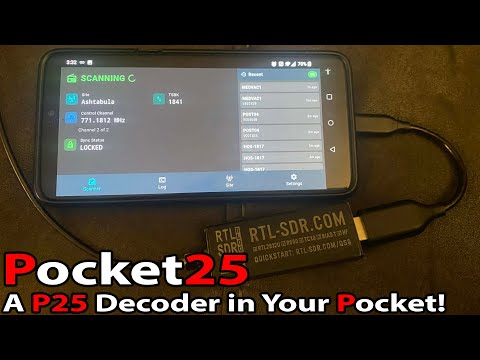
Pocket 25: An Android P25 Phase 1 Digital Voice Radio Decoder

Thank you to reader "EN53" for submitting news about a newly released open source Android app called Pocket 25. Pocket 25 is an Android-based APCO Project 25 (P25) phase 1 digital voice decoder based on the DSD-Neo decoder engine. It was developed by Sarah Rose (aka SignalsEverywhere), whose other software we have posted about in the past.

APCO P25 phase 1 trunked digital voice systems are commonly used in the United States, Canada, Australia, and other countries by emergency services. As long as the P25 network is unencrypted, it is commonly decoded to audio with an RTL-SDR and decoding software such as DSDPlus or SDRTrunk.

Pocket 25 allows users to now decode P25 signals on portable Android devices. An RTL-SDR can be connected to an Android device via a USB-OTG cable, or a remote networked RTL-SDR can be used via an rtl_tcp connection. The app also supports RadioReference accounts, automatic GPS site hopping, smart filtering, and logging.

In the readme, Sarah also notes that, because Pocket 25 is based on the DSD-Neo engine, it supports additional digital voice protocols, including DMR, NXDN, and others. However, the interface is designed around P25, so non-P25 systems may show incorrect metadata.

The software is open source and code can be found on the GitHub. There is also an active discussion about the app on RadioReference.

Pocket25 | Running DSD-Neo on Android!

Tech Minds: Testing Out A New Signals Intelligence Tool Called Intercept

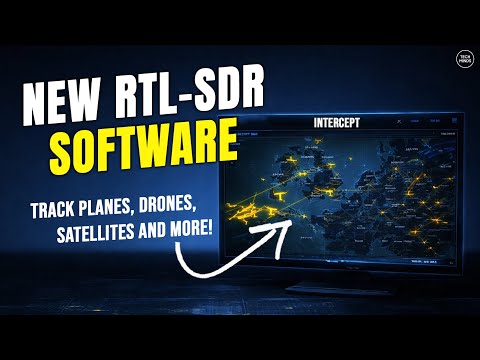
Over on the Tech Minds YouTube channel, Matt has uploaded a video where he tests out 'Intercept', a new tool for RF signals intelligence with RTL-SDRs and other wireless devices. It is open source with code available on GitHub and can be installed on Linux and OSX devices.

Intercept is a tool that combines multiple external decoder tools into one easy-to-access web interface. It is capable of the following:

  • Pager Decoding - POCSAG/FLEX via rtl_fm + multimon-ng
  • 433MHz Sensors - Weather stations, TPMS, IoT devices via rtl_433
  • Aircraft Tracking - ADS-B via dump1090 with real-time map and radar
  • Listening Post - Frequency scanner with audio monitoring
  • Satellite Tracking - Pass prediction using TLE data
  • WiFi Scanning - Monitor mode reconnaissance via aircrack-ng
  • Bluetooth Scanning - Device discovery and tracker detection

We note that features like WiFi and Bluetooth scanning will require a separate WiFi and Bluetooth adapter to be connected. In terms of supported SDR hardware, Intercept supports RTL-SDRs, as well as any SDR supported by SoapySDR.

In the video Matt shows how to install Intercept, and shows it decoding data from the various supported signal types.

Intercept Radio Signals For Intelligence Gathering With An RTL SDR

Guglielmo FM and DAB Receiver Software Updated to Version 0.7

Thank you to Marco for letting us know that his Guglielmo software has recently been updated to Version 0.7.

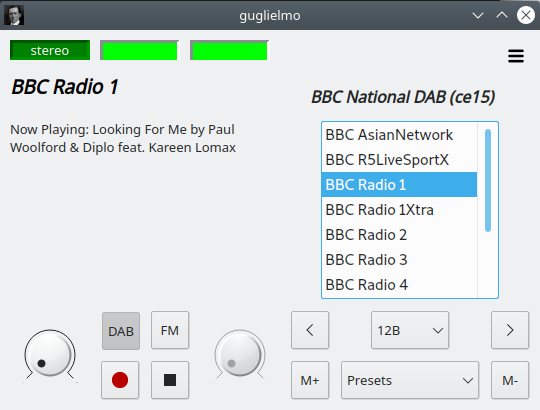
Guglielmo is an FM and DAB receiver for Linux, Windows and MacOS. It supports all major SDRs, including RTL-SDR, Airspy, SDRplay, HackRF, and LimeSDR. It is designed to be easy to use for media users rather than hobbyist technical users.

Version 0.7 adds the following features:

  • Raspberry PI appimage
  • UI improvements
  • Basic skins support
  • Logo handling

The new Raspberry Pi appimage, and binaries for other platforms can be found on the GitHub Releases page. Just expand the "assets" tab.

Guglielmo: Screenshot of the DAB Interface

Mykola: A New Fast Multichannel Scanner Application for RTL-SDR, Airspy and HackRF

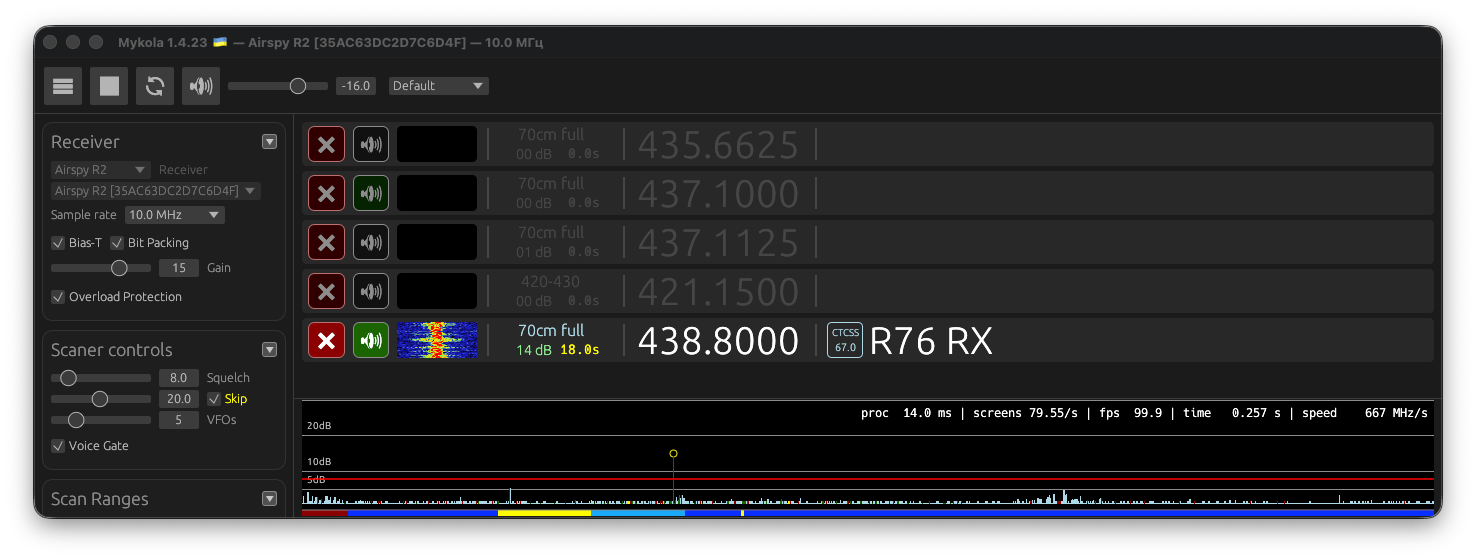
A new multichannel SDR scanner application called 'Mykola' has recently been released by a Ukrainian programmer with the same name as the application. A scanner application allows users to scan a much wider bandwidth than the SDR's instantaneous bandwidth, while automatically searching for active signals.

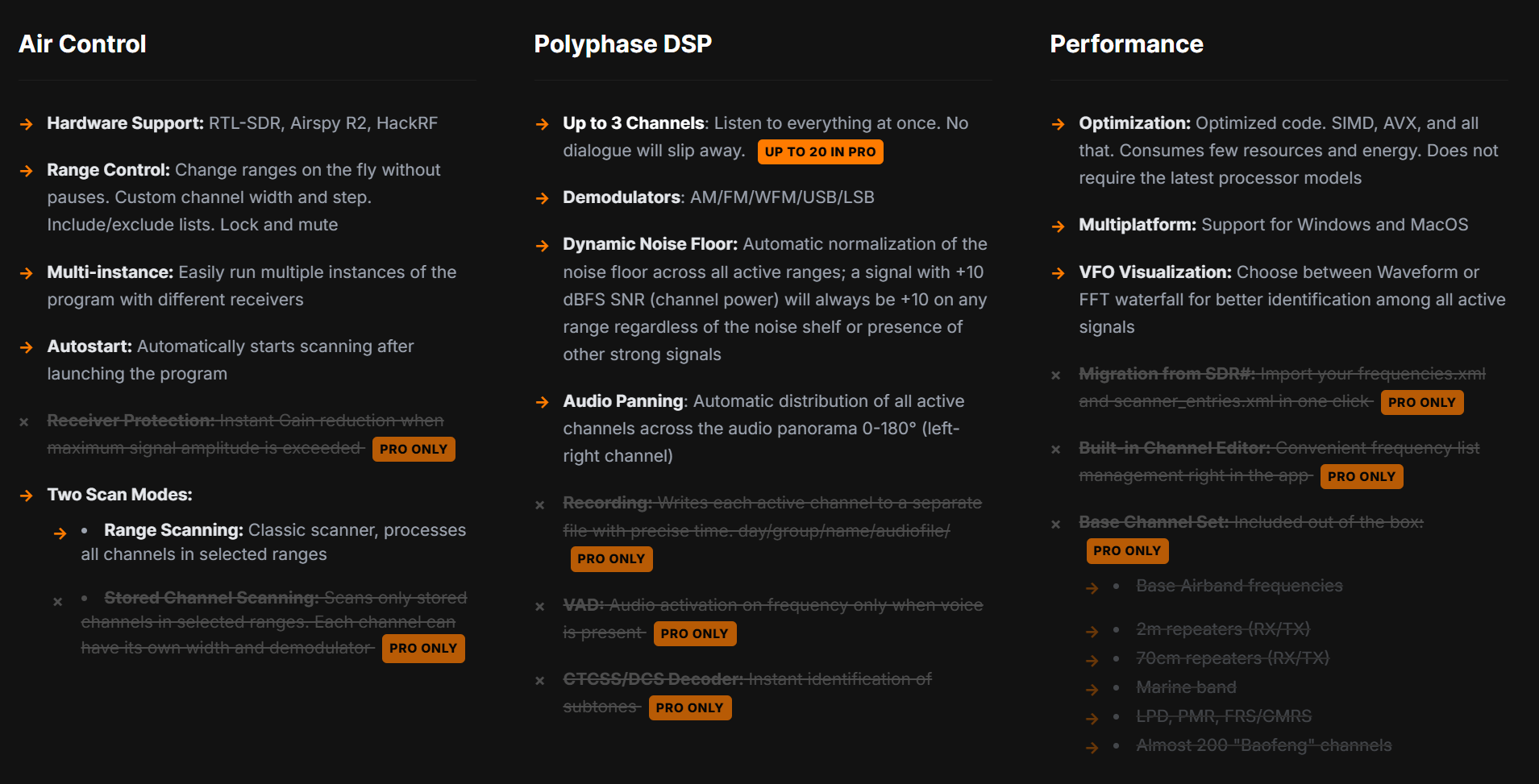
Mykola advertises extreme scanning speed abilities, adaptive noise floor, and simultaneous demodulation of 3 channels (20 in the paid pro version). It currently supports RTL-SDR, Airspy R2, and HackRF SDR devices. Some of the other features include automatic normalization of the noise floor, audio panning, and support for Windows and macOS.

The application is free, but a pro version will be available in the future, which enables additional features such as stored channel scanning, recording, voice activation, CTCSS/DCS decoder, SDR migration, channel editor, and a base channel set. The pro version is not yet available, and pricing has not been announced. 

Features of the Mykola Scanning Software
Mykola Scanner Interface

SDRSharp Frequency Manager Python Application

Thank you to Argilli Marco (IU4HMY) for writing in and sharing with us his Python application called "SDR# Frequency Manager 1.0.1" for managing frequency lists in SDR#. SDR# is a popular free SDR program commonly used with RTL-SDR and Airspy dongles. Argilli writes:

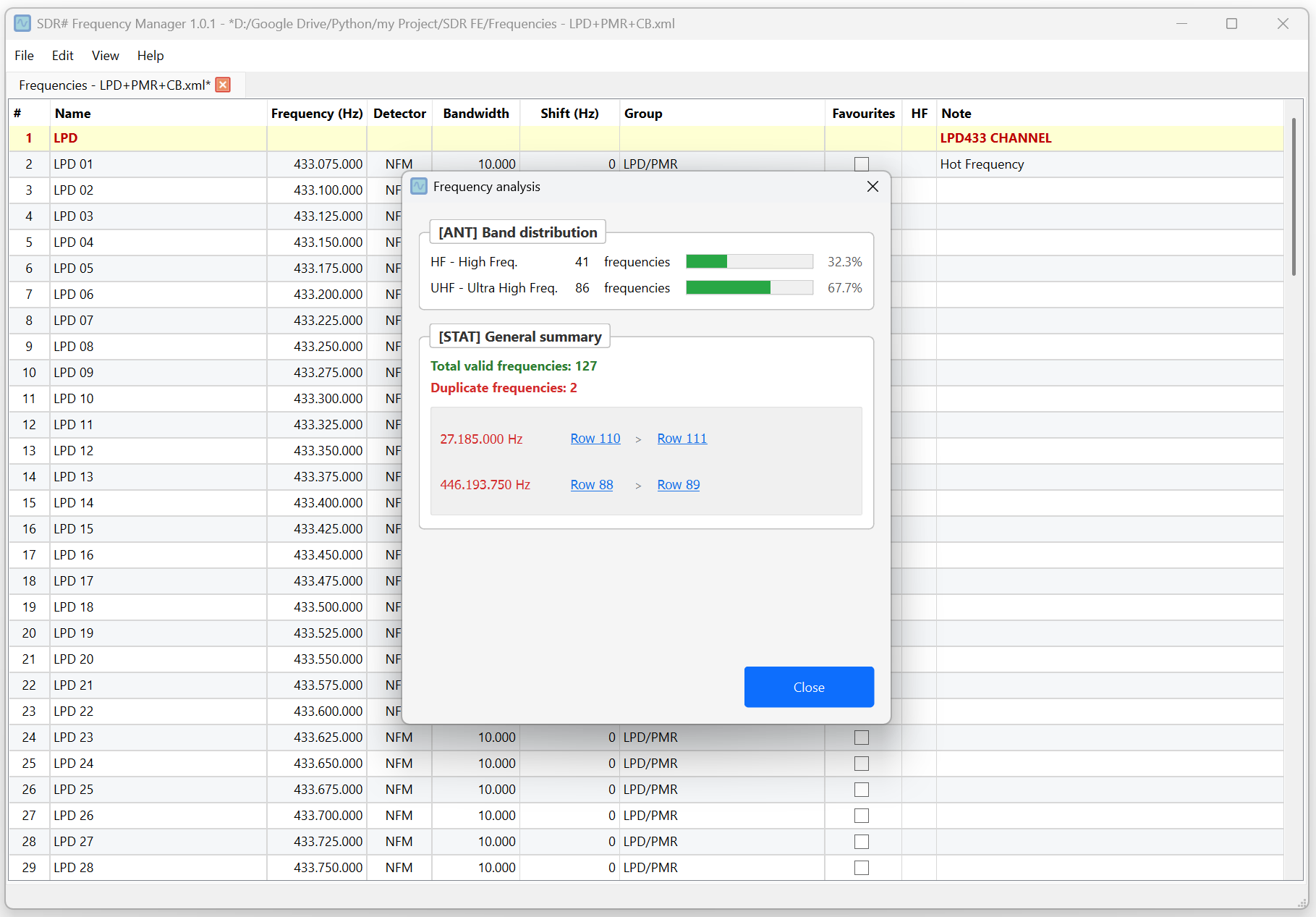
SDR# Frequency Manager is a Python application designed to simplify the management and editing of frequency lists used by SDR#. The software allows you to open, edit, and save SDR# XML frequency files in a clear and structured interface.

The application is free but closed source and available on his website.

SDR# Frequency Manager Python Application