Eric had an inverted L and T3FD antenna set up in his backyard and he wanted to test both at the same time to see which received HF better overall. Rather than relying on subjective 'by ear' measurements he decided to use the digital FT8 mode as his comparison signal. FT8 is quite useful for this purpose as the decoded data includes a calculated signal-to-noise (SNR) reading which is a non subjective measure that can be used for comparisons. It also contains information about the location of the signal which can be used for determining the DX capability of the antenna.
To perform the comparison he used two or our RTL-SDR Blog V3 dongles running in direct sampling mode, and also added an additional low pass filter to prevent excessively strong TV and FM signals from overloading the input. Each antenna is connected to it's own RTL-SDR, and a modified version of GQRX with remote UDP control is used to switch between multiple FT8 frequencies so that multiple bands can be covered in the experiment. WSJT-X is used for decoding the FT8 packets.
After logging SNR values for several days he was able to plot and compare the number of packets received by each antenna, the maximum distance received by each antenna. His results showed that his inverted L antenna was best in both regards. He then performed a relative comparison with the SNR readings and found that the inverted L performed best apart from at 14 MHz, where the T3FD performed better.
In further tests he also compared the antennas on which signal headings they were receiving best from. The results showed that Erics inverted L was receiving best from one direction only, whereas the T3FD received signals from more headings.
Eric's post includes full instructions on the software setup and also Python code which can be used to replicate his experiments. We think that this is a great way to objectively compare two types of antennas.
Antenna directionality measurements via FT8 received headings
This weeks video on the TechMinds channel explores the various online web SDRs that are available to access for free. Accessing these online SDRs does not require any hardware apart from a PC and internet connection, although of course you are then receiving signals from a different location to yourself.
In the video he shows how to access the SDR# Spy Server Network which mostly consists of Airpsy and RTL-SDR units, the SDR-Console V3 Server network which consists of a wide array of different SDRs, the browser based WebSDR network which is mostly soundcard based SDRs but also RTL-SDR and other SDRs, and finally the KiwiSDR network which is made up of KiwiSDRs.
Using Software Defined Radio Without SDR Hardware - WebSDR
Thank you to Frugal Radio for submitting a YouTube video where he tests the YouLoop on an RTL-SDR Blog V3 running in direct sampling mode. The YouLoop is a passive HF loop antenna that requires a highly sensitive SDR like the Airspy HF+ Discovery to work at its full potential. However, in direct sampling mode the RTL-SDR Blog V3 does have enough sensitivity to work with the antenna to some extent thanks to the HF amplifier that is used on the direct sampling circuit. In the video Frugal Radio demonstrates the YouLoop receiving various HF signals.
Will an AirSpy YouLoop work with an RTL-SDR v3 on HF in direct sampling mode? It shouldn't...
We also note a second video by Bartłomiej Marcinkowski which shows an RTL-SDR Blog V3 in direct sampling mode running with a DIY YouLoop and MiniWhip. The MiniWhip does have increased signal strength, but the YouLoop is still usable and may be a better choice in the presence of interference. Later in the video he compares the RTL-SDR Blog V3 with MiniWhip against the Airspy HF+ Discovery with DIY YouLoop.
RTL-SDR v3 & YouLoop vs RTL-SDR v3 & MiniWhip vs AirSpy HF+ Discovery & YouLoop [80m,40m,20m]
Over on his YouTube channel Frugal Radio has been testing his YouLoop passive magnetic loop antenna on VLF and LF reception with his Airspy HF+ Discovery. In the video Frugal Radio browses the VLF & LF spectrum, making note of some interesting signals, and showing how well the combo receives.
The YouLoop is a low cost passive loop antenna for HF and VHF. It is based on the Möbius loop design which results in a high degree of noise cancelling. However the main drawback is that it is a non-resonant design, which means that it needs to be used with ultra low MDS receivers like the Airspy HF+ Discovery. We have YouLoop stock available in our shop for $34.95 with free worldwide shipping.
Airpsy YouLoop passive antenna review on VLF & LF with an HF+ Discovery and SDR# during storms!
In a recent YouTube video Tech Minds shows how to decode GMDSS (Global Maritime Distress and Safety System) messages which are broadcast on MW and HF. In the video he explains the DSC (Digital Selective Calling) which allows calls to be made to individual ships, a group or all stations. He goes on to demonstrate the YADD GMDSS DSC decoder running via the HF audio piped in from SDRUno and received with an SDRPlay RSPdx.
How To Decode Maritime Distress Messages GMDSS DSC
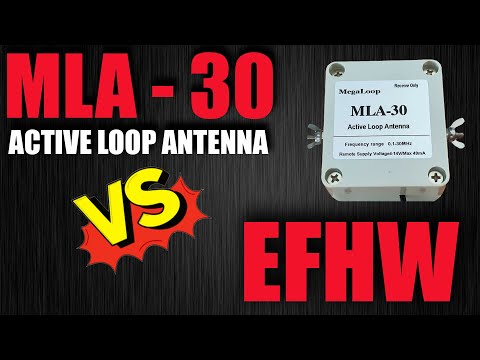
Over on YouTube Tech Minds has uploaded a new video where he reviews the MLA-30 active HF loop antenna. In the past we have posted about the MLA-30 antenna a several times on the blog as it is the cheapest active loop antenna available on the market, can be powered by the RTL-SDR Blog V3's bias tee, and generally loop antennas can give good HF performance in a small package. In the video he compares the MLA-30 against an end-fed halfwave antenna and concludes that the MLA-30 works well at the lower frequencies, but not so well in the higher bands.
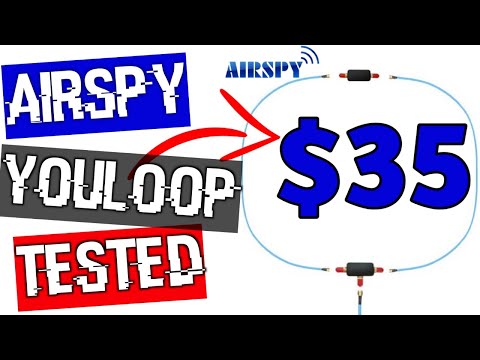
Thank you to Robin from the "Frugal Radio" channel on YouTube for submitting his latest video which is a review of the Airspy YouLoop antenna that we currently have for sale on our store for $34.95 including shipping.
The YouLoop is a low cost passive loop antenna for HF and VHF. It is based on the Möbius loop design which results in a high degree of noise cancelling. However the main drawback is that it is a non-resonant design, which means that it needs to be used with ultra low MDS receivers like the Airspy HF+ Discovery. However, a high performance HF pre-amp will be available in the future which will allow it to work well with other radios too.
In his video Robin tests the YouLoop on the HF bands with an Airspy HF+ Discovery and he demonstrates excellent noise free reception from his location. In terms of his setup he notes:
I am running Spyserver on a 10 year old Windows 7 laptop in the loft. The same laptop is also running 3 x SDRSharp instances (following 2 digital trunking systems). It runs 4 x simultaneous Zello instances each providing a high quality audio feed to my Network Radio / phone.
In terms of noise-creating equipment nearby, there is
a second laptop used for other duties
a Pi 3B used for ADS-B reception, feeds & a second instance of spyserver
a Pi 3A with MMDVM module performing as a hotspot
a Motorola HT charger
5 x base station scanners
This means there are 10 x switched mode power supplies constantly running, as well as 4 x 24/7 WiFi devices.
All this equipment is within 10ft of the YouLoop antenna, was one of my primary reason for choosing a passive loop.
Since making the video, cable clips have been added provide support to the antenna which means it is now in the correct shape of a loop. That means I am unable to rotate the antenna to make use of the nulls when receiving. However I am very pleased with the performance based on the location, noisy environment, and frugal pricing :-)
$35 Airspy YouLoop Passive Antenna Review : tested on HF using Airspy HF+ Discovery SDR
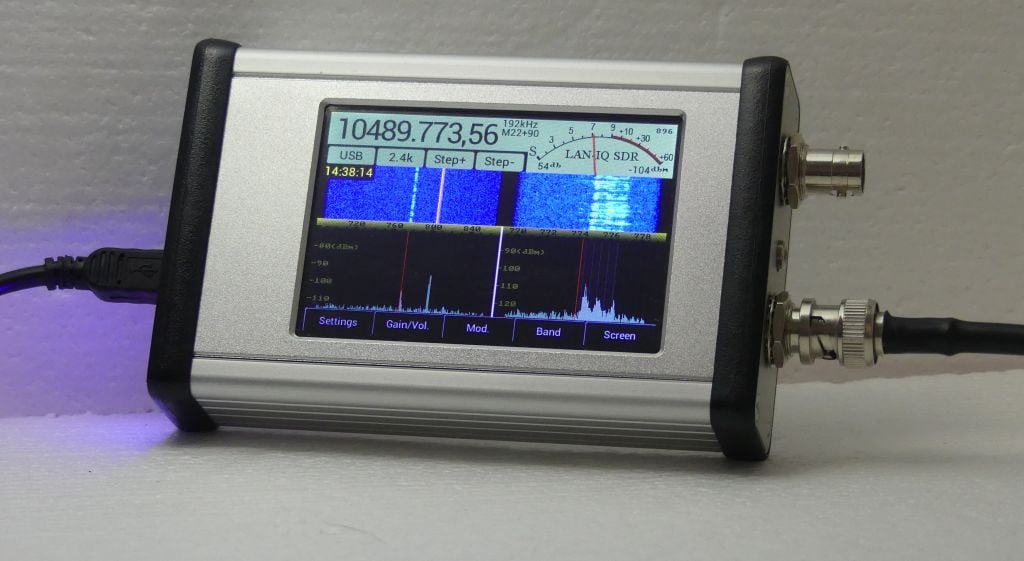
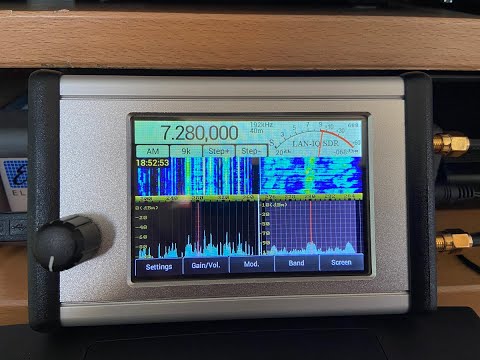
AFEDRI have recently begun shipping their new software defined radio called the "LAN-IQ". The LAN-IQ is a full standalone SDR with good advertised specifications and a very decent price of only US$339. The advertised specs from the Afedri LAN-IQ website are pasted below:
LAN-IQ SDR is stand-alone, direct sampling Software Defined Receiver (see picture above) it has ability to send it's received I/Q stream in three different modes:
Stand-Alone (Digital processing, filtering , decoding is implemented inside SDR)
Network (LAN)
USB
LAN-IQ SDR has the following specification:
Frequency Coverage: 0.03MHz-35MHz & 35MHz-1700MHz
Noise Figure: ~11dB (for 1MHz-35Mhz range and maximum RF gain 35dB)* *input VGA (Variable Gain Amplifier) has variable Gain from -10dB up to +35dB
Noise Figure: ~3.5dB (for 50MHz-435Mhz range and maximum LNA/MIX gain )
MDS: -136 dBm at 500Hz bandwidth (0.03MHz-35MHz)
MDS: -143.5 dBm at 500Hz bandwidth (50MHz-435Mhz)
Output data format: two 16-bit I/Q channels (audio stereo stream emulation)
Maximum Receiving Bandwidth:
BW = up to 2200kHz (for 2400kHz sample rate) - using Network connection
BW = up to 706kHz (for 768kHz sample rate) - instand-alone mode
BW = up to 230kHz (for 250k samples/s sample rate) - using USB connection
RF ADC sampling rate: 76.800 MHz
Power Supply Voltage Requirements:
5V (supplied from the PC's USB bus or from external) or from external power supply able to provide 5VDC +/-0.2V).
7.0-10V DC to the DC power connector.
Power Supply Current Requirements:
up to 850mA (max. LCD brightness, network cable connected, VHF/SHF band)
The LAN-IQ SDR is designed to be used in stand-alone mode , i.e. without need to use any additional computer and software.
In same time the SDR can be connected and used with Personal Computer (PC) by two interfaces:
1. Ethernet Network connection.
This can now provide up to 2400 kHz sample rate
2. Full Speed USB
From PC point of view, the SDR-Net can be used alternatively as:
1. Network device using two IP protocols: TCP and UDP.
TCP protocol is used to control the SDR parameters.
UDP protocol is used to send received I/Q stream from SDR to PC
2. Or exactly like the AFEDRI SDR-Net -USB Composite Device, that contains two USB functions:
Generic USB Audio device - to transfer baseband I/Q signal, as an audio stereo stream
From the Afedri Groups.io forum we've learned that by default the unit will come without the tuning knob, but a knob can be requested if preferred, although it comes with some limitations.
Ordering of the LAN-IQ is done via email only, and the email address can be obtained at the end of their ordering page. They accept PayPal, and shipping costs anywhere from $18 - $32 depending on the country. Also regarding shipping they note that deliveries may be delayed due to COVID-19 which is of course the case for every global delivery right now.
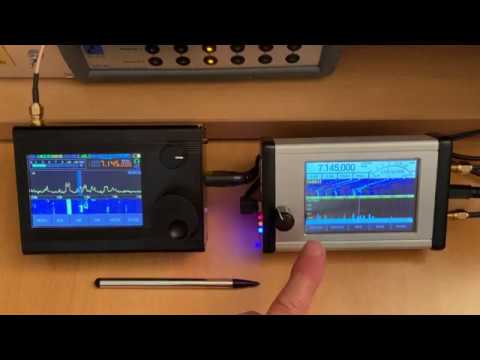
From the SWLing Post blog post we've also learned of a short demonstration video created by Fenu-Radio which is shown below. We are also awaiting his full review which will be posted on fenu-radio.ch.
Afedri LAN-IQ in Action
In a second video Fenu-Radio compares the LAN-IQ against the Malahit-DSP which is another similar low cost standalone SDR which we posted about back in November 2019.


![RTL-SDR v3 & YouLoop vs RTL-SDR v3 & MiniWhip vs AirSpy HF+ Discovery & YouLoop [80m,40m,20m]](https://www.rtl-sdr.com/wp-content/plugins/wp-youtube-lyte/lyteCache.php?origThumbUrl=https%3A%2F%2Fi.ytimg.com%2Fvi%2FiIklM9F52lQ%2F0.jpg)