To reverse engineer the drones wireless communications system the teams used software defined radios like the HackRF and BladeRF, and also an alternative method involving just using an Arduino and nRF24L01+ receiver chip. Once the signal was received, they used GNU Radio to decode the signal into packets of data. After analyzing the data they found that the data bytes were easily reverse engineered and then were able to transmit their own data packets to control the drone. The post goes into further detail on the specifics of the reverse engineering.
The Syma X8C drone to be stolen in the competition.
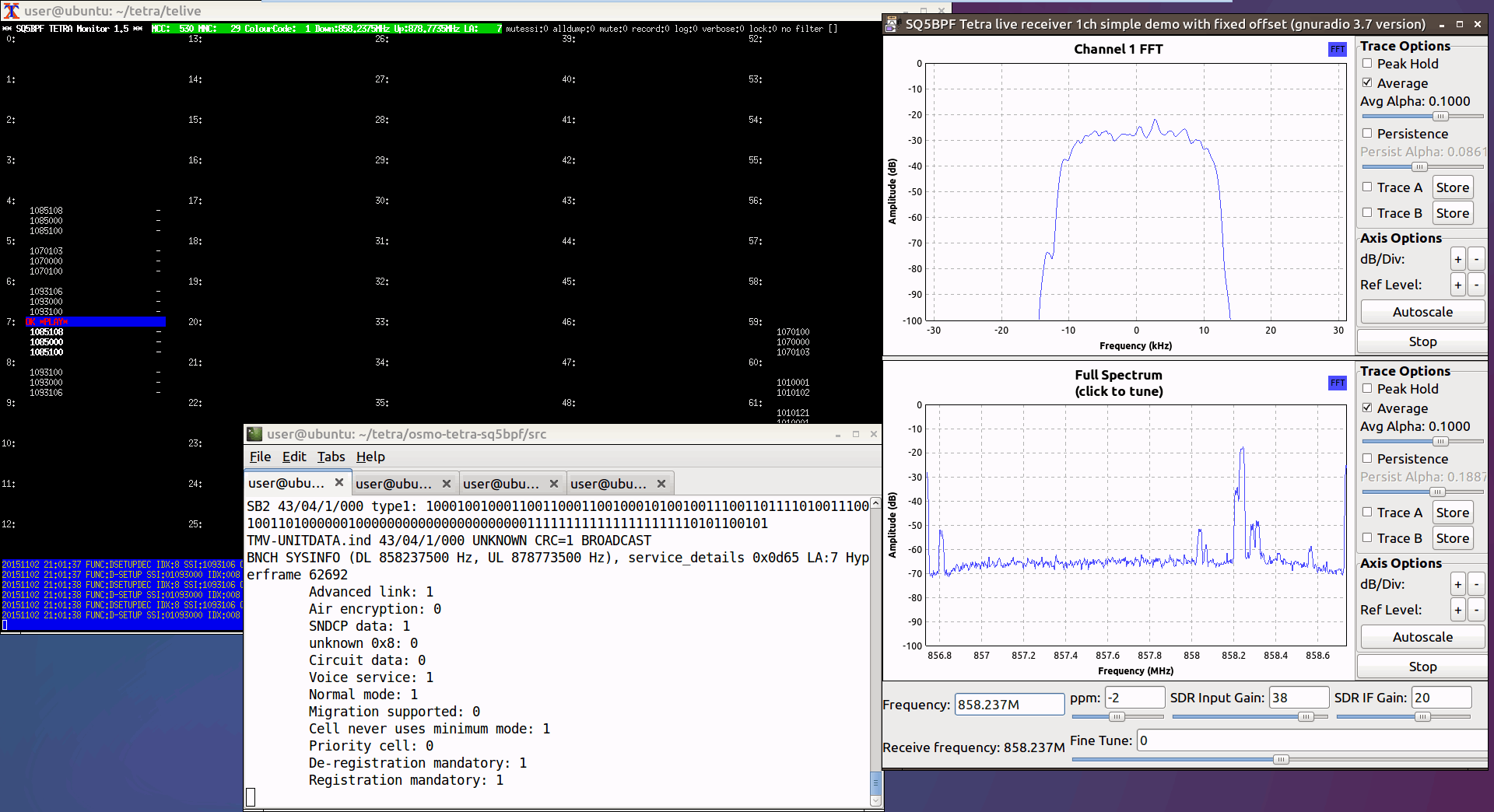
Dejan Ornig, a 26 year old student at the University of Maribor’s Faculty of Criminal Justice and Security was recently almost jailed for finding a security flaw in Police TETRA communications in his home country of Slovenia. Back in 2013 his University Computer Science class of 25 was assigned a task to research security vulnerabilities in TETRA. TETRA is a RF digital communications protocol often used by authorities due to its ability to be secured via encryption. During his research he used an RTL-SDR and the open source Osmocom TETRA decoder, and discovered a flaw in the Slovenian Police’s TETRA configuration which meant that encrypted communications were often being broadcast in the clear. Translated, Ornig said:
For $20 I bought a DVB-T receiver (RTL-SDR), on the Internet, I have found also freely available and open-source software OsmoCOM. Free access solution for decoding the signal Tetra eighth-tetra is already prepared in advance programming framework based on the platform GNU.
He goes on to say (translated):
I was even more surprised when I found that most users do not have authentication turned on the radio terminal, even though the Ministry of the Interior in the documents and tenders repeatedly wrote to all the radio terminals to access networks using authentication.
Shortly after discovering the flaw, Dejan privately contacted the authorities with his findings. But after two years of repeatedly contacting them and waiting for a fix, Dejan decided to take his story to a local news agency in February 2015. At this point the Slovenian Police became interested in Dejan, and instead of fixing the problem, decided to conduct a search on his house, seizing his computer and RTL-SDR. After the search the Police made life harder for Ornig by trying to lump on other problems. During the search they found a “counterfeit police badge” in his house and apparently accused him of impersonating a police officer, and after a search of his PC they also decided to charge him after finding out that he covertly recorded his ex-employer calling him an “idiot”.
Ornig has now been given a 15 month suspended jail sentence for attempting to “hack” the TETRA network. Fortunately the suspended part means that in order to not go to jail Ornig simply must not repeat his crime again within 3 years. While SDR’s and radios are not illegal in most countries this is a reminder to professional and amateur security researchers to check that what you are doing is legal in your country. Even if it is for the overall good, Police often do not have the technical competence to understand security researchers and may react illogically to findings. The good news about Ornig’s story is that apart from the suspended jail sentence the authorities appear to have now worked with him to fix the problems.
Over on his blog Caleb Madrigal has written a short article that describes how he was able to perform a simple relay attack against a Jeep Patriot vehicle which allowed him to unlock and lock his car via his HackRF. The replay attack is a very simple attack that can easily be performed with a TX capable SDR, like the HackRF. Essentially, all that is done is that a signal is recorded, and then rebroadcast (replayed) again. Normally, wireless car locks have rolling code security measures that prevent such an attack, but it appears that the 2006 Jeep Patriot has no such measures.
Caleb first recorded the unlock and lock signals using his HackRF with GNU Radio. He then took the step of opening the recorded file up in Audacity and isolating the unlock and lock audio signals, and then saving each signal to a separate file. Finally, after doing this he was able to transmit the unlock and lock waveforms which successfully locked and unlocked the Jeep.
Look up the device frequency and listen to it with an RTL-SDR and SDR#.
Record the signal and visually study the waveform in Audacity.
Look up system part info and determine encoding type (e.g. ASK/OOK)
Determine the bit string and baud rate.
Program the RFcat to send the same disarm binary string.
Once again research like this shows that cheap home alarm systems have literally zero protections against wireless attacks. In a previous post we also showed how the popular Simplisafe wireless alarm system could be disarmed in a somewhat similar way.
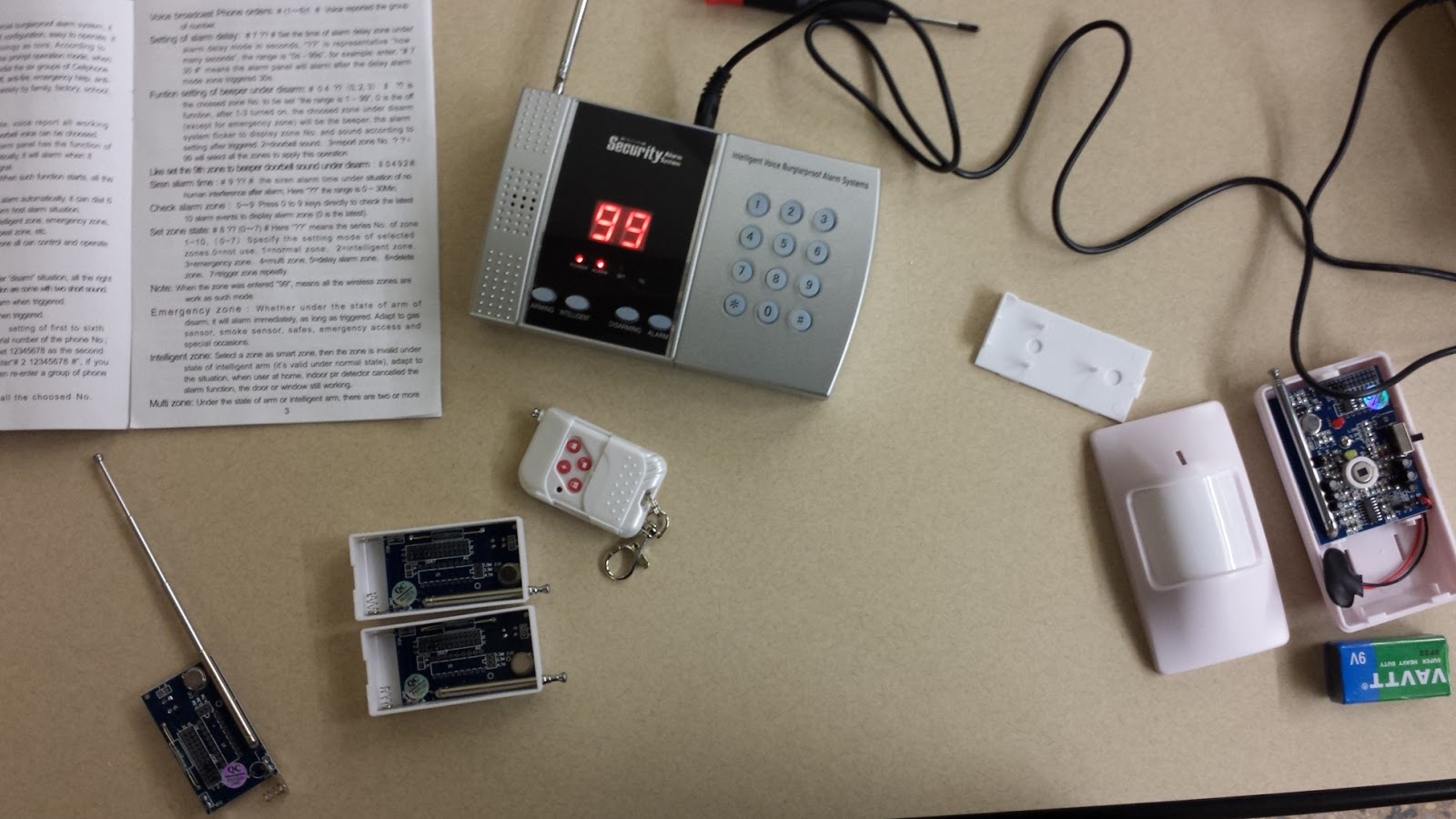
$50 home alarm system broken by an RTL-SDR and RFcat.
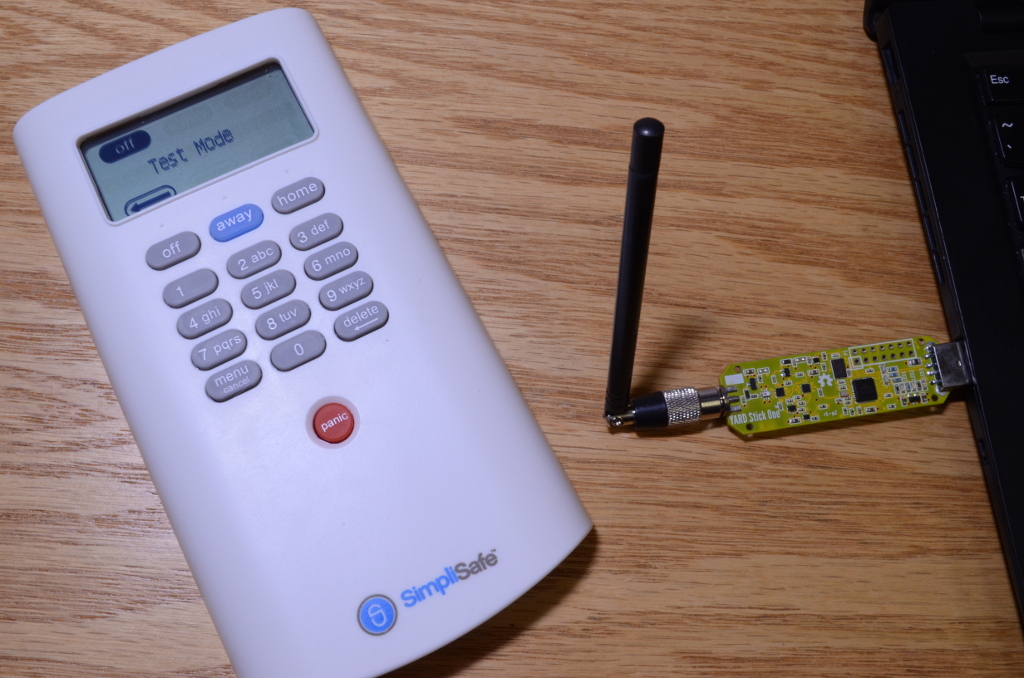
SimpliSafe is a home security system that relies on wireless radio communications between its various sensors and control panels. They claim that their system is installed in over 300,000 homes in North America. Unfortunately for SimpliSafe, earlier this week Dr. Andrew Zonenberg of IOActive Labs published an article showing how easy it is for an attacker to remotely disable their system. By using a logic analyser he was able to fairly easily reverse engineer enough of the protocol to discover which packets were the “PIN entered” packets. He then created a small electronic device out of a microcontroller that would passively listen for the PIN entered packet, save the packet into RAM, and then replay it on demand, disarming the alarm.
A few days later Micheal Ossmann (wireless security researcher and creator of the HackRF SDR and YardStick One) decided to have a go at this himself, using a YARD Stick One and a HackRF SDR. First he used the HackRF to record some packets to analyze the transmission. From the analysis he determined that the protocol was an Amplitude Shift Keying (ASK) encoded signal. With this and some other information he got from the recorded signal, he could then use his Yardstick One to instantly decode the raw symbols transmitted by the keypad and perform a replay attack if he wanted to.
Next, instead of doing a capture and replay attack like Andrew did, Micheal decided to take it further and actually decode the packets. This took him a few hours but it turned out to not be too difficult. Now he is able to recover the actual PIN number entered by a home owner from a distance without having to do any transmitting. With the right antenna someone could be gathering 100’s of PINs over a distance of many miles. Also, an expensive radio is not required, Micheal notes that the gathering of PIN numbers could just as easily be done on a cheap $10-$20 RTL-SDR dongle.
Micheal notes that the SimpliSafe alarm seems to lack even the most basic cryptographic protection, and that this is a problem that is seen all too often in wireless alarm systems. Rightly so, Micheal and Andrew are not publishing their code, although it seems that anyone with some basic knowledge could repeat their results.
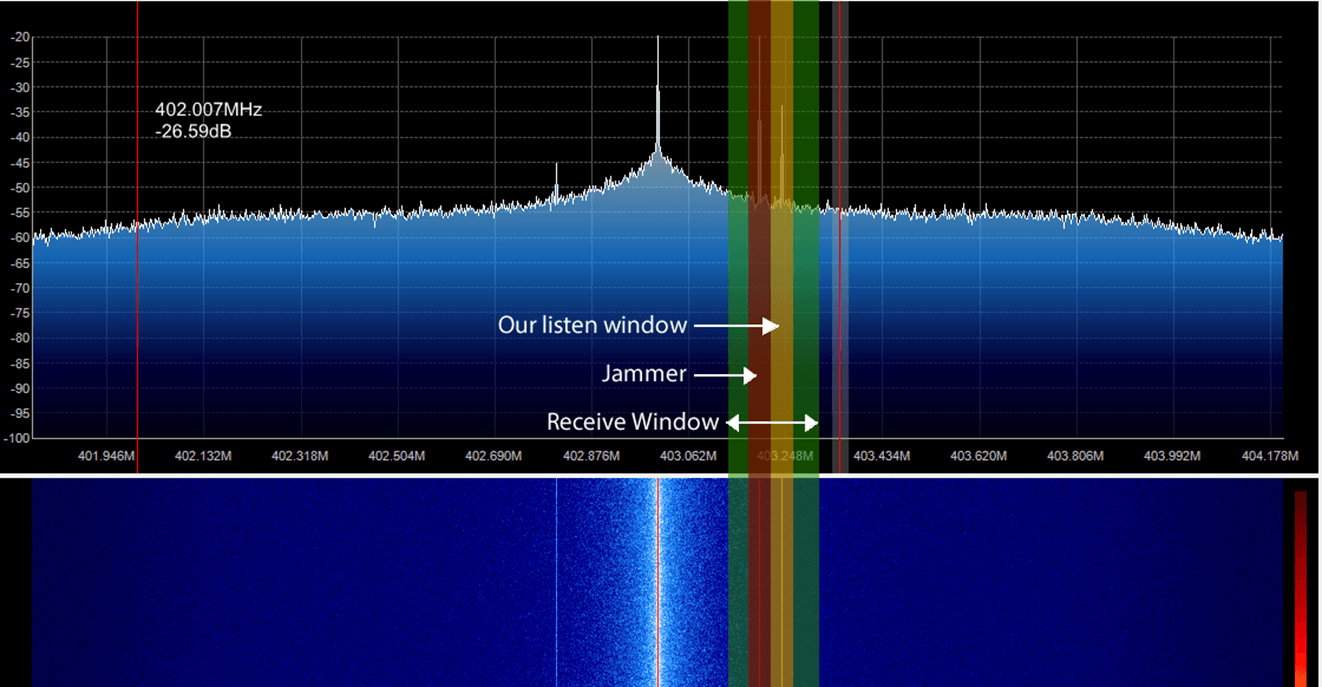
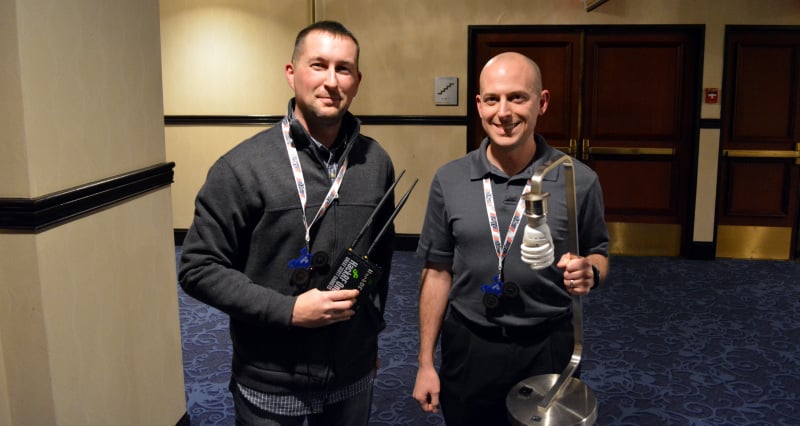
A while back we posted about Samy Kamkars popular “RollJam” device, which was a $32 home made device that was able to defeat rolling code based wireless security systems such as those used on modern cars.
Wireless security researcher Andrew Macpherson became interested in RollJam and has now written up a post showing how to create a similar device using the YardStickOne and RFcat wireless tools. In his post Andrew shows how he automates the replay attack side of things using a Python script and two RFcat devices. He also fully explains how rolling codes work and how to attack them using the CodeGrabbing/RollJam technique. Andrew explains the RollJam technique as follows:
Target parks their car, gets out the carAttacker launches a jammer that prevents the car from receiving the code from the remote
Target presses the remote, car does NOT lock and the attacker obtains the first keypress
Target presses the remote a second time and the attacker obtains the second keypress
Attacker then sends the first key press to lock the car, car locks as per normal
Target assumes all is well and carries on about their day
Attacker then sends the second keypress to the car, unlocking it
Profit.
Target returns to the vehicle and remote works as per normal
In the video below Andrew uses an SDR to help demonstrate the RollJam attack.
6. jam and replay rolling code rolljam codegrabbing
Z-wave is a wireless protocol that is used often in applications like smart home and industrial automation. It essentially allows various wireless nodes to connect and talk to one another within your house, using 900 MHz wireless technology. Some common examples of Z-wave node products might be wireless controlled lights, door locks, thermostats and other security devices like motion detectors.
Recently at Shmoocon 2016 (a yearly hacking and security themed conference), presenters Joseph Hall and Ben Ramsey showed how they were able to use a HackRF software defined radio and some GNU Radio based software to not only sniff Z-wave packets, but to also control Z-wave devices. What’s also interesting is that they found that encryption on z-wave devices was rarely enabled, except for five out of nine door locks that they tested where it was enabled by default.
Toorcon is a yearly conference that focusus on information security related topics. At the 2015 Toorcon conference Micheal Ossmann (inventor of the HackRF SDR) gave an interesting talk about reverse engineering wireless systems using software defined radio.
Back in November Micheal gave a bit of a quick tutorial on reverse engineering in a November edition of the YouTube web series Hak5. Now his full conference talk has been released over on his website. In his talk he uses a HackRF and a Yardstick One to show how to reverse engineer a wireless cabinet lock.