Wireless traffic lights reverse engineered with an RTL-SDR
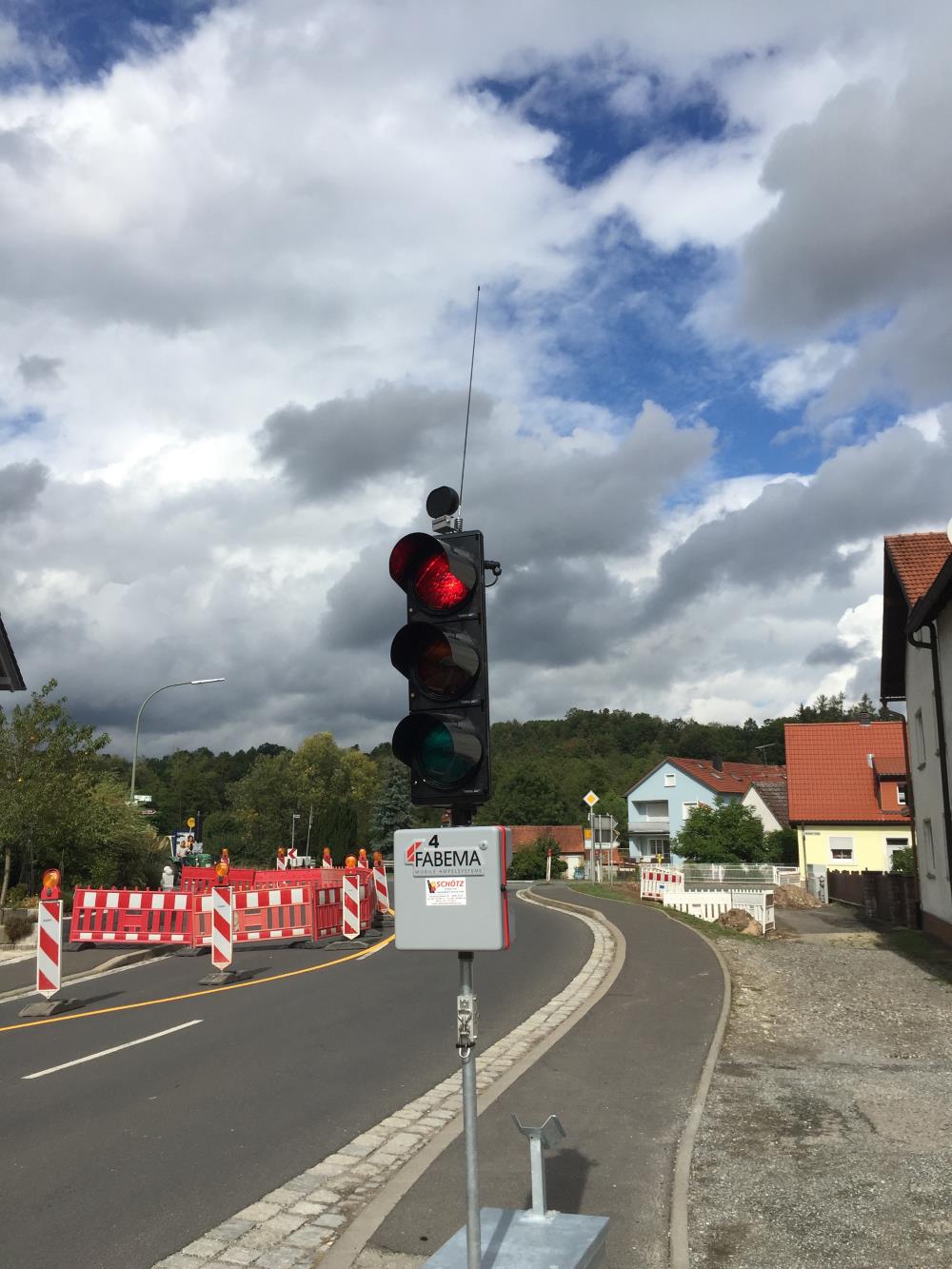
Bastian discovered two signals at around 170 MHz which corresponded to two pairs of lights. By analyzing the signal in Baudline and Audacity he discovered that the signal was AFSK1200 modulated between 1200Hz and 2400Hz. He then created a simple GNU Radio program which was able to output the frame bit data. After some analysis he was able to make sense of the structure and create a simple web interface that visualized the data as virtual traffic lights on his PC. The YouTube video below shows the signal and his RTL-SDR decoding software in action.
It seems that the telemetry is unencrypted, however we would assume that the control signals are encrypted.
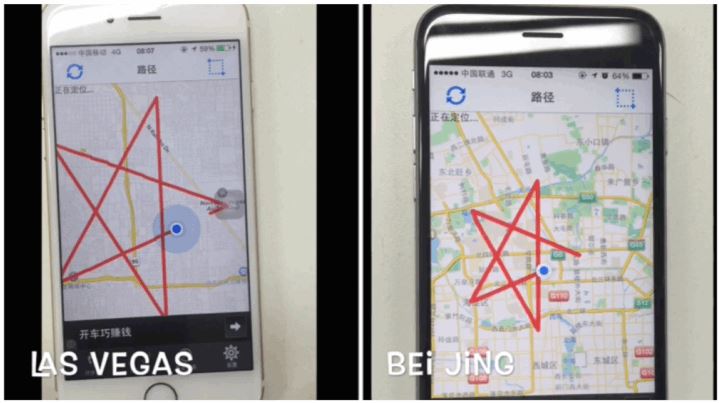
At this years Defcon 2015 conference researcher Lin Huang from Qihoo 360 presented her work on spoofing GPS signals. Qihoo 360 is a Chinese security company producing antivirus software. Lin works at Qihoo as a security researcher where her main job is to prevent their antivirus software and users from becoming vulnerable to wireless attacks. Her research brought her to the realm of GPS spoofing, where she discovered how easy it was to use relatively low cost SDRs like a USRP B210/BladeRF/HackRF to emulate GPS signals which could allow a wireless attacker to manipulate the GPS on smartphones and cars.
Previous attempts at GPS spoofing have all used more expensive custom hardware. One attempt in 2013 allowed university researchers to send a 213-foot yacht off course, and it is suspected that hackers from the Iranian government have used GPS spoofing to divert and land an American stealth drone back in 2011.
In Lin’s presentation she shows how she was able to trick a smartphone into thinking it was in a different location. In addition she writes how this method could be used to trick the phone into changing it’s time, as many smartphones will periodically refresh the clock accuracy by using GPS satellites. She also shows how she was able to bypass a DJI drones forbidden area no fly zone policy. DJI drones come with a feature where the engines will not power up if the on board GPS detects that it is in a no drone fly zone. By spoofing the GPS she was able to get the drone to power up inside a no fly zone in Beijng.
Researchers at the University College of London have found a way to use WiFi signals to see through walls, using a USRP software defined radio and software written in LabView. The researchers have shown that they are able to utilize local WiFi signals to detect and monitor moving objects such as people behind a wall in a similar fashion to how radar systems work. The advantage over traditional radar is that their system is completely passive, requiring no transmitter, other than the already ubiquitous WiFi signal.
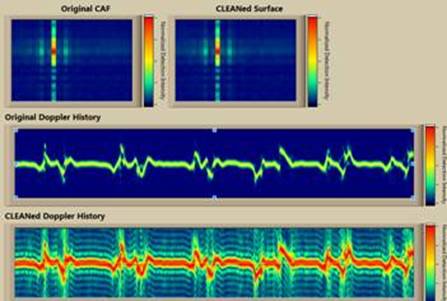
In a demonstration the researchers showed how they were able to not only detect the presence of a person behind a wall, but also detect small hand gestures that were made.
Detecting body gestures from WiFi signals in LabView.
It appears the researchers are patenting their work and are looking to market their technology towards military and security surveillance operators as well as towards other applications such as traffic monitoring and the monitoring of children and the elderly.
We aren’t sure what type of radio accuracy is required for a system such as this, but it may be possible that SDR’s that cost less than the USRP may also work, assuming the software technology can ever be replicated/licensed.
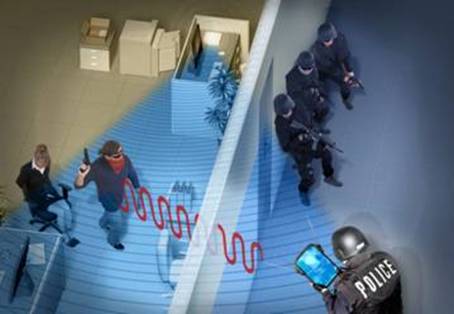
A proposed application of the technology: Allowing police to see through walls in a hostage situation.
At this years Def Con conference speaker Samy Kamkar revealed how he built a $32 device called “RollJam” which is able to break into cars and garages wirelessly, by defeating the rolling code protection offered by wireless entry keys. Def Con is a very popular yearly conference that focuses on computer security topics.
A rolling code improves wireless security by using a synchronized pseduo random number generator (PRNG) on the car and key. When the key is pressed the current code is transmitted, and if the code matches what the car is expecting the door opens. The seed for the PRNG in the car and key is then incremented. This prevents replay attacks.
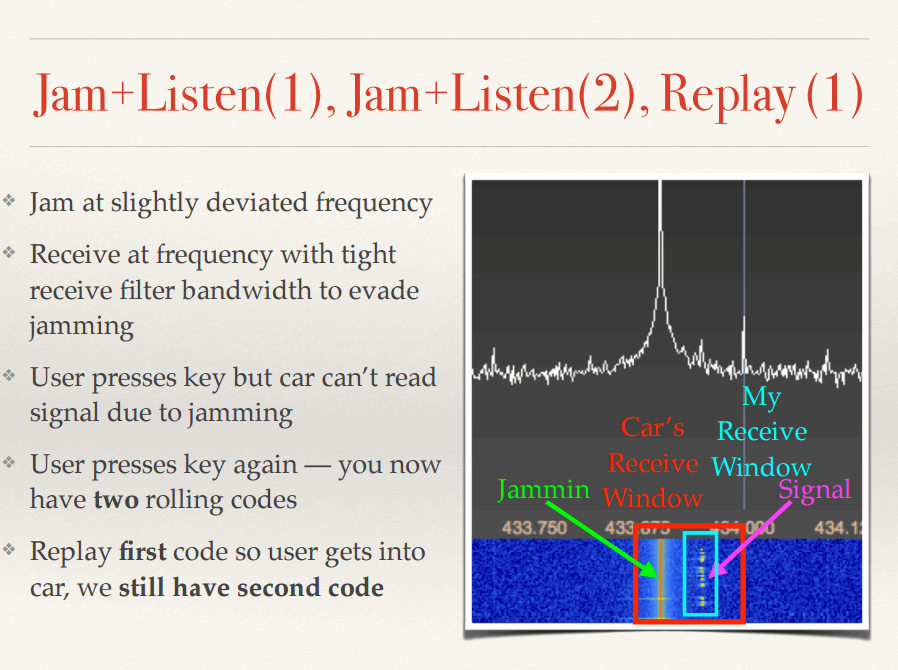
The RollJam hardware currently consists of a Teensy 3.1 microcontroller and two CC1101 433 MHz RF transceiver modules. It works by recording the wireless key signal, but at the same time jamming it so that the car does not receive the signal. When the key is pressed a second time the signal is first jammed and recorded again, but then the first code is replayed by the RollJam device. Now you have an unused code stored in RollJam that can be used to open the car. Samy shows how this works using an SDR and waterfall display graph in the following slide.
How RollJam Works
Samy’s full set of presentation slides can be downloaded from samy.pl/defcon2015. Also several large publications including networkworld.co, Wired.com and forbes.com have also covered this story with longer more in depth articles that may be of interest to readers.
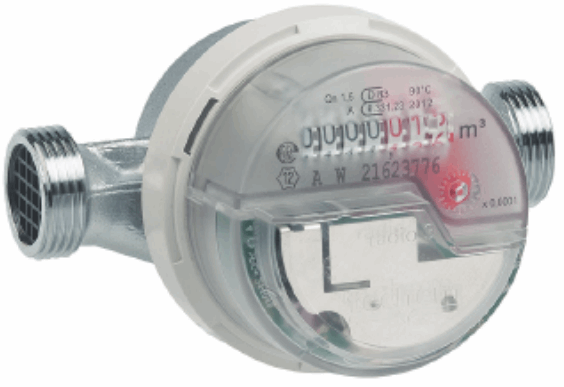
Over on YouTube a talk about decoding water and electricity usage meters with an RTL-SDR has been uploaded from the 2015 Camp++ conference in Hungary. The presenter, Stef writes:
Budapest public utilities started to roll out some new metering devices for water and heating (at least in my block). The plumbers who should install these could not tell me about the privacy protections considered, as I was a bit worried about the things leaking information over radio-waves, so I built a radio and reversed the messages.
The talk shows how the presenter was able to reverse engineer the FSK wireless protocol of his heating meter with help from some patent information that he found on the web. Using a GNU Radio flow graph that he created he was able to extract information such as total energy consumption and temperature readings.
Being a security themed conference, the presenter also discusses some of the security risks associated with wireless meters such as whether or not the meter can be used to detect if someone is currently at home.
The theory behind the RNG is by taking advantage of atmospheric noise, which is caused by natural occurrences, such as weak galactic radiation from the center of our Milky Way Galaxy to the stronger local and remote lightning strikes. It’s estimated that roughly 40 lightning strikes are hitting the Earth every second, which equates to about 3.5 million strikes per 24 hour period. Interestingly enough, this provides a great deal of entropy for a random number generator.
In the post Aaron also shows how to put the rtl_entropy generated data through some standardized randomness tests, how to visualize the random output and also shows how to use rtl_entropy to generate 80-bit entropy passwords.
Visualizing the random noise output of rtl_entropy.
They write about the performance of their results:
Using GnuPG as our study case, we can, on some machines:
distinguish between the spectral signatures of different RSA secret keys (signing or decryption), and
fully extract decryption keys, by measuring the laptop’s electromagnetic emanations during decryption of a chosen ciphertext.
In their experiments they used a Funcube Dongle Pro+ to measure the unintentional RF emissions coming out of a laptop computer at around 1.6-1.75 MHz, but they also mention that a low cost RTL-SDR with upconverter could also work.
Every time the CPU on a target PC performs a new operation the unintentional frequency signature that is emitted changes. From these emissions they are able to use the unique RF signature to determine what operations are being performed by the CPU, and from that they can work out the operations GnuPG is performing when decrypting data. They write:
Different CPU operations have different power requirements. As different computations are performed during the decryption process, different electrical loads are placed on the voltage regulator that provides the processor with power. The regulator reacts to these varying loads, inadvertently producing electromagnetic radiation that propagates away from the laptop and can be picked up by a nearby observer. This radiation contains information regarding the CPU operations used in the decryption, which we use in our attack.
Recovering CPU assembly code operations from its unintentional RF emissions.
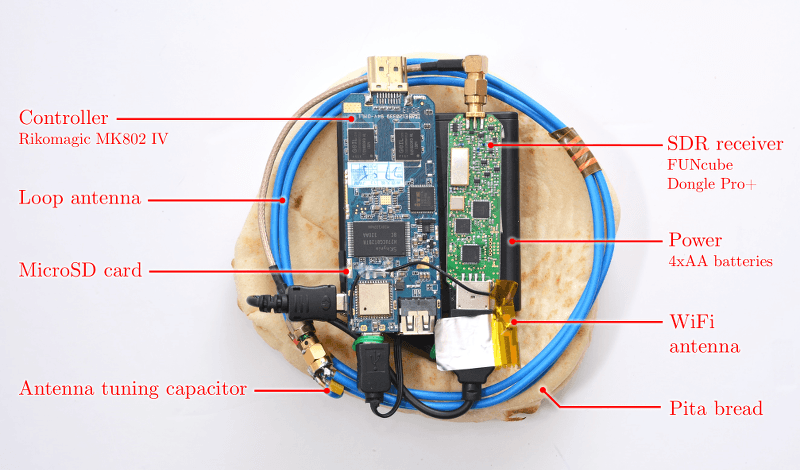
In addition to the above they were also able to create portable attack hardware by connecting the Funcube Dongle Pro+ with a small Android based embedded computer called the Rikomagic MK802 IV. They also show that they were even able to perform the portable attack with a standard AM radio with the output audio being recorded with a smart phone.
A portable version of their attack set up with the Funcube Dongle Pro+ and microcontroller.
The researchers write that they will present their work at the CHES 2015 conference in September 2015.
Paul Rascagneres, an RF experimenter has recently uploaded a document detailing his efforts at reverse engineering a wireless doorbell (pdf file) with a 433 MHz Amplitude Shift Keyed (ASK) signal with his HackRF software defined radio. The HackRF is a SDR similar to the RTL-SDR, but with a wider available bandwidth and transmit capabilities.
To reverse engineer the doorbell, Paul used GNU Radio with the Complex to Mag decoder block to receive and demodulate the ASK signal. Once demodulated he was able to visually see the binary modulated waveform, and manually obtain the serial bit stream. From there he went on to create a GNU Radio program that can automatically obtain the binary strings from the ASK waveform.
In order to replay the signal, Paul found that the simplest way was to use the hackrf_transfer program, which simply records a signal, and then replays it via the HackRF transmitter on demand. With this method Paul was able to ring his doorbell via the HackRF.
Paul also confirmed his SDR results with an Arduino and 433 MHz transceiver. He then took it a step further and used the Arduino to create a system that could automatically receive and replay signals at 433 MHz and 315 MHz.