Back in March we posted about the release of OpenEar, a standalone TETRA decoder for the RTL-SDR. Since then OpenEar has undergone massive developments, not only improving upon the TETRA decoder, but adding DMR, ADS-B and POCSAG decoders as well as a waterfall display.
Recently Tech Minds reviewed this software on his YouTube channel. In the video he shows how to download the software, install the rtlsdr.dll file, and run and use the software. He then demonstrates reception of an amateur radio DMR repeater, reception of POCSAG pager messages and finally reception of ADS-B aircraft messages.
OpenEar Digital Decoder - DMR TETRA P25 ADSB POCSAG RTL-SDR
In a recent YouTube video Tech Minds shows how to decode GMDSS (Global Maritime Distress and Safety System) messages which are broadcast on MW and HF. In the video he explains the DSC (Digital Selective Calling) which allows calls to be made to individual ships, a group or all stations. He goes on to demonstrate the YADD GMDSS DSC decoder running via the HF audio piped in from SDRUno and received with an SDRPlay RSPdx.
How To Decode Maritime Distress Messages GMDSS DSC
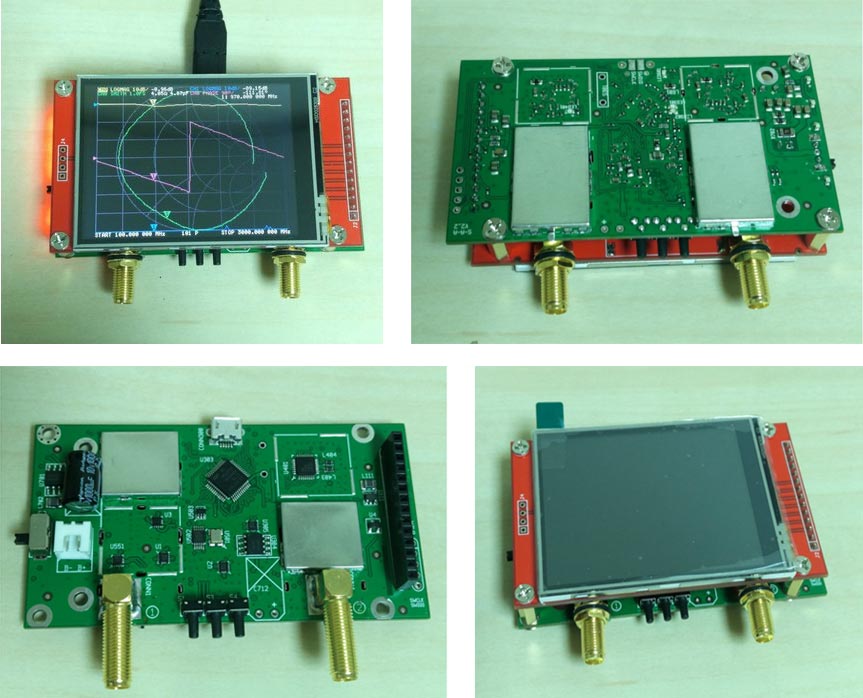
The much awaited NanoVNA V2 is now readily available for around $60 + shipping from the Tindie store. Shipping is noted to begin on June 30th due to a public holiday and you must agree to possible pandemic delays, although feedback from earlier customers indicates that most countries appear to be receiving the packages in good time. You can also add a calibration kit for $10 extra, or a calibration kit and acrylic enclosure for $14 extra.
For US customers R&L Electronics have them in stock in "high end" for $59.95 and "low end" for $54.95 options. The high end option appears to have higher quality cables included. UPDATE: It has been brought to our attention that the stock at R&L is actually from a "clone" manufacturer and the clones do not support the original developer.
We note that the NanoVNA V2 is an open source project created by OwOComm, a research organization with a mission to further "intellectual communism". Therefore any factory is free to produce their own version from the designs, and hence several other versions have already been showing up on marketplaces like Aliexpress/eBay. However, for now it is probably safer to buy directly from the original manufacturers on the Tindie store. This is because according to the developer the quality of the "unofficial" clones that are showing up on Aliexpress and eBay is not yet known. The official version also supports the original developer and funds future software development.
NanoVNA V2 Available for Sale on Tindie
A Vector Network Analyzer (VNA) is an extremely useful tool for radio hobbyists as it allows you to tune antennas, filters, and measure cable loss among other applications. Until recently a VNA would cost hundreds if not thousands of dollars. However, the original NanoVNA brought expensive VNA capabilities to the masses with its low $40 pricing. But the original design was limited to a maximum frequency of only 900 MHz. The new V2 design pushes this maximum frequency up to 3 GHz officially, and unofficially up to 4.4 GHz with reduced performance. It also improves on overall dynamic range and maintains the affordable price.
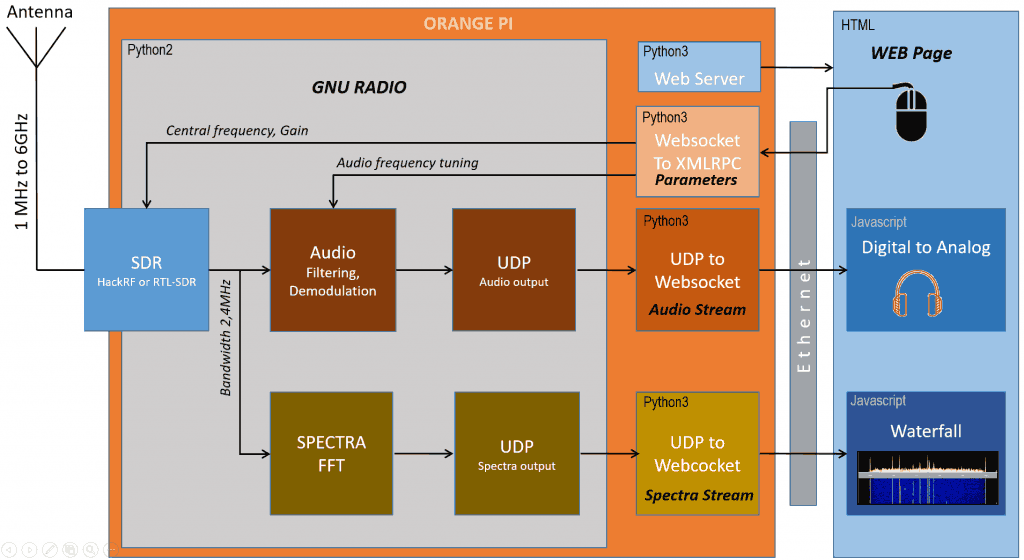
Over on his blog F1ATB has uploaded a post explaining how he created an RTL-SDR or HackRF based remote SSB receiver controllable with an internet browser. To set this up he uses an Orange Pi One Plus single board computer which runs several GNU Radio based digital signal processing flow graphs. Then a Python server serves a custom HTML and Javascript based web interface with waterfall that can be controlled remotely over the internet. In the post he explains the GNU Radio DSP flowgraphs that he's built, and notes that he will explain the HTML and Javascript side in another future article.
The Portapack is an add on for the HackRF SDR that allows the HackRF to be used portably without a PC. If you're interested, in the past we reviewed the Portapack with the Havok firmware, which enables many TX features such as POCSAG transmissions as well as various other RX modes.
In a recent video Tech Minds reviews a Portapack clone, which is essentially exactly the same as the original Portapack. In the video he shows how to connect the Portapack to the HackRF, how download the Firmware and flash it to the HackRF. He then goes on to show some of the Portapack RX features in action. In this review he uses the official Portapack firmware, but notes that he will test the third party Havok and Mayhem firmware which have many more features in a future video.
HamSCI is an organization dedicated citizen radio science and specifically the "publicity and promotion of projects that advance scientific research and understanding through amateur radio activities". Recently they held their HamSCI 2020 workshop online, and the videos are now available on the Ham Radio 2.0 YouTube channel. Several of the projects mentioned in the talks involve the use of software defined radios.
Come join HamSCI at its third annual workshop! Due to restrictions caused by the COVID-19 Coronavirus, this year's workshop will he held as a virtual, eletronic workshop. The meeting will take place March 20-21, 2020 using Zoom Webinar Services hosted by The University of Scranton in Scranton, PA . The primary objective of the HamSCI workshop is to bring together the amateur radio community and professional scientists. The theme of the 2020 HamSCI Workshop is "The Auroral Connection: How does the aurora affect amateur radio, and what can we learn about the aurora from radio techniques?" Invited speakers include Dr. Elizabeth MacDonald, NASA Scientist and founder of Aurorasaurus, Dr. James LaBelle, Dartmouth Space Scientist and expert on radio aurora, and Dave Hallidy K2DH, an expert in ham radio auroral communication.
One talk discusses the HamSCI personal weather station project, which is an SDR and Raspberry Pi based solution that monitors HF signals like WSPR, as well as characterizing HF noise, detecting lightning and ionospheric disturbances.
HamSCI 2020 Overview of the Personal Space Weather Station and Project Update
Another talk discusses the TangerineSDR, which is an open source SDR currently in development by TAPR. The goal of the TangerineSDR is to be a sub $500 SDR with a focus on space science, academic research as well as general amateur use.
HamSCI 2020 TangerineSDR Data Engine and Overall Architecture
The Amateur Radio Experimenters Group (AREG) recently held an online talk with guest speakers Phil Lock and Bill Cowley, talking about amateur radio astronomy. In the talk they note how they use an RTL-SDR as their radio.
Cheaper electronics has created great possibilities for Amateur Radio Astronomy. This talk will describe a local project to receive and map the distribution of 1420 MHz signals from neutral hydrogen in our galaxy. We briefly describe the history of 21cm RA and why it’s still of great interest to astronomers. We outline some challenges over the last few years in assembling a 2m dish with custom feed, electronics and signal processing, then show recent results from our project.
The image in the thumbnail shows recent signals (May 17th) recorded over a 24 hour period for dish elevation of 53 degrees. The signal changes as the antenna points to different parts of the Milky Way.
Just after our post a few days ago about an art project involving weather satellite reception with SDRs, we received a story submission about an artistic performance with similar weather satellite and SDR themes. The submission from Sasha Engelmann reads:
Open Work, Second Body is a live-streamed performance by designer Sophie Dyer (@sophiecdyer) [M6NYX] and geographer Sasha Engelmann (@sashacakes) [M6IOR] in collaboration with the author Daisy Hildyard. The work was performed twice during Reveil 2020, a global sound arts festival streaming sounds from listening points around the planet on the day of the International Dawn Chorus.
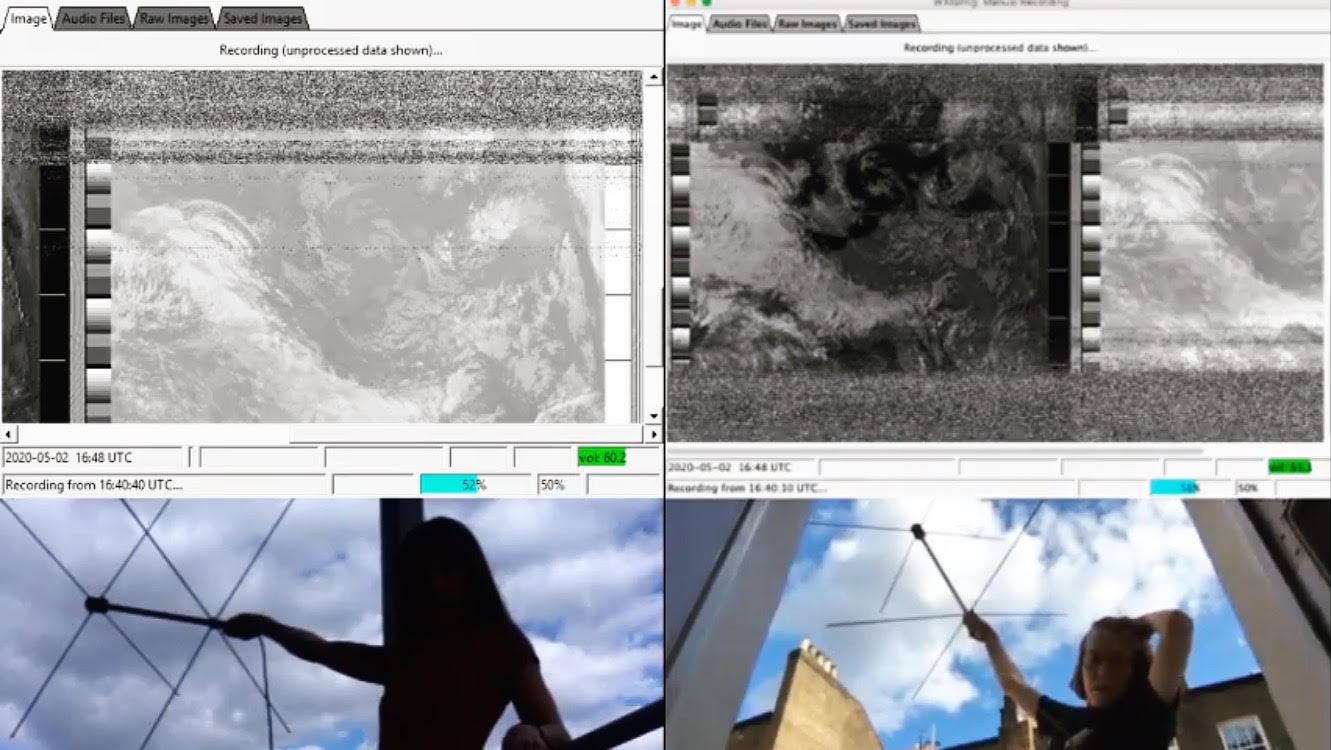
Open Work, Second Body asks: From the climate crisis to coronavirus: what are the tools we need to make sense of events unfolding on vastly disparate scales? Through spoken word, field recordings and live radio reception of two NOAA satellite images, the work probes the porous boundaries between our bodies, local atmospheres and weather systems.
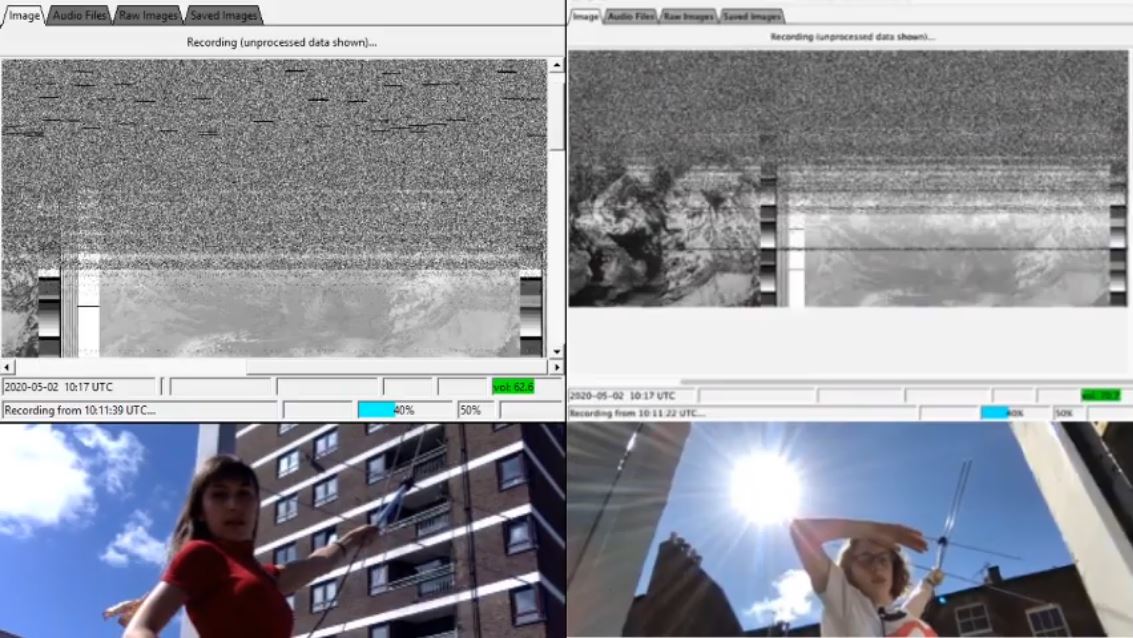
Still image capture from livestream of Open Work, Second Body, AM performance, May 2nd 2020
Due to lockdown constraints in London, Sophie and Sasha were not able to be in the same place or to leave their apartments, so they performed the work via simultaneous streams from their respective balconies in South East and North West London. Using RTL-SDRs, Turnstile antennas, Open Broadcast Software and collaborating with two NOAA satellite passes, Sophie and Sasha shared the process of decoding NOAA satellite images with hundreds of viewers around the world, employing spoken word poetry and field recordings to complicate relationships of local and global, weather and climate, the individual and the collective.
Recordings of the performances can be found at the links below.
Still image capture from livestream of Open Work, Second Body, PM performance, May 2nd 2020
Open Work, Second Body is part of Sophie and Sasha's larger artistic research and design project Open Weather, which employs ham radio, open data and feminist theories and approaches to build new and diverse communities around satellite image decoding and weather sensing. The Open Weather web platform will be launched in Summer 2020 and will host an archive of SDR-generated weather images, visually rich how-to guides for those with no radio and engineering experience, and material about Sophie and Sasha's collaborative artistic practice.
For Open Work, Second Body, Sophie and Sasha would like to thank the Soundcamp Team: Grant Smith, Dawn Scarfe, Christine Bramwell, Maria Papadomanolaki and Ciara Drew. They are grateful to Daisy Hildyard for her willingness to be in conversation with them, Bill Liles NQ6Zfor technical advice, Jol Thoms for sound design, Rachel Dedman, Laure Selys and Arjuna Neuman (Radio Earth Hold) for early curatorial input, Akademie Schloss Solitude for the support of a residency, the satellites NOAA 18 and NOAA 19 and the RTL-SDR and wider ham radio community.