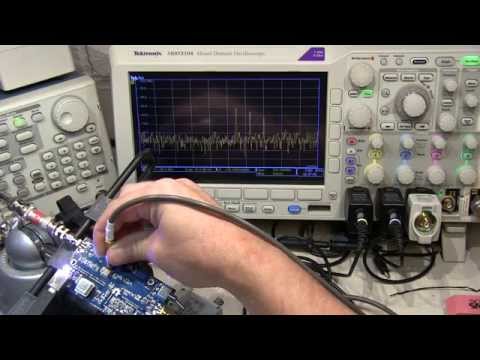
On this episode of Hak5, a popular YouTube technology channel, Shannon shows two Android based ADS-B RTL-SDR apps that we have mentioned on this blog previously. One is “ADS-B on USB SDR RTL” and the other is Avare ADS-B. Both are ADS-B apps that will display real time airplane positions on a map.
To run these apps you need a RTL-SDR dongle, a USB OTG cable and an Android phone.
Cellular Testing Tools and Mobile SDR Apps, Hak5 1708
Japanese blogger and RTL-SDR experimenter ttreftech has had an ADS-B front end kit (In Japanese, use Google Translate) consisting of a low noise amplifier (LNA) and SAW filter available for sale in Japan for a few months now. The LNA helps to push weak signals through the coax feed line and the SAW filter is a bandpass filter that helps to remove interference outside of the 1090 MHz ADS-B region. If you are interested in building your own version, ttrftech has also posted a schematic. Another recent post about the front-end can be found here.
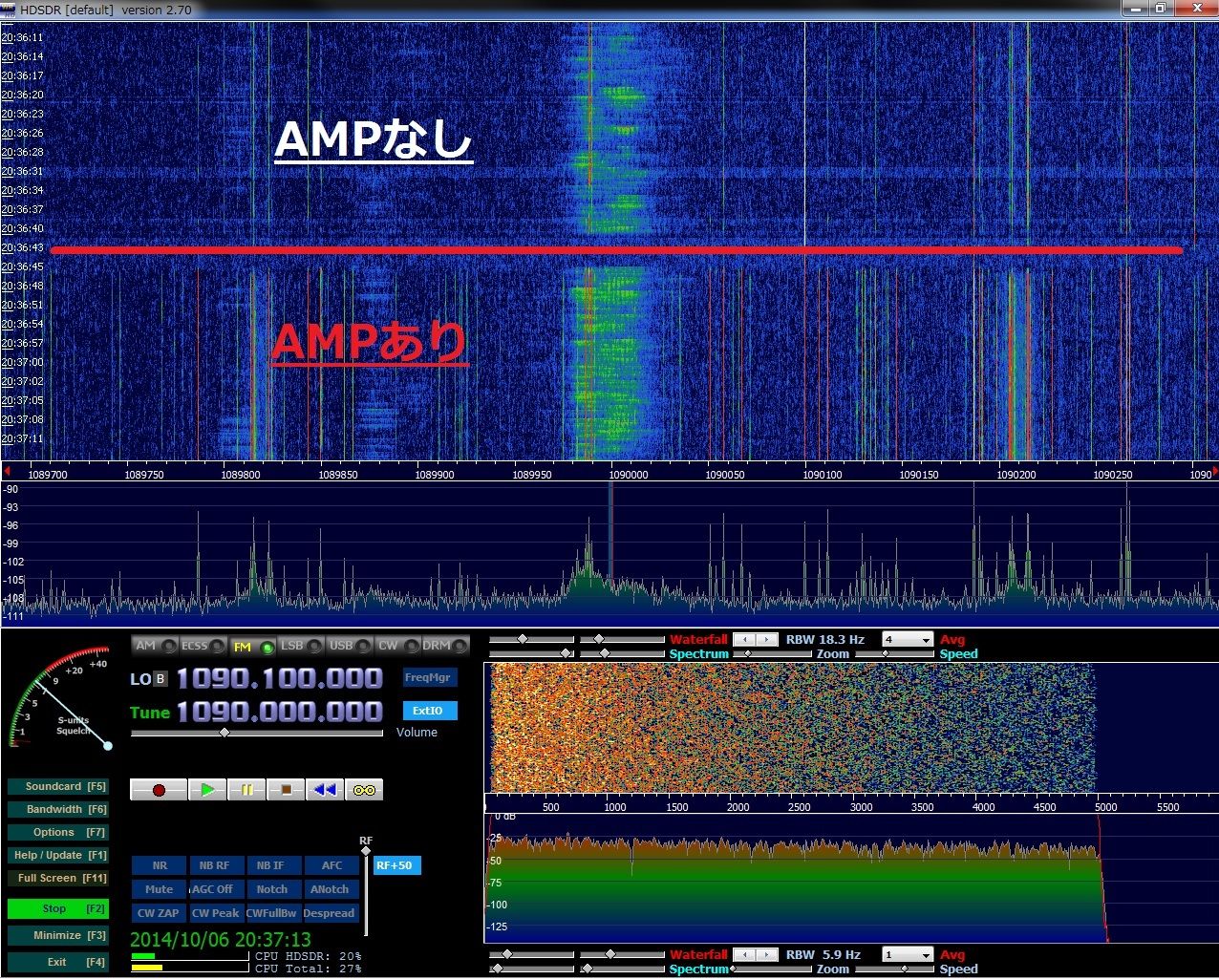
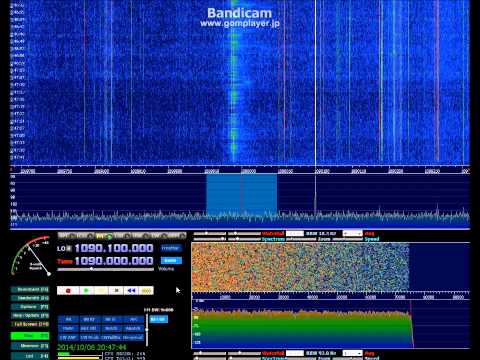
Another Japanese blogger, “pup” has posted about his results with the ADS-B front end kit (Also in Japanese, use Google Translate). His results show that the front end does significantly improve ADS-B reception. The image below shows an ADS-B signal with the front end turned off (top) and with it turned on (bottom). Pup has also posted a video showing the kit and its performance on HDSDR.
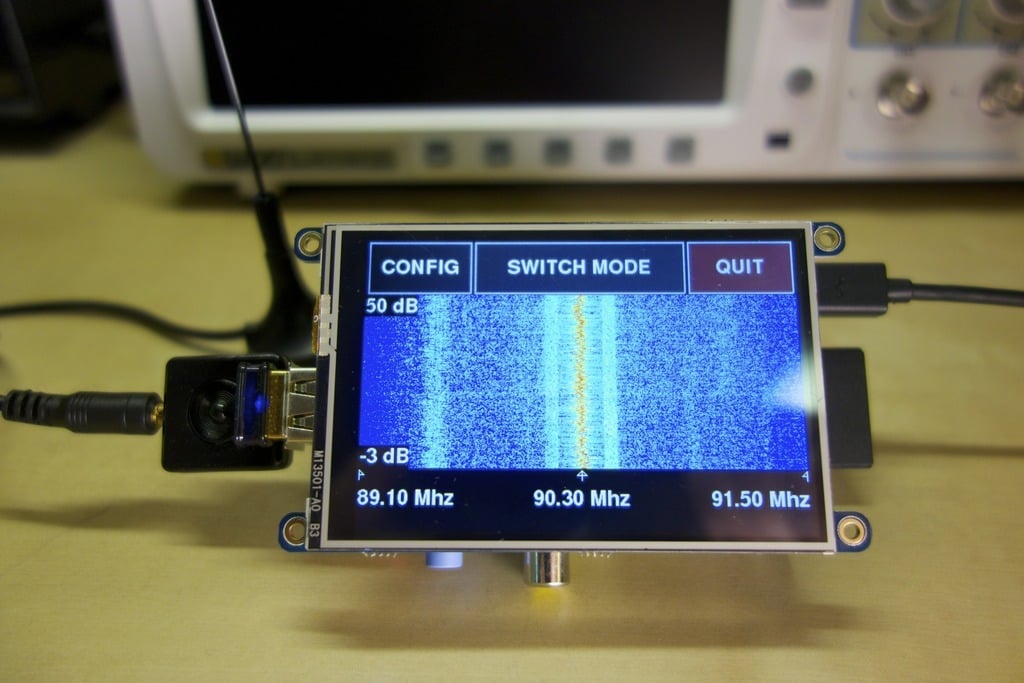
Adafruit has released a tutorial showing how to build a portable TFT screen based Raspberry Pi RTL-SDR spectrum analyzer that was inspired by the HackRF portapack. Construction of the project is very simple and the “FreqShow” python software is provided as a simple download that is ready to run once the RTL-SDR is installed on the Raspberry Pi.
The FreqShow software appears to be fully featured with the ability to change the center frequency, sample rate, and gain. It can show on the TFT screen the real time RF spectrum of the currently tuned area or it can be switched to show a waterfall of the spectrum as well. Below is a video of the finished project that shows the software in action.
“Freq Show” Software in action on a Raspberry Pi with TFT Screen
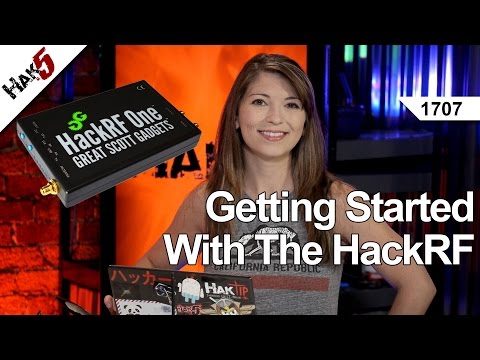
On this episode of Hak5, a popular technology YouTube channel, Shannon does a tutorial on how to get started with the HackRF. The HackRF is a recently released software defined radio similar to the RTL-SDR dongle, but with transmit capabilities.
In the video she shows how to set up the HackRF on Pentoo Linux and GNU Radio. She then shows how to use a GNU Radio program that can receive multiple broadcast FM signals simultaneously. The GNU Radio program is one that is based on Micheal Ossmans GNU Radio video tutorials.
Over on YouTube user Java’s Toys has uploaded a video showing a demo of his reception of a BPSK63 signal using his RTL-SDR and the Ham-it-up upconverter. BPSK63 is a text based digital communications mode used by ham radio enthusiasts to make contacts. It is twice as fast compared to the more commonly used BPSK31 mode.
Java’s toys used HDSDR together with Fldigi to receive and decode the signal.
Over on YouTube user w2aew has uploaded a video tutorial explaining how filtering in an upconverter works. In a previous video w2aew explained how a simple upconverter for the RTL-SDR worked and noted that for best performance the upconverter needs three filters, one preselector at the input, one after the local oscillator and one after the mixing stage.
In this video w2aew takes a Nooelec Ham-it-up upconverter which has the three filters mentioned above implemented and scopes the output after each filter to show their effect on an input signal.
#175: Filter functions in an HF Upconverter used with RTL-SDR Dongle Receiver
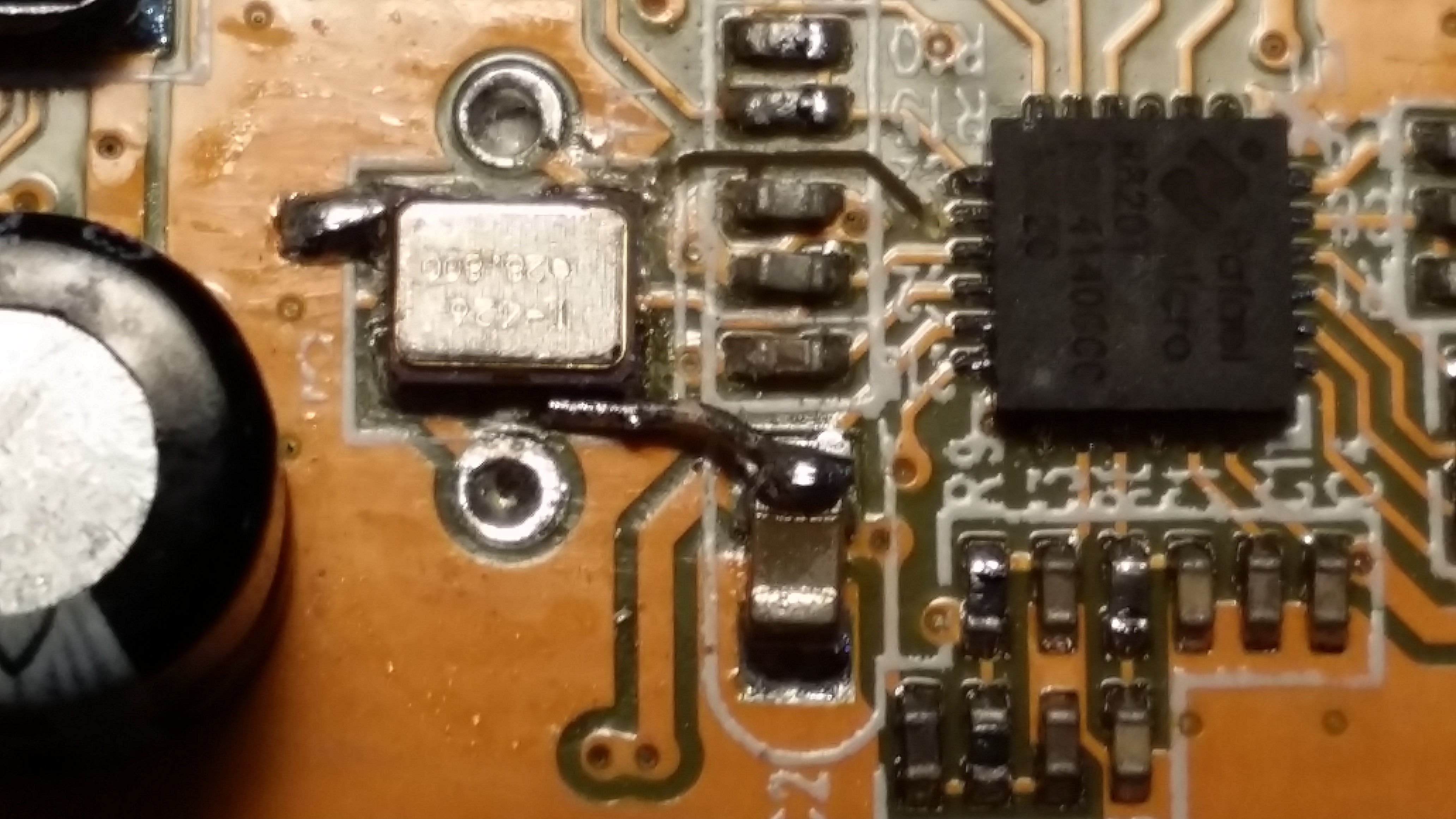
The modified TCXO dongle is based on a standard full sized R820T RTL-SDR PCB board. Inside we can see that the standard 28.8 MHz oscillator has been removed and in its place is a 28.8 MHz TCXO oscillator. The old oscillator has been removed and the new oscillator is carefully soldered in its place. The soldering job appears to be nice and tidy.
TCXO close up
Next we tested the TCXO dongle against a control RTL-SDR which had a standard non-TCXO oscillator. First we measured the PPM offset at room temperature against a known ATIS signal. The TCXO dongle had an offset that was somewhere around 0.5 PPM. The control RTL-SDR had an offset of 60 PPM.
As the dongle heats up from use, the oscillator will experience thermal drift, causing the frequency offset to change. The TCXO should be immune to this problem due to it’s temperature compensation circuitry. To test the TCXOs temperature compensation capabilities we placed both dongles in a freezer for 30 minutes and then took them out and recorded their start and end PPM offsets after 30 minutes of operation. To simulate a warm environment the dongles were also placed under a warm tungsten light during operation.
The control RTL-SDR started with an PPM offset of 58 PPM and ended with an offset of 72 PPM, giving a total drift of 14 PPM. The TCXO RTL-SDR dongle started with a PPM offset of ~0.5 PPM and ended with an offset of ~0.5 PPM, giving a total drift of 0 PPM.
Below we have recorded animated GIFs of the drift observed in both dongles. The first GIF shows the control RTL-SDR. Note how the frequency offset oscillates at first and then slowly drifts away in one direction. The TCXO dongle exhibited no drift whatsoever.
Control RTL-SDR Drift over 15 Minutes (Sped up)TCXO Dongle Drift over 15 Minutes (Sped up)
The results show that the US TCXO has a very low overall PPM offset and is very stable over temperature changes. If you want one of these dongles they can be found for sale over on Ebay for $65 USD.
In the previous post some commenter’s raised the concern that this product was overpriced at $65 USD. However, we believe this price is reasonable. The reason the cost is much higher than a standard RTL-SDR is that it is very difficult to obtain TCXO oscillators with 28.8 MHz clocks. The company selling these needed to have the TCXOs custom made from the factory with a large minimum order quantity of 1000 pieces. Then after adding the labour, quality control and selling costs the profit margins become quite small.