RTL-SDR and RDS Spy with HDSDR

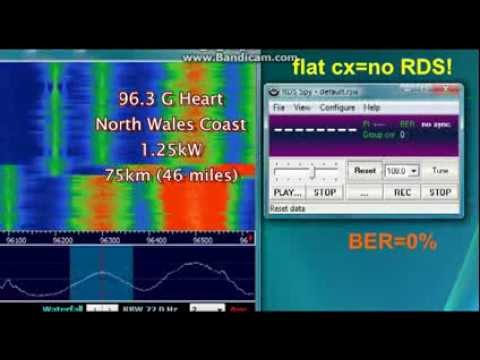
On YouTube user pe1etr shows us a video where he uses his RTL-SDR combined with HDSDR, Virtual Audio Cable and RDS Spy to decode a distant RDS signal. RDS Spy is a free advanced software program capable of decoding weak RDS signals contained in many broadcast FM radio stations.

RDS stands for Radio Data System and is a digital signal embedded into broadcast FM signals. It is used by radio stations to display the name of the radio station and current song playing on an LCD screen.

HDSDR & RDS Spy side by side

New DSD Block Available for GNU Radio

The popular digital speech decoder (DSD) software has now been wrapped into a GNU Radio Companion block. Previously, DSD required use of virtual audio cables to get decoding to work with GNU Radio, but now the signal audio can be passed directly into this block.

Luke Berndt from the HackRF-dev forums has posted his work to make the functionality of DSD available to GNU Radio users in the form of a GRC block. “I have been playing around a bit and found an easy way to receive and playback digital LMR. More and more of the radio systems are going from narrow band FM to Digital. This makes it tough to listen to them on GQRX. DSD is a great program which can decoded the audio you get when you tune in a system in GQRX, but you either have to run it on another machine with a audio cable in between or figure out how to do a virtual audio cable on your machine.

Luckily, someone wrapped the DSD libraries so they can be accessed as GRC blocks. I have put together a GRC file and a Python program that make it a little easier to use the block.

If you have a chance, give them a try and let me know if they work. There is a good chance I have messed up the values in the filters or else where, but I have gotten clean audio out of it.”

Download the files from GitHub.

DSD is a Linux and Windows software program capable of decoding popular digital speech codecs such as APCO P25 and MOTOTRBO/DMR.

Via DangerousPrototypes

ViewRF – RTL-SDR Spectrum Analyzer Software for the BeagleBone Black Released

Last month we showed a video of a spectrum analyzer project by Stephen Ong. He used a BeagleBone Black (mini embedded Linux capable computer similar to a Raspberry Pi), a touch capable LCD screen, and an RTL-SDR dongle to create a portable spectrum analyzer.

Now Stephen has released ‘ViewRF’, which is the software that powers his spectrum analyzer. It is released under the GPL licence. Also on his post are the download and install instructions.

Spectrum Analyzer using Beaglebone Black and RTL-SDR

Rain Scatter 10 GHz Reception with the RTL-SDR

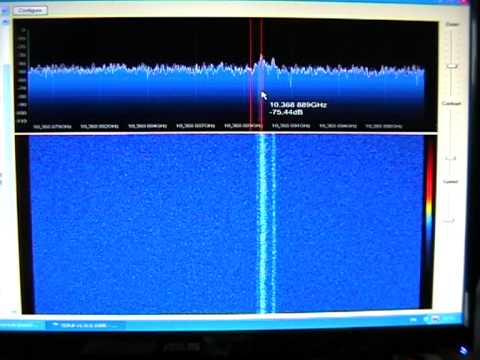
YouTube user feri67000 who last month showed us that the RTL-SDR can receive 10 GHz signals with a cheap avenger LNB PLL now shows an interesting experiment where he uses a technique known as rain scatter to receive a 10 GHz beacon with his satellite dish pointed in the opposite direction of the beacon transmitter.

Usually communications at 10 GHz are line of sight only, but by using the rain scatter technique, the 10 GHz signal can be bounced off a precipitation cloud and received with line of sight to the cloud, rather than the transmitter.

rain scatter 10ghz LX1DB beacon

NOAA Weather Satellite Antenna and Software Guide

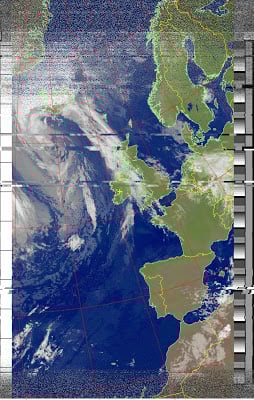
Over on the SDR for mariners blog, author Akos has written two new beginners posts on getting up and running with receiving and decoding NOAA weather satellite APT images.

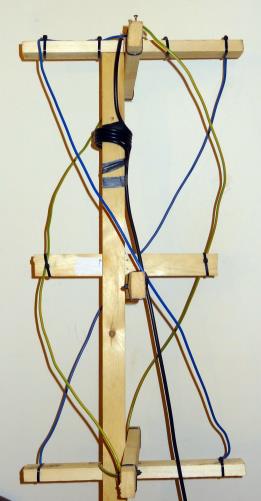
The first post discusses antennas that are useful for NOAA satellite reception, and shows how to build a homemade turnstile and QFH antenna. His second post shows a beginners guide to the software that can be used to decode the APT signal in order to obtain a live weather satellite image.

sdrformariners_apt_image QFH Antenna

RTL-SDR Running on an Aria G25

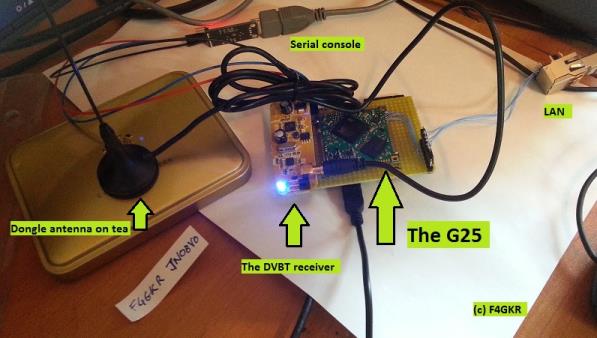
Blogger and ham radio enthusiast F4GKR has written a brief tutorial post on his blog showing how he got an RTL-SDR working with an Aria G25, and in another post some benchmarking results. The Aria G25 is a very small low cost, Linux capable embedded computer, similar to the Raspberry Pi.

He was able to get rtl_tcp running with a 2 MSps sampling rate and found it used about 60% of the CPU.

Aria G25 running the RTL-SDR

HackRF vs. BladeRF vs. USRP

To help you decide which of the recently released software defined radios is right for you, blogger Taylor Killian has written an article discussing and comparing the HackRF, BladeRF and new USRP models.

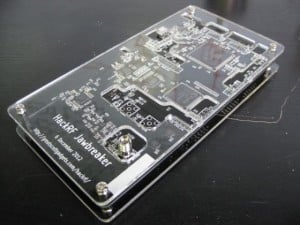
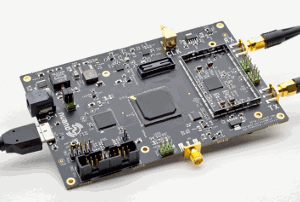
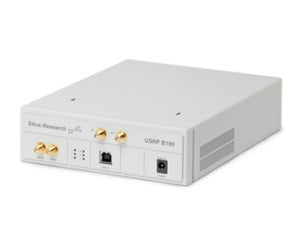
The HackRF, BladeRF and USRP are all high end SDRs which range in cost from $300 (HackRF) to $1100 USD (USRP B210). They differ from the RTL-SDR in that each is specifically designed for the purpose of software defined radio, and they all have large bandwidths and transmit capabilities.

HackRF Jawbreaker Board with EnclosureBladeRFUSRP

New Command Line Utility: rtl_power

A new command line wideband spectrum monitor utility called ‘rtl_power’ has been released by keenerd on Reddit. See the original thread here. This tool let’s you gather signal data over a very wide area of the frequency spectrum, and then that data can be used to find active areas of the spectrum.

Rtl_power is a small CLI tool for logging wide swaths of bandwidth. You can specify any chunk of spectrum, with any FFT bin size and any logging rate. (For sane values of any.)

For example

rtl_power -f 150M:200M:2k -i 10 logfile.csv

will monitor everything between 150MHz and 200MHz. The resolution will be at least 2kHz fine. It will integrate for 10 seconds and dump those numbers to the logfile. The structure of the logfile is:

date, time, Hz low, Hz high, Hz step, samples, dbm, dbm, ...

So it is not quite the traditional CSV file. Each frequency hop gets its own line and the frequencies of each column are extrapolated.

Coupled with a python script, a heatmap can be generated from the excel data.

I’m scanning the region between 150MHz and 160MHz, where there is local emergency services chatter. Each pixel is 10kHz wide and 10 seconds long, over a period of seven hours
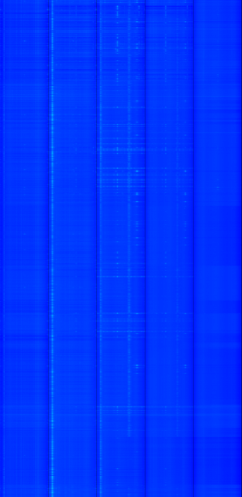
rtl_power heatmap

This is command line tool is somewhat similar to the Scanner Metrics SDRSharp plugin, which allows large areas of the frequency spectrum to be monitored from within SDRSharp.