Category: Amateur Radio

A Review of the TitanSDR Pro

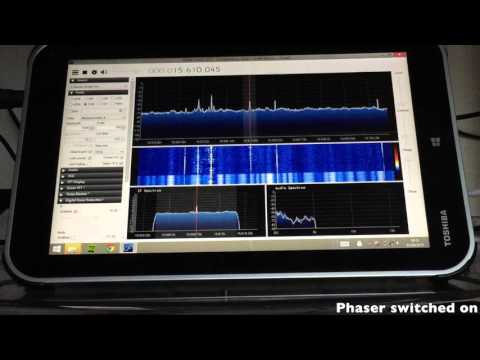
Over on the swling.com blog, Thomas has uploaded a review of the TitanSDR Pro that was published in the May 2015 version of The Spectrum Monitor online magazine. Although the TitanSDR pro software defined radio is an expensive (1,380 EUR for the basic / 1,970 EUR for the PRO), it may be of interest to those looking to go further into the short wave listening hobby. The TitanSDR is a high performance 9 kHz to 32 MHz receiver with 16 built in preselectors and a bandwidth up to 2.1875 MHz. It’s main markets appear to be government intelligence and military, but it also finds good use in general short wave listening.

Thomas reviews the TitanSDR positively, liking its easy to use software and its superb sensitivity, but noting that it’s high price may be a bit off putting.

Also, in the current June version of The Spectrum Monitor magazine Thomas also reviews the SDRPlay, a $149 USD HF capable radio, also giving it a favourable review.

The TitanSDR Pro
The TitanSDR Pro

Review of Nobu’s HF Upconverter, Galvanic Isolator and 14 MHz Low Pass Filter

Back in April we posted about some new products made by Japanese RTL-SDR experimenter and product manufacturer Nobu. Nobu’s new products were a 1:1 galvanic isolator and a low pass filter. The galvanic isolator isolates the antenna from the RTL-SDR and PC, significantly reducing noise. The low pass filter is useful when used with direct sampling modified RTL-SDRs to filter out any strong interfering signals that are above 14 MHz.

Recently Nobu sent us at RTL-SDR.com some samples of his products. He sent us one of his HF upconverters, a galvanic isolator and a low pass filter.

NobuProducts
Nobu’s RTL-SDR Products: HF Upconverter, Galvanic Isolator, Low Pass Filter. Placed next to an RTL-SDR for size comparison.

Continue reading

Listening to a Radio Amateur Stratosphere Balloon with an RTL-SDR

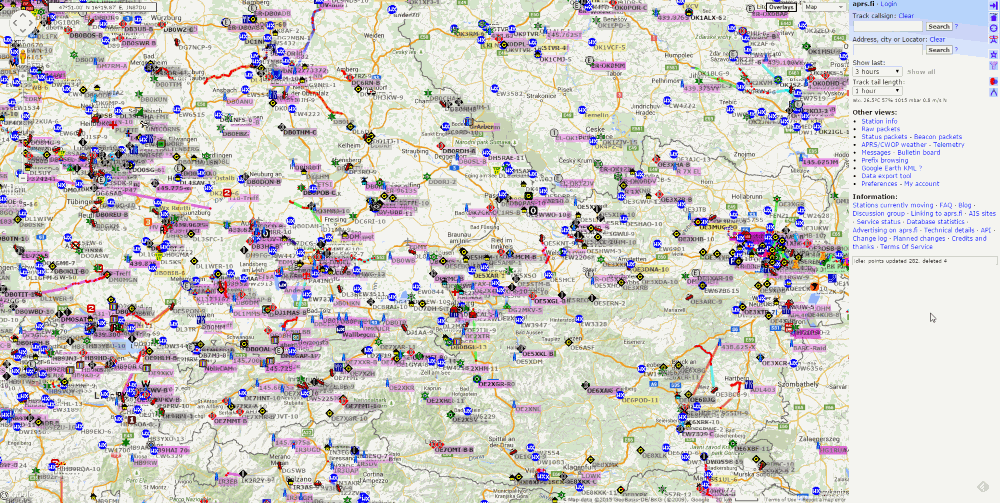
Over on YouTube user kpappa has uploaded a video showing his reception of the J43VHF radio amateur stratosphere balloon with an RTL-SDR dongle and discone antenna. On the 10th of May radio amateurs in Greece launched a high altitude balloon. The balloon carried a transceiver payload which allowed amateurs to talk to each other via the balloon at a frequency of 144.200 MHz. The video shows good reception of the balloon and also shows it’s tracking via APRS.fi.

More information about the balloon can be found at https://j43vhf.wordpress.com/ and http://hellashab.blogspot.gr/.

The high altitude balloon's radio payload recovered after landing.
The high altitude balloon’s radio payload recovered after landing.
Tracking J43VHF (Radio Amateur Stratosphere Balloon) by RTL-SDR & Diamond Discone D3000N Antenna

A 1961 Drake 2B Receiver using an RTL-SDR as a Panadapter

The Drake 2B is an old analogue tube based radio from 1961. Although it is so old it is still considered a decent shortwave receiver. Over on YouTube user M0HBR decided to bring his Drake into the modern age by coupling it with a panadapter made from an RTL-SDR dongle. A panadapter is a device that allows you to view the RF spectrum and waterfall of a normal radio. 

To do this he tapped into the 455 kHz IF output of the Drake and amplified it with a homebrew FET source-follower, before connecting it to the RTL-SDR. He then uses the HDSDR software to listen to and display the received signals on the waterfall.

Drake Dongle Derring-Do -- 2B Goes SDR

Sigimira Decoder now supports the RTL-SDR Directly

Sigmira is a popular free Windows software program which supports decoding of radio modes such as PSK31, RTTY, CW, STANAG 4285, Japanese Slot Machine, FSK, HFDL and M141 as well as standard modes such as NFM, AM, USB and LSB.

Previously Sigmira could be used with the RTL-SDR by piping audio into it from another program such as SDR#. In the latest version that was just released Sigmira now directly supports connecting to the RTL-SDR, allowing for a spectrographic display and point and click tuning. Sigmira also now includes a database with frequencies of over 2000 known signals.

Screenshot of the Sigmira decoding software which now supports the RTL-SDR directly.
Sigmira Signal Database
Sigmira Signal Database.

How to Setup CWSkimmer with an RTL-SDR and HDSDR

Over on YouTube user Brent Crier has uploaded a tutorial video showing how to set up CWSkimmer with an RTL-SDR and HDSDR. CWSkimmer is regarded as one of the best pieces of software that can be used to decode CW a.k.a Morse code.

Morse code is a communications technique still used widely by the amateur radio community in the HF bands. The RTL-SDR can receive HF frequencies and Morse code with an upconverter or direct sampling modification.

In the video Brent goes over the installation of HDSDR, Virtual Audio Cable, and a program called Virtual Serial Port (VSP) manager as well as the needed settings for each program. The set up he shows allows CWSkimmer to automatically change the frequency in HDSDR when tuning in CWSkimmer.

How to setup a CWSkimmer with a RTL SDR and HDSDR

Homemade Upconverter for the RTL-SDR Running on a Cellphone Battery

Over on YouTube user ek6rsc has uploaded a video showing his home made upconverter for the RTL-SDR. His upconverter uses a diode mixer design with a low pass filter and 40 MHz oscillator which he obtained from a USB-WIFI adapter. Usually an upconverter is powered by a power plug or USB cable, but ek6rsc has powered his with a 3.7V 860ma cellphone battery. He writes that the battery lasts a long time and helps avoid interference caused by power adapters and the PC. Ek6rsc has also uploaded a second video showing the upconverter in action.

Up-converter for RTL-SDR 40MHZ Lo. & cellphone battery

How work Up-converter for RTL-SDR 40MHZ Lo. & cellphone battery

Spyverter Sneak Preview

The Spyverter is being developed by the creators of the Airspy software defined radio to be a high performance upconverter. It is designed for use with the Airspy, but may also be compatible with other SDR devices too.

Compared to most other upconverters which use a diode ring mixer architecture, the Spyverter uses a different, as of yet undisclosed architecture. The main claimed advantages over other upconverters will be it’s low loss and high IIP3 performance, which means that the Spyverter will not saturate in the presence of strong signals as easily as other upconverters.

Recently a photo of a Spyverter alpha board was released, indicating that the Spyverter is getting close to release.

The Spyverter Alpha
The Spyverter Alpha

Also, a few months ago W9RAN posted a YouTube video about a prototype HF upconverter for the Airspy and we believe he was using an early version of the Spyverter.

Airspy HF Converter Sneak Peek by W9RAN