Category: Antennas

Reviews of the Low Cost MLA-30 Wide Band HF Magnetic Loop Antenna

Recently Chinese manufacturers have begun producing a low cost wide band (100 kHz - 30 MHz) magnetic loop HF antenna known as the MLA-30. The loop can be found on eBay for under US$45 with free shipping. In the past wide band HF loop antennas have not been cheap, normally costing $300+ dollars from manufacturers like Wellbrook.

RF signals are electromagnetic waves that consist of an electric and magnetic component.  A magnetic loop antenna mostly receives the magnetic portion of the wave. This is useful as most unwanted interference from modern electronic devices is generated in the electric component only.  So, a magnetic loop antenna may be preferable in city and suburban environments over other antennas like wires and miniwhips. Magnetic loops are also directional, and can be rotated to avoid interference.

One of the biggest costs to a magnetic loop antenna is the shipping, because a large hula hoop sized piece of metal needs to be sent. The MLA-30 cuts costs on shipping by providing a folded up thin loop wire and no physical support for the loop. You are expected to provide your own support, or simply hang the loop wire on something. If you like you can also replace the included loop wire with a larger loop.

The MLA-30 comes with 10m of RG174 coax, is bias tee powered, and comes as a set with a bias tee injector that is powered over 5V USB. We tested our own unit with the RTL-SDR Blog V3, Airspy and SDRplay bias tee's and found that they all worked well instead of the included bias tee. So if you have one of those SDRs using the loop is as simple and neat as plugging it in and turning on the bias tee.

In terms of build quality, the unit is sturdy and the PCB is fully potted and protected against rain/weather. It is yet to be seen how the external screw terminals holding on the loop will age over a longer period of time however.

So how does the very cheap MLA-30 compare to higher end magnetic loop antennas? Below are some reviews by various hams and SWLs. The general consensus is that it works well for the price, but as you'd expect, falters on handling very strong signals and produces a higher noise floor compared to the more expensive loops, especially in the higher HF bands. But overall we'd say that it's probably still better than using a miniwhip, especially in suburban/city environments, and is probably the best compact HF antenna that you can get on a budget.
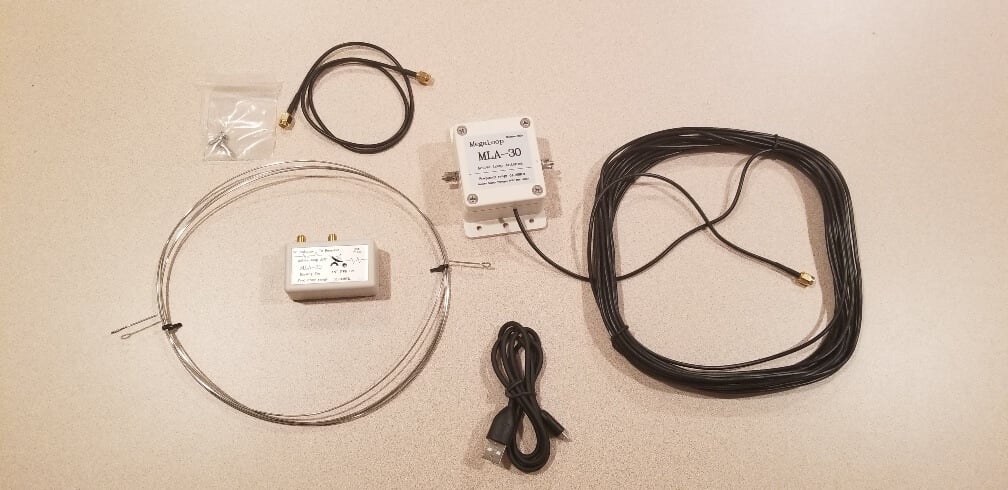
What's included in the MLA-30 set. Photo from David Day's Review.

MLA-30 Magnetic Loop Antenna Review and Comparison by David Day (N1DAY)

In this review David compares the MLA-30 against a 30-ft ground loop and a Wellbrook ALA1530-LF. His results show that while the loop is capable of receiving the same signals that the two comparison loops can, the SNR is much lower. He also notes that the much thinner loop wire used on the MLA-30 seems to result in a much deeper null, and that IMD was a problem for him.

Inside the MLA-30 Active Loop Antenna by Matt (M0LMK)

This post is a complete teardown of the antenna. As the PCB is fully potted Matt had to boil down the epoxy in order to get to the actual PCB. He notes that the PCB is a simple single amplifier design with the exposed pot working as a gain control.

Cheap Chinese Magnetic Loop Antenna (MegaLoop aka MAGALoop) MLA-30 by John

In this review John compares the MLA-30 against a $345 W6LVP and Wellbrook ALA1530LN. His findings are very favorable concluding that it is an adequate performer, perfect for cash strapped SWLs.

First hour battle of the antennas W6LVP loop VS MLA 30 loop test by OfficialSWLchannel

This is a YouTube video where OfficialSWLchannel compares his MLA-30 against a W6LVP loop. He notes that his initial testing shows that the MLA-30 performs as well as the W6LVP loop.
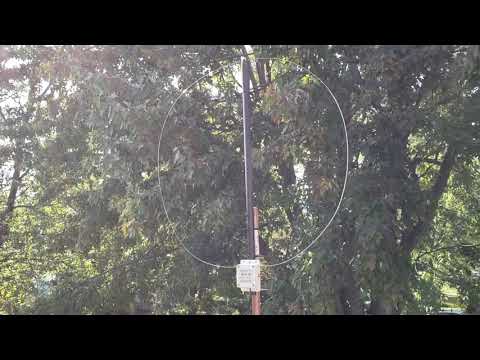
First hour battle of the antennas W6LVP loop VS MLA 30 loop test

MLA-30 Loop vs 80M EFHW by Matthew Payne

In this YouTube video Matthew compares his MLA-30 against a 80M end fed halfwave antenna with an SDRplay RSP1a. 
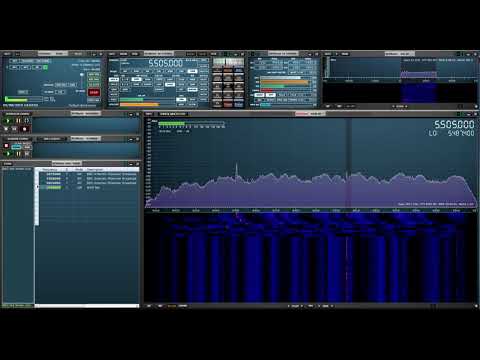
MLA-30 Magnetic Loop Modifications by Scanner and Sdr Radio

In this video the Scanner and Sdr Radio YouTube channel uses an RSPduo to compare the MLA-30 against a Wellbrook loop. His results show that the MLA-30 definitely has a higher noise floor compared to the Wellbrook, but still receives signals decently although chasing weak signals it's not good enough. He also shows how to improve the MLA-30 by replacing the cheap coax that it comes with, noting that the modification reduced his noise.
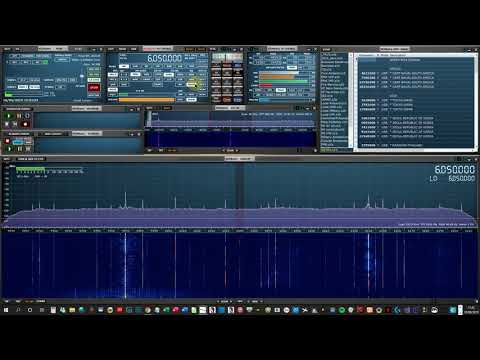
MLA-30 Magnetic Loop Modifications


Testing a PCB Patch Antenna and Radiosonde QFH Antenna for Inmarsat and Iridium Reception

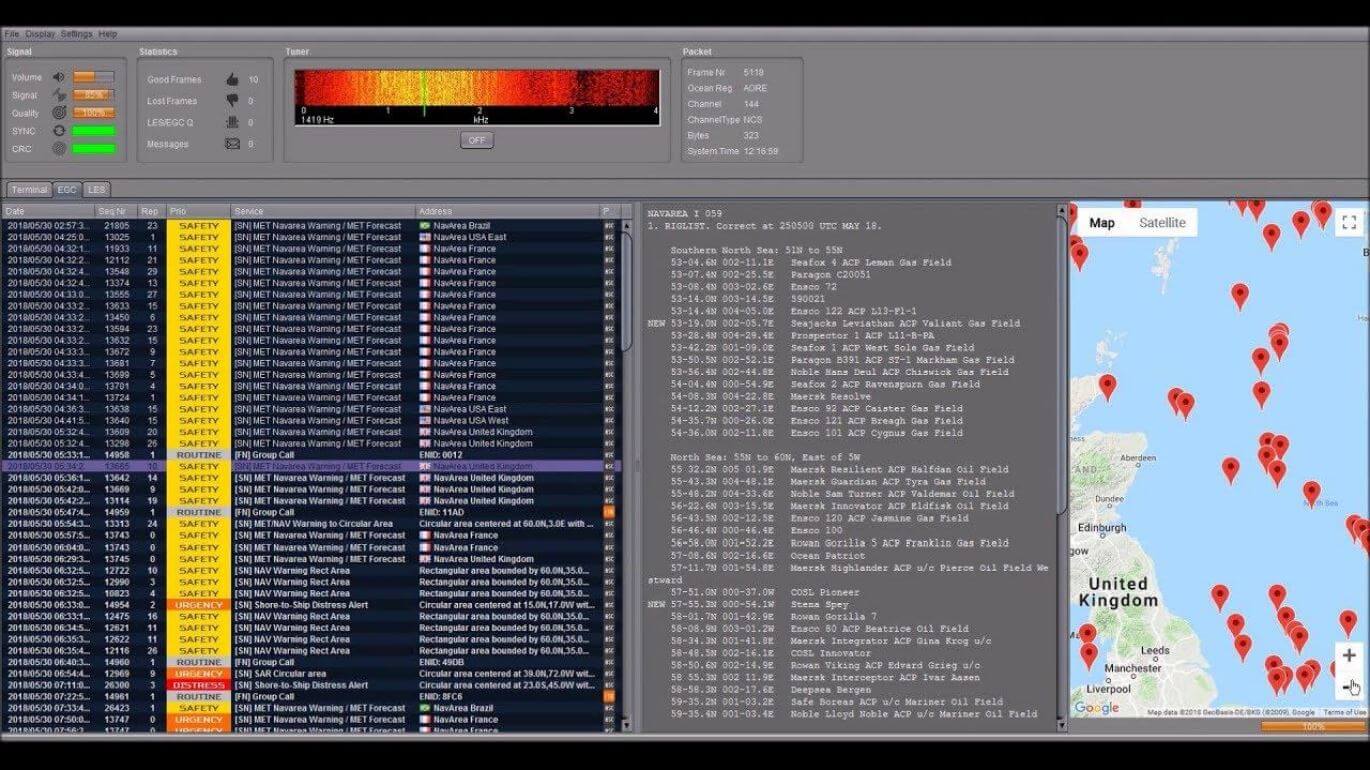
Over on his YouTube channel Tech Minds has been testing some antennas for Inmarsat and Iridium L-Band satellite reception. Inmarsat is a satellite service that runs on geostationary satellites, and one can be received from almost anywhere in the world. There are various services, but the ones that are easily decodable are STD-C EGC and AERO. EGC contains text information search and rescue (SAR) and coast guard messages as well as news, weather and incident reports, and AERO is a form of satellite ACARS, and typically contains short messages from aircraft.

In the first video Tech Minds tests what appears to be an as of yet unreleased prototype PCB patch antenna being designed by NooElec. The PCB patch antenna is combined with a SAWBird Inmarsat LNA and an RTL-SDR. With it he's able to receive STD-C and AERO signals.

In the second video Tech Minds tests an L-Band QFH antenna salvaged from a Vaisala weather balloon radiosonde. The QFH is designed for GPS frequencies, but can potentially be used at the slightly higher Inmarsat and Iridium frequencies. Tech Minds combines the QFH antenna with a SAWBird Inmarsat LNA, but unfortunately finds that reception is too weak for any AERO decoding to be possible. However, when used on the higher Iridium frequencies the antenna works well, and he's able to decode packets with Iridium Toolkit.

New Inmarsat Antenna from NooElec

Testing A QFH Antenna For Inmarsat And Iridium

RTL-SDR Blog L-Band Patch Antenna Preview

We note that over the last several months we have been working on our own L-band patch antenna that will cover Inmarsat, GPS and Iridium frequencies all in one. We expect manufacturing to be completed near the end of the month, or early next month.

The antenna is a ceramic patch, and will come in a waterproof enclosure. It will be possible to easily mount the antenna on a window or elsewhere using the standard suction cup and bendy legs tripod included with our dipole kits. Target price is US$39.95 including the suction cup, tripod, 2M coax and shipping, but we may have it initially on sale for a lower price.

This is cheaper than buying an Inmarsat & Iridium LNA, but a bit more than the SDR-Kits patches that they brought out a few weeks ago. Although performance of our patch is much better. Keep an eye out for the initial information post coming in the next few days.

RTL-SDR Blog L-Band Patch Preview (RTL-SDR for Scale)

Mike Tests out L-Band STD-C and AERO with a Low Cost Modified GPS Antenna

SDR-Kits.net have begun selling low cost GPS antennas that are modified to receive the Inmarsat satellite frequencies between 1535 MHz to 1550 MHz. They also have a version for Iridium satellites that receives 1610 MHz to 1630 MHz. The antennas are powered by a 3-5V bias tee, so they should work fine with SDRplay, Airspy and RTL-SDR Blog V3 units.

Mike Ladd from SDRplay has recently sent us a guide to receiving AERO and STD-C messages on L-band with the SDR-Kits antenna and an SDRPlay unit running SDRUno (Megaupload link).

AERO messages are a form of satellite ACARS, and typically contain short messages from aircraft. It is also possible to receive AERO audio calls. STD-C aka FleetNET and SafetyNET is a marine service that broadcasts messages that typically contain text information such as search and rescue (SAR) and coast guard messages as well as news, weather and incident reports. Some private messages are also seen. To decode AERO Mike uses JAERO, and for STD-C he uses the Tekmanoid STD-C decoder.

Mike has also created a very handy bank of frequencies for the SDRUno frequency manager which can be downloaded from here.

We note that if you're interested in waiting, at the end of September we will have an L-band patch antenna set available too. Our antenna will work from 1525 up to 1637 MHz. Prototypes have shown have shown good Inmarsat, Iridium and GPS reception. More details coming next month when manufacturing gets closer to finishing up.

Screenshot of the Tekmanoid Decoder from Mikes Tutorial

A Remote ADS-B, ACARS, VDL2 and Air Traffic Control Voice Monitoring Station with LTE Connection

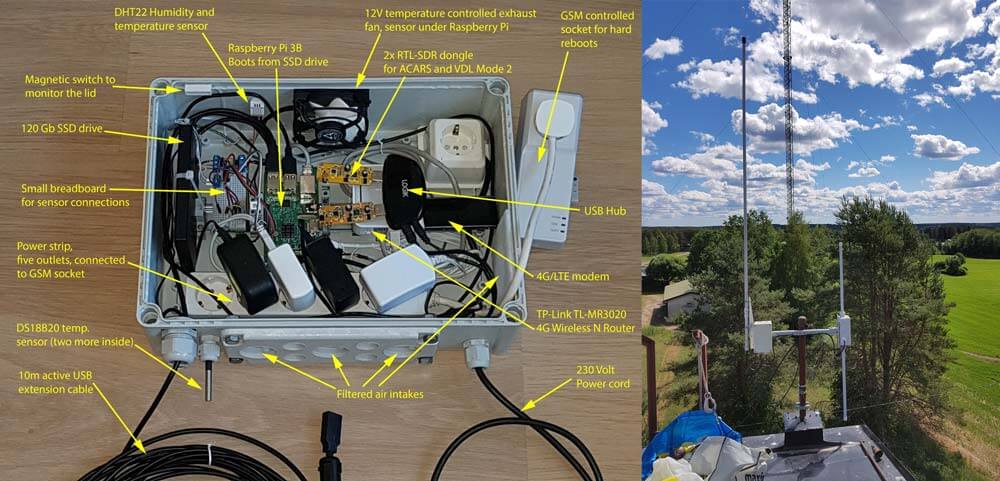
Over on Reddit u/tsimola has posted about his remote ADS-B station that is accessed via an LTE connection. When an opportunity came up to install a remote ADS-B station on a tall building with unobstructed 360 degree views, tsimola decided to build the best ADS-B monitoring station that he could, and make sure that it would be easily to maintain and monitor from afar.

He notes that his ADS-B station consists of a FlightAware Prostick Plus and 16-element collinear coaxial antenna. The following components are also used:

  • Raspberry Pi 3 booting and running from SSD drive (Raspbian and ADSB Receiver Project package)
  • Power via UPS (1 hour and 45-minute runtime) and text message controlled power socket (for hard reboots)
  • Powered USB hub with three basic RTL-SDR dongles (ACARS, VDL Mode 2 and voice)
  • Three temperature sensors and one humidity sensor, 80 mm exhaust fan (filtered air intakes)
  • Magnetic switch for push notifications if the lid is opened (IFTTT and Webhooks)
  • LTE/4G router for Internet connection

In addition to the ADS-B station, tsimola has also added ACARS, VDL2, and AM voice air traffic control monitoring with a second station in the same location that utilizes three RTL-SDR dongles. This second airband station is connected to a 128 MHz tuned airband dipole antenna, with an LNA4all and GPIO labs airband filter.

As well as descriptions of the hardware, tsimola's post goes over his software choices and explains how it is securely accessed. We think that this is a very well put together build that should be replicated in other locations too.

A remote ADS-B, ACARS, VDL2 and Air Traffic Control Monitoring Station.

[Also seen on Hackaday]

SDRplay RSPDuo Diversity: Combing a Magnetic Loop and Miniwhip Antenna

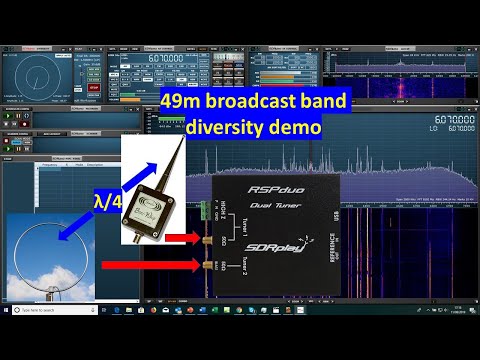
The SDRplay team have posted some more videos that demonstrate the SDRplay Duo's diversity function. The SDRplay RSPDuo is a 14-bit dual tuner software defined radio capable of tuning between 1 kHz - 2 GHz. It's defining feature is that it has two receivers in one radio, which allows us to combine the signal from two antenna together.

In the video Jon uses a Wellbrook Magnetic Loop antenna and a Bonito Miniwhip antenna both connected to the RSP Duo. Individually each antenna receives the signal relatively poorly and fades in and out as conditions and signal reflections fluctuate. However, with diversity enabled the SNR is improved and fading is significantly reduced.

The method they use to combine signals is a relatively simple method called maximum-ratio combining (MRC). The idea is that the two signal channels are added together, with the currently stronger and less noisy channel having increased gain. So while the signal levels fluctuate, as long as one antenna can receive the signal you will see no fading.

SDRplay HF Diversity Demo

SDRplay note that the key to a good setup is to have the antennas spaced out at a quarter wavelength of the signal frequency that you are receiving. In a second video they show how to properly set up an antenna system for proper HF diversity receiving.

This video demonstrates how SDRuno diversity and the RSPduo can bring enhanced reception at HF using 2 antennas separated by approximately a quarter wavelength. It uses the the current version of SDRuno (V 1.32) and the dual tuner RSPduo SDR from SDRplay.

In this experiment we had a wire dipole with one leg approximately a quarter wavelength from a Boniwhip vertical - both were picking up similar strength signals before going into "diversity" (max ratio combination) mode.

The benefits of diversity tuning at HF are very dependent on many variables, most notably the changing nature of the reflected signal path and the degree to which noise and unwanted signals are not as coherent as the wanted signal.

Antenna and SDRplay set-up for HF diversity reception (rev1)

Reviews of the NanoVNA: An Ultra Low Cost $50 Vector Network Analyzer

A vector network analyzer (VNA) is an instrument that can be used to measure antenna or coax parameters such as SWR, impedance and loss. It can also be used to characterize and tune filters. It is a very useful tool to have if you are building and tuning home made antennas, filters or other RF circuits. For example if you are building a QFH or ADS-B antenna to use with an RTL-SDR, a VNA can help ensure that your antenna is properly tuned to the correct frequency. Compared to a standard SWR or network analyzer a VNA supplies you with phase information as well.

Until just recently, VNA's have cost roughly US$500 for a decent USB PC based unit like the miniVNA or PocketVNA, and have set people back thousands to tens of thousands of dollars for bench top units.

However, the cost of owning a VNA has now been reduced to only US$50 thanks to the NanoVNA. The open source NanoVNA project by @edy555 and ttrftech has been around since 2016, but only recently have Chinese sellers begun mass producing the unit and selling them on sites like Aliexpress, eBay and now Amazon. We note that it seems that there are some sellers selling them without shielding, so it might be worth double checking the listing to see if they mention that. All the listings we've seen seem to come with simple calibration kits as well.

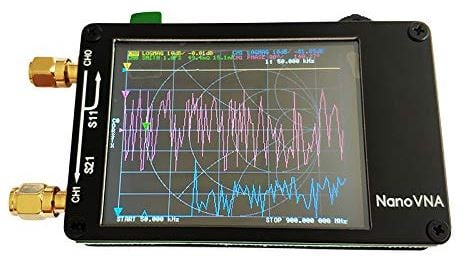
The NanoVNA: A $50 Vector Network Analyzer

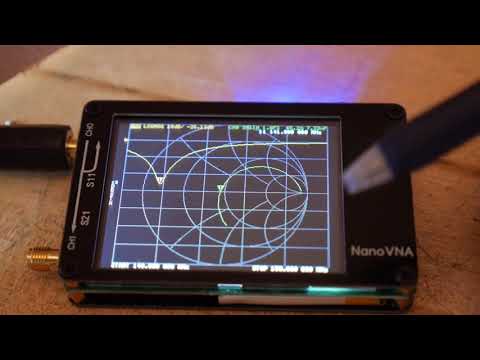
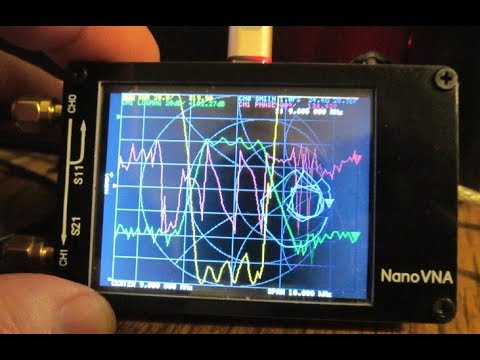
The NanoVNA is a small credit card sized VNA. It has a built in LCD screen that can be used to display graphs directly, or it can also be connected to a PC and the graphs viewed via the NanoVNA Windows software. When purchasing you can opt to include a small battery for portable operation for a few dollars extra. The frequency range is from 50 kHz to 900 MHz, although you should note that above 300 MHz dynamic range performance is reduced.

Over on YouTube several hams and radio enthusiasts have recently uploaded videos demonstrating and reviewing the NanoVNA. The overall consensus is that the unit is accurate and works well. For additional support there is forum available at Groups.IO.

Below YouTube user IMSAI Guy reviews the NanoVNA. Check out IMSAI Guy's other videos too as he has several where he tests the NanoVNA on difference filters and antennas, and checks the accuracy.

#350 NanoVNA Vector Network analyzer 900MHz VNA for $50

Below is YouTube user joe smith's review. He also has two other NanoVNA videos on his channel where he shows how to use the NanoVNA to measure antenna impedance, and how to use the NanoVNA to create SPICE models for simulation.

The NanoVNA, a beginners guide to the Vector Network Analyzer

Finally YouTube user Oli gives another overview. Please note that the following video is in Polish, but YouTube captions can be set to English.

NanoVNA - omówienie, kalibracja, pomiar anteny i filtra [english subtitles]

We've also seen several recent text reviews:

NanoVNA - A short review. In this review nuclearrambo shows off the calibration kit, and shows a practical measurements of a directional coupler and 137 MHz QFH antenna.

NanoVNA compared with a Keysight fieldfox N9952A. Here nuclearrambo provides a comparison between the $50 NanoVNA and the $40,000+ Keysight FieldFox N9962A.

The NanoVNA, a real VNA at less than 48 €!. A review written in French, but Google Translate can be used. In this review David Alloza compares the NanoVNA against an Agilent E5062A benchtop VNA, and results look comparable.

Building a DIY 2.4 GHz Helical Feed for the QO-100/Es’Hail-2 Satellite

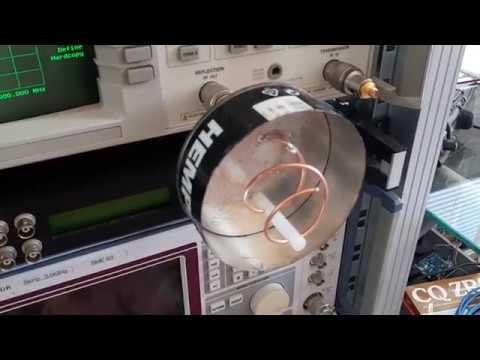
Over on his YouTube channel Adam 9A4QV has uploaded a short video that demonstrates his 2.4 GHz homemade helical feed designed to be used with a reflector (prime feed satellite dish) for QO-100/Es'Hail-2 satellite reception. The antenna is made from an old can, 2-turns of copper wire, and a plastic insulator to hold the turns in place. The two turns are wound in left hand circular polarization (LHCP), because when used with a satellite dish reflector it will result in right hand circular polarization (RHCP), which is the polarization QO-100 uses.

One of the most important parts of the video is when Adam shows how he matches the antenna to 50 Ohms. He notes that without matching the antenna won't work properly, and the return loss will be about 8 dB or even less, resulting in poor performance. With matching he obtains 30 dB return loss.

Helical feed for the 2.4 GHz QO-100 satellite

SignalsEverywhere: Satcom Antennas for L-Band Reception via RTL-SDR + Podcast on the MiTee CubeSat Project

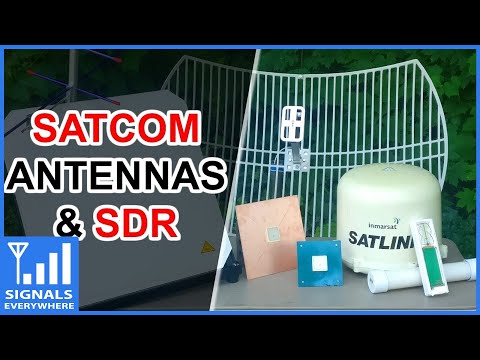
On this episode of SignalsEverywhere on YouTube Corrosive shows off several antennas that can be used for Inmarsat and Iridium satcom reception. His video shows off a commercial Inmarsat branded satlink antenna which is designed to be used on moving ships, a grid dish antenna, a custom QFH iridium antenna made from a repurposed Vaisala radiosonde, a commercial Iridium patch, an older Outernet/Othernet Iridium patch and a custom Iridium patch that Corrosive built himself.

Satcom Antennas for L-Band Reception via RTL SDR

A few days prior Corrosive also released a new episode of his podcast. In this episode he interviewed Derek a student from The University of Michigan who is working on the MiTee CubeSat. The MiTee cubesat is a small experimental satellite that will explore the use of miniaturized electrodynamic tethers for satellite propulsion.