The author of hamradioscience.com has posted a review of his thoughts on the SDRplay RSP software defined radio. The SDRplay is a SDR that is a $150 USD software defined radio that can be considered as a next stage level up from the RTL-SDR dongle. We consider it somewhat of a competitor to the Airspy SDR ($199 USD).
The review goes over the marketed specs, what you get in the box, software, support and its real world performance. The review is positive and the author concludes:
At the $150 price point there just isn’t much to complain about. The SDRPlay represents an excellent value in a low cost wideband SDR receiver. If you are currently considering getting involved with SDR radio, or want to trade up from the RTL dongle world, then the SDR Play should definitely be on your short list.
If you are interested in mid level SDR’s like the SDRplay then keep an eye out for our own review on RTL-SDR.com coming out in the next few weeks. We will be doing an in depth review and comparison of the Airspy, SDRplay and HackRF.
Radio transmissions between 0 - 30 MHz can travel all the way around the world. At these frequencies many interesting signals such as international shortwave radio, ham radio communications and several military transmissions exist.
The RTL-SDR's lowest tunable frequency is 24 MHz, and so it can only receive a small portion of the interesting transmissions that occur between 0 - 30 MHz. In order to listen to frequencies below 24 MHz an upconverter is required (either that or perform the direct sampling mod). An upconverter works simply by shifting these lower frequencies up to a higher frequency that the RTL-SDR can receive. For example, a 5 MHz signal might be upconverted to 105 MHz.
To date, most decent upconverters (such as the popular ham-it-up upconverter) have been based on the double balanced mixer architecture implemented by the ADE-1 mixer chip from Minicircuits. The SpyVerter on the other hand is based on a different type of architecture which is inspired by the H-mode mixer design that was used in the unreleased HF7070 communications receiver. The expected major advantage that this design has over a ADE-1 based design is better IIP3 performance. This essentially means that strong signals will not cause overloading issues in the SpyVerter, meaning less noise and spurious images.
Another advantage of the SpyVerter is its use of a 120 MHz low phase noise/low jitter clock, meaning less reciprocal mixing and thus greater SNR and a lower noise floor. A low phase noise clock is essential for getting good performance when receiving the very narrowband signals that are typically found between 0 - 30 MHz. The other upconverters do not specify their phase noise performance as far as we can tell.
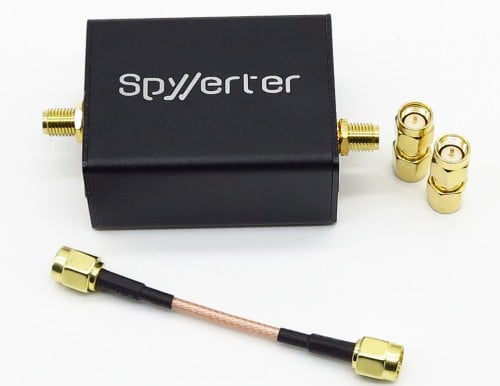
The SpyVerter comes in a metal box, with three SMA adapters. A metal box is great because it helps keep strong interfering signals from entering the signal path, as well as stabilizing the internal temperature, keeping frequency drift to a minimum. Most upconverters only come with a metal box as a paid add on, but the SpyVerter comes in one by default.
Although the SpyVerter is designed to be used with the Airspy, it is fully compatible with the RTL-SDR as well. The SpyVerter can be powered via a USB cable, or via 5V bias tee (and this is compatible with the bias tee used on the RTL-SDR Blog units sold by us).
Over on the hamspirit.de blog author January has just uploaded his latest review comparing the Airspy with the SDRPlay (article in German, so use Google Translate if necessary). These are two mid price range RX only software defined radio receivers that many people see as a first upgrade from an RTL-SDR dongle. Currently, the Airspy sells for $199 USD and the SDRPlay sells for $149 USD.
In his review January uses the SDR# to compare both devices on a wide range of signals include a beacon in the 10M band, broadcast FM stations, another beacon in the 2M band, TETRA signals and trunked radio in the 70cm band. He ran the SDRPlay at a bandwidth of 1.536 MHz and the Airspy at a bandwidth of 2.5 MHz, with decimation set to 2 in order to get comparable bandwidths.
From the results it appears that overall the two SDR’s are quite comparable to one another. But the SDRPlay has the advantage that it’s frequency range covers shortwave frequencies and his results show that the SDRPlay had better SNR in the FM broadcast band (although these results may be incorrect as it appears that his gain settings were not set properly, as the Airspy guide recommends that Airspy gains be adjusted to keep the noise floor near -80 dBFS). On the other hand the Airspy was much better when strong FM overload was present as shown in his TETRA results. In his conclusion he writes (translated from German to English):
If one value to a SDR, which covers with the short wave, it is running out on the SDRplay.
If one is interested in the field below the 70cm amateur radio bands, is in my view the Airspy front.
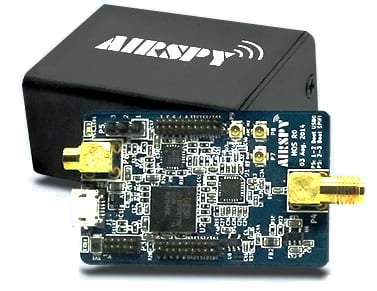
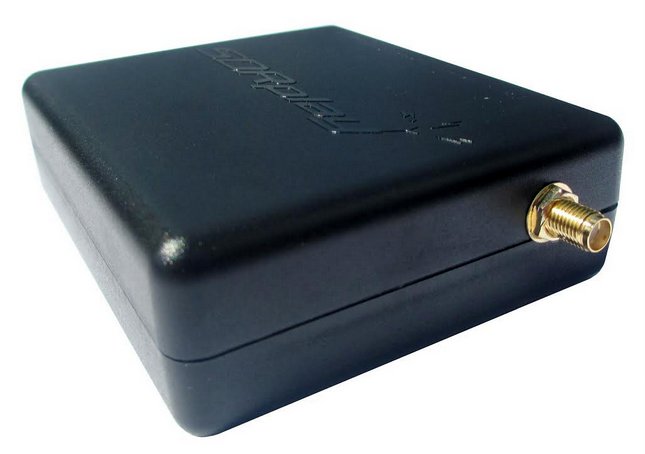
In the May 2015 issue of The Spectrum Monitor magazine, the SDRPlay was reviewed in an article by Thomas. Now the article has been released for free over on the swling.com blog. The SDRPlay is a $149 USD software defined radio with a tuning range of 100 kHz – 380 MHz and 430 MHz – 2 GHz, a 12-bit ADC, and up to 8 MHz of bandwidth. We consider it as a decent upgrade to those wishing for something better than the RTL-SDR and a good competitor to the Airspy SDR.
In the review Thomas unboxes the unit, installs the software and reviews the HF DX performance comparing it to the more expensive Elad-FDM S2. While the performance isn’t as good as the Elad, Thomas writes that for the price it performs very impressively. In his conclusion he writes:
[The] SDRplay RSP really impressed me from the beginning with its low noise floor, variable IF bandwidth options, and relative ease of installation. Since the RSP only requires one USB cable for both data and power, it’s also an ideal portable SDR.
Januaries review discusses the Airspy specifications, the unboxing, ease of use and reception results. The review is generally positive and he writes that in the coming weeks he hopes to do some comparisons between the RTL-SDR and Airspy.
Back in May we did a review of Japanese RTL-SDR experimenter Nobu’s products, which were his HF Upconverter, Galvanic Isolator and 14 MHz Low Pass Filter. The low pass filter was designed to be used with a direct sampling modified RTL-SDR receiver, but unfortunately we didn’t have one of those on hand at the time.
Nobu was kind enough to send us one of his direct sampling modified RTL-SDR dongles that he also has on sale on his Japanese Amazon page. This is a nice little unit that has an upgraded 10 ppm oscillator, and an additional MCX port connected to the direct sampling pins of the RTL2832U chip through an impedance transformer. With this unit we were able to give the low pass filter a better test.
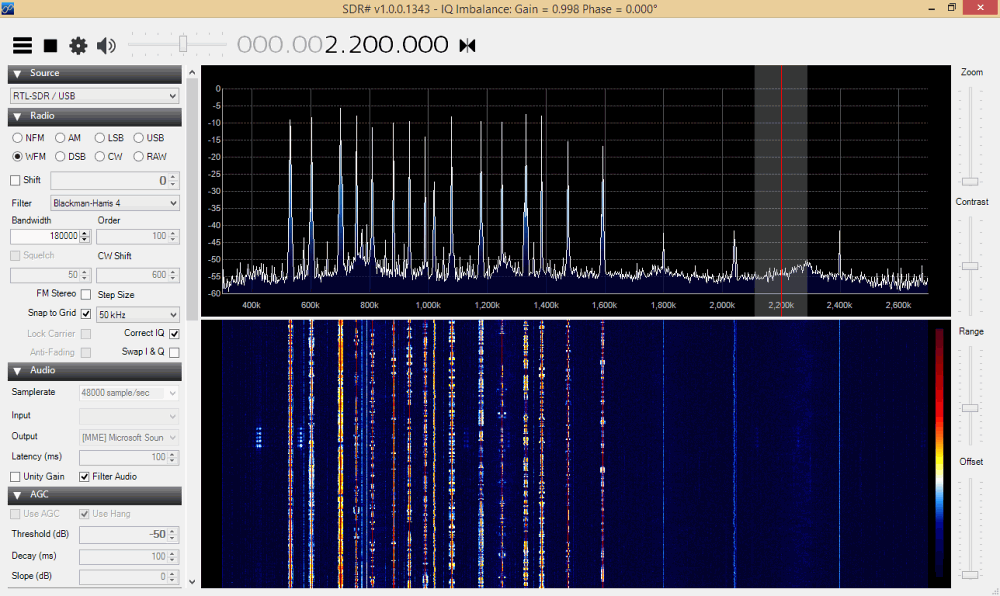
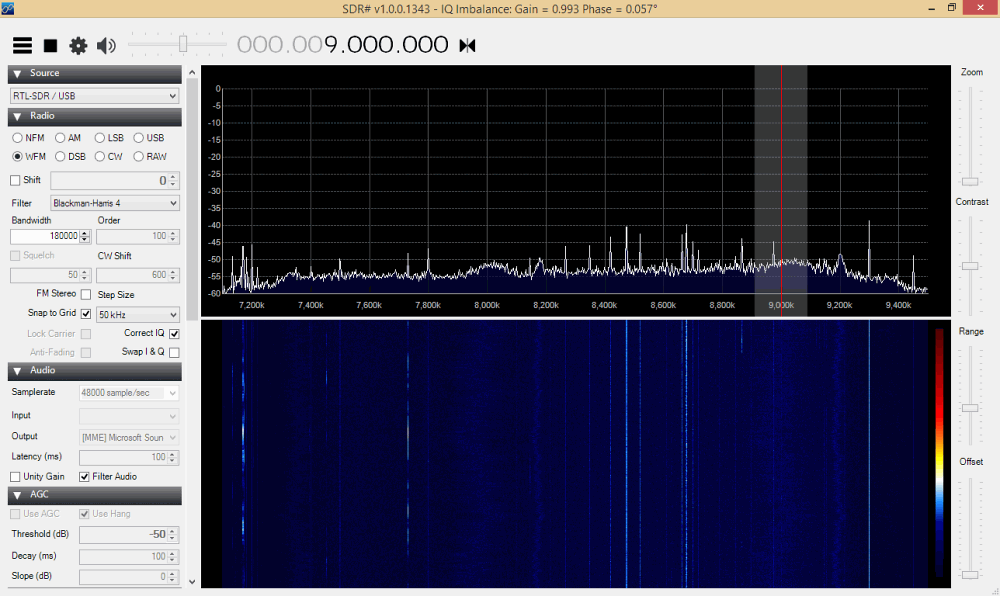
The image below shows the AM broadcast band with the filter in place. Mouse over the image to see the effect of removing the low pass filter. (If on mobile click inside the image, and outside the image to toggle the mouse over effect). We can see that there is some insertion loss from the filter, however with the LPF not connected there is severe interference from the broadcast FM band and some AM signals are completely unusable.
We repeated the same test at 9 MHz. Again, mouse over the image to see the effect of removing the low pass filter. Once more we see that without the LPF there is severe interference from the broadcast FM band, as well as in this case what looks to be a DAB signal.
Similar interference is found all through the 0 – 14 MHz frequencies without the low pass filter in place and most weak signals cannot be listened to without the filter connected. It is clear that without a low pass filter the direct sampling modification is almost useless in the presence of strong interfering signals, such as those from the FM broadcast band.
To purchase from outside of Japan you can use a third party shopping service available at http://agent.jzool.com/, which will buy and ship the product to you from Japan.
Over on the swling.com blog, Thomas has uploaded a review of the TitanSDR Pro that was published in the May 2015 version of The Spectrum Monitor online magazine. Although the TitanSDR pro software defined radio is an expensive (1,380 EUR for the basic / 1,970 EUR for the PRO), it may be of interest to those looking to go further into the short wave listening hobby. The TitanSDR is a high performance 9 kHz to 32 MHz receiver with 16 built in preselectors and a bandwidth up to 2.1875 MHz. It’s main markets appear to be government intelligence and military, but it also finds good use in general short wave listening.
Thomas reviews the TitanSDR positively, liking its easy to use software and its superb sensitivity, but noting that it’s high price may be a bit off putting.
Also, in the current June version of The Spectrum Monitor magazine Thomas also reviews the SDRPlay, a $149 USD HF capable radio, also giving it a favourable review.
Back in April we posted about some new products made by Japanese RTL-SDR experimenter and product manufacturer Nobu. Nobu’s new products were a 1:1 galvanic isolator and a low pass filter. The galvanic isolator isolates the antenna from the RTL-SDR and PC, significantly reducing noise. The low pass filter is useful when used with direct sampling modified RTL-SDRs to filter out any strong interfering signals that are above 14 MHz.
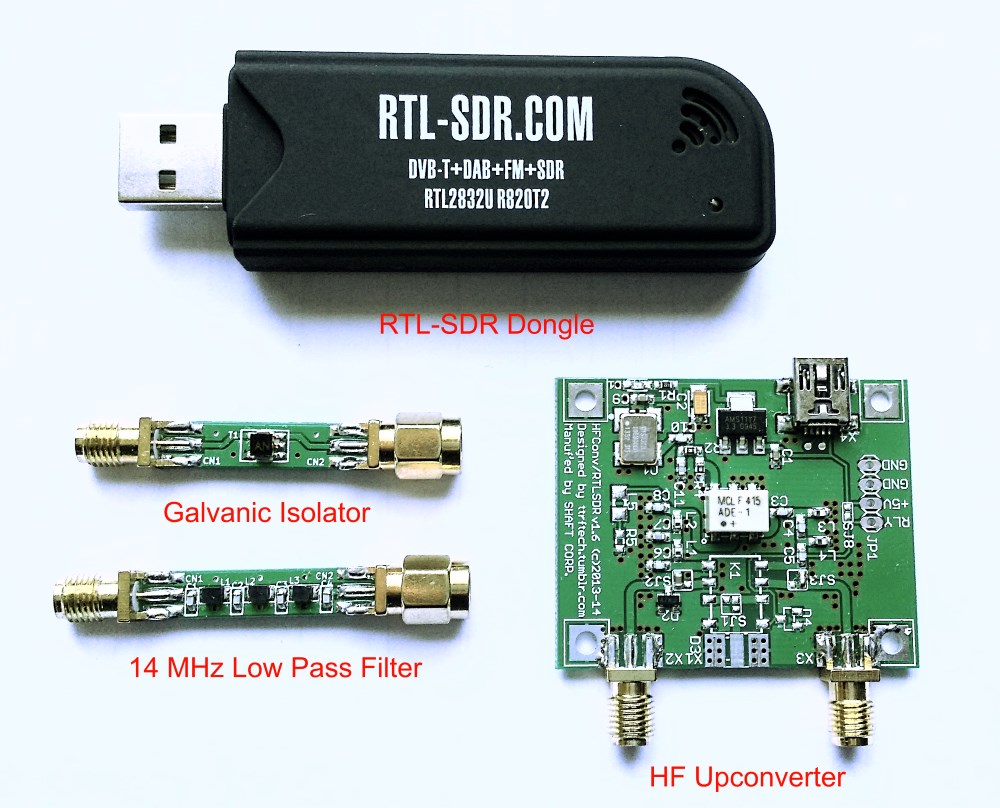
Recently Nobu sent us at RTL-SDR.com some samples of his products. He sent us one of his HF upconverters, a galvanic isolator and a low pass filter.
Nobu’s RTL-SDR Products: HF Upconverter, Galvanic Isolator, Low Pass Filter. Placed next to an RTL-SDR for size comparison.