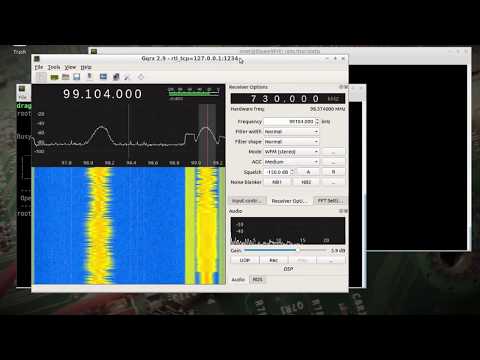
Over on his DragonOS YouTube tutorial channel Aaron has uploaded a video showing how it is possible to run rtl_tcp over the TOR network. TOR is an "anonymity network" which routes your internet traffic through thousands of volunteer nodes in order to make tracing your internet activity more difficult.
Aaron's tutorial shows how to route rtl_tcp traffic through a TOR connection on his Linux distribution DragonOS (although it should work on any Linux distro), and connect to it with GQRX.
However, a major caveat is that the data streaming result is rather poor with there being lots of data drops, probably due to the slowness of the TOR network. Perhaps running a smaller sample rate, or using a more efficient server like Spyserver might work better.
DragonOS LTS Remote access RTL-SDR over TOR network (Gqrx, rtl_tcp, OpenWRT)
The yearly GNU Radio Conference (GRCon) is a conference all about the development of GNU Radio and projects based on GNU Radio. GNU Radio is an open source digital signal processing (DSP) toolkit which is often used in cutting edge radio applications and research to implement decoders, demodulators and various other SDR algorithms.
This years 2020 GNU Conference is to be the 10th one ever held and was supposed to take place in Charlotte, NC. However due to the ongoing pandemic the organizers have now decided that it will be held entirely online this year. The starting date is September 14 and the talks and events will probably run for several days. All talks will be streamed for free, however, registering for US$50 will get you access to the live workshops and other events.
There is a great line up of keynote speakers, and if you have a talk that you'd like to submit, submissions are now open. For ideas on what GNU Radio talks are like, you can see full recordings from previous GNU Radio conferences on their YouTube channel playlists.
GNU Radio Conference (GRCon) is the annual conference for the GNU Radio project & community, and has established itself as one of the premier industry events for Software Radio. It is a week-long conference that includes high-quality technical content and valuable networking opportunities. GRCon is a venue that highlights design, implementation, and theory that has been practically applied in a useful way. GRCon attendees come from a large variety of backgrounds, including industry, academia, government, and hobbyists.
GRCon20 will be held starting September 14, 2020 online as a virtual event. The organizing team is hard at work to create a fun and interactive experience.
Our keynote speakers include: Becky Schoenfeld W1BXY, managing editor of QST magazine, Oona Räisänen [ windytan ] hacker of signals and computer programmer, and Jim St. Leger, Director Open Source, Intel.
With an annual program that has broad appeal, GRCon attracts people new to Software Radio just looking to learn more, experts that want to keep their finger on the pulse & direction of the industry, and seasoned developers ready to show off their latest work.
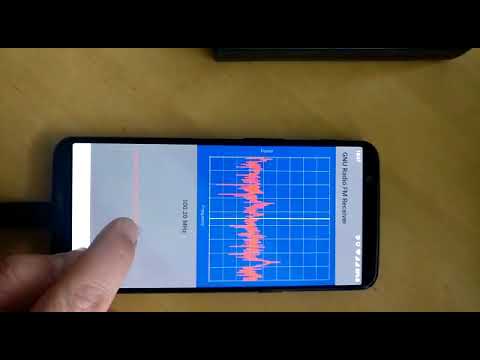
Back in November 2019 we posted how Bastian Bloessl (@bastibl) had teased us with his ability to get GNU Radio running on an Android phone. Now he has officially released his code to the public on GitHub. This is quite a remarkable development as you can now carry a full DSP processing suite in your pocket. In addition to the code, he's put up a short blog post explaining a bit about the port. He notes some highlights of the release:
Supports the most recent version of GNU Radio (v3.8).
Supports 32-bit and 64-bit ARM architectures (i.e., armeabi-v7a and arm64-v8a).
Supports popular hardware frontends (RTL-SDR, HackRF, and Ettus B2XX). Others can be added if there is interest.
Supports interfacing Android hardware (mic, speaker, accelerometer, …) through gr-grand.
Does not require to root the device.
All signal processing happens in C++ domain.
Provides various means to interact with a flowgraph from Java-domain (e.g., Control Port, PMTs, ZeroMQ, TCP/UDP).
Comes with a custom GNU Radio double-mapped circular buffer implementation, using Android shared memory.
He's even included demonstration code that turns a USRP B200 SDR connected to an Android phone into a WLAN transceiver which can run in real time on faster devices.
Installing it may not be easy for most, but Bastian has included full build instructions on the GitHub page, and makes use of a Docker file which should simplify the installation a bit.
GNU Radio running on an Android phone, usinga USRP B200 SDR as a WLAN transceiver.
GNU Radio 3.8 on un-rooted Android receiving FM w/ HackRF (take 2)
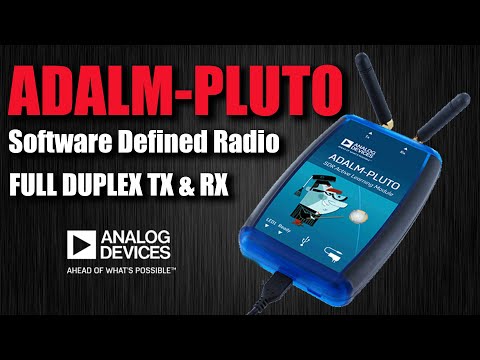
Over on his YouTube channel Tech Minds has uploaded a video where he overviews and demonstrates the ADALM PLUTO (aka PlutoSDR). The PlutoSDR is a low cost RX/TX full duplex capable SDR with up to 56 MHz of bandwidth and 70 MHz to 6 GHz frequency range. It is typically priced anywhere between US$99 - US$149 depending on sales.
In the video Tech Minds explains the specs and features of the PlutoSDR, analyzes the included antennas, shows how to connect to the PlutoSDR via USB/Ethernet/WiFi and finally demonstrates the unit running on SDR-Console V3 receiving and transmitting signals.
He also notes how he modified his unit and installed a more stable TCXO. This is required as he intends to use the unit for QO-100 SSB satellite operation which requires a very stable signal. In addition to the TCXO mod he also performed a mod to improve the grounding on the unit which reportedly prevents the unit from locking up when using long long network cables and a USB to Ethernet adapter.
TEMPEST refers to a technique that is used to eavesdrop on electronic equipment via their unintentional radio emissions (as well as via sounds and vibrations). All electronics emit some sort of unintentional RF signals, and by capturing and processing those signals some data can be recovered. For example the unintentional signals from a computer screen could be captured, and converted back into a live image of what the screen is displaying. We have tutorials on how to do this with a program called TempestSDR available on a previous post of ours.
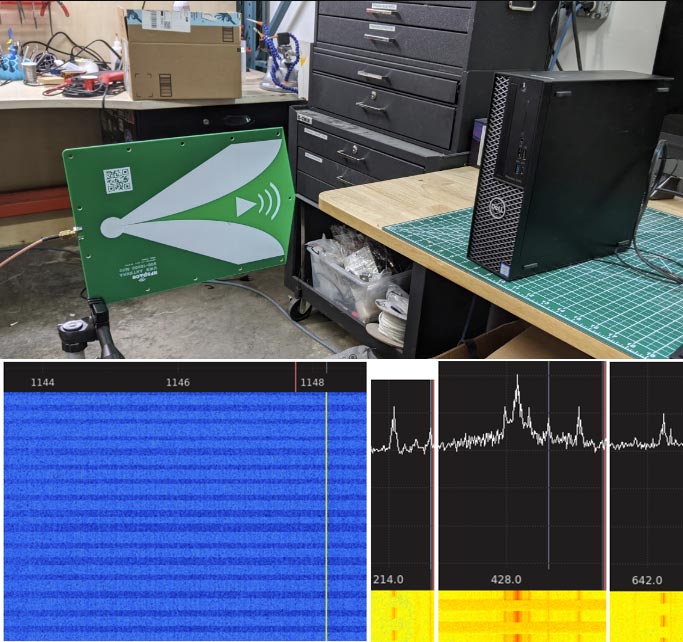
Recently Mikhail Davidov and Baron Oldenburg from duo.com have uploaded a write up about their TEMPEST experiments. The write up introduces the science behind TEMPEST eavesdropping first, then moves on to topics like software defined radios and antennas.
At the end of their post they perform some experiments like constantly writing data to memory on a PC, and putting the PCs GPU under varying load states. These experiments result in clear RFI bursts and pulsing carriers being visible in the spectrum, indicating that the PC is indeed unintentionally transmitting RF. They note that machine learning could be used to gather some information from these signals.
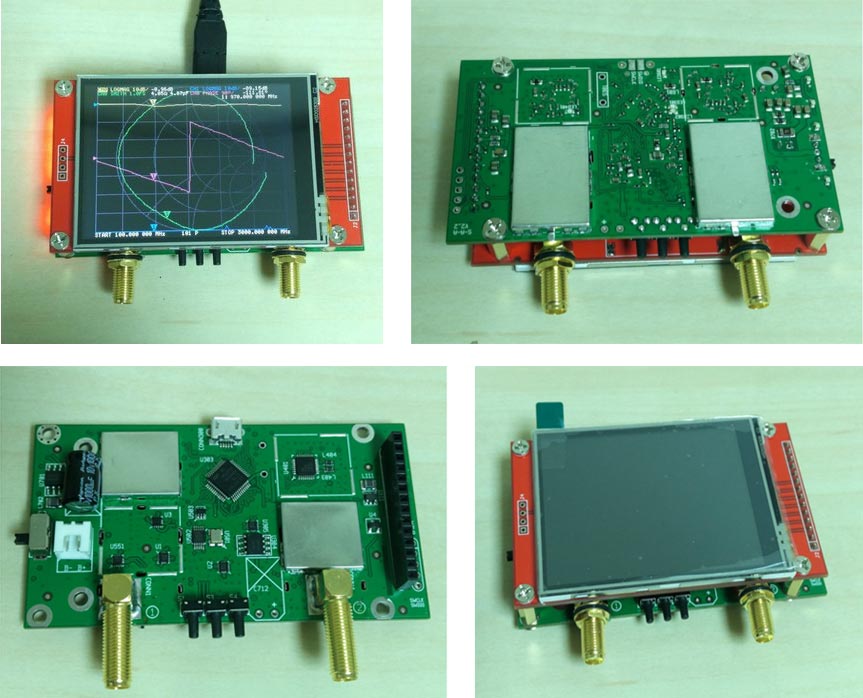
We've received a few notices that the NanoVNA V2 design that we've been following since last year is now available for sale on eBay and Tindie (or Taobao if you live in China). The original official sales appear to have been from Tindie, where it is priced at $58.25 + shipping, although it is now out of stock. On eBay resellers are selling it for up to $150. If you're interested in purchasing the V2 we recommend entering your email into the Tindie form as they will notify you when it's back in stock. Initial reviews posted on the Tindie store indicate that the unit has excellent performance for the price so we expect that it will be popular enough to manufacture many more in the future.
The original NanoVNA brought expensive Vector Network Analyzer (VNA) capabilities to the masses with it's low $40 pricing. A VNA is an extremely useful tool for radio hobbyists as it allows you to tune antennas, filters and measure cable loss among other applications. However, the original design was limited to only a frequency of 900 MHz maximum. The new design pushes this up to 3 GHz official, and unofficially up to 4.4 GHz whilst also improving dynamic range and maintaining the low price point.
The description and specs of the NanoVNA V2 are shown below:
3GHz second generation NanoVNA vector network analyzer, designed in collaboration with OwOComm.
Note: Micro USB cable not included. Fully assembled, without enclosure. Ships within 5 business days.
Earlier in the year we posted a tutorial showing how to detect the Galactic Hydrogen Line at home with less than $200 in components. All that is really needed is a 2.4 GHz WiFi dish, an RTL-SDR and an LNA. With this setup it's possible to do home science like determining the size, shape and rotational speed of our own galaxy.
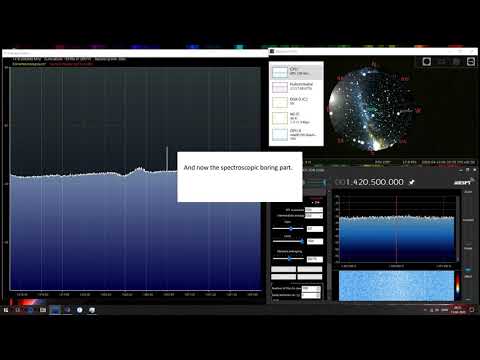
Over on YouTube user Nicks Tech Hobby has successfully replicated our tutorial with similar hardware, and has uploaded a time lapse video showing his results. His success confirms that this is a good way to get introduced into radio astronomy. What's also interesting is that it is possible to spot the Hydrogen line energy on the live waterfall even without averaging/integration.
My first successful attempt to detect galactic hydrogen (Hydrogen line)
Thank you to Apostolos for submitting information about his new open source program called "CygnusRFI". CygnusRFI is a tool designed for analyzing radio frequency interference (RFI) with a focus on how it affects satellite ground stations and radio telescopes. We note that in the past we've posted several times about Apostolos' other project called PICTOR, which is an open source radio telescope platform that makes use of RTL-SDR dongles.
Apostolos explains CygnusRFI in the following:
CygnusRFI is an easy-to-use open-source Radio Frequency Interference (RFI) analysis tool, based on Python and GNU Radio Companion (GRC) that is conveniently applicable to any ground station/radio telescope working with a GRC-supported software-defined radio (SDR). In addition to data acquisition, CygnusRFI also carries out automated analysis of the recorded data, producing a series of averaged spectra covering a wide range of frequencies of interest. CygnusRFI is built for ground station operators, radio astronomers, amateur radio operators and anyone who wishes to get an idea of how "radio-quiet" their environment is, using inexpensive instruments like SDRs.