Tagged: HF

Measuring the input impedance of the RTL2832U direct sampling input pins

The direct sampling mod allows you to listen to the HF frequencies between 0 – 14 MHz on an RTL-SDR by simply connecting an antenna directly to the ADC pins on the RTL2832U chip. Until recently the impedance of these pins was unknown, but most people assumed that it was about 300 Ohms.

Now Martin (G8JNJ) has recently updated his webpage with some interesting results that he and another experimenter (Robert Symanek) obtained regarding the input imedpance. Robert found that using a Minicircuits T16-6T-KK81 transformer with 50 Ohms on the primary and 800 Ohms on the secondary gave a 16dB to 19dB higher signal than a simpler 200 Ohm transformer.

This inspired Martin to do a proper measurement of the input impedance. Martin’s measurements found that the differential input impedance of the RTL2832U is approximately 3,330 Ohms when the input is enabled, and this would require a 66:1 transformer. However, Martin writes that a wideband transformer like this probably does not exist, but that the T16-6T-KK81 with terminating resistors added is probably a good choice.

Martin's Direct Sampling + Diplexer Mod
Martin’s Direct Sampling + Diplexer Mod

Several PDF Files Related to RTL-SDR’s and HF/MW Reception

Recently RTL-SDR.com reader Dr. Phil wrote in to let us know about some PDF notes that he has created about the RTL-SDR dongle. There is some good information in his documents and the notes mainly focus on using the RTL-SDR with the direct sampling mod to receive HF.

His other documents also explain concepts such as imaging, interference and gain, how to reduce interference, input impedance of the Q sampling pads, intermediate frequency, and sample rate. In addition he has also uploaded some documents where he has calculated for various AM, FM and SW stations at what frequencies images will show up. His final document also discusses the Mirics SDR chipsets which are used in the SDRPlay.

He writes that any corrections are welcome. Dr. Phil’s main website can be found at http://home.comcast.net/~phils_radio_designs/.

Pocket HF SDR: http://home.comcast.net/%7Ephils_radio_designs/Pocket_SDR.pdf

Pocket HF SDR Cookbook: http://home.comcast.net/%7Ephils_radio_designs/SDR_Cookbook.pdf

RTL2832U: http://home.comcast.net/%7Ephils_radio_designs/RTL2832U.pdf

HF Direct Sampling: http://home.comcast.net/%7Ephils_radio_designs/Direct_Sample.pdf

AM Images: http://home.comcast.net/%7Ephils_radio_designs/AM_Images.pdf

FM Images: http://home.comcast.net/%7Ephils_radio_designs/FM_Images.pdf

SW Images: http://home.comcast.net/%7Ephils_radio_designs/SW_Images.pdf

Generic RTL: http://home.comcast.net/%7Ephils_radio_designs/GenericRTL.pdf

Mirics Chipset: http://home.comcast.net/%7Ephils_radio_designs/Mirics.pdf

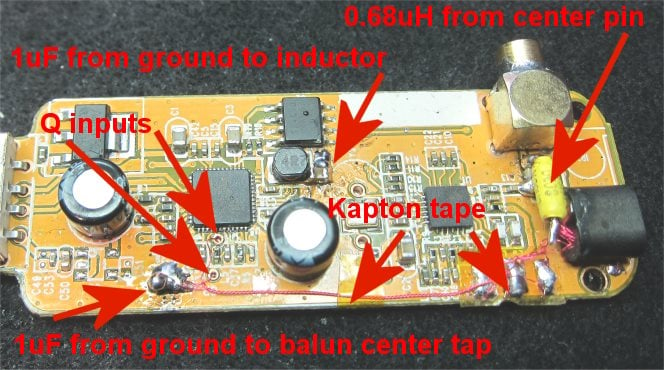
A photo of the direct sampling mod with a wire antenna.


A Review of the TitanSDR Pro

Over on the swling.com blog, Thomas has uploaded a review of the TitanSDR Pro that was published in the May 2015 version of The Spectrum Monitor online magazine. Although the TitanSDR pro software defined radio is an expensive (1,380 EUR for the basic / 1,970 EUR for the PRO), it may be of interest to those looking to go further into the short wave listening hobby. The TitanSDR is a high performance 9 kHz to 32 MHz receiver with 16 built in preselectors and a bandwidth up to 2.1875 MHz. It’s main markets appear to be government intelligence and military, but it also finds good use in general short wave listening.

Thomas reviews the TitanSDR positively, liking its easy to use software and its superb sensitivity, but noting that it’s high price may be a bit off putting.

Also, in the current June version of The Spectrum Monitor magazine Thomas also reviews the SDRPlay, a $149 USD HF capable radio, also giving it a favourable review.

The TitanSDR Pro
The TitanSDR Pro

Homemade Upconverter for the RTL-SDR Running on a Cellphone Battery

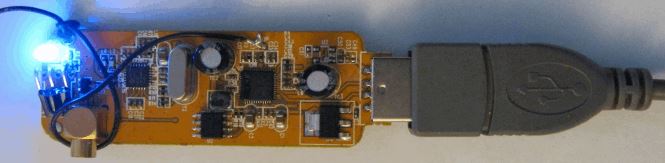
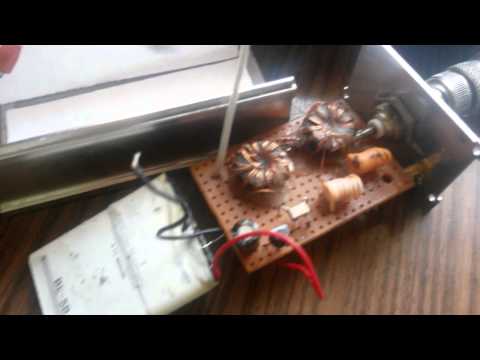
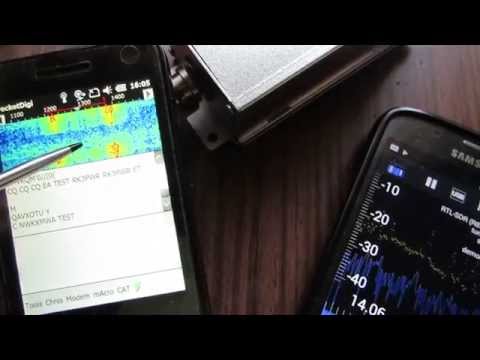
Over on YouTube user ek6rsc has uploaded a video showing his home made upconverter for the RTL-SDR. His upconverter uses a diode mixer design with a low pass filter and 40 MHz oscillator which he obtained from a USB-WIFI adapter. Usually an upconverter is powered by a power plug or USB cable, but ek6rsc has powered his with a 3.7V 860ma cellphone battery. He writes that the battery lasts a long time and helps avoid interference caused by power adapters and the PC. Ek6rsc has also uploaded a second video showing the upconverter in action.

Up-converter for RTL-SDR 40MHZ Lo. & cellphone battery

How work Up-converter for RTL-SDR 40MHZ Lo. & cellphone battery

Spyverter Sneak Preview

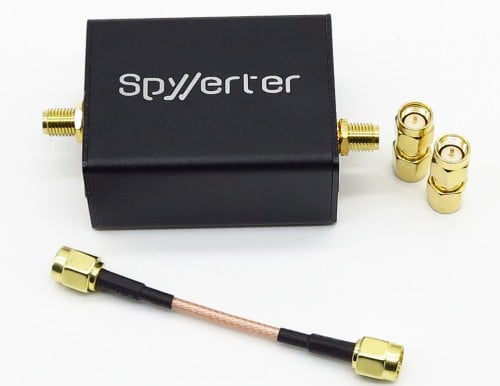
The Spyverter is being developed by the creators of the Airspy software defined radio to be a high performance upconverter. It is designed for use with the Airspy, but may also be compatible with other SDR devices too.

Compared to most other upconverters which use a diode ring mixer architecture, the Spyverter uses a different, as of yet undisclosed architecture. The main claimed advantages over other upconverters will be it’s low loss and high IIP3 performance, which means that the Spyverter will not saturate in the presence of strong signals as easily as other upconverters.

Recently a photo of a Spyverter alpha board was released, indicating that the Spyverter is getting close to release.

The Spyverter Alpha
The Spyverter Alpha

Also, a few months ago W9RAN posted a YouTube video about a prototype HF upconverter for the Airspy and we believe he was using an early version of the Spyverter.

Airspy HF Converter Sneak Peek by W9RAN

Receiving Hellschreiber with the RTL-SDR and an Upconverter

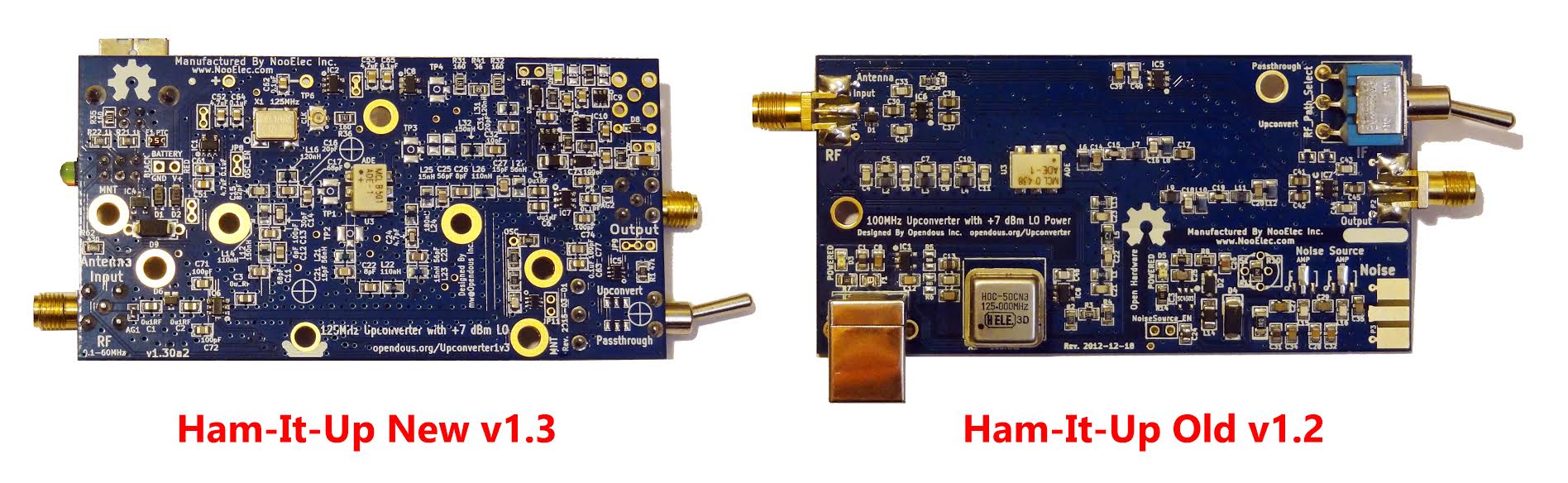
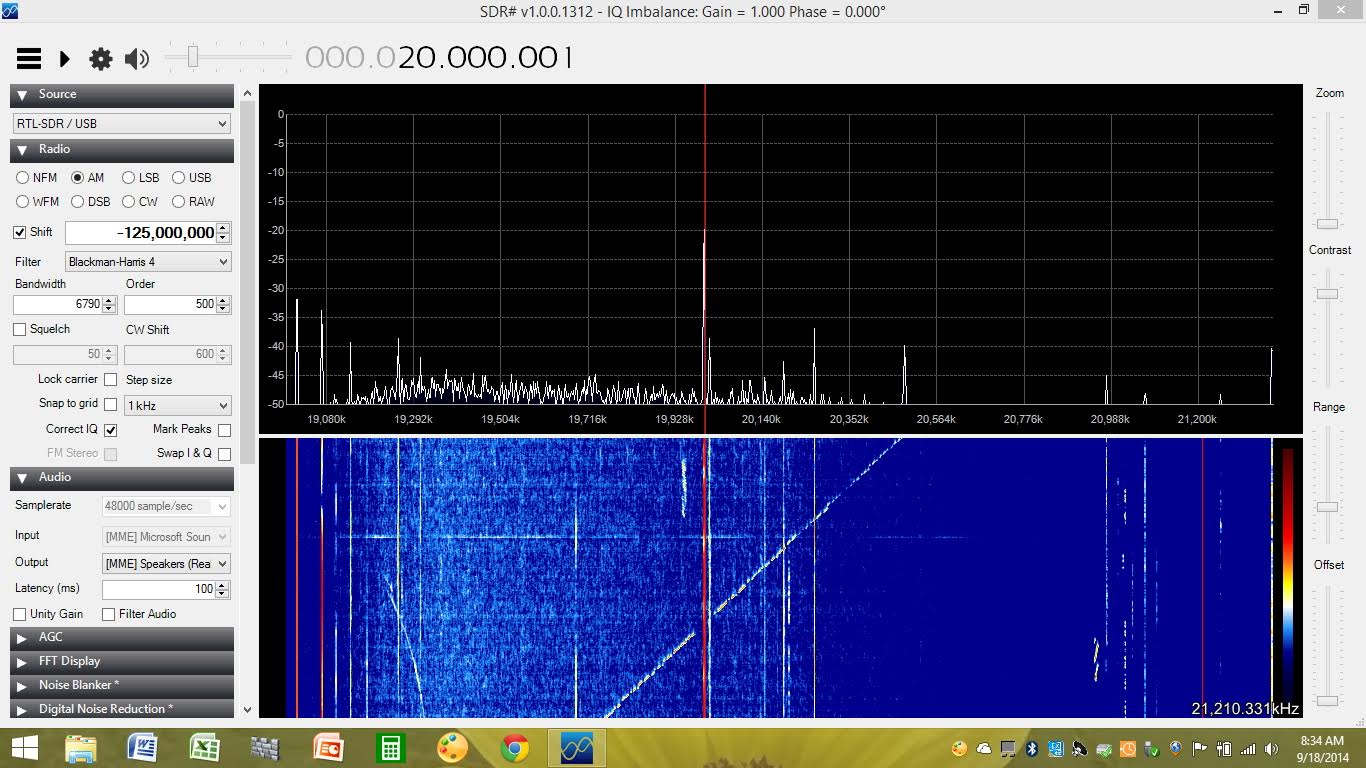
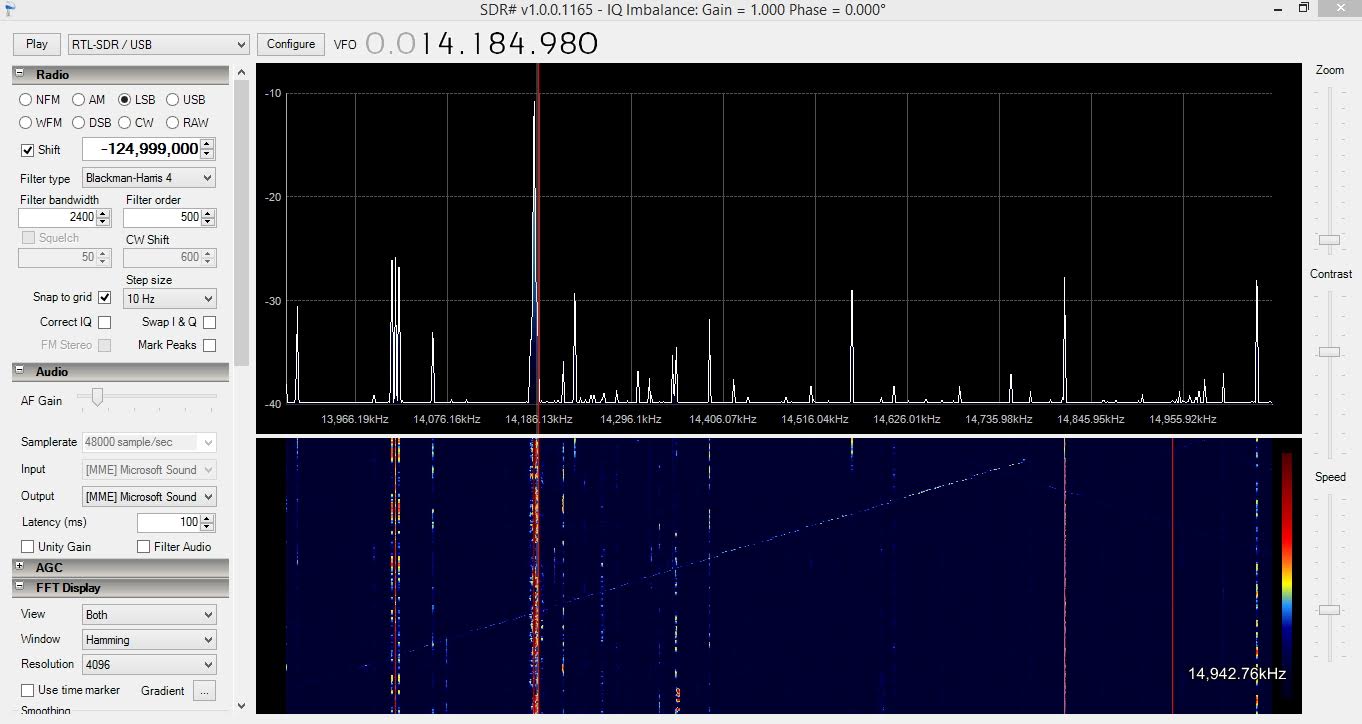
Over on YouTube user BSoD Badgers has uploaded a video showing reception of Hellschreiber on HF at 20m. To receive the HF frequencies he used a ham-it-up upconverter. He used SDR# to receive the signal and the Fldigi decoding software to decode the signal.

Hellschreiber is a fax-like communications mode used by amateur radio hobbyists.

Receiving BPSK63 with an RTL-SDR and Ham-It-Up Upconverter

Over on YouTube user Java’s Toys has uploaded a video showing a demo of his reception of a BPSK63 signal using his RTL-SDR and the Ham-it-up upconverter. BPSK63 is a text based digital communications mode used by ham radio enthusiasts to make contacts. It is twice as fast compared to the more commonly used BPSK31 mode.

Java’s toys used HDSDR together with Fldigi to receive and decode the signal.

Understanding Filtering in an Upconverter for the RTL-SDR

Over on YouTube user w2aew has uploaded a video tutorial explaining how filtering in an upconverter works. In a previous video w2aew explained how a simple upconverter for the RTL-SDR worked and noted that for best performance the upconverter needs three filters, one preselector at the input, one after the local oscillator and one after the mixing stage.

In this video w2aew takes a Nooelec Ham-it-up upconverter which has the three filters mentioned above implemented and scopes the output after each filter to show their effect on an input signal.

#175: Filter functions in an HF Upconverter used with RTL-SDR Dongle Receiver