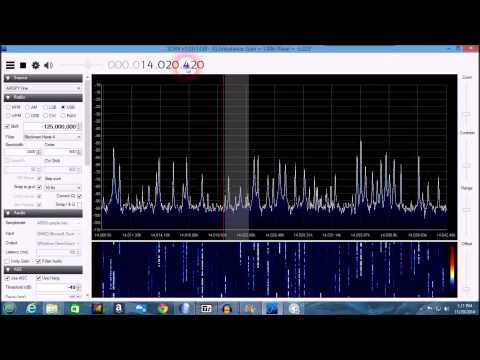
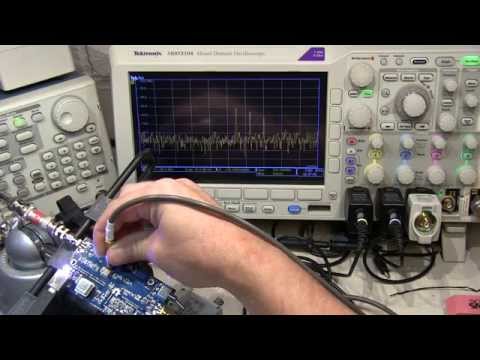
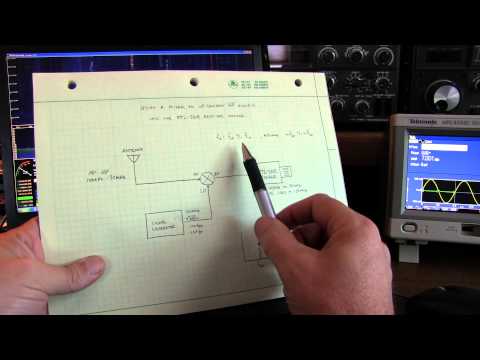
Over on YouTube user w2aew has uploaded a tutorial video that clearly explains the theory behind upconverters. Upconverters are commonly used with the RTL-SDR to receive the HF (0 – 30 MHz) bands. In the video he shows how to make a simple homemade double-balanced diode ring mixer for the RTL-SDR and shows its performance in HDSDR.
#174: Using a mixer to listen to HF, shortwave, ham, etc. on RTL-SDR dongle
Over on the Osmocom mailing list, Oliver Jowett an RTL-SDR experimenter has posted about his new experimental driver for the R820T RTL-SDR which extends the tunable range down to around 13 and up to 1864 MHz (previously 24 – 1766 MHz). Oliver writes
You can get these changes from https://github.com/mutability/rtl-sdr/ (you’ll need to build from source yourself). There should be no application changes needed, just tune as normal. (gqrx needs the “no limits” option turned on) These changes work by limiting the tuner to a range of frequencies that it can reliably tune to, then allowing tuning beyond those bounds by making the 2832’s downconverter do the final bit of tuning. This can add up to 14.4MHz to each end of the range. Also, the tuner is switched to low-side mixing at the top of the range which gives a bit more range there. The practical range is limited by the width of the IF filter and aliasing effects at the extreme edges of the downconverter’s range. I’ve been able to pick up broadcast AM and amateur CW/SSB down to around 15.5MHz without too much trouble. I’d be interested to know how this works for others. Also.. these changes are likely to have broken offset tuning, direct sampling mods, and tuners other than the R820T, as it touches all those areas but I only have an unmodified R820T to test against. If you have different hardware and are willing to spend some time testing then please let me know. I expect that the range of the other tuners can be extended in the same way with not much trouble.
Over on the Reddit RTL-SDR discussion board there has been talk about this patch. Most users are reporting that it works well down to around 15 MHz, but some people are reporting that they have been able to receive signals down to around 4 MHz. Testers also report that this modified driver works much better than the no-hardware direct sampling mod patch released a few months ago.
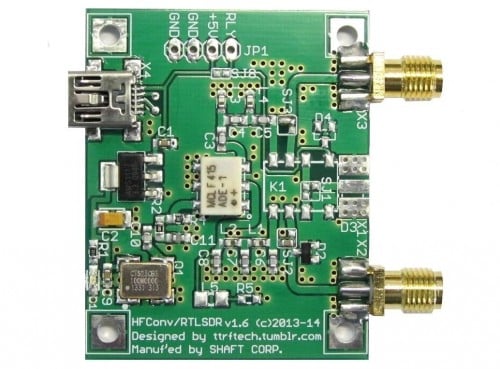
A new HF upconverter designed for the RTL-SDR has gone up on ttrftech’s Japanese language blog (use Google Translate). The upconverter is called the ‘SC-HFCONV-100’ and comes with 100 MHz oscillator, SMA connectors, USB mini-B power.
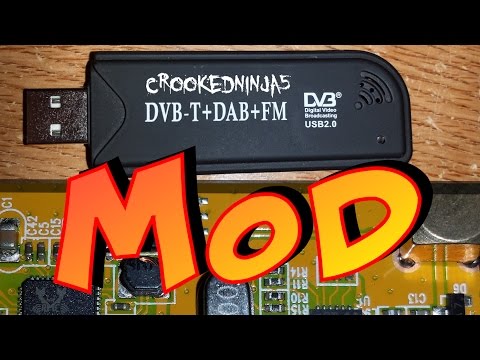
Over on YouTube user crookedninja5 has uploaded a video showing what he calls the “Easy HF dongle mod”. The mod involves soldering a wire from Pin 1 on the RTL2832U chip to the static protection diode near the antenna input. At the same time he also uses the modified RTL-SDR dll file for SDR# which enables the “no hardware mod” direct sampling mode.
Using this mod he is able to get decent coverage of 0 – 14.4 MHz.
In previous posts we have featuredMartyKN0CK’spopularmodified RTL-SDR dongles which have either a miniature built in high quality HF upconverter with amplifier and filter, or an amplified and filtered direct sampling modification applied to them. With these modified dongles you can receive the HF frequencies from 0.5 MHz to 54 MHz. These kits were previously available for sale on a webstore, however that store has since closed down.
Fortunately, Marty’s modified RTL-SDR dongles are still available at http://www.kn0ck.com/HF_SDR/. The HF upconverting dongle can be bought for $75 and the direct sampling dongle at $60. The store page also shows example videos of the performance you can expect.
KN0CK HF Upconverting RTL-SDR ModificationKN0CK HF DIrect Sampling RTL-SDR Modification
The DX Patrol 100 kHz to 2 GHz SDR receiver appears to be a custom built RTL-SDR with upconverter built in. It is made by CT1FFU who is also known to be a good manufacturer of upconverters for the RTL-SDR. The DX Patrol SDR can be bought for 79 Euros at CT1FFU’s website. It’s features are as follows:
Ultra Wide-band Coverage SDR Receiver
Full coverage reception form 100KHz to 2GHz SDR
Independent antenna inputs for Shortwave and VHF
USB computer connection ( mini usb)
Very High dynamic range receiver
Low noise pin-diode band switch
Accurate and efficient band filters
Very clean audio reception
SMA golden antenna connectors
LED power and band indication
40MHz local oscillator for HF conversion
DBM balance diode ring mixer
Small size board
Freeware software
Up to 3.2 M Sample rate.
Ultra Wide band DX Patrol SDR Receiver 100KHz to 2GHz
We aren’t sure how this compares to a standard RTL-SDR with conventional upconverter, or direct sampling mode and we also aren’t sure about the truthfulness to their very high dynamic range claims as the RTL-SDR is known to have dynamic range that isn’t what could be called very high (8 bits ~ 50 dB).
Over on YouTube user OfficialSWLchannel has uploaded a video review. OfficialSWLchannel gives a generally positive review of the hardware.
Over on this Japanese language blog, ttrftech has been experimenting on a type of direct sampling front end board (Use Google Translate) for a direct sampled RTL-SDR dongle. More info about his direct sampling front end can be found on this post. Translated, it appears his board has the following feautres.
Filter x2 up to fifth order
RF switch
Amplifier
Power regulator
Input transformer (optional)
The RJ-45 (optional) or the SMA input connector
Power supply to the antenna
Output to U-FL or SMA (ipex) connector
The results seem to show his board does improve reception. Note that the RJ-45 appears to be the antenna. There also appears to be review of the board by “pup” here and a video showing the board filtering out a broadcast FM image in the video below. On Pups blog there are also more posts about the board under this tag.
Over on YouTube user Theo Faber has uploaded a video showing his adjustable multiband HF preselector project for his RTL-SDR dongle. The preselector covers the entire HF band. Theo designed and built his own homemade upconverter for this project as well.
Preselectors on the RTL-SDR can vastly improve reception quality. Without preselection, noise and strong images of other nearby stations can cause strong interference.
My project ‘pre selector’ for wideband radios and in particular the popular tv-sticks than can be used for SDR reception. The sticks are very cheap and the software free available on the internet. SDR Sharp in this case, is operating stable under XP and W7. Sticks are sensitive, however the input level can only vary +- 20dB. The sticks are easely overloaded and will produce cross and intermediation. So you need in front of the stick / converter band pass or tunable filters. Hopefully this inspired you to build your own set of filters, to fully benefit from the perfect performing of this affordable SDR.
for more info contact me on: t.faber87__AT__upcmail.nl
kind regards and 73’s