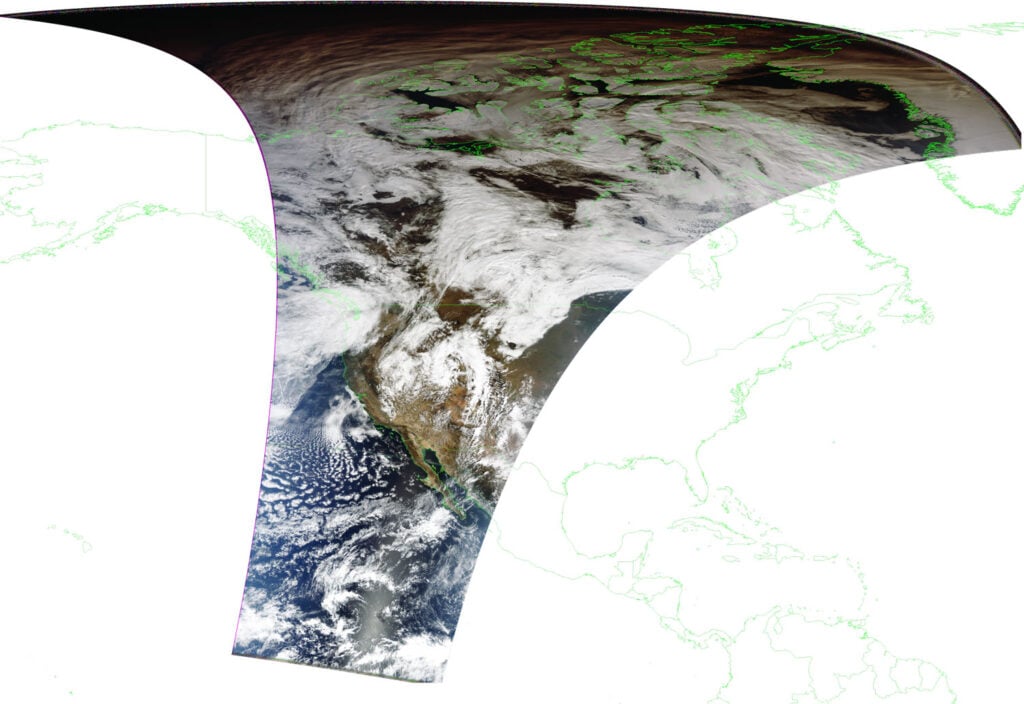
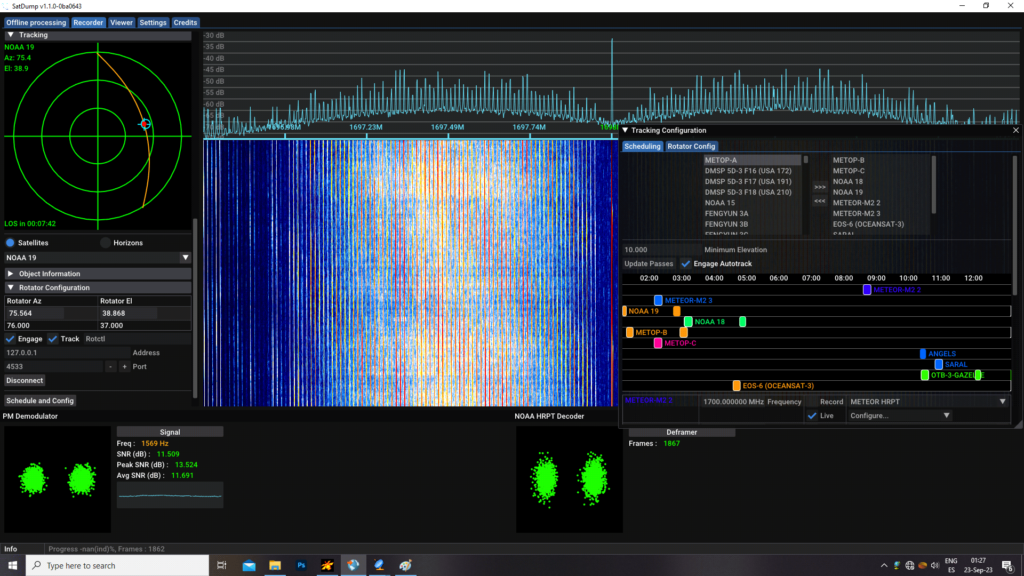
SatDump is a popular program that is used with RTL-SDRs and other SDRs for decoding transmissions from a wide array of weather satellites and their various imagers and sensors. Recently SatDump's author @aang254 has been working on improving the way projections work. Projections are essentially when the weather satellite image is stretched and skewed to fit correctly over the curved earth.
This means now that city markings and border lines should show up in the correct placed in any images received from SatDump.
If you're interested @aang254 has uploaded blog post on the SatDump website explaining the math, algorithms and problems he found when trying to get projections done right.
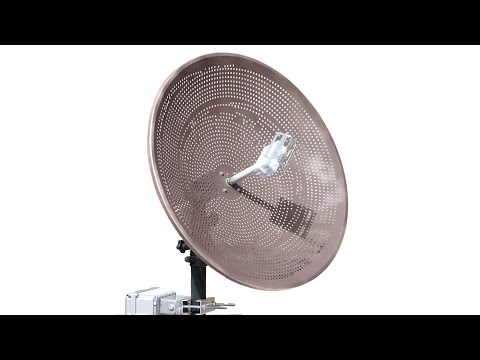
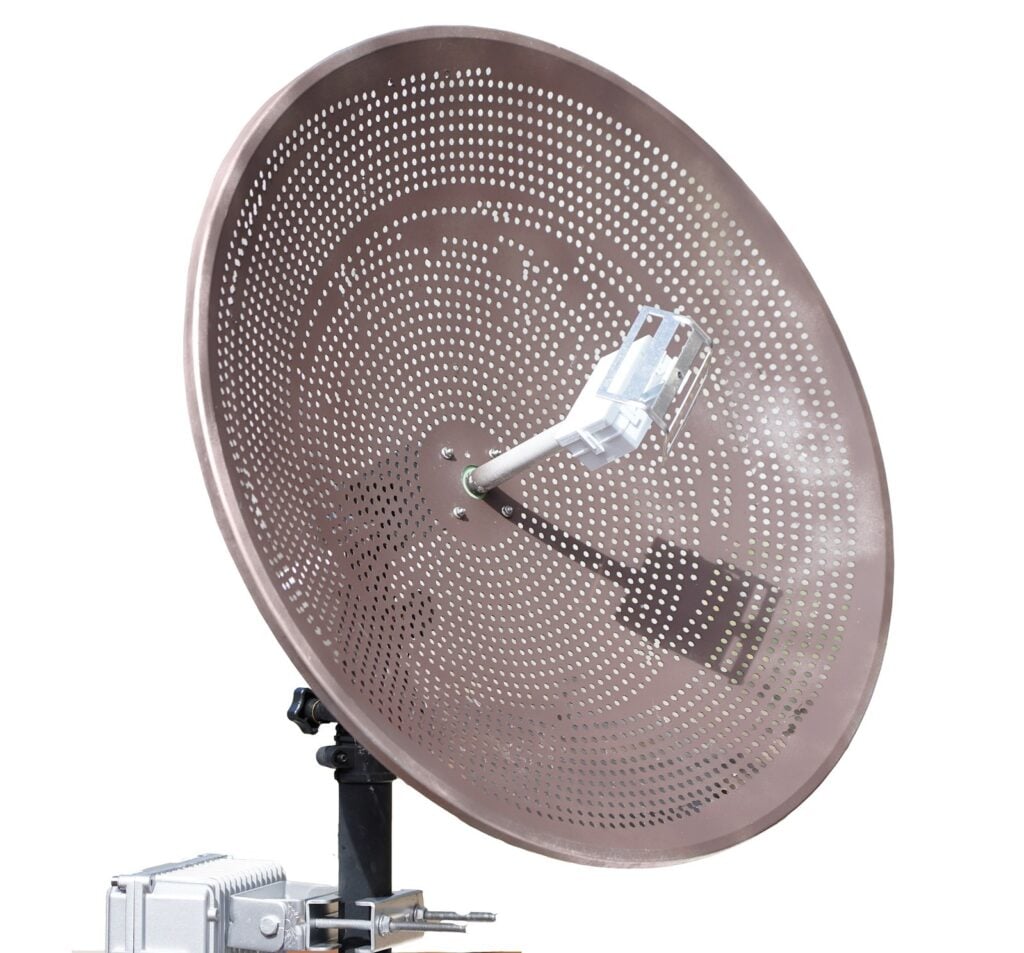
For the past few years we have been working on finding the best way to help beginners get started with L-band weather satellite reception and basic radio astronomy. We have now come up with a solution that we're calling the 'Discovery Dish' - a lightweight 65 cm diameter dish and active filtered feed set.
Discovery Dish: Simplified system for weather satellite reception and hydrogen line radio astronomy
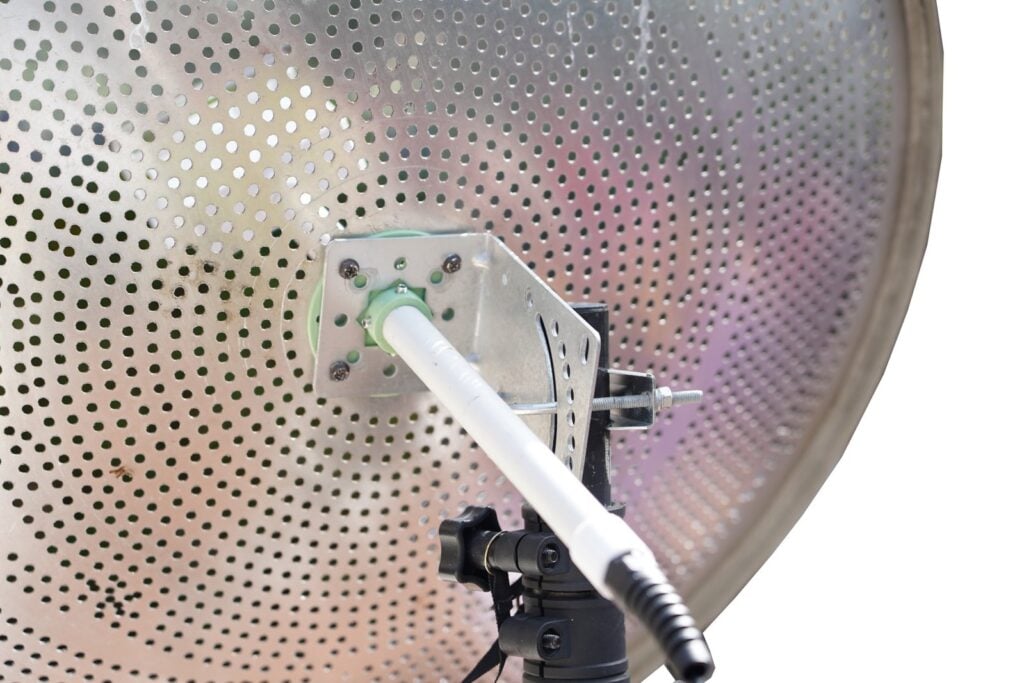
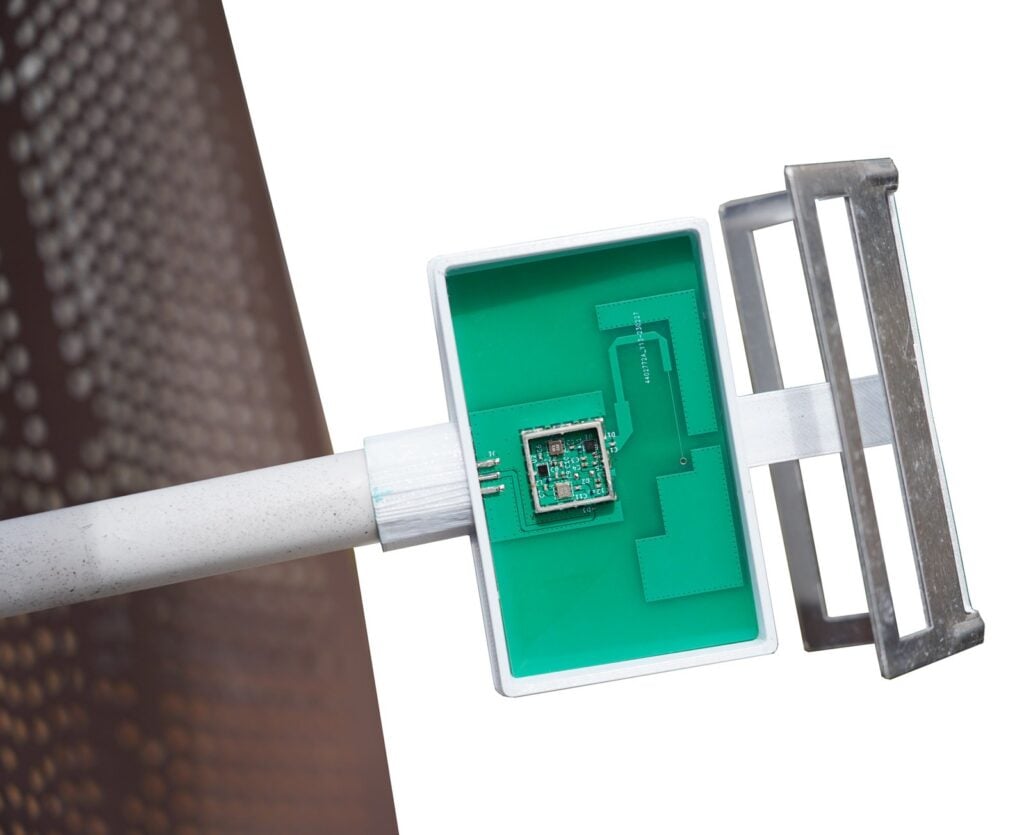
Discovery Dish is a 65-cm diameter aluminum satellite dish and active filtered feed designed for receiving GOES HRIT, GK-2A LRIT, FengYun LRIT, NOAA HRPT, Metop HRPT, Meteor M2 HRPT and other weather satellites that operate around 1.69 GHz. The dish is designed to weigh under one kilogram, and it splits into three petals, making it easier to ship worldwide. The 1.69 GHz feed contains a built-in LNA right at the feed point, as well as filtering, which means that there is almost no noise figure loss from cables or connectors.
Note that the prototype images show an early non-petalized prototype with rough laser cut wind holes. The production version will obviously be a lot neater looking!
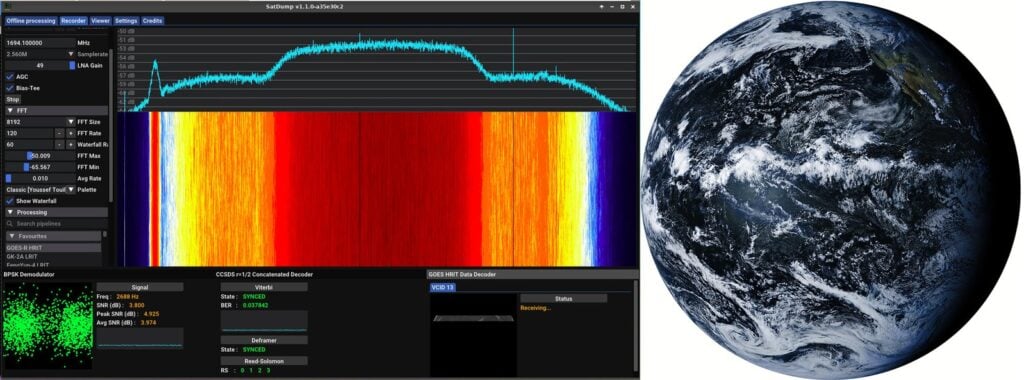
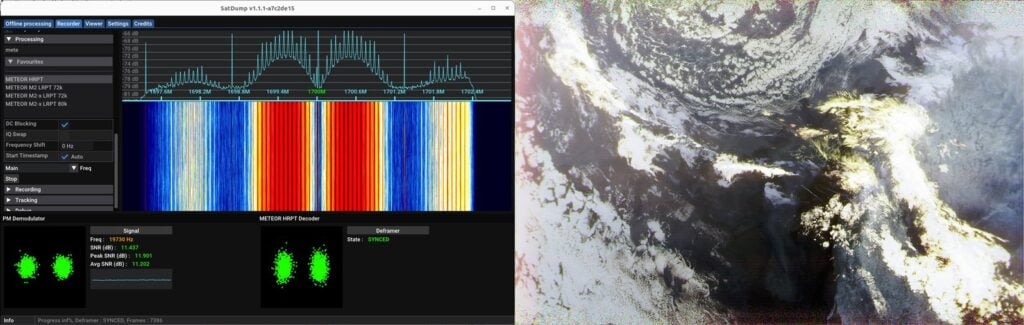
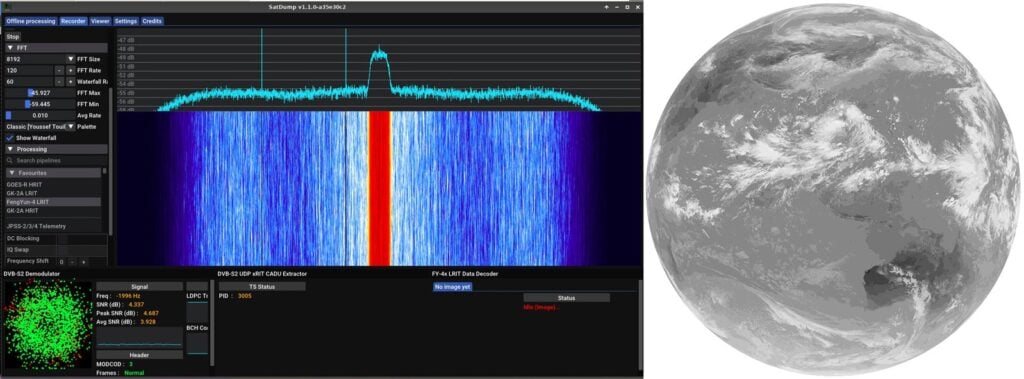
In testing the 65 cm diameter Discovery Dish with it's highly optimized feed has proven effective at receiving the GOES HRIT satellite signal with SatDump. We typically achieve SNR values of 3-4 dB to GOES-18 at 24 deg elevation, and with SatDump an SNR of 1 dB is about the minimum required to receive images so there is plenty of margin. It can also easily receive LRIT from GK-2A and Fengyun, and also when combined with an antenna rotator (or manual hand rotating) can receive HRPT weather satellites too.
The feed on the Discovery Dish consists of a tuned dipole feed with two 5V bias tee powered low noise figure LNAs, and two SAW filters (centered at 1680 MHz with 69 MHz Bandwidth). The feeds are also easily swapped out, and we will also be selling a 1.42 GHz Hydrogen Line feed for those who want to use the dish to get started with radio astronomy. Because the LNA's are right by the feed there is are no losses from feed to LNA, so we can use thinner and easier to handle cabling like RG58 without any loss issues.
In the past we've recommended and relied on 60 x 100 cm WiFi dish antennas for L-Band geosynchronous satellites and Hydrogen Line reception, but at 1.6kg these are too heavy, wide and exert too much torque for light duty antenna rotators to handle. At about half the weight of an equivalent WiFi Dish, the Discovery Dish is much easier to handle.
In the future we hope to be able to provide a low cost light duty antenna rotator that compliments the Discovery Dish. Currently we have tested the Discovery Dish with the AntRunner antenna rotator and found it to be light enough for that rotator to handle, versus a WiFi dish which is far too heavy for it.
Also when compared to a WiFi dish, the Discovery Dish is much easier to optimally set the offset skew as you can simply rotate the feed, versus having to rotate the entire dish at 45 degree increments.
We will also be offering an outdoor electronics enclosure that can be used to house a Raspberry Pi, RTL-SDR and other components like POE splitters. In our tests we have been running an RTL-SDR Blog V4, Orange Pi 5 and POE splitter in the enclosure, and running the SatDump GUI directly on the Orange Pi 5. This results in a neat contained system where only one Ethernet cable needs to be run out to the enclosure.
As we are in pre-launch, pricing is not yet confirmed, but we expect the Discovery Dish to sell for less than US$200 with reasonable worldwide shipping costs. It will be a similar cost to what you would pay if you purchased a WiFi dish, filtered LNA and cabling yourself. Obviously please check what satellites can be seen in your region.
SatDump is a popular program that can be used with RTL-SDRs and other software defined radios for decoding images from a wide array of weather imaging (and other) satellites including GOES, GK-2A, NOAA APT, NOAA HRPT, FengYun, Electro-L and Meteor M2 LRPT + HRPT, and many many others. It is multiplatform, running on Windows, MacOS, Linux and even Android. Because of it's good decoding performance, wide satellite and OS compatibility, it is the most recommended software for satellite decoding.
Recently SatDump was updated to version 1.1.0 and the new version brings many enhancements and new features. In summary, Lua scripting support has been added, calibrated products are now possible, composites can be made via Lua scripting, nightly builds are now available on GitHub, Mac .dmg builds are now available, decimation has been added, an SDR Server is available, and a Windows installer was added.
Support for various satellites and their instruments have also been added for NOAA APT, CCSDS LDPC decoding for Orion, LandSat-9, TUBIN X-Band, FengYun-3G/3F, Meteor M2-3, Geonetcast (soon), GOES RAW X-Band, STEREO-A, DSCOVR EPIC, ELEKTRO-L N°4, Inmarsat STD-C, UmKA-1 (soon), PROBA-V GPS .
SatDump also now includes rotor tracking control which works together with it's satellite pass predictor and scheduler. There is no more need to use programs like Orbitron or Gpredict as everything can be handled by SatDump.
An insane amount of work has gone into SatDump, so if you like the software please remember to support the developer @aang23 by donating on Ko-Fi.
Thank you to Carl Reinemann for writing in and sharing with us that the Meteor M2 LRPT decoder by Oleg (Robonuka) was recently updated. The Russian Meteor M2-3 weather satellite was launched in June of this year and is currently the only operational Meteor M2 satellite in the sky. It transmits images at 137 MHz in the digital LRPT format.
To receive it a simple V-Dipole antenna and RTL-SDR is usually sufficient. And to decode it software like SatDump or M2_LRPT_DECODER combined with the Meteor Demodulation Plugin for SDR# can be used. Instructions for the latter are available on HappySats instructional page.
Regarding the update Carl writes:
Thanks to Oleg (Robonuka), Happysat and Usradioguy have been testing the new decoder for about 6 weeks now, and it is ready to go!
The stability of the processing has been improved: The decoder is now more likely to produce stable results, even when there are errors in the input data.
The procedure for generating RGB and calculating GEO in the error-handling block has been improved. Now, the decoder's processing is considered unfinished until the GEO calculation is completed.: This means that the decoder will now wait until the GEO calculation is finished before generating the RGB values. This helps to prevent errors and produce more accurate results.
Exception errors fixed: Some errors that were previously causing the decoder to crash have been fixed.
AutoClose=yes by default: This means that the decoder will now automatically close when it is finished decoding. This can be helpful for saving resources and preventing memory leaks.
80K is much more stable: The decoder is now more stable than before. This means that it is less likely to crash or produce unexpected results.
Overall, these changes make the decoder more reliable and easier to use.
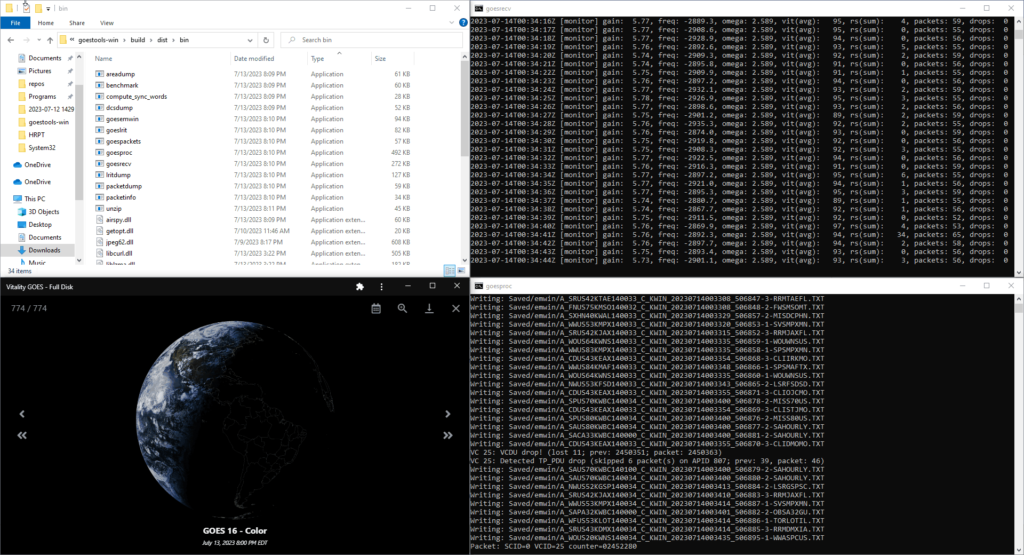
Thank you to Carl Reinemann (aka USRadioGuy) for letting us know through his blog post that goestools has recently been ported to Windows. Goestools is a software package that is used to receive and decode images from GOES weather satellites. In the past it was only available for Linux systems, however recently thanks to the work of Jamie Vital, goestools has now been ported and can run on Windows. Carl Reinemann has confirmed that the software runs perfectly on Windows. Our GOES tutorial should also be easily modified to work with the Windows port.
The Windows port can be downloaded from goestools-win on GitHub. If you are interested, Jamie Vital is also the author of Vitality GOES, which is a program that can display the received weather images in a nice GUI.
Alternatively we note that another cross platform GOES decoder is SatDump which is currently the most popular choice for GOES.
Over on YouTube dereksgc has another video on Meteor M2-3 reception. In the video Derek goes over the history of Meteor M launches and then goes on to test reception of the 3.4 GHz telemetry signal which he recorded early after the satellites launch.
The next day he sets up 1.7 GHz HRPT reception using a hand tracked satellite dish and is successful as receiving it. He then goes on to test 137 MHz LRPT reception with a V-dipole antenna and RTL-SDR and is also successful. Finally he decodes the recordings using SatDump and is able to get some great images.
Derek also notes that there might be a problem with the LRPT antenna which could explain some reports of poor reception at some elevations of the satellite. He notes that it seems likely that the QFH antenna extension process on the satellite didn't extend fully or at all.
A few days ago we posted about the successful launch and deployment of the latest Russian Meteor M2-3 weather satellite. The satellite is currently actively transmitting LRPT weather images.
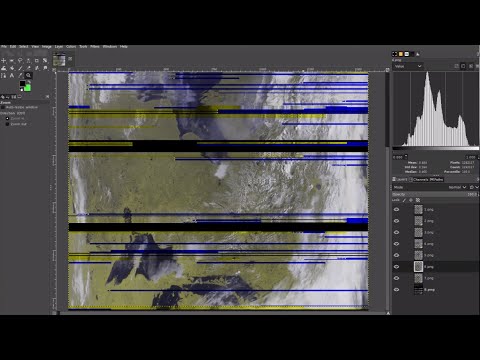
Over on his YouTube channel, "saveitforparts" has uploaded a video showing how he received images from the new satellite using his RTL-SDR. His method involves first recording the signal pass on a Raspberry Pi with rtl_fm, and then passing that wav file into SatDump for decoding and image generation.
We note that it is also possible to directly live decode the pass using SatDump, however a Raspberry Pi may be a little too slow to run the GUI version of SatDump. Instead you could use rtl_tcp on the Pi and run SatDump on a networked PC, or simply run the RTL-SDR and SatDump on the PC or a more powerful device like an Orange Pi 5.
Ultimately he experiences some unresolved problems with the decoding process, but is able to end up with a decent image.
Grabbing Images From New Russian Satellite (Meteor M2-3)
Meteor-M satellites are Russian owned weather imaging satellites that are in polar orbit. They transmit images to earth in the LRPT format at 137 MHz, making them almost as easy to receive as the older NOAA APT satellites. Unfortunately all prior Meteor M satellites have suffered an early ending or partial ending to their mission from technical faults or micro-meteorite collisions.
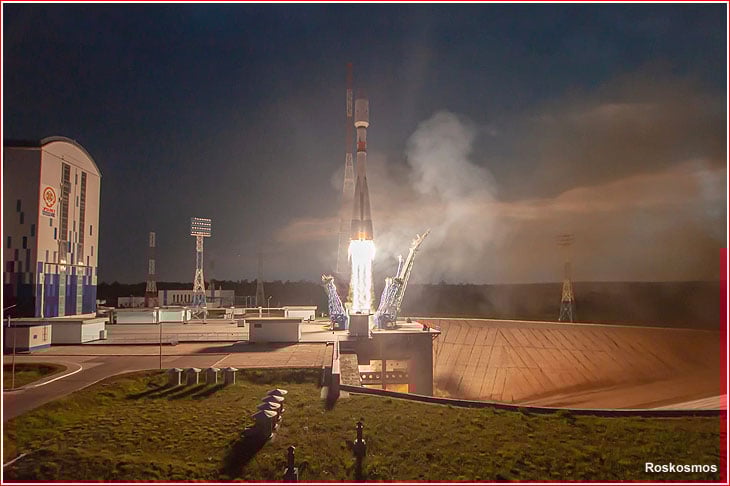
However, on June 27th 2023 the latest Meteor M2-3 satellite was successfully launched on a Soyuz-2 and has been reported to be already transmitting LRPT images of the earth.
Soyuz-2 Launch of Meteor M2-3 and 42 Cubesats
To receive images from the Meteor M2-3 satellite you will need an appropriate 137 MHz satellite antenna such as a v-dipole, Turnstile or QFH. An RTL-SDR or any similar SDR can be used as the receiver.
These days, the easiest software to use to receive Meteor M2-3 is probably SatDump, whose Windows and Android binary releases can be downloaded from the GitHub Releases page. Linux users can follow the build guide in the SatDump Readme. We note that we've found the SatDump GUI to run well on an Orange Pi 5, which makes this a good portable solution too.
To determine when the satellite is over your location you can use satellite tracking software such as Gpredict on Linux and Mac, or Orbitron on Windows. (For Orbitron, remember to run the software as Administrator, and to update the TLEs so that the Meteor M2-3 weather.txt TLE tracking data is downloaded).
Over on Twitter we've already seen various Tweets about successful reception.
1st try w/ 137 MHz LRPT from the new METEOR-M N2-3 1500utc. So nice to have a higher resolution weather sat back on VHF! Images from I/Q replay in SatDump (https://t.co/A7V0MeqeGE) pic.twitter.com/OMs1zjpKb4
Second pass of the newly launched Meteor-M 2-3
This time all worked like a charm and the picture is superb. I tried dual band to compare both LRPT in 137.900 and HRPT in 1700. Although decoded shown picture is from the HRPT stream.
@aang254, the author of SatDump has also noted that he is working on finalizing projections for Meteor M2-3 and this should be ready to use in SatDump shortly.
METEOR-M 2-3 is active, and I have added initial support including projections in SatDump already.
We also note that a Meteor Demodulator has also now just been added to SDR++.
The OQPSK mode has been added to the #Meteor demodulator to decode Meteor M N2-3. Enable it when receiving said satellite. It will be available for download in a few minutes when the nightly build is done building.
Note that some more tuning will be done in the coming days.#SDRpic.twitter.com/DB307Q5ObD
Another interesting fact is that along with Meteor M2-3 the UmKA cubesat was launched will transmit astronomical images at 2.4 GHz. To receive this, you will most likely need a 2.4 GHz WiFi dish, and also a motorized tracking system to track the satellite as it fly's overhead. Decoding of this is already supported in SatDump according to the programmer.
METEOR-M 2-3 is launching tomorrow, and with it UmKA that @HRPTEgor worked on.
It will transmit astronomical imagery on amateur bands 2.4Ghz. As such, I have added support for it in SatDump just now :-)