Category: Antennas

SATSAGEN: Software to use a PlutoSDR as a Tracking Spectrum Analyzer

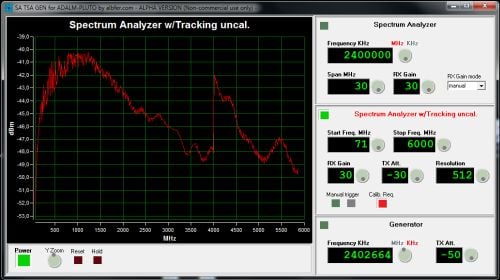
Thank you to Frank, HB9FXQ for submitting news about a new Windows program called SATSAGEN which allows you to use a PlutoSDR as a wideband spectrum analyzer. SATSAGEN was created by Alberto IU1KVL and is entirely free to use. This makes it possible to get wideband scans of RF components like filters and attenuators. Together with a directional coupler it could also be used to measure the SWR of antennas as HB9FXQ demonstrates in his Twitter post.

The PlutoSDR is a low cost RX/TX capable SDR with up to 56 MHz of bandwidth and 70 MHz to 6 GHz frequency range. It is typically priced anywhere between US$99 - US$149 depending on sales.

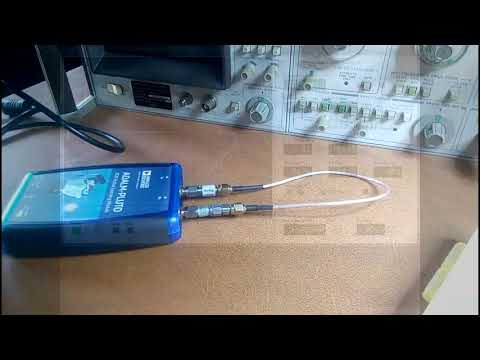
In the video below Alberto demonstrates SATSAGEN performing some wideband scans, and he shows the various features of the software. He writes that the system has a scan range from 70 MHz to 6 GHz and can show results in dBm. The spectrum analyzer works with the TX part of the PlutoSDR to provide a tracking generator with resolution of up to 1024 points. The software can also use the PlutoSDR as a frequency generator with 1 kHz of resolution.

There is also a support group available at groups.io/g/satsagen.

SATSAGEN Screenshot
SATSAGEN Screenshot

A Seminar on Setting up and Understanding a SatNOGS Satellite Ground Station

At the 2019 TAPR Digital Communications Conference (DCC), Corey Shields (KB9JHU) and Dan White (AD0CQ) presented a comprehensive guide on setting up your own SatNOGS satellite ground receiver station. The video of the presentation has just recently been uploaded to YouTube by Ham Radio 2.0.

SatNOGS is an open source project that aims to make it easy for volunteers to build and run satellite ground stations (typically based on RTL-SDR and Raspberry Pi hardware) that automatically receive RF satellite data, and automatically upload that data to the internet for public access. This is very useful for low budget cubesats launched by schools and small organizations who don't have the resources to run a worldwide satellite ground station network. Without global ground stations the majority of data and telemetry collected by the satellite could be lost as it would only pass over the owners ground station once or twice a day with limited time and bandwidth to downlink data. SatNOGS volunteers with distributed ground stations placed all over the world provide a free solution for this problem. 

Setting up a SatNOGS station and understanding the data coming down can be a pretty involved project, so Corey and Dan's 3.5 hr presentation gently guides us through the steps required. The guide focuses most on the software side, and does not include information about building their open source Yagi antenna rotator which can be used to receive satellites with lower power weak signals. Instead they focus on using a simpler fixed QFH antenna which is still capable of receiving data from a majority of satellites.

Learn to build and operate your own SatNOGS ground station. The Sunday Seminar is somewhat like the "anchor" topic of the entire weekend of the TAPR Digital Communications Conference. In 2019 we had the privilege of hearing from Corey, KB9JHU and Dan AD0CQ from the SatNOGS Team and they are going to give us, in detail, instructions for setting up a home satellite station.

(2:38) Intro
(7:46) Section 1: Satellite Building 101
(1:14:50) Section 2: Using SatNOGS
(2:19:55) Section 3: API and Contributing
(2:51:55) Section 4: RF Stack and Decoders

SatNOGS Ground Station Building Guide from TAPR DCC 2019

New 978 MHz UAT Specialty RTL-SDR and Antenna and Dual 1090 & VHF Antenna from RadarBox

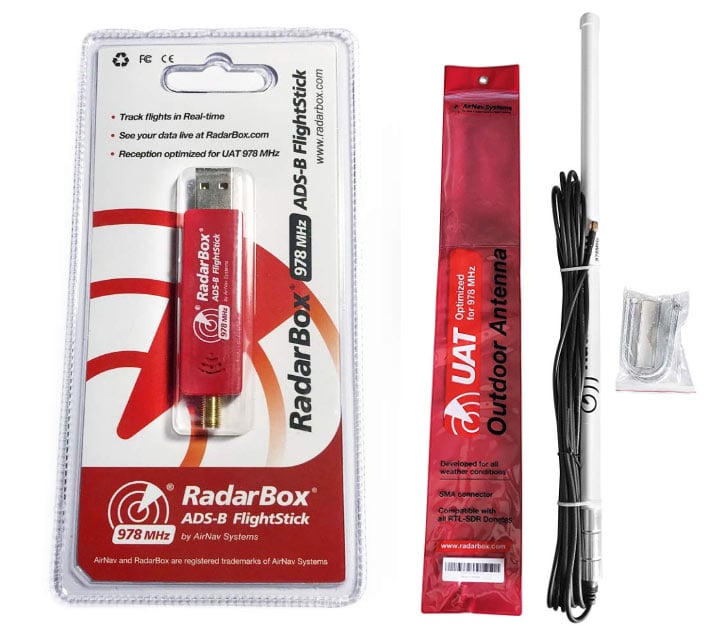
Over on Amazon we've recently seen the release of a 978 MHz UAT specialty RTL-SDR and 978 MHz tuned antenna by the flight tracking service known as AirNav RadarBox. The RTL-SDR appears to be similar to their 1090 MHz RTL-SDR version, which contains a SAW filter and LNA onboard the RTL-SDR. Due to the built in filter, this dongle will only work at the 978 MHz frequency. Like the 1090 MHz version, the dongle itself is priced at only US$14.95, and the antenna at US$49.95.

Universal Access Transceiver (UAT) is an alternative to ADS-B that is available only in the USA. It is typically used by smaller aircraft, transmits at 978 MHz, and apart from it's tracking system it has some additional advantages for pilots over 1090 MHz ADS-B, like the ability to receive alerts, weather data and radar plots. With an RTL-SDR and appropriate software these data services can also be received.

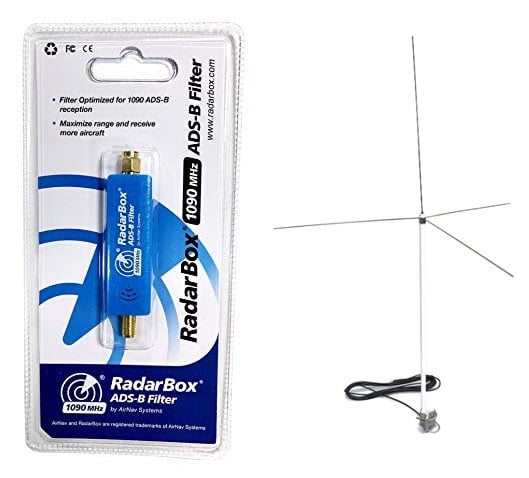
In addition they have also released some other interesting products including a 1090 MHz ADS-B with 118-136 MHz VHF airband antenna stacked on top of the ADS-B element for US$49.95, and an external ADS-B 1090 MHz filter for only US$14.95.

As an alternative to an RTL-SDR UAT receiver, we note that the Stratux has a hardware radio based UAT receiver available which has significantly lower power consumption. Although the receiver itself appears to be currently out of stock.

We note that we also currently have our 1090 MHz AirNav Radarbox Antenna + ADS-B optimized RTL-SDR set on sale for only US$39.95 + shipping, which is cheaper than you can find it elsewhere. Visit our store for ordering information.

The AirNav RadarBox 978 MHz UAT Optimized RTL-SDR and Antenna.
New RadarBox 1090 MHz Filter and 1090 MHz & VHF Antenna single antenna.

Increasing L-Band Active Patch SNR by using it as a Feed for a Satellite Dish

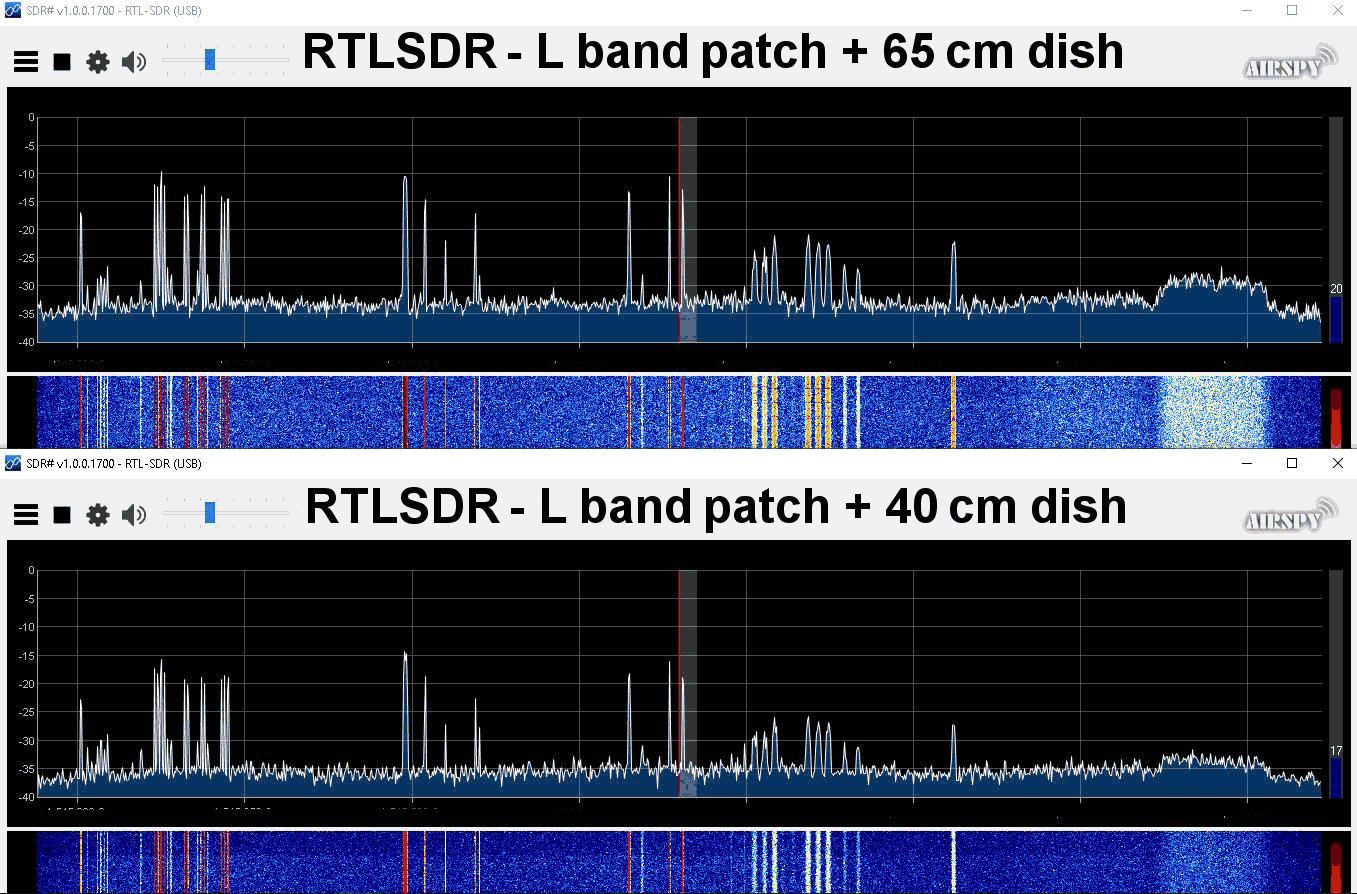
Recently RTL-SDR.COM reader Bert has been experimenting with our active L-band patch antenna product. He's written in to share that he's found that using it as a feed for a satellite dish works well to improve SNR on those weaker 10500 AERO signals which Bert found that he could not decode from his location due to insufficient SNR. Our active L-band patch antenna receives signals from 1525 - 1637 MHz and can be used for signals from Inmarsat, Iridium and GPS satellites.

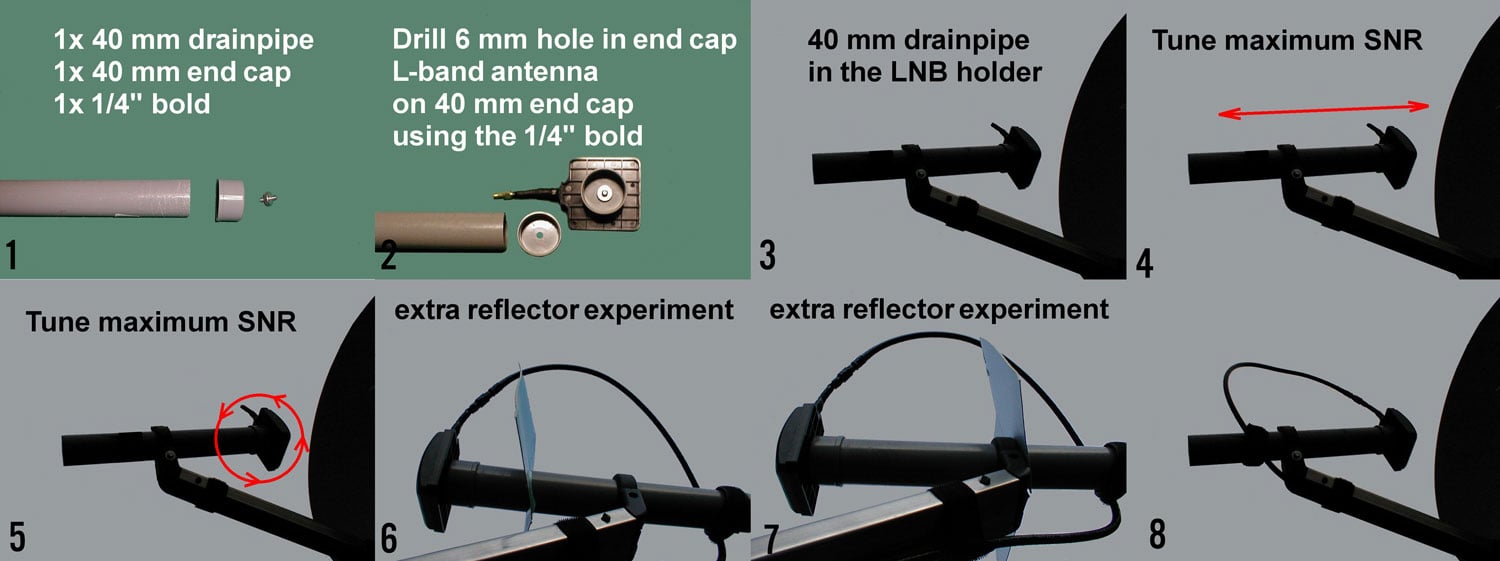
To use the patch as a feed Bert used a 40mm drain pipe and mounted the antenna on the end of the pipe. The drain pipe fits perfectly into the LNB holder, and once mounted the distance and polarization rotation can easily be adjusted for best SNR. He also found that adding a secondary sub-reflector about 17x17cm in size helped to boost SNR by about 3-5 dB too.

Build steps to use the Active L-band Patch with a Satellite Dish

Bert has tested the active L-band patch as a feed on a 65cm satellite dish and a smaller 40cm dish, both with good results.

SNR Results
SNR Results

Measuring the Radiation Pattern of a Yagi Antenna with a NanoVNA

On Hackaday we've seen an interesting post about Jephthai who has used a NanoVNA to measure the radiation pattern of a home made Yagi antenna. He began by initially modelling the Yagi using the MMANA software package, then building the antenna and measuring the SWR.

However, SWR is only partial information and tells us nothing about the actual gain and directivity / radiation pattern of the antenna. The radiation pattern tells us in which direction the antenna receives and radiates power best from. For a Yagi, we would expect the best reception gain to come from the front, with much less gain on the sides and rear.

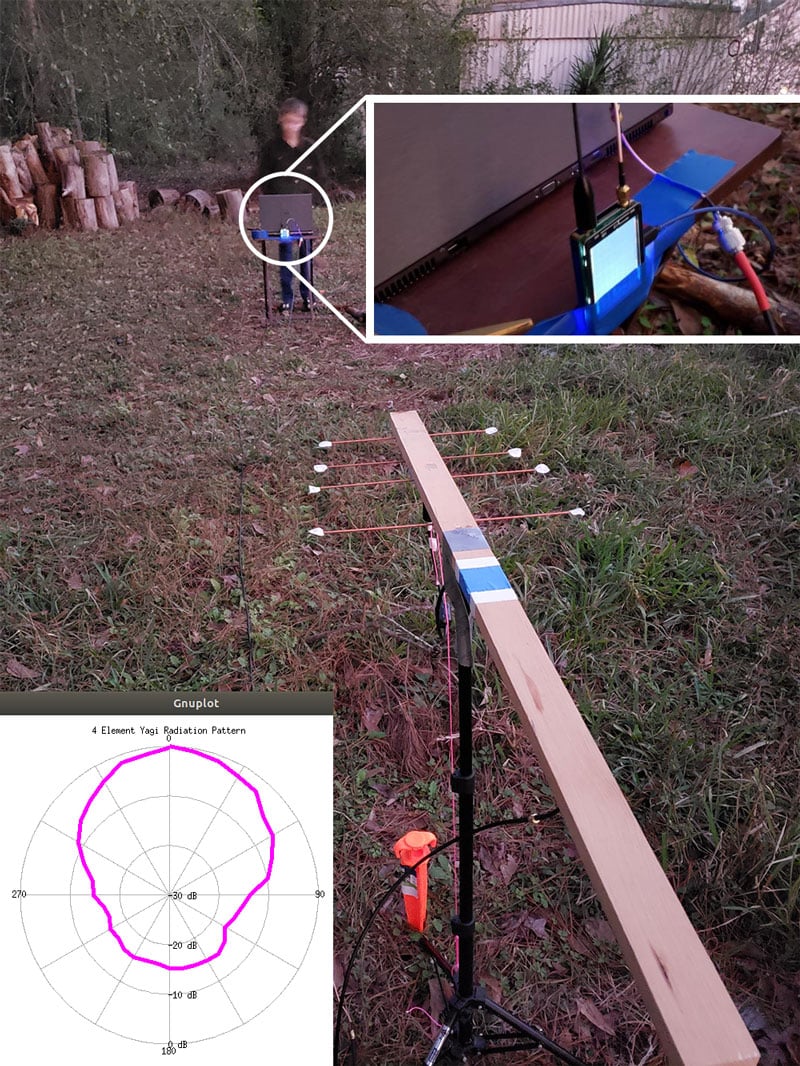
To set up the radiation pattern measurement, Jephthai connected the Yagi to the TX port of the NanoVNA via a long coax cable, and connected an omnidirectional whip antenna to the RX port of the NanoVNA. The NanoVNA and Yagi are separated by a reasonable distance of 18' to ensure that the far-field radiation pattern is measured instead of the near-field pattern. He then measures and collects the S21 reading over multiple rotations of the Yagi.

The data is then plotted revealing a two dimensional radiation pattern for the Yagi. As expected gain is highest in the front, and weaker on the sides and rear. Jephthai notes that the radiation pattern mostly matches what the MMANA antenna modelling software predicted too.

Jephthai's NanoVNA Radiation Pattern Measurement Setup

Astrophiz Podcast Interviews Steve Olney: Capturing the 2019 Vela Pulsar Glitch with an RTL-SDR

Back in May 2019 we posted about Steve Olney's HawkRAO amateur radio astronomy station which was the only station in the world to capture the 2019 Vela Pulsar "glitch" which he did so using his RTL-SDR as the radio. The astronomy focused podcast "Astrophiz" recently interviewed Steve in episode 95 where he talks about his amateur radio background, his home made radio telescope, his RTL-SDR and software processing setup, and the Vela glitch.

A pulsar is a rotating neutron star that emits a beam of electromagnetic radiation. If this beam points towards the earth, it can then be observed with a large dish or directional antenna and a radio, like the RTL-SDR. The Vela pulsar is the strongest one in our sky, making it one of the easiest for amateur radio astronomers to receive.

Pulsars are known to have very accurate rotational periods which can be measured by the radio pulse period. However, every now and then some pulsars can "glitch", resulting in the rotational period suddenly decreasing. Glitches can't be predicted, but Vela is one of the most commonly observed glitching pulsars.

The HawkRAO amateur radio telescope run by Steve Olney is based in NSW, Australia and consists of a 2 x 2 array of 42-element cross Yagi antennas. The antennas feed into three LNAs and then an RTL-SDR radio receiver. 

Astrophiz 95: Steve Olney: From Ham Radio to Radio Astronomy - "The 2019 Vela Glitch" 

Feature Interview: This amazing interview features Steve Olney who has established the Hawkesbury Radio Astronomy Observatory in his backyard. Steve has constructed a Yagi antenna array, coupled it with a receiver and observed a pulsar 900 LY away and generated data that has enabled him to be the only person on the planet to observe Vela’s 2019 glitch in radio waves as it happened.

If you're interested in learning more about Vela, Astrophiz podcast episode 93 with Dr. Jim Palfreyman discusses more about the previous 2016 Vela glitch and why it's important from a scientific point of view.

SignalsEverywhere Reviews our RTL-SDR Blog L-Band Active Patch Antenna Kit

Over on the SignalsEverywhere YouTube channel Corrosive from the SignalsEverywhere channel has uploaded a review of our RTL-SDR Blog L-Band Active Patch antenna. Our patch antenna can be used for applications such as Inmarsat, Iridium and GPS reception. 

In the video Corrosive shows what the kit comes with, and first demonstrates the antenna working indoors. He also shows how signal SNR can be improved for indoor reception simply by adding a larger ground plane to the back of the antenna and clamping it on with the mounting screw. Later he shows what reception is like outdoors, and shows it being used to decode from STD-C Inmarsat and Iridium signals.

If you're interested in this antenna we also previously posted about TechMinds review video.

The antenna is available for sale on our web store, or from Amazon.

RTL SDR Blog L-Band Inmarsat/Iridium Satellite Service Patch Antenna

DEF CON 27 SDR Talks: Antennas for Surveillance, Ford Keyfob Hack, Smart TV Wireless Side Channel Attack

Talks from this years DEF CON 27 conference which was held back in August are now available on YouTube. DEFCON is a yearly conference that a focuses on information security topics and often includes talks about SDRs and other wireless radio topics too. In particular we wanted to highlight the the DEF CON 27 Wireless Village playlist which contains numerous talks related to wireless, radio and SDRs.

Most talks from the wireless village relate to WiFi, but one talk with some very useful information that we really enjoyed was "Antennas for Surveillance" by Alex Zakhorov. 

We will cover the various kinds of antennas available to optimized your SDR radio for different types of spectrum monitoring. We will also explain why RF filters are necessary on most SDR's and when Low Noise Amplifiers help, and when Low Noise Amplifiers hurt reception.

Kent Britain/WA5VJB - Antennas for Surveillance - DEF CON 27 Wireless Village

Another interest talk was called "The Ford Hack Raptor Captor video" by Dale Wooden (Woody) where he shows how he used an RTL-SDR and HackRF to hack a Ford car key fob. If you're interested we wrote about the Hak5 videos on this hack in a previous post.

This talk will show flaws with development of security protocols in New Ford key fobs. This will exploit several areas. The ability for a denial of service to the keyfob WITHOUT jamming. How to trick the vehicle into resetting its rolling code count. How to lock, unlock, start, stop, and open the trunk of ford vehicles using a replay attacked after resetting rolling code count. How to find the master access code for Fords keypad to bypass security. This talk will also demonstrate how to reset your key fobs if they are attacked by a deauth attack. We will also demonstrate gnu-radio script to automate RF collection of Ford key fobs. As seen on HAK5 episodes 2523-2525

Woody - The Ford Hack Raptor Captor video - DEF CON 27 Wireless Village

Outside of the Wireless village there were also some interesting SDR topics including this talk titled "SDR Against Smart TVs URL Channel Injection Attacks" by Pedro Cabrera Camara. If you're interested we also wrote about Pedro's work in a previous post.

Software-defined-radio has revolutionized the state of the art in IoT security and especially one of the most widespread devices: Smart TV. This presentation will show in detail the HbbTV platform of Smart TV, to understand and demonstrate two attacks on these televisions using low cost SDR devices: TV channel and HbbTV server impersonation (channel and URL injection). This last attack will allow more sophisticated remote attacks: social engineering, keylogging, crypto-mining, and browser vulnerability assessment.

Pedro Cabrera Camara - SDR Against Smart TVs URL Channel Injection Attacks - DEF CON 27 Conference