Category: Applications

Broadcasting DVB-S2 with the LimeSDR

The LimeSDR is a $299 USD software defined radio that has RX and TX capabilities, a tuning range of 100 kHz – 3.8 GHz, a 12 bit ADC and up to 61.44 MHz worth of bandwidth. It is currently seeking crowdfunding over at CrowdSupply.com, and there are still 170 early bird units available at a lower price of $249 USD. The funding campaign ends in 14 days at the time of this post.

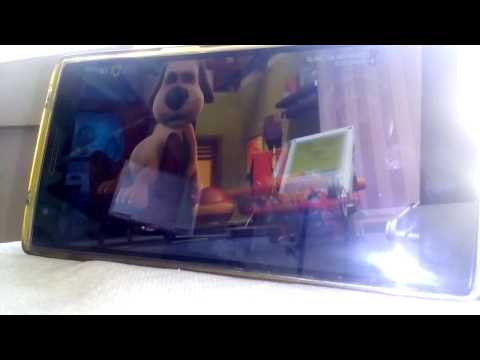
In a recent blog post on the myriadrf website, beta tester Alexandru shows how the LimeSDR can be used to transmit DVB-S2 video using GNU Radio.  Alexandru used bladeRF dvbs2_tx.grc gr-dtv example which is provided with GNU Radio and modified it for the LimeSDR. He then transmitted the video stream and used an off the shelf satellite TV receiver to display the video, and an Airspy to monitor the spectrum. The gr-dtv library can also be used to transmit other video standards such as ATSC, DVB-T, DVB-T2, DVB-C and DVB-S2.

LimeSDR DVB-S2 GNU Radio Flowgraph

LimeSDR demo: High Definition Video Transmission using GNU Radio

IF Average SDR# Plugin Updated

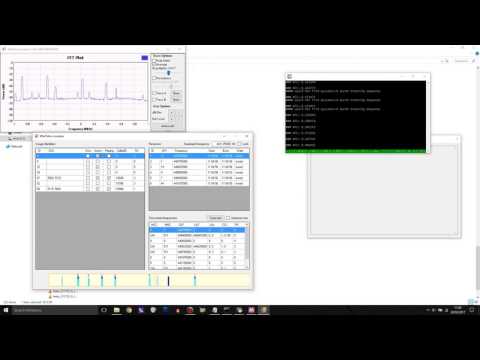
The IF Average tool is a RTL-SDR compatible plugin for SDR# which allows you to plot an average of the current spectrum shown in SDR#. This is especially useful for radio astronomers who often need to average the spectrum for a long time in order to get a good plot of the Hydrogen Line. Recently the plugin was updated to support newer versions of SDR# and to upgrade some features. Daniel Kaminski, the author of the plugin writes:

I used ultrafast FFT which works on 4k to 512k bit space. With this plugin it is possible to average up to 64000000 samples in real time. XNA allows to shows the calculation results in real time.

To install the plugin you will need to install the XNA Framework 4.0 Redistributable first. Then copy the plugin files over to the SDR# folder and add the “magicline” to the SDR# Plugins.xml file.

The IF Average SDR# Plugin

A Demonstration of the RTL-SDR Receiving WiFi and 2.4 GHz ISM with a Modded SUP-2400 Downconverter

Back in April we posted about how KD0CQ found that he could receive signals up to 4.5 GHz with an RTL-SDR by using a $5 downconverter for DirecTV called the SUP-2400. The RTL-SDR can only receive up to a maximum frequency of about 1.7 GHz, but the SUP-2400 downconverter can be modified to convert frequencies at around 2.4 GHz down into a range receivable by the RTL-SDR.

When we first posted the story the instructions for modifying the SUP-2400 to use as a downconverter weren’t uploaded yet, but they are now. The modification requires decent soldering skills as it involves desoldering a few small SMD components and bridging some points with wires.

Over on YouTube user T3CHNOTURK has uploaded a video showing the downconverter in action. With the SUP-2400 downconverter and RTL-SDR he is able to receive some WiFi at 2.447 GHz as well as signals from a wireless keyboard at 2.465 GHz

RTLSDR Receiveing wifi & 2.4 ghz ism band with moded SUP-2400 Downconverter

Monitoring Ionosondes and Creating Ionograms with a USRP and GNU Chirp Sounder

In the HF region between about 0 – 30 MHz it is common to see and hear “chripers” – signals which quickly sweep through the HF frequency band and produce an audible chirp. These chirps are actually signals from Ionosondes which is a type of radar system used to monitor the Ionosphere. The Ionosphere exists about 50km above the surface of the earth and is the atmospheric layer responsible for a large part of long range HF communications. In a previous post by Mario Filippi we also discussed Ionosondes.

Usually it is scientists who transmit and monitor these Ionosondes, however if you have wide band radio that can cover a majority of the HF spectrum then you can also monitor these chirpers yourself. Over on his blog Fabrizio Francione has created a post showing how to use a USRP, together with a GNU Radio Program called GNU Chirp Sounder to create his own amateur Ionogram monitoring station. The USRP is a fairly expensive SDR with a bandwidth of 25 MHz, but we add that we think that next generation of low cost wide band SDRs like the up and coming LimeSDR should also be able to do the same job.

The Ionograms show at what frequencies HF propagation is currently optimal for a specific distance (or number of signal bounces from the Ionosphere). Below is an example Ionogram animation showing the reception of Ionosondes taken over time. Video from the GNU Chirp Sounder page.

Decoding the NOAA Weather Satellite Telemetry Beacons

It is well known that the NOAA satellites broadcast weather satellite images which can be received and displayed with an RTL-SDR and computer. What is less known is that there is a telemetry beacon that is also transmitted by the same satellites. The telemetry not only contains data such as the current spacecraft time, day and ID, but also contains scientific data from on board instruments such as:

  • The HIRS/3 and HIRS/4 instruments which is a high resolution infrared sounder which can be used to create a low resolution multi-spectral scan of the earth. (more info)
  • The Space Environment Monitor (SEM-2) which has a Medium Energy Proton and Electron Detector (MEPED), and a Total Energy Detector (TED). This experiment is used to measure the effect of the sun on satellite communications. (more info)
  • The experimental DCS/2 transmitter which retransmits signals from 401.65 MHz sea buoys, arctic fox collars, sea ice monitors, weather balloons and more. (more info pdf)
  • The ARGOS Advanced Data Collection System (ADCS) which amongst other uses is used in research for tracking animal GPS collars around the world.

On GitHub user nebarnix has been working on a standalone C based decoder for these NOAA satellite telemetry beacons. So far from her wiki log, it appears that she has been able to get HIRS decoding and producing an image, receive and graph SEM-2 data, and decode the locations of some fixed DCS transmitters.

A HIRS multispectrum scan of the earth from the NOAA-18 satellite telemetry beacon.

Building a very low cost satellite tracker for your RTL-SDR

A satellite tracker is a motorized unit that points a directional antenna towards passing satellites. Most satellites are not in a fixed orbit, and will fly over your head a few times a day and will be receivable for a few minutes, and a directional antenna is usually recommended since the signals can be weak. The goal of the SatNOGS project is to set up various volunteer satellite tracker stations around the world, and network the received data on the internet, so that satellite data is always being received and shared.

Over on his blog, Paul has written up a tutorial showing how he’s managed to make a super cheap satellite tracker for his RTL-SDR using some pan/tilt servos, a Yagi antenna made from measuring tape, and and Arduino running the SatNOGS tracking software. When he tested the tracker he was able to receive NOAA 18 and some of the XW-2 satellites.

Although the tracker works, he admits that there are some problems and that it is probably not as good as the SatNOGS recommended build, which is a more permanent solution. But the SatNOGS build requires access to a 3D printer and higher quality components, so Paul’s solution is a much cheaper solution to implement at least for experimentation.

The low cost satellite tracker built by Paul.

Satellite Tracker NOAA 18 40x

QSpectrumAnalyzer Updated to Version 1.4.0

QSpectrumAnalyzer is a Linux based opensource GUI front end for rtl_power or rtl_power_fftw and can be used with an RTL-SDR to scan for signal activity on wide swaths of the frequency spectrum. Recently QSpectrumAnalyzer was updated to version 1.4.0 and the new updates add the following features:

  • Max peak hold
  • Min peak hold
  • Averaging
  • Spectrum Persistence (RTSA fosphor-like effect)
  • Smoothing

Previously we posted about QSpectrumAnalyzers ability to use rtl_power_fftw, which is a much faster version of rtl_power. The new features help make the spectrum view clearer especially when using rtl_power_fftw at a very short interval.

qspectrumanalyzer_screenshot qspectrumanalyzer_screenshot2

Using Aisdecoder to decode both AIS channels simultaneously

Recently SV3EXP wrote in to let us know that he has been documenting his experiences with trying to get aisdecoder to decode both AIS channels simultaneously. AIS stands for Automatic Identification System, and is a system used to track the locations of marine vessels. With an RTL-SDR or other SDR radio, and appropriate decoder software you can plot ship positions on a map. As the AIS system uses two separate channels for redundancy, you can get a faster and more reliable update rate if you monitor and decode both channels.

On his blog SV3EXP shows how he uses Linux and the "demod" and "csdr" tools to demodulate multiple channels at the same time from IQ data generated by rtl_fm. The demodulated data is then fed to the aisdecoder software for decoding, and then fed to aisdispatcher for feeding the AISHub.net AIS data aggregation website.

Of course the easier solution to decode both AIS channels at once is to use decoding software that already supports this, such as AISdeco2 or AISrec which can be downloaded at http://xdeco.org, and https://sites.google.com/site/feverlaysoft respectively. But regardless SV3EXP's method does show an interesting way to demodulate multiple streams using only command line tools.

SV3EXP also wanted to point out that he is selling a bias tee powered PSA4-5043+ based LNA on eBay which is compatible with the bias tee on our RTL-SDR Blog SDR units.

AISHub Coverage Areas