Category: Applications

Open.Space: An Open Source SDR Based Phased Array for Bouncing Signals off the Moon

Open.space is an upcoming open-source project aiming to unlock affordable earth-moon-earth (EME) bounce communications for the amateur radio public. To achieve this, they have designed a software-defined radio-based tiling system that allows people to easily create phased arrays.

EME (Earth–Moon–Earth) bouncing is a part of the amateur radio hobby that typically involves using (~1m - 3m diameter) high-gain dish antennas to transmit a signal toward the Moon, reflect it off the Moon’s surface, and have it received by a distant contact on Earth with similar hardware.

A phased array consists of a grid or lattice of many small antennas working together in sync. By applying tiny delays between elements and combining their signals, the array can make radio waves add up in one chosen direction and cancel in others. This lets software steer the receive/transmit beam electronically (no motors or moving parts), improving sensitivity and reducing interference. Compared to a dish antenna, it can scan and track targets much faster, form multiple beams if needed, and is compact and low-profile without physically turning. A common phased-array antenna many may have used before is a Starlink antenna.

A single open.space tile consists of a 4x4 MIMO SDR and four antennas. The SDR's frequency range covers 4.9 - 6.0 GHz, and it has 40 MHz of bandwidth via an 8-bit ADC. The tiles can be used on their own as a general SDR, for radio direction finding, as an Open-Wi-Fi router, as a 4G/5G basestation, or for drone HD links and robotics communications.

Multiple tiles can also be combined in a lattice shell to form the "Mini" starter phased array, which consists of 18 tiles. With the Mini phased array, you can achieve 60 degrees of beam steering, up to 34 dBi of gain, and 52.6 dBW of EIRP transmit power. The Mini is not large enough for EME, but upgrading to "Moon", which consists of 60 tiles, makes EME possible. "Moon" gets you 60 degrees of beam steering, up to 39.3 dBi gain, and 63.1 dBW transmit power.

This sounds expensive, but each tile is actually slated to cost only US$49-US$99. The Mini is priced at US$899 - US$1499, and the "Moon" at US$2,499 - US$4,999.

The Open.space hardware has not yet been released for sale, but the website indicates March 2026 as the expected shipping date. You can sign up to their email list on their website for updates.

Open Space. Left: EME Concept, Middle: Single Tile, Right: Moon Phased Array consisting of 60 tiles.
Left: EME Concept, Middle: Single Tile, Right: Moon Phased Array consisting of 60 tiles.

Tech Minds: Testing Out A New Signals Intelligence Tool Called Intercept

Over on the Tech Minds YouTube channel, Matt has uploaded a video where he tests out 'Intercept', a new tool for RF signals intelligence with RTL-SDRs and other wireless devices. It is open source with code available on GitHub and can be installed on Linux and OSX devices.

Intercept is a tool that combines multiple external decoder tools into one easy-to-access web interface. It is capable of the following:

  • Pager Decoding - POCSAG/FLEX via rtl_fm + multimon-ng
  • 433MHz Sensors - Weather stations, TPMS, IoT devices via rtl_433
  • Aircraft Tracking - ADS-B via dump1090 with real-time map and radar
  • Listening Post - Frequency scanner with audio monitoring
  • Satellite Tracking - Pass prediction using TLE data
  • WiFi Scanning - Monitor mode reconnaissance via aircrack-ng
  • Bluetooth Scanning - Device discovery and tracker detection

We note that features like WiFi and Bluetooth scanning will require a separate WiFi and Bluetooth adapter to be connected. In terms of supported SDR hardware, Intercept supports RTL-SDRs, as well as any SDR supported by SoapySDR.

In the video Matt shows how to install Intercept, and shows it decoding data from the various supported signal types.

Intercept Radio Signals For Intelligence Gathering With An RTL SDR

Echo – A Native iOS Client for KiwiSDR & OpenWebRX

Thank you to Mark Garrison Jr. for writing in and sharing with us a new iOS app he's developing called "Echo". Echo is an app designed to provide a streamlined mobile companion for the KiwiSDR and OpenWebRX ecosystems. Note that the app is currently not yet released, but Mark is planning a TestFlight beta in February. Follow his Twitter/X @SDRecho for updates, and sign up to the beta tester waiting list if you are interested.

OpenWebRX is a piece of server software that allows you to access and share SDRs over a network connection, such as the internet, via a web browser interface. OpenWebRX is a core component of the KiwiSDR, an SDR designed to operate as a shared receiver over a network connection. Around the world, many people have set up public KiwiSDR, RTL-SDR, and other SDR systems that can be accessed via OpenWebRX. Echo is designed to make searching for and viewing public OpenWebRX receivers easy on iOS devices.

Mark writes:

[Echo] is a native iOS app built entirely in SwiftUI, designed to provide a streamlined mobile companion to the KiwiSDR and OpenWebRX ecosystems.

The goal is to offer a modern interface optimized for iPhone, making it easier to explore the spectrum on the go.

Key Features:

Global Connectivity: Access any public KiwiSDR or OpenWebRX server via a live global map with 500+ active stations.

Smart Scans: Station scanner with presets for Shortwave, Ham, and Military bands.

Audio Intelligence: Integrated recording with speech-to-text transcription for logging signals.

Native Performance: 100% SwiftUI for smooth waterfall rendering and low battery impact.

The app is currently in active development. I am sharing progress updates and will be announcing the upcoming TestFlight beta over on Twitter at @SDRecho. I’m planning to launch a beta in February.

Echo iOS App for KiwiSDR and OpenWebRX
Echo for iOS: The Native SDR Experience

Guglielmo FM and DAB Receiver Software Updated to Version 0.7

Thank you to Marco for letting us know that his Guglielmo software has recently been updated to Version 0.7.

Guglielmo is an FM and DAB receiver for Linux, Windows and MacOS. It supports all major SDRs, including RTL-SDR, Airspy, SDRplay, HackRF, and LimeSDR. It is designed to be easy to use for media users rather than hobbyist technical users.

Version 0.7 adds the following features:

  • Raspberry PI appimage
  • UI improvements
  • Basic skins support
  • Logo handling

The new Raspberry Pi appimage, and binaries for other platforms can be found on the GitHub Releases page. Just expand the "assets" tab.

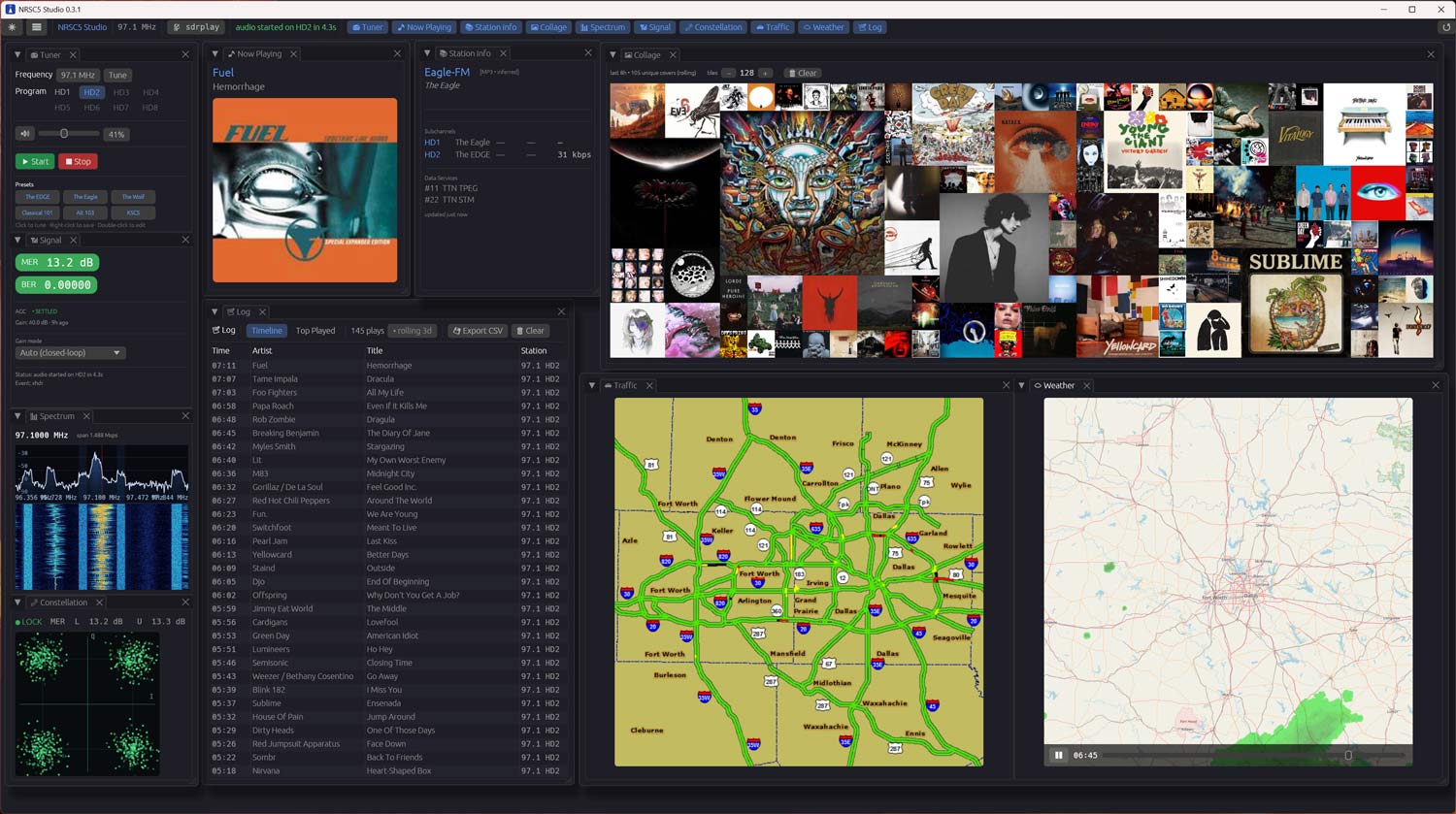
Guglielmo: Screenshot of the DAB Interface

Touchstone Networks in Terminals (TNT): Visualize Touchstone S-Parameter Files in Terminal ASCII

Thank you to Alexander Arsenovic, the original author of the OpenSource RF engineering Python library www.scikit-rf.org, for writing in and sharing with us a new program he has created called "tnt: [t]ouchstone [n]etworks in [t]erminals".

The program is written in Python, and allows a user to visualize Touchstone S-parameter graphs in a terminal, using simple ASCII character-based plotting techniques. Touchstone files are created by Vector Network Analyzers (VNAs), which are used to measure and tune antennas and RF components, or by RF simulation software.

TNT Demo
TNT Demo

Mykola: A New Fast Multichannel Scanner Application for RTL-SDR, Airspy and HackRF

A new multichannel SDR scanner application called 'Mykola' has recently been released by a Ukrainian programmer with the same name as the application. A scanner application allows users to scan a much wider bandwidth than the SDR's instantaneous bandwidth, while automatically searching for active signals.

Mykola advertises extreme scanning speed abilities, adaptive noise floor, and simultaneous demodulation of 3 channels (20 in the paid pro version). It currently supports RTL-SDR, Airspy R2, and HackRF SDR devices. Some of the other features include automatic normalization of the noise floor, audio panning, and support for Windows and macOS.

The application is free, but a pro version will be available in the future, which enables additional features such as stored channel scanning, recording, voice activation, CTCSS/DCS decoder, SDR migration, channel editor, and a base channel set. The pro version is not yet available, and pricing has not been announced. 

Features of the Mykola Scanning Software
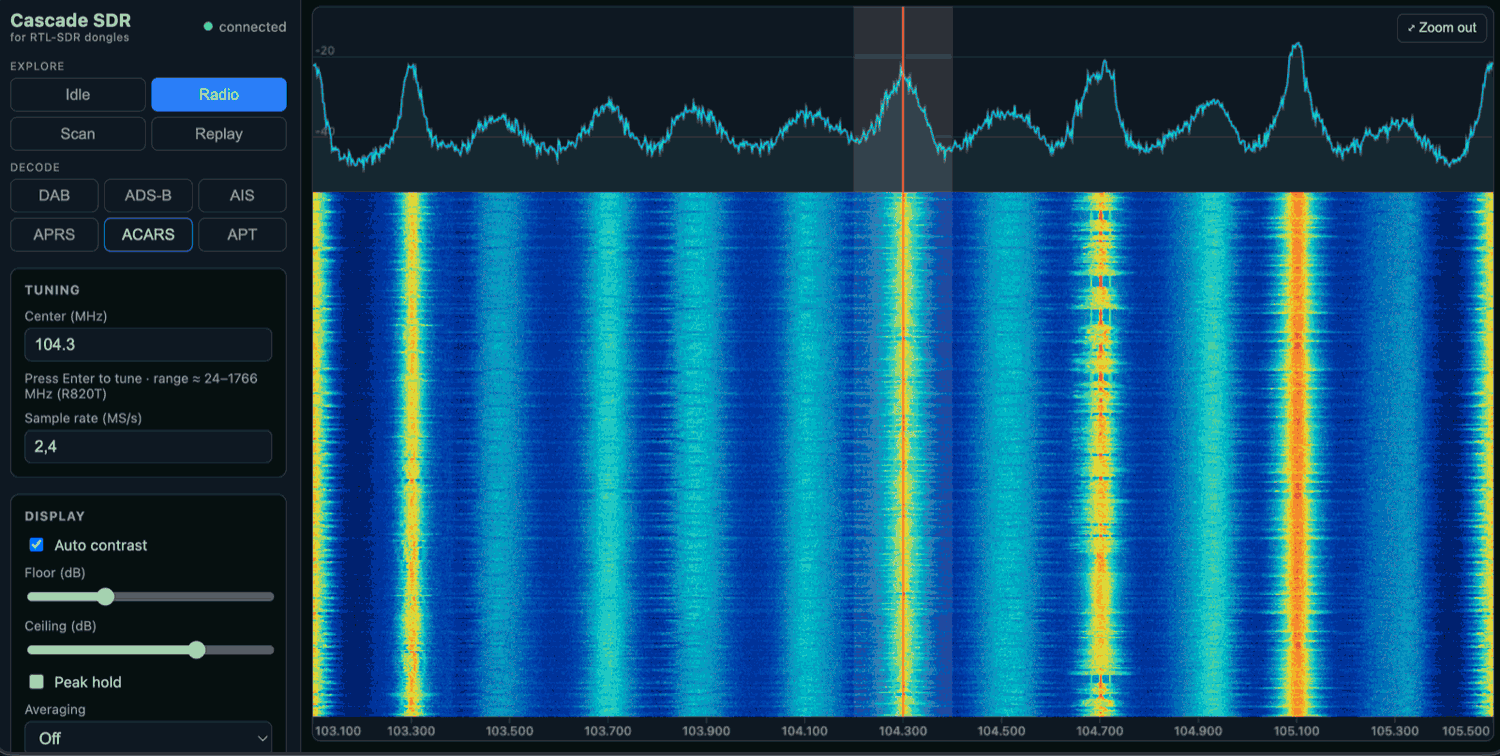
Mykola Scanner Interface

SDRSharp Frequency Manager Python Application

Thank you to Argilli Marco (IU4HMY) for writing in and sharing with us his Python application called "SDR# Frequency Manager 1.0.1" for managing frequency lists in SDR#. SDR# is a popular free SDR program commonly used with RTL-SDR and Airspy dongles. Argilli writes:

SDR# Frequency Manager is a Python application designed to simplify the management and editing of frequency lists used by SDR#. The software allows you to open, edit, and save SDR# XML frequency files in a clear and structured interface.

The application is free but closed source and available on his website.

SDR# Frequency Manager Python Application

The Thought Emporium Explores IMSI Cell Phone Tracking and Other Advanced Cell Phone Attacks with Software Defined Radios

Over on YouTube, The Thought Emporium channel has uploaded a video outlining how mobile phones constantly leak unique IMSI identifiers over the air, making passive location tracking much easier than most people expect. While LTE and 5G improve security, older 2G and 3G protocols still expose permanent subscriber IDs that can be collected and linked to movement over time.

The video highlights how accessible this surveillance is. A cheap RTL-SDR USB dongle, basic antenna, and free software pre-installed on DragonOS are enough to passively collect IMSI numbers from nearby phones running on 3G. Once you know a person's unique IMSI number, you can easily track their movements if you have cheap radios monitoring the areas they frequent.

They also show how it's possible to use a more advanced TX-capable SDR like a USRP B210 to create a Stingray device, which is a fake cell-tower base station that you can force nearby cell phones to connect to. Once connected to the Stingray, all communications from your phone can be tapped. Finally, they discuss SS7 attacks, which, while difficult and/or expensive to gain access to the SS7 walled garden, can allow malicious actors to easily reroute security-related messages, such as 2-factor authentication.

The video finishes with potential defenses, including turning phones off when needed, forcing more secure LTE/5G-only connections, and using tools that detect fake cell towers. Privacy-focused mobile services that rotate identifiers are also discussed.

Recreating ICE Spy Tech Was WAY Too Easy