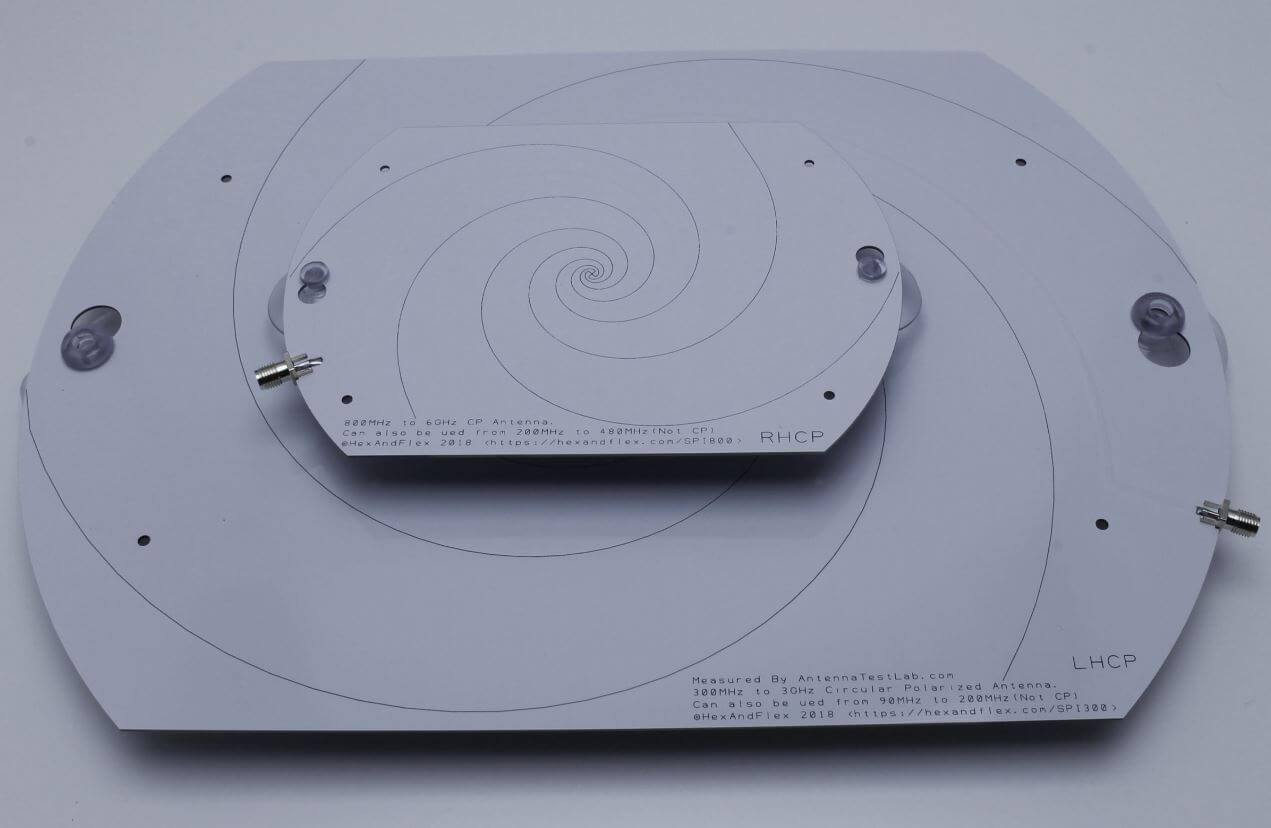
Back in January we posted about a Vivaldi antenna project by "hexandflex". In that project he showed how he designed and manufactured the Vivaldi. A Vivaldi antenna is wideband and directional and the design works well for frequencies above 800 MHz, but becomes too physically large to handle for lower frequencies like 400 MHz. In his latest project, hexandflex has designed a PCB based spiral antenna to cover these lower frequencies.
Hexandflex is currently selling his spiral antennas over on Tindie. There are two versions, one smaller one costing $32 designed for 800 MHz+ and a larger one costing $42 designed for 300 MHz+. Both come with suction cups that allow for easy window mounting.
The 800 MHz+ and 300 MHz+ spiral antennas by Hexandflex
Over on YouTube, channel Null Byte has uploaded a video showing us how to use an RTL-SDR V3 on an Android smartphone. In the video he discusses the hardware and software required to get started on Android and demonstrates the free SDRoid Android app (based on RFAnalyzer) by tuning to several signals including a voice signal. Later in the video he also shows an ADS-B app for receiving aircraft positions. The video is intended for people new to RTL-SDR so it is a little basic, but it's a great introduction.
He notes that the next video (which will probably be released in a week) will show RPiTX being used with the RTL-SDR.
Use an RTL-SDR Software-Defined Radio Receiver with an Android Smartphone [Tutorial]
Thanks to Luigi (aka @luigifcruz and PU2SPY) for writing in and submitting to us his LimeSDR based doppler radar blog post. The LimeSDR Mini is a low cost two port TX and RX capable SDR. Luigi's doppler based radar makes use of one TX port to transmit the radar signal, and the RX port to receive the reflection. The idea is that the if the object being measured is moving, the received reflected signal will be altered in phase due to the doppler effect.
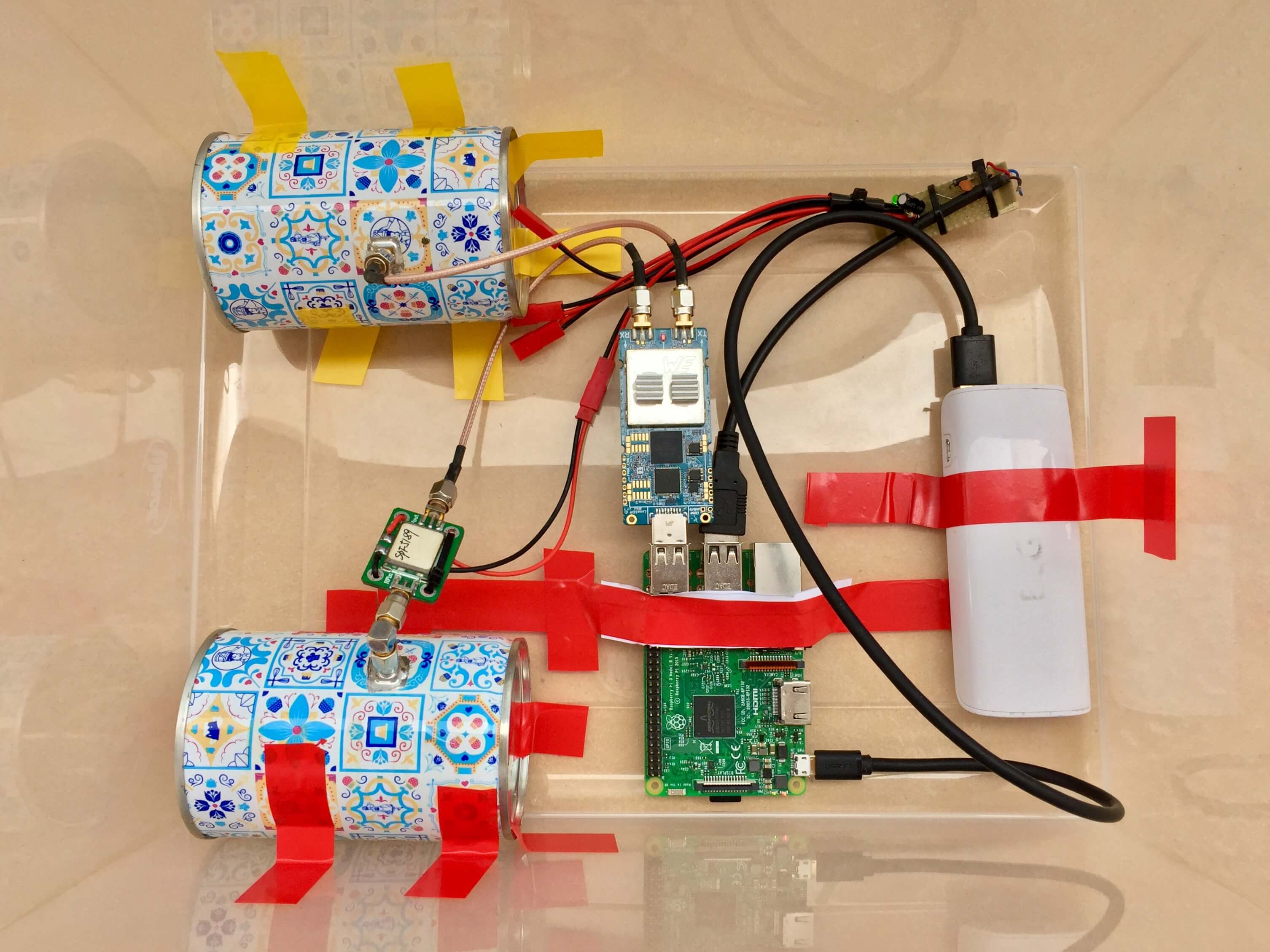
In terms of hardware, Luigi's radar uses the LimeSDR Mini as the TX/RX radio, a Raspberry Pi 3 as the computing hardware, an SPF5189Z based LNA on the RX side, and two cantenna antennas. It transmits a continuous wave signal at 2.4 GHz.
Luigi's LimeSDR Based Doppler Radar
On the software side it uses a GNU Radio program to transmit, receive and process the returned signal. Luigi's post goes over the DSP concepts in greater detail, but the basic idea is to measure the phase shift between the transmitted and reflected signal via a Multiply Conjugate block, and then decimate the output to increase the resolution. The result is then output on a frequency domain waterfall graph. The GNU Radio is all open source and available on Luigi's Github.
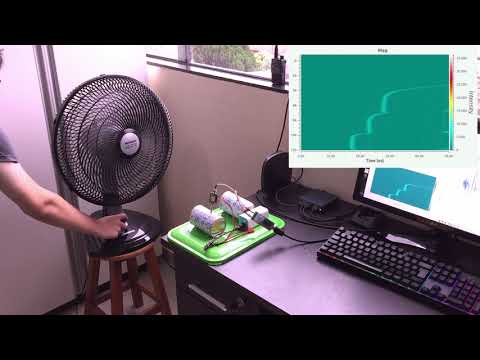
In order to test the system Luigi first set up a test to measure an electric fan's blade speed. The result was clearly visible line in the spectrogram which moved depending on the speed setting that the fan was set to.
Software Defined Radar - Continuous Wave Doppler Radar w/ LimeSDR
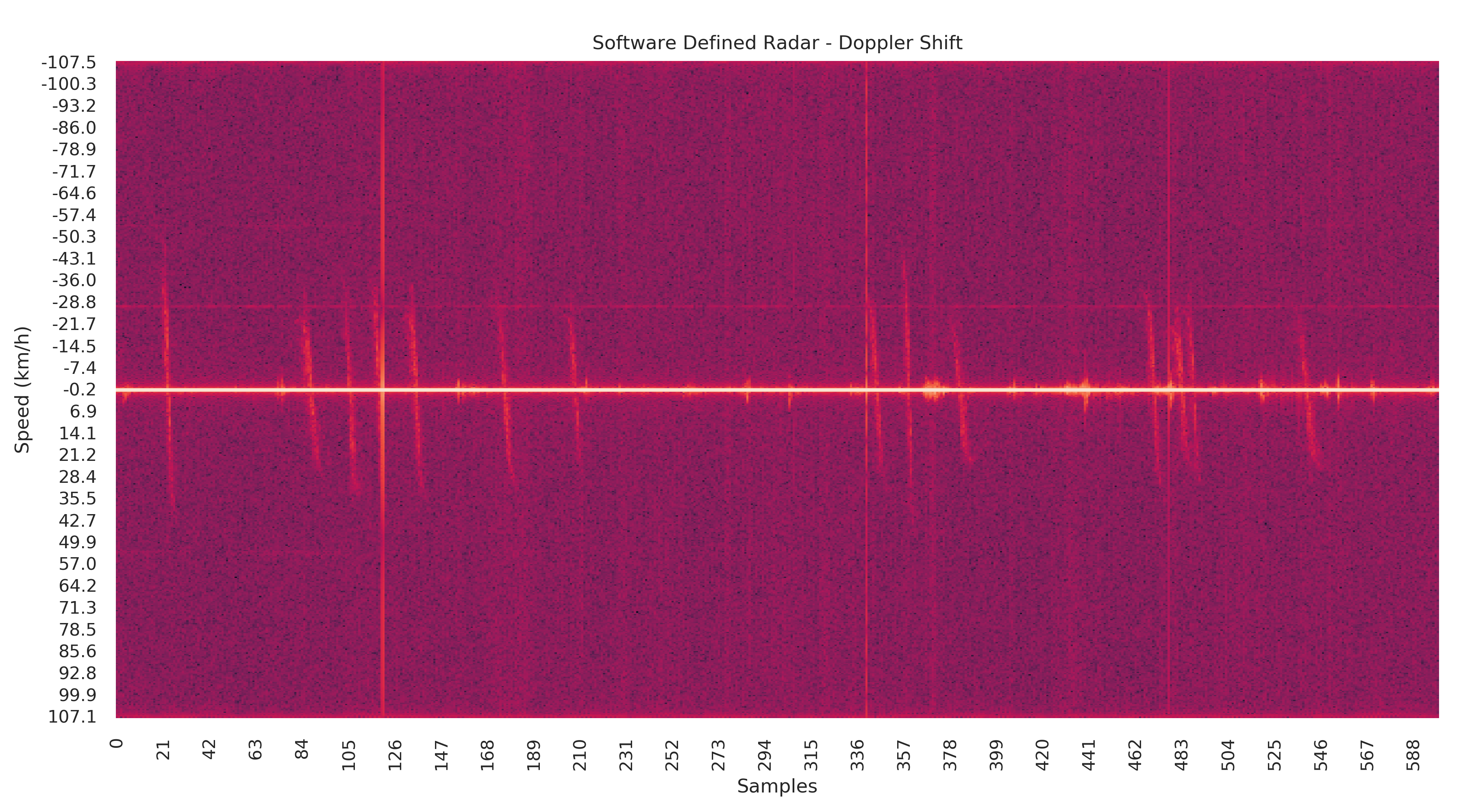
In his second test Luigi measures the speed of vehicles by placing the radar on the sidewalk, pointed at cars. The result was clear indication of the vehicle passes as shown by the longer vertical lines on the graph below. The smaller lines have been attributed to pedestrians passing by.
LimeSDR Vehicle Doppler Radar Results: Each long line indicates a vehicle, and shorter lines indicate pedestrians.
In a third test, Luigi measured vehicle speeds in tougher conditions, with the radar placed 50 meters away from the highway, at 45 degrees, and with weeds in the way. The radar still generated obvious lines indicating vehicles passes. Finally, in his fourth test, Luigi tested the speed accuracy of his radar by measuring a car driving at a known speed. The results showed excellent accuracy.
Software Defined Radar - Continuous Wave Doppler Radar w/ LimeSDR
Airspy is currently running a 15% Black Friday sale over on the manufacturers website iead.cc, and on their US distributor airspy.us. The coupon code is BF2018.
This results in an Airspy Mini costing only $84.15, an Airspy HF+ costing $169.15, an Airspy R2 costing $143.65 and a SpyVerter costing $41.65. This is the cheapest we've seen these products to date.
Over on Ham Radio Outlet, the RSP2 is currently reduced by $20, taking it down to a price of only $149.95. The RSP2 Pro is also reduced down to $192.95. Other SDRplay products, and products on their website appear to be not discounted.
HackRF
Over on SparkFun the original HackRF is 20% off, resulting in a price of only $239.96. It's still double the price of an Aliexpress clone, but it is an original unit. In the UK ML&S are also selling it for 15% off at £219.95. This is the cheapest price we've seen an original HackRF sold for.
Elad FDM S2
At the higher end of the SDR spectrum, we see that the Elad FDM-S2 is currently reduced by $51, resulting in a sale price of $529.
Most of these sales are expected to run until Monday, or until stocks run out.
Have you found any other great SDR deals? Let us know in the comments.
In his post K2GOG mentions our successfully crowd funded KerberosSDR which will be shipping in January next year. KerberosSDR is our 4x coherent RTL-SDR, and one possible application is to use it as a four antenna phase coherent direction finder. K2GOG explains the phase coherent concept in his post quite elegantly.
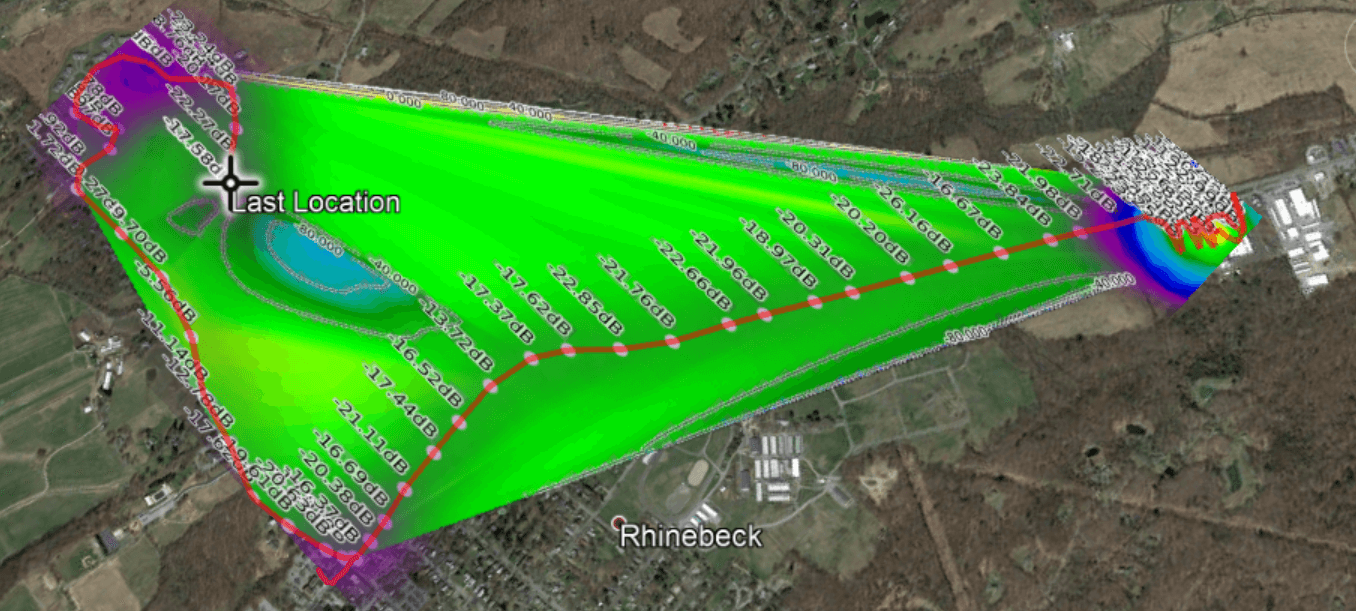
While looking over KerberosSDR, K2GOG was also reminded of another direction finding technique called heat mapping which can be performed with a single RTL-SDR. This process involves driving around with an RTL-SDR and GPS logger, measuring the signal power as you drive and combining it the current GPS coordinates. From that data a heat map can be generated, which shows where the signal is the strongest, and therefore where the likely source is. The RTLSDR Scanner application by eartoearoak makes doing this easy, and in his post K2GOG provide a short tutorial on setting it up.
A heatmap generated by K2GOG with an RTL-SDR, GPS and RTLSDR Scanner.
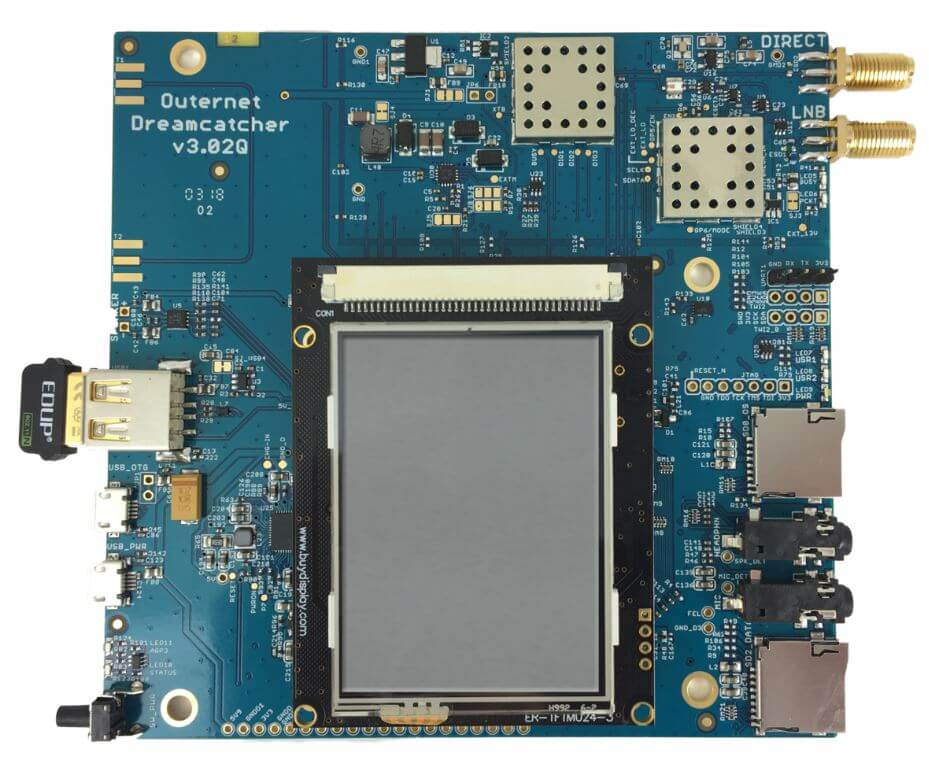
Othernet (previously known as Outernet) are currently having a 50% off sale on all their products. This means that you can snag a discounted Dreamcatcher at only US$75, and a moRFeus at US$99. The sale expires midnight on the 26th.
The sale is exclusive to RTL-SDR Blog readers (although feel free to share the coupon) and the coupon code to use at checkout is rtlsdrblog83759.
Dreamcatcher and Othernet Data Signal Information
If you weren't already aware, the Othernet project aims to bring live data such as news, weather, video, books, Wikipedia articles and audio broadcasts to the world via a free satellite service and cheap receivers. Although an internet connection provides the same data, Othernet's satellite broadcast is receivable in remote areas, will continue working in disasters, and costs nothing to continually receive roughly 200MB of data a day. The trade off is that the service is downlink only, so the data that you get is only what is curated by the Othernet team.
Othernet can provide this service for free because they are funded by private customers whom they provide private data/audio satellite channels to. One such private customer is attempting to implement an Othernet based Tsunami early warning system in Vanuatu which would work even when the cell phone system fails in a disaster. Each siren is equipped with an Othernet receiver and LNB that receives the Othernet signal. The goal is to allow for any village to be able to set up their own low cost warning system. At the same time the Othernet Tsunami warning receiver is made use of in normal circumstances as it receives a satellite radio broadcast which is then re-transmitted to the village over regular FM radio.
Currently the public service is in a test period and is only available in North America, but public service for the EU and possibly Oceania is planned to begin in Q1 2019. The rest of the world should eventually follow after. Some more information about the data service can be found on our previous post.
Alternatively, if you have no interest in the data service then your Dreamcatcher could also be used as a TX/RX capable LoRa radio. In a previous post we had some fun with two Dreamcatchers and a LoRa chat application.
Othernet Dreamcatcher
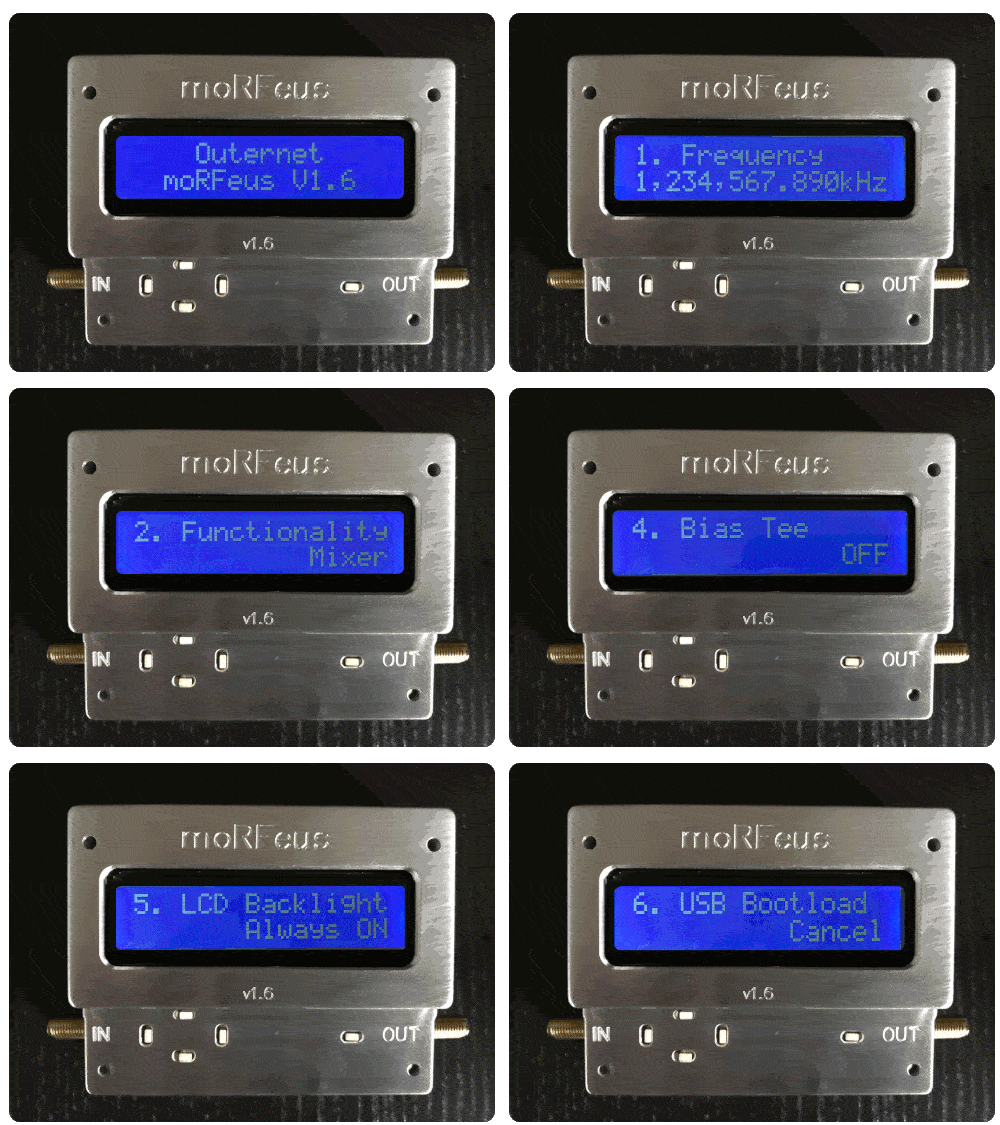
moRFeus Information
The moRFeus is a low cost signal generator. It's capable of generating a tone anywhere from 85 MHz to 5400 MHz, and it can also be used as a frequency mixer component for implementing things like homebrew upconverters and downconverters.
Thank you to Thierry Leconte (TLeconte) for writing in and submitting his new command line based open source software called vortrack. Vortrack is a simple VOR decoder which calculates the angle towards the VOR. It is compatible with both RTL-SDR and Airspy radios, and runs on Linux.
In the past we've seen several other posts about RTL-SDRs being used to decode VOR signals, but Thierry's implementation appears to be the easiest way to get a bearing straight away. You'll get the most use out of the software if you install it on a portable device like a Raspberry Pi and take it out for a drive as you'll be able to see the VOR angle changing then.
VOR stands for VHF Omnidirectional Range and is a way to help aircraft navigate by using fixed ground based beacons. The beacons are specially designed in such a way that the aircraft can use the beacon to determine a bearing towards the VOR transmitter. VOR beacons are found between 108 MHz and 117.95 MHz, and it's possible to view the raw signal in SDR#.
A DVOR Ground Station at an Airport. Source Wikipedia.
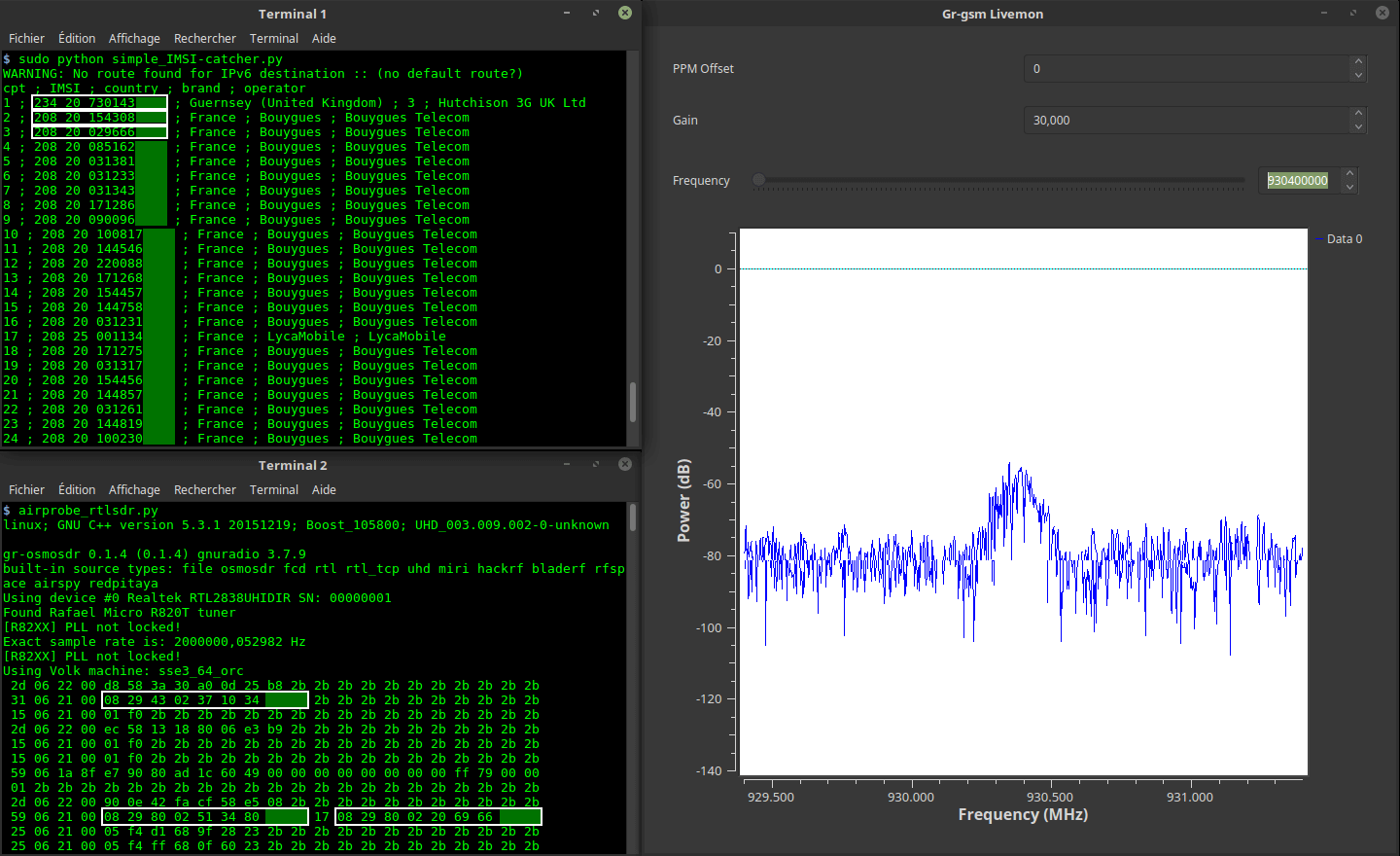
Motherboard, an online technology magazine has recently run an article titled "With $20 of Gear from Amazon, Nearly Anyone Can Make This IMSI-Catcher in 30 Minutes". The article describes how an RTL-SDR together with the IMSI-Catcher Linux software can be used to collect IMSI numbers from cellphones connected to a nearby cell tower. The IMSI is a unique number assigned to each SIM card and collecting this data could be used to identify if someone is in the area covered by the cell tower.
The IMSI-Catcher software only works with the older 2G GSM signals which are now being phased out in some countries and are relatively unused in others. Also unlike more advanced IMSI-Catchers which create a fake cell tower signal, the RTL-SDR based IMSI-Catcher can only collect IMSI numbers when the cellphone first connects to the cell tower.
![Use an RTL-SDR Software-Defined Radio Receiver with an Android Smartphone [Tutorial]](https://www.rtl-sdr.com/wp-content/plugins/wp-youtube-lyte/lyteCache.php?origThumbUrl=https%3A%2F%2Fi.ytimg.com%2Fvi%2Fda1CLA82jw8%2F0.jpg)