ESP32 Bit Pirate Updates: New LoRa and Meshtastic Analysis Features

Back in September 2025, we posted about the "ESP32 Bus Pirate" firmware, which transforms an ESP32-S3 into a multi-protocol debugging and hacking tool. We later covered an update in March 2026 that added waterfall displays, cellular modem support, and an external radio expander.

Although the ESP32 does not have true SDR capabilities, it can leverage its numerous built-in radio hardware components to achieve a range of interesting SDR-like features. Recently, "Geo," the creator of the ESP32 Bus Pirate, wrote in to share some recent firmware updates with us.

Geo notes that the project is now called "ESP32 Bit Pirate" and now includes LoRa/SX1262 support and Meshtastic analysis features.

ESP32 Bit Pirate can now transmit and receive LoRa packets, monitor RSSI, scan frequency activity, display a simple waterfall view and perform Channel Activity Detection. Radio parameters including frequency, bandwidth, spreading factor, coding rate, transmit power, preamble and sync word can be configured directly from the interface.

Packets can also be recorded to the ESP32 filesystem and replayed later together with their original radio configuration.

A dedicated Meshtastic analysis shell has also been added, allowing users to send, receive and inspect Meshtastic packets. The goal is not to replace a Meshtastic node, but to provide a debugging and experimentation interface for understanding and interacting with LoRa/Meshtastic traffic.

The latest update has also added new LoRa hardware support for the Heltec Vision Master T190 and Heltec WiFi LoRa 32 V4, a browser-based debugging ecosystem, a Python scripting lab, and a BPIO2 USB adapter mode.

The project is entirely open source, and the code can be found on their GitHub page.

ESP32 Bit Pirate LoRa Support Added

Open Source Firmware for the DeepSDR 101

Thank you to Esteban Benito (EA8DGL) for writing in and sharing news of a bare-metal open source firmware for the GD32F450-based DeepSDR 101. The firmware is a collaborative effort developed by Esteban Benito (EA8DGL), Alexandr (UA6YKK), and Blas (EA7GIB). The DeepSDR 101 is a popular low-cost hand-held SDR, covering 100 kHz to 149 MHz, with a bandwidth of 192 kHZ, and a 4.3-inch screen. Various clones of the DeepSDR 101 also appear on marketplaces.

Esteban notes that the motivation for writing custom firmware was that the DeepSDR 101 and its clones have had only one firmware update since it came out. While the stock firmware currently works well, it lacks certain features such as selectable filter bandwidths and some demodulation modes, and it needs an updated interface.  

Esteban writes:

The idea was to take genuinely inexpensive hardware - a GD32F450 microcontroller, an 800x480 touchscreen, a TLV320AIC3204 audio codec used as the I/Q front-end, and an MS5351 (Si5351-compatible) local oscillator - and turn it into a receiver with features you'd normally only find on much pricier radios:

- A real-time spectrum/waterfall panadapter with adjustable zoom (1x-8x), smoothing, and trace styles
- AM, USB, LSB, NFM and WFM demodulation, with adjustable channel bandwidth and squelch
- One-tap band presets (shortwave, airband, 2m, HF ham bands, FM broadcast, CB, and more), each pre-loaded with the right mode and tuning step
- A touchscreen settings menu with configurable AGC profiles, PGA gain, backlight, and more
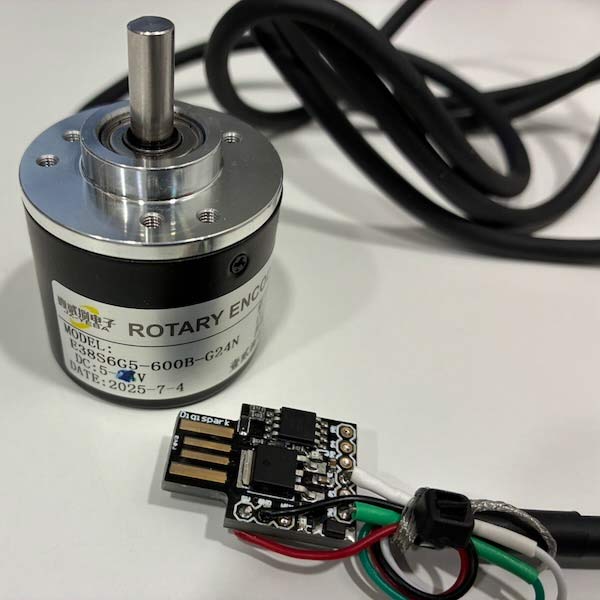
- Encoder-based tuning down to 100Hz steps across 4.8-180MHz

Everything is bare-metal C - no RTOS, direct register access for clocks/DMA/I2S - and the whole firmware, from the I2S/audio bring-up to the DSP chain to the UI,

With this being fully open, it also opens the door to things like CW, RTTY, SSTV, HF FAX or FT8 decoding down the line - none of that requires new hardware, just firmware that's actually open enough to build on.

So really, the goal isn't to replace or criticize the original firmware - it's to give the community a base to build on, so one of the most affordable and easy-to-use SDR radios out there can keep getting better over time instead of staying frozen after a single update.

DeepSDR 101 Open Source Custom Firmware

AI-Disclaimer: We point out that Esteban discloses that this firmware is primarily being written with AI. 

Tech-ni-shn Measures RTL-SDR Blog and Airspy Sensitivity

Thank you to Kevin Murphy (ZL1UJG) (aka Tech-ni-shn) for writing in and submitting some RTL-SDR and Airspy sensitivity measurements that he has recently done over on his YouT ube channel. In his tests, Kevin measures an RTL-SDR Blog V4, RTL-SDR Blog V3 + SpyVerter, Airspy HF+ Discovery, and Airspy Mini using a signal generator, attenuators, and SDR#.

His results show that the RTL-SDRs and Airspy devices have very similar minimum discernible signal (MDS) levels, all measured around ~-133 dBm. Kevin has provided a PDF summary of his results, and the video below.

Video#012 SDR Sensitivity and Noise figure

Sn0ren Tests the HackRF Pro Portapack H4M Pro

Over on YouTube, RF enthusiast sn0ren has posted a video reviewing the new 'HackRF Pro Portapack H4M Pro'. The HackRF Pro is the latest official version of the popular HackRF software-defined radio. It started shipping to customers back in January 2026, and it includes improvements such as improved noise figure measurements, a USB-C port, increased frequency limits, a TCXO, and an improved, flatter frequency response.

The Portapack H4M is currently the most recommended portapack product for the HackRF. A Portapack is a separate PCB board that piggybacks on a HackRF board and turns the HackRF into a portable device that can receive and transmit various signals in the field.

In the video, sn0ren starts by showing a performance comparison between the HackRF and HackRF Pro, noting increased signal strength with the HackRF Pro. The Portapack H4M Pro appears to mostly be a change in order to fit the new HackRF Pro PCB layout, but there are some minor improvements that sn0ren finds in the video, such as better buttons, a slightly larger case, a removable battery lid, metal screws, and a lanyard hole. 

The Biggest HackRF Upgrade in Over a Decade

Building a Homemade Weather Radar with a HackRF or PlutoSDR and Salvaged Automatic RV Dish

After nearly being hit by a tornado that NEXRAD didn't see coming, Koakno decided to build his own DIY self-contained mobile weather radar built from a $5 salvaged RV satellite dome, a HackRF or PlutoSDR, and open-source software. 

Koakno notes that NEXRAD (the US weather radar system) data is typically 4-6 minutes old, and from a radar station that is often 100+ miles away, resulting in warnings coming in too late or not being detected at all. Only professional local mobile Doppler radar trucks have the capability of detecting local tornadoes rapidly enough to take action. Koakno set out to recreate this capability on a budget.

His antenna consists of a salvaged Winegard Carryout Anser GM-5000 automatic satellite dome built for RV motor homes. The dish carries an LNB that radiates an 850 MHz signal at 10.4 GHz, which is a perfect wavelength for weather radar. The SDR hardware can either be a HackRF or PlutoSDR. As the HackRF is only half-duplex, it uses pulsed timing, whereas the full-duplex PlutoSDR uses a continuous FMCW chirp. Open-source Python software processes the results, producing a live radar display showing color-scaled reflectivity.

Importantly, Koakno addresses the licensing concerns around this project. He notes there are clauses in the amateur radio FCC legislation that support the use of automatically controlled beacons for the observation of propagation, and experimental activities in the 3cm 10.0 - 10.5 GHz amateur radio band, but he is not an attorney, so this activity may still exist in a grey area.

The screenshot below was generated via the simulation the software provides for testing the UI.

A Demo of the Weather Radar Display

Overhead Sky: A Mac App That Names Local Aircraft in your Menu Bar

Thank you to Chris Miller for submitting news about the release of his (paid) Mac app called Overhead Sky. This app sits in the MacOS menu bar, and names aircraft as they pass overhead, by making use of the adsb.lol ADS-B data aggregator.

The app costs $24.99 one off, or $3.99 monthly, however Chris writes that people who feed adsb.lol with an RTL-SDR or other SDR get the app discounted at $9.99. Chris writes that detecting people feeding to adsb.lol was a challenge, and shares his methods below:

I started on a commercial flight-data API and found it bills per aircraft returned rather than per call, which means one person leaving the app running over a busy sky costs more in a month than the app costs in a year. So I went to the community feeds and read the licences properly, and most said no. airplanes.live is non-commercial. ADS-B Exchange's affordable tier is a non-commercial community tier, and the site is Jetnet-owned now. adsb.lol is ODbL, which permits commercial use with attribution. So that is what it runs on, credited in the app, on the privacy page, and in the App Store description.

Two things follow from being a paid product living on a volunteer commons, both written down before it went on sale. Ten percent of profit goes back to the ADS-B open-data community, totalled once a year and published so the promise stays checkable. And anyone who feeds pays $9.99 instead of the full sticker.

The verification is the part I think fits your readership best. adsb.lol has no login, so the app calls GET /0/me, which reports the caller's own receiver based on the source IP of the request. If your Mac shares a public IP with your receiver, your beast or mlat client shows up and you are verified with no input at all. That call has to run from the user's machine rather than my server, because through a proxy it would judge my IP and match nobody.

The same reasoning sets the data path. Positions go from the Mac straight to adsb.lol, coarsened to about a one kilometre square first, because adsb.lol rate limits per IP and routing every user through one Cloudflare egress would have earned the block it deserved. Only route lookups pass through my server, carrying a callsign already on the user's screen and no location, unlogged.

So that leaves two honest gaps, since they belong in any piece about this. The app reads the aggregated network rather than a local dump1090 or tar1090 feed, so it is API-backed rather than receiver-backed today. And I do not run a receiver myself yet (though I hope to eventually).

Overhead Sky
Overhead Sky

FrameRF: An SDR-Based Technical Surveillance Counter-Measure Analysis Platform

Thank you to Stefano Cangiano, an Italian TSCM (Technical Surveillance Counter-Measures) specialist, for writing in and sharing with us about the release of his FrameRF product. Stefano writes:

After more than ten years of operational field experience, I developed FrameRF, a professional SDR-based TSCM analysis platform designed to help operators rapidly identify, classify and prioritize RF signals in complex environments.

Rather than replacing existing SDR software, FrameRF focuses on operational analysis by correlating multiple wireless technologies (Wi-Fi, Bluetooth, BLE, GSM, LTE and others) into a single workflow that supports real-world investigations.

FrameRF has been developed from real operational TSCM field experience, with the goal of reducing RF analysis time and helping operators make faster and more informed decisions during technical inspections.

To summarize, FrameRF appears to be a portable deployable kit, consisting of a laptop, SDR hardware, antennas, and custom software in a rugged briefcase. The product is intended to be used by TSCM specialists for applications like sweeping for RF bugs, corporate security audits, and finding anomalous signals.

It can do things like detect LTE voice activity, automatically classify signals, alert the user based on patterns, detect a DECT phone call, recognize Apple AirTags, estimate if different random Bluetooth MAC addresses belong to the same physical device, analyze the WiFi environment, reconstruct device relationships, and detect hidden WiFi networks and potential spoofing.

If you are interested, Stefano has provided a PDF brochure explaining the product further.

FrameRF Live Monitor
FrameRF – Professional RF Behavioral Analysis Platform | TSCM Video Demonstration

9GRadio: An Android RTL-SDR App for Spectrum Monitoring and Decoding Analog/HAM/Aviation/Marine Radio Traffic

Thank you to Richard (9G5AR) for writing in and sharing with us the release of his open source Android app called 9GRadio. Richard writes that 9GRadio is an app designed for spectrum monitoring/analysis and the decoding of analog/ham/aviation and marine radio traffic.

In terms of demodulation it supports AM, FM, NFM, WFM, WFM Stereo, USB, LSB, CW, CWR, DSB and RAW IQ modes.

For digital decoding, it supports APRS, digital voice modes such as DMR, D-STAR, YSF, dPMR, NXDN, and aircraft, marine, and datalink modes such as ADS-B, AIS, ACARS, RDS, and multilateration.

Richard also notes that 9GRadio includes a full multilateration stack for locating transmitters, which works with 2+ networked 9GRadio receivers. Interestingly, the multilateration stack is noted to be protocol-agnostic, meaning it should work not only with ADS-B, but also with any mode that provides a digital identity for a transmission, such as AIS, ACARS, RDS, and digital voice modes.

The app is not available on the Google Play Store, but the APK is available for sideloading on the project's GitHub Releases page, along with the open source code.

9GRadio GIF of various screens