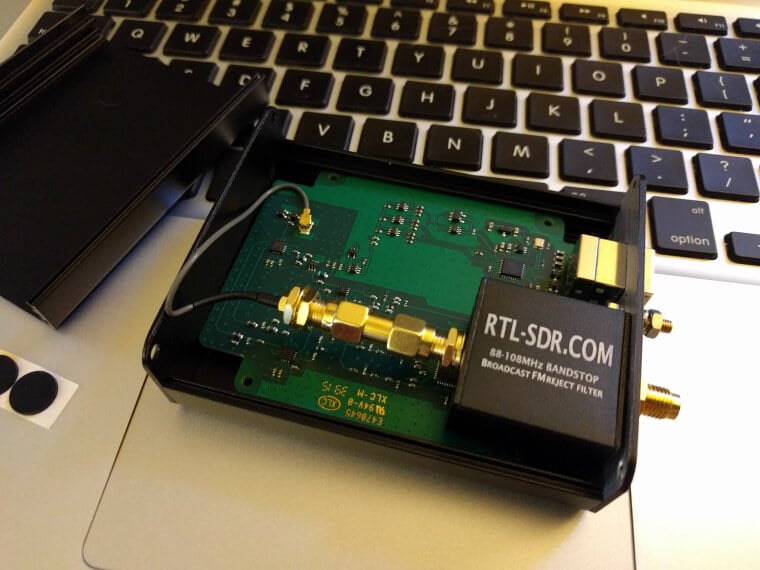
Mike (kd2kog), our partner on the SDRplay RSP1 Metal case upgrade kit has recently uploaded an instruction set that shows step by step how to perform the upgrade (pdf). It shows how to dismantle the RSP1 from the plastic case, install the included broadcast FM filter, mount the PCB and shows where all the nuts and washers go.
The metal case upgrade is something we brought out back in March. It allows owners of the SDRplay RSP1 SDR to upgrade the default plastic case to a sturdy metal one for improved ruggedness and RF shielding. It also comes with an included broadcast FM filter to help reduce strong FM images which are often a problem on some bands with the RSP1. It also comes with a handy travel case. If you want to purchase the enclosure we have it available on our store at www.rtl-sdr.com/store, and also on US Amazon, both with free shipping.
If you’re interested in printing the stand for yourself Jaime has uploaded the design files to his dropbox. He has also created a short YouTube video showing a slideshow of his stand which is shown at the end of this post.
If you’re interested in 3D printing accessories and enclosures for the RTL-SDR then thingiverse.com has a range of user submitted designs, ranging from custom RTL-SDR dongle enclosures, to stratux Raspberry Pi + dongle enclosures, to Outernet patch antenna stands.
Some of the RTL-SDR related design on Thingiverse.
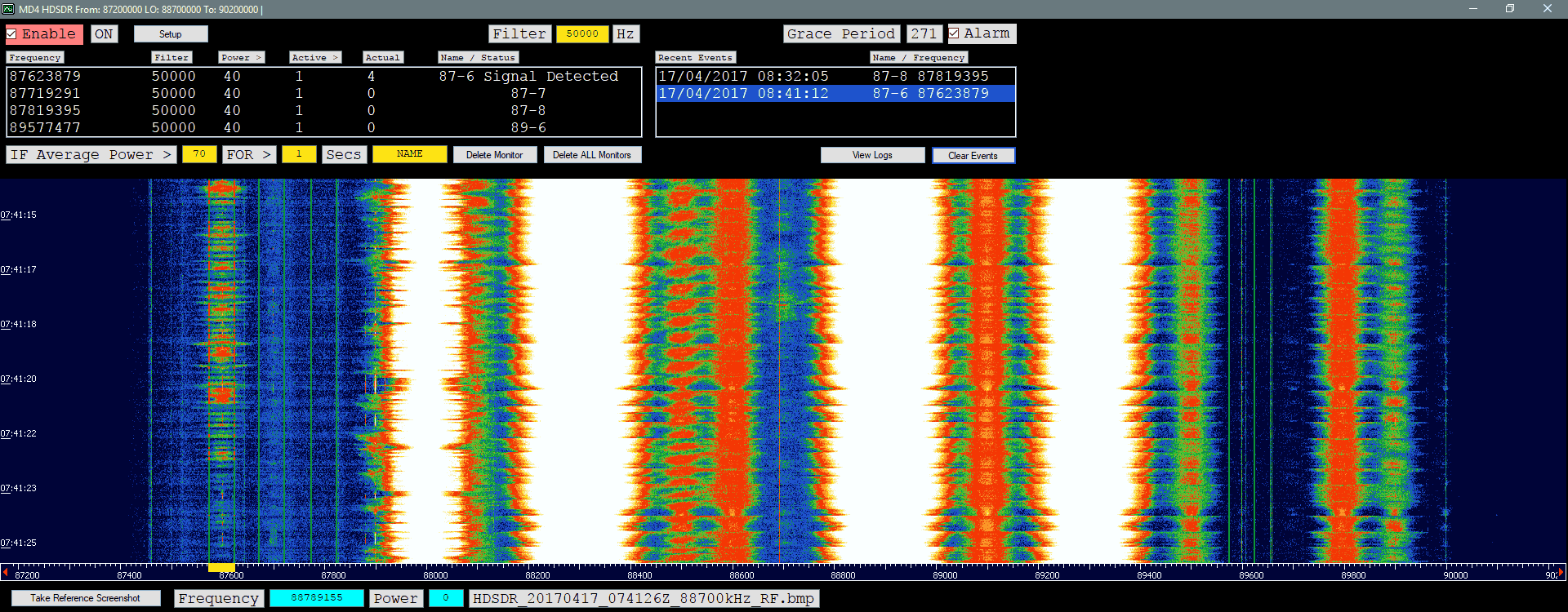
Over on our forums Andy (M0CYP) has posted about his new meteor scatter detection program which works with HDSDR and any supported SDR like an RTL-SDR. It works in an interesting way, as instead of analyzing sound files for blips of meteor scatter activity it analyzes screenshots of the HDSDR waterfall. The software automatically grabs the screenshots and determines if a signal is present on any given frequency. You can set a preconfigured detection frequency for a far away transmitter, and if the waterfall shows a reflection it will record that as a meteor.
Meteor scatter works by receiving a distant but powerful transmitter via reflections off the trails of ionized air that meteors leave behind when they enter the atmosphere. Normally the transmitter would be too far away to receive, but if its able to bounce off the ionized trail in the sky it can reach far over the horizon to your receiver. Typically powerful broadcast FM radio stations, analog TV, and radar signals at around 140 MHz are used. Some amateur radio enthusiasts also use this phenomena as a long range VHF communications tool with their own transmitted signals. See the website www.livemeteors.com for a livestream of a permanently set up RTL-SDR meteor detector (although that site does not use Andy’s software).
Andy writes that his meteor scatter detection software is still in beta so there might be some bugs. You can write feedback on the forum post, in the comments here, or contact Andy directly via the link on his website.
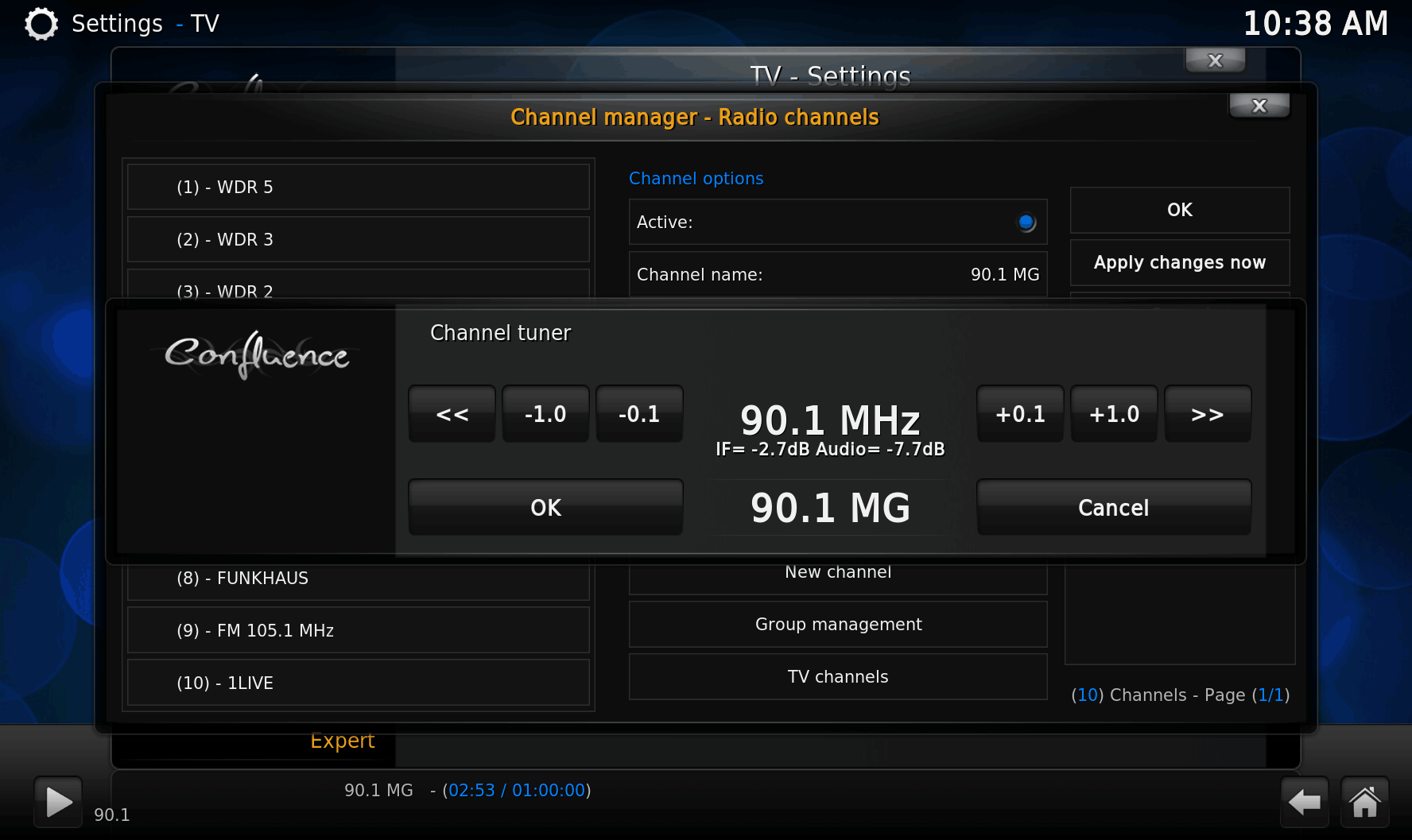
Kodi is a media player and entertainment hub program that is used to manage digital video collections and music. It is used mostly on TV’s together with a home theater PC, or Raspberry Pi 3, but also runs on Android and iOS. It can be thought of as more fully featured smart TV software.
Over on Tom’s Radio Room Show (TRRS) on YouTube Tom has uploaded a video showing how to use SDR# together with Vasili’s Fast Scanner plugin. Fast Scanner is a plugin for SDR# that allows you to use SDR# as a wide band scanner. Essentially this quickly scans through multiple ~2 MHz chunks of bandwidth, and automatically tunes to any active signals.
In his video Tom shows the Fast Scanner plugin in action, shows how to use it, discusses a bit about how it works and also shows what all the features are.
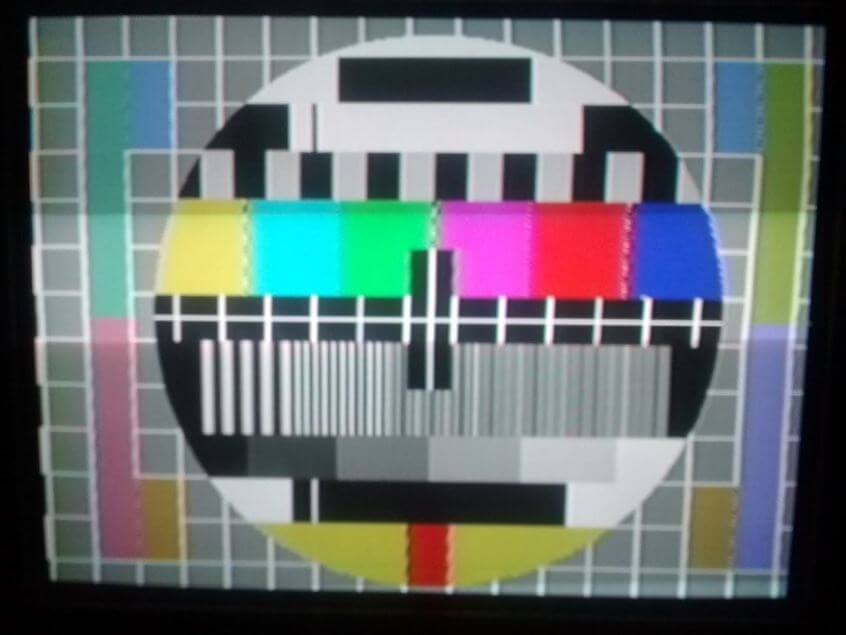
In his submission he shares a tutorial that explains the theory behind the PAL analog video standard. He explains the different components of the PAL signal, including the luma (black and white part), frame rates, and modulation. He then goes on to explain how color is encoded onto the PAL by using Quadrature Amplitude Modulation (QAM).
Finally in the files section marble also supplies us with the GNU Radio flowgraph which can be used to transmit PAL video with a HackRF.
Earlier in April we posted about Hannes Fasching (OE5JFL)’s work in detecting pulsars with an RTL-SDR. Thanks to Steve Olney (VK2XV), administrator of the Neutron Star Group for pointing out that there are actually several amateur radio astronomers who are using RTL-SDR dongles for pulsar detection.
A pulsar is a rotating neutron star that emits a beam of electromagnetic radiation. If this beam points towards the earth, it can then be observed with a large dish antenna and a radio, like the RTL-SDR. Pulsars create weakly detectable noise bursts across a wide frequency range. They create these noise bursts at precise intervals (milliseconds to seconds depending on the pulsar), so they can be detected from within the natural noise by performing some mathematical analysis on the data. Typically a few hours of data needs to be received to be able to analyze it, with more time needed for smaller dishes.
One problem is that pulsar signals can suffer from ‘dispersion’ due to many light years of travel through the interstellar medium. This simply means that higher frequencies of the noise burst tend to arrive before the lower frequencies. Mathematical de-dispersion techniques can be used to eliminate this problem enabling one to take advantage of wideband receivers like the RTL-SDR and other SDRs. The more bandwidth collected and de-dispersed, the smaller the dish required for detection.
Over on the Neutron Star Group several amateur pulsar detection projects are listed, and entries denoted with the “^” symbol make use of the RTL-SDR. Below we show a brief overview of those projects:
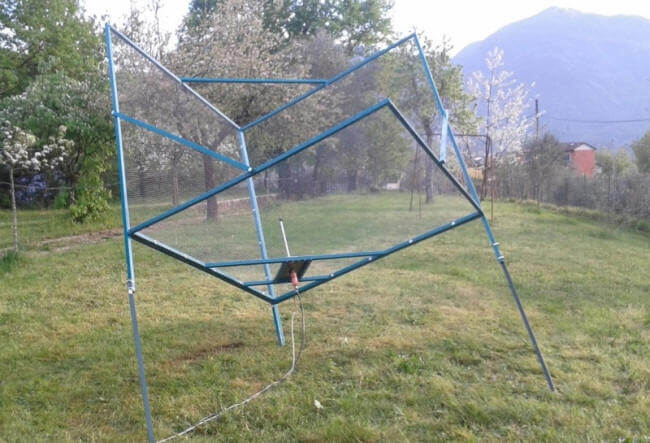
Andrea Dell’Immagine (IW5BHY)– Based in Italy Andrea often uses a 3D corner reflector antenna which is equivalent to a 2.5 meter diameter dish to observe pulsars in the 70cm band (~420 MHz). The antenna is in a fixed position so he can only detect pulsars that drift into the beam width of the antenna. With this antenna, a 0.3dB NF LNA, an RTL-SDR and de-dispersion techniques he’s been able to detect the Pulsar B0329+54 which is 2,643 light years away with an integration time of about 3 hours.
Andrea (IW5BHY)’s 3D Corner Reflector Pulsar Detection Antenna.
Hannes Fasching (OE5JFL) – Based in Austria Hannes has a 7.3M dish that he uses for pulsar detection with his RTL-SDR. With this large dish he’s been able to receive 22 pulsars at both 70cm (424 MHz), and 23cm (1294 MHz) frequencies. With such a large dish, detecting a strong pulsar like B0329+54 only needs less than a minute of integration time.
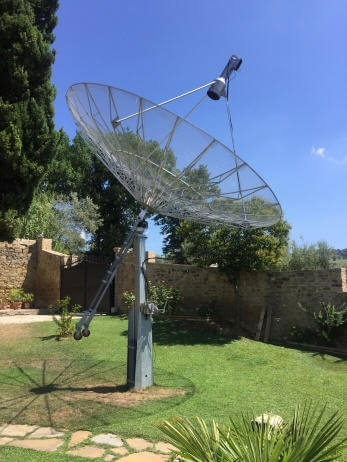
Mario Natali (I0NAA) – Based in Italy Mario uses a 5M dish to observer pulsars at both 409 MHz and 1297 MHz. Combined with a low noise figure LNA and his RTL-SDR he’s been able to receive the B0329+54 pulsar with an integration time of about 2 – 2.5 hours.
Mario Natali (I0NAA)’s 5M Dish
Michiel Klaassen – From the Dwingeloo Radio Observatory in the Netherlands Michiel has used their large 25M dish and an RTL-SDR to detect B0329+54 at 419 MHz.
Peter East & Guillermo Gancio–Peter and Guillermo have used the large 30M dish at El Instituto Argentino de Radioastronomía (IAR) in Argentina and an RTL-SDR to detect the Vela pulsar (B0833-45) at 1420 MHz.
In terms of hardware required, from the above projects we see that you’ll need an RTL-SDR dongle (other more costly SDR’s could also be used), a dish as large as you can get (along with some sort of dish pointing system), a low noise figure amplifier (0.5dB or less is desired) to be placed right by the dish, a few line amps if the cable run is long and perhaps a filter if you are seeing interference from terrestrial signals.
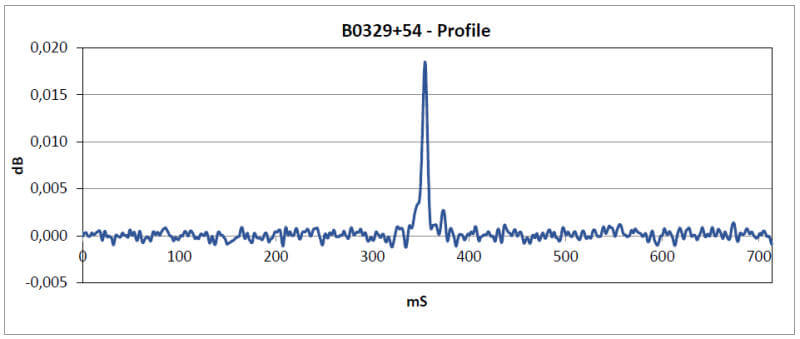
An overview of software for detecting pulsars with the RTL-SDR can be found over on the Neutron Star Groups software page. Essentially what you need is an analysis program which can work on the raw IQ data that is collected by the RTL-SDR and dish antenna. This software ‘folds’ the data, looking for the regular noise bursts from the pulsars. The output is data that can be used to create a graph indicating the spin period of the pulsar, and thus confirming the detection.
Graph showing the half-period of B0329+54. 350 * 2 = 700 ms which is about what matches on the B0329+54 Wikipedia page.
RadarBox.com is an ADS-B aggregator which is very similar to other aggregators like FlightAware.com and FlightRadar24.com. These services use ADS-B data provided from volunteers all around the world to create a live worldwide snapshot of current air traffic. The data is then used by airlines, airports, aerospace companies, as well as enthusiasts and regular people to track aircraft and estimate arrival times.
Typically contributors to these services use an RTL-SDR combined with a Raspberry Pi as the receiver. Some sites also use their own proprietary hardware, but they seem to be slowly falling out of favor as the RTL-SDR solution tends to be cheaper and more effective.