New Inline Low Noise Amplifier Design for the RTL-SDR and RTL-SDR Power Injector Modification

Recently a reader named Fabio wrote in to let us know about his new Low Noise Amplifier (LNA) design for the RTL-SDR. Fabio writes that his design is similar to the LNA4ALL, but is small enough to fit inline with an antenna. An LNA can help improve reception especially if you have long runs of coax cable between the antenna and RTL-SDR.

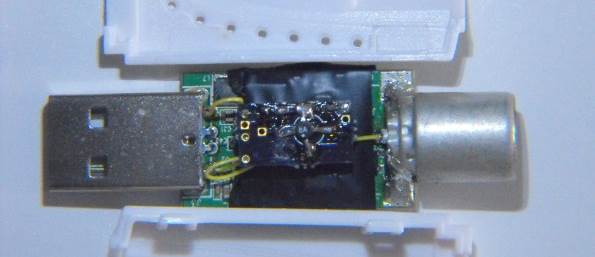
Fabio’s design requires that the LNA be powered inline with a bias-tee power injector circuit which can be easily built from an inductor and capacitor. But instead of building an external bias-tee he modified the RTL-SDR dongle itself to provide the required 5V output power from the USB bus. He writes that with this modification the RTL-SDR could also be used to power an active antenna.

Fabio has also released his circuit designs on his GitHub page for free.
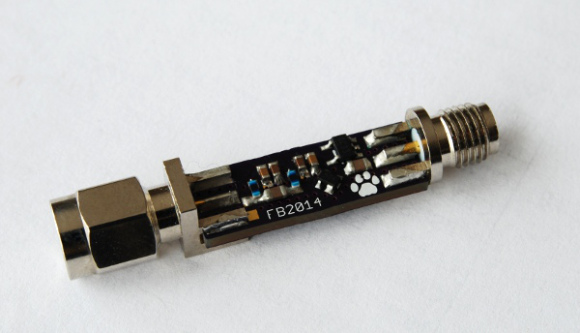
Inline LNA for the RTL-SDR
RTL-SDR Bias-T Modification

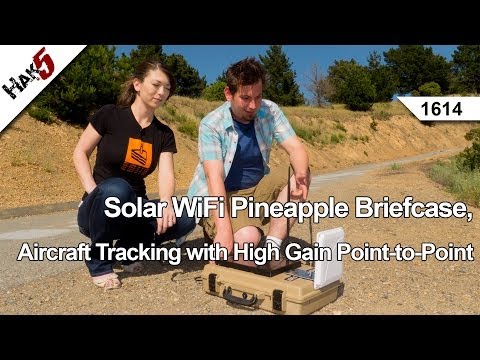
Hak5: Using a Solar Powered Embedded Device with an RTL-SDR to Track Aircraft Remotely

Over on YouTube Hak5, a popular electronics enthusiast channel has uploaded a video showing their project which involves creating a remote solar powered ADS-B receiver with the RTL-SDR. They used a WiFi Pineapple which is a mini Linux based embedded computer as a remote PC and sealed it in a weather tight briefcase with a lead acid battery and solar panel. They also used a high gain directional WiFi antenna on both the transmitting and receiving ends. With this setup the WiFi Pineapple is capable of running indefinitely transmitting ADS-B data using just the solar panel and battery.

They took their setup to the top of a hill near to their office and pointed the transmitting WiFi antenna towards their offices. Then back in the comfort of their offices they were able to remotely connect to the WiFi Pineapple and start a dump1090 webserver and connect to it using Virtual Radar Server.

Solar WiFi Pineapple Briefcase, Aircraft Tracking with High Gain Point-to-Point, Hak5 1614

Listening to Spacewalk Communications from the International Space Station

Over on YouTube user LEGION ELMELENAS has uploaded a video showing his reception of voice communications from a Russian spacewalk on the International Space Station (ISS).

Legion used a Funcube Dongle Pro+ which is a software defined radio USB dongle similar to the RTL-SDR, but with better performance and higher cost. He also used a home made turnstile antenna, the SDRSharp software and the Orbitron satellite tracking software to automatically correct for the signals doppler shift as the ISS flies over.

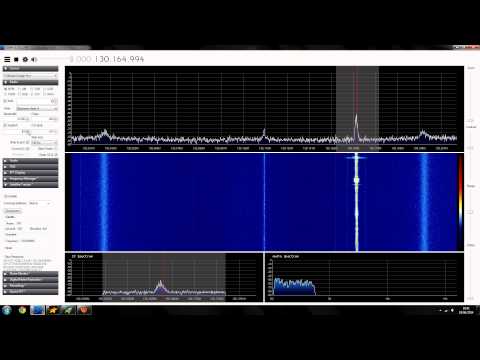
International Space Station spacewalks(Russian astronauts EVA) received with Funcube Dongle Pro+

KN0CK HF Upconverting and Direct Sampling RTL-SDR Receiver Store

In previous posts we have featured Marty KN0CK’s popular modified RTL-SDR dongles which have either a miniature built in high quality HF upconverter with amplifier and filter, or an amplified and filtered direct sampling modification applied to them. With these modified dongles you can receive the HF frequencies from 0.5 MHz to 54 MHz. These kits were previously available for sale on a webstore, however that store has since closed down.

Fortunately, Marty’s modified RTL-SDR dongles are still available at http://www.kn0ck.com/HF_SDR/. The HF upconverting dongle can be bought for $75 and the direct sampling dongle at $60. The store page also shows example videos of the performance you can expect.

KN0CK HF Upconverting RTL-SDR Modification
KN0CK HF DIrect Sampling RTL-SDR Modification

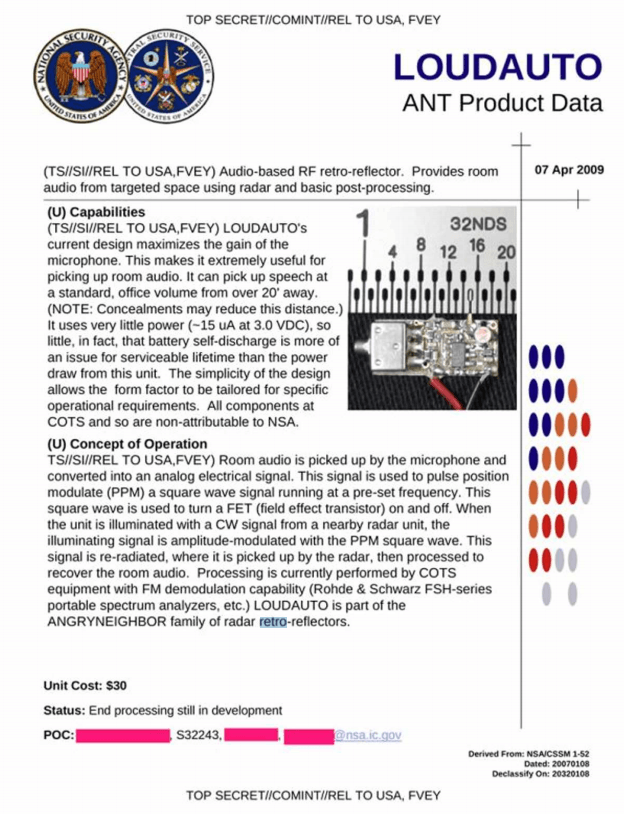
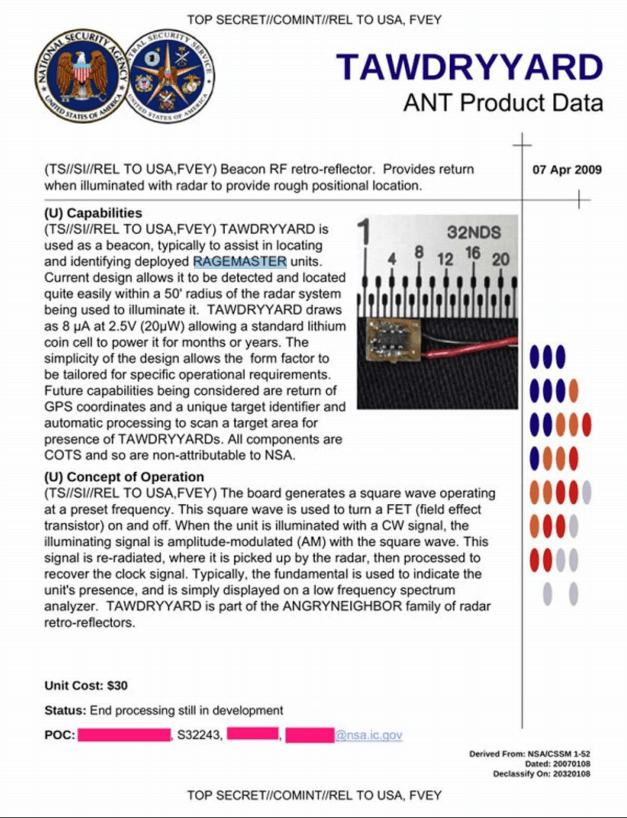
Reverse Engineering NSA Spy ‘Retro Reflector’ Gadgets with the HackRF

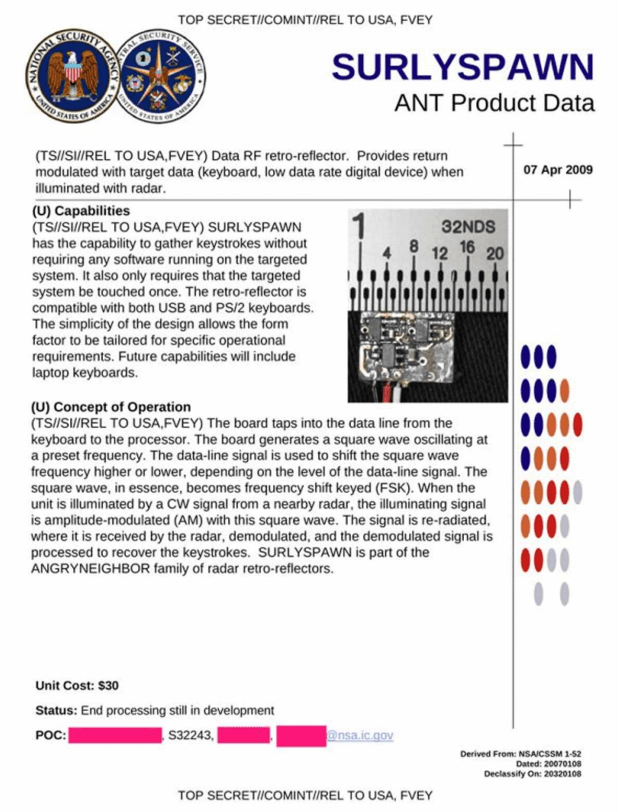
In 2013 whistleblower Edward Snowden leaked (along with other documents) some information about the American National Security Agencies (NSA) spy tools. One such group of tools named ‘retro reflectors’ has recently been investigated and reverse engineered by Micheal Ossmann, the security researcher behind the recently available for preorder HackRF software defined radio. The HackRF is a SDR similar to the RTL-SDR, but with better performance and transmit capabilities.

Newscientist Magazine has written an article about Ossmann’s work here. From their article a retro reflectors are described in the following quote.

One reflector, which the NSA called Ragemaster, can be fixed to a computer’s monitor cable to pick up on-screen images. Another, Surlyspawn, sits on the keyboard cable and harvests keystrokes. After a lot of trial and error, Ossmann found these bugs can be remarkably simple devices – little more than a tiny transistor and a 2-centimetre-long wire acting as an antenna.

The HackRF comes in to play in the following quote

Ossmann found that using the radio [HackRF] to emit a high-power radar signal causes a reflector to wirelessly transmit the data from keystrokes, say, to an attacker. The set-up is akin to a large-scale RFID- chip system. Since the signals returned from the reflectors are noisy and often scattered across different bands, SDR’s versatility is handy, says Robin Heydon at Cambridge Silicon Radio in the UK.

Ossmann will present his work at this years Defcon conference in August.

retro-reflector-surlyspawn     retro-relector    retro-reflector-ragemaster


Analyzing 433 MHz Transmitters with the RTL-SDR

Over on his blog, Yashin has written a post showing how to analyze 433 MHz transmitters using several methods. Devices that transmit using low power 433 MHz are common and often include devices such as weather monitors, power monitors and alarm sensors.

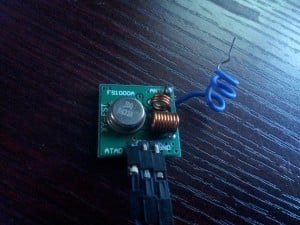
To show his analysis methods Yashin used an ASK modulated FS1000A 433 MHz transmitter connected to an Arduino Teensy microcontroller. He first uses GQRX and baudline together with an RTL-SDR in Kali Linux to test that the transmitter is working and to visually inspect the RF spectrum. Then he shows how to use GNU Radio to receive the 433 MHz transmitter and how to record an audio file. The final tool he shows how to use is rtl_433 which will automatically decode the data into binary strings using the analysis option.

ASK 433 MHz Transmitter

Visualizing Doppler Signal Reflections with the RTL-SDR

Over on his blog DE8MSH has uploaded a video showing a timelapse of some Doppler signal reflections he recorded. He shows more information about his Doppler recording setup on this previous post which shows that he was even able to get a Doppler reflection from the ISS using the French Graves radar.

When an airplane or meteor reflects a signal from a strong transmitter such as an ATIS signal or the Graves radar in France, the received reflected signal frequency will change as the plane or meteor comes towards or away from your receiver. This is due to the Doppler effect. Its effect can be observed as the sloping lines shown in the video.

To do the recording, DE8MSH used HDSDR together with spectrum lab and an RTL-SDR.

Receiving Signals from the Lunar Reconnaissance Orbiter with an RTL-SDR and WiFi Grid Antenna

Gat3way has recently posted on his blog an article showing how he was able to receive a signal from the Lunar Reconnaissance Orbiter (LRO) using only an RTL-SDR, WiFi grid antenna and a low noise block (LNB). The LRO is a NASA spacecraft which is currently orbiting and being used to create maps of the moon.

The LRO transmits a tracking, telemetry and control (TT&C) signal at 2271.125 MHz which is in the S band (2 to 4 GHz). Since the S band frequencies are commonly used for Indovision satellite TV, gat3way was able to find a cheap LNB which could downconvert the GHz level S band frequencies down into a frequency receivable by the RTL-SDR. For the antenna he used a high 22dBi gain motor controlled WiFi mesh parabolic grid antenna.

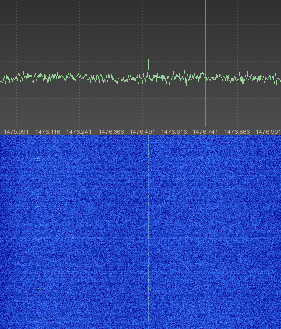
After aiming the antenna at the moon, gat3way was able to clearly see the LRO carrier signal in the RTL-SDR waterfall as shown in the image below.

WiFi Parabolic Mesh Antenna for the S Band
LRO Signal Received by RTL-SDR, LNB and WiFi antenna.