The GNU Radio conference talks are generally about cutting edge SDR research topics and the YouTube playlist contains 67 videos covering a gambit between what changes have been made in new releases of GNU Radio to presentations and demonstrations focusing on topics such as reverse engineering smart power meters and 5G cell detection among many others.
Some of the talks from this years conference that we found most interesting include:
Over on Reddit member u/OlegKutkov has recently posted about his success at receiving Starlink beacons at 11.325 GHz with his HackRF "supercluster". Starlink is an Elon Musk / SpaceX venture that aims to provide fast global satellite internet access for low cost. The venture is advanced enough that in most locations the service is now operational, and there will be Starlink satellites in the local sky at any given time.
Oleg's setup to receive the satellite beacons consists of a small hand tracked satellite dish with LNB feed connected to his HackRF "supercluster". The supercluster is 8 HackRFs connected to the same antenna via a splitter, resulting in 160 MHz of bandwidth. Oleg's blog post from last year appears to contain a bit more information about the start of the supercluster. The 11.325 GHz beacon frequency is out of range for the HackRF which covers up to 6 GHz, so a standard satellite TV LNB is used to downconvert the frequency. The LNB had to first be converted to circular polarization, and is fed via an 'invacom' feedhorn.
Update Notes: Thank you to @dereksgc for pointing out that the HackRF supercluster and modified LNBs aren't actually required to receive Starlink beacons. Derek notes that the Starlink beacons are actually very easy to receive. All you need is an RTL-SDR V3 and a stock "astra" LNB (or the Bullseye LNB) which will convert the 11325 MHz beacon frequency to 1575 MHz which is in the range of the RTL-SDR. The bandwidth of the beacons including doppler shift is also small enough for the RTL-SDR. The beacons are circularly polarized, but strong enough to be received with an unmodified linear LNB and small offset TV dish. So receiving the beacons is possible with modest hardware, provided you have a way to power the LNB. Oleg's setup appears to be gearing up to receive the actual wideband data from Starlink, or some other wideband satellite signals.
In the spectrum waterfall image, the doppler shift of the beacons is clearly visible due to the speed at which the satellites orbit.
More information about his setup is available from his followup Reddit comment and the Twitter links he provides there. You can also visit his Twitter directly at @olegkutkov where he shows more images of his HackRF supercluster and the hardware he' using.
In the past we've posted about how IU2EFA and Jan de Jong were able to track the Starlink satellites via an alternative means involving reception of the European GRAVES space radar being reflected off the satellite body.
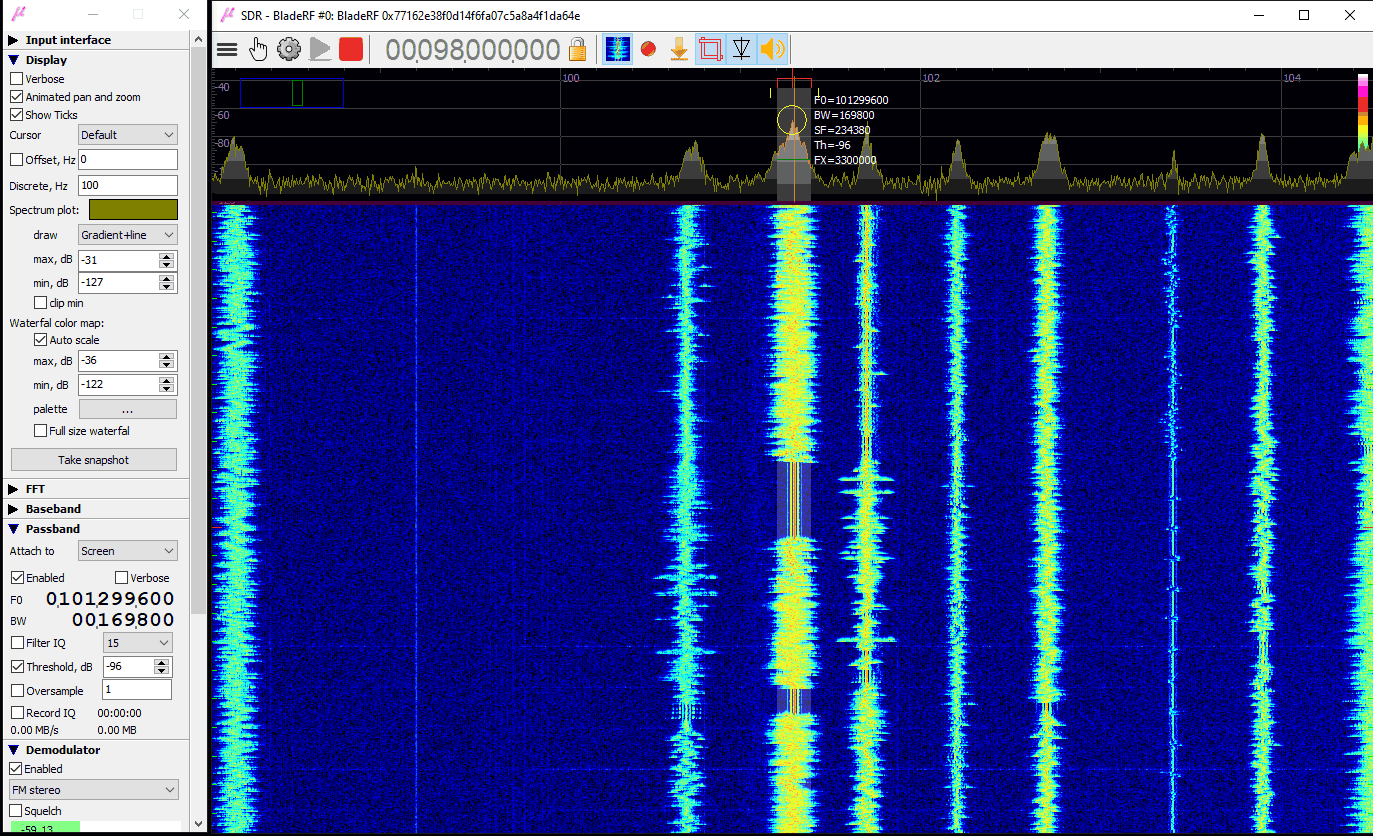
Back in July we posted about the release of Viol Tailor's "uSDR" software, which is a lightweight general purpose multimode program for Windows which supports the RTL-SDR, Airspy, BladeRF, HackRF and LimeSDR radios. Recently Viol has updated the software to V1.4.0. The new release brings SDRplay support, and various performance and GUI improvements listed below.
This week on the SignalsEverywhere YouTube channel Sarah shows how to install the "Retrogram" software. This is a command line 'retro' styled spectrum analyzer designed to be used with the PlutoSDR. The software makes use of ASCII art to display the spectrum, meaning that a spectrum can be viewed directly in an SSH terminal, without any GUI.
In the video Sarah goes through the steps to install the software before demonstrating it in action.
Retrogram - A Command Line Spectrum Analyzer For The PlutoSDR
This week on the Tech Minds YouTube channel Matthew introduces the "Cloudmarkers" plugin for SDRuno. SDRuno is the official software for the SDRplay RSP line of software defined radios, but the EXTio version also supports the RTL-SDR.
Cloudmarkers is a plugin that allows users to query the online Cloudmarkers database to determine what an unknown signal at the currently tuned frequency might be. The database is created by other Cloudmarkers users, so if you have your own information to add you can add information about particular frequencies to the database for others to query later.
In the video Matthew shows the Cloudmarkers plugin in operation and notes that the plugin can work with both SDRplay SDRs and the RTL-SDR.
Sarah from the SignalsEverywhere YouTube channel is back this week with a video review and demonstration of our RTL-SDR Blog Active L-Band patch antenna, which is designed for receiving Inmarsat and Iridium satellites between 1525 - 1660 MHz with an RTL-SDR or other bias tee capable SDR.
In the video Sarah demonstrates the patch antenna in action running in SDR++, discusses some of the features and compares it against another patch antenna. She goes on to briefly show JAERO receiving and decoding an 8400bps AERO voice channel.
The patch is currently in stock in our store for $49.95 shipped worldwide, or on Amazon USA for US customers. We note that previous problems (as explained in our earlier post) with cracks in the plastic in the latest batch with grey enclosures have been resolved now, and units shipping now are without defect.
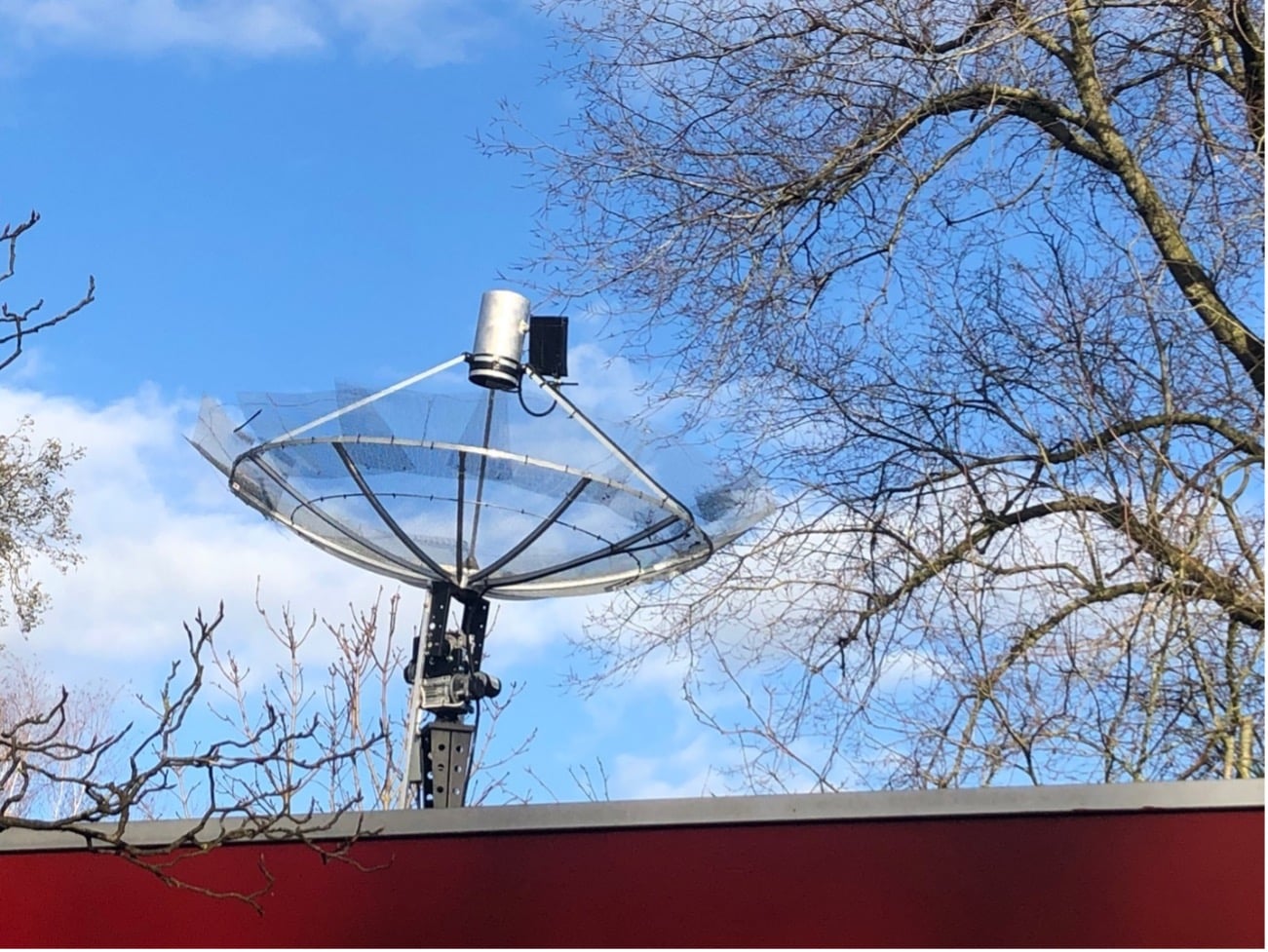
Just a few days ago we posted about Job Geheniau's success at radio imaging the Cygnus-X star forming region at 1424 MHz with a 1.9m radio telescope, an RTL-SDR and some additional filtering and LNAs.
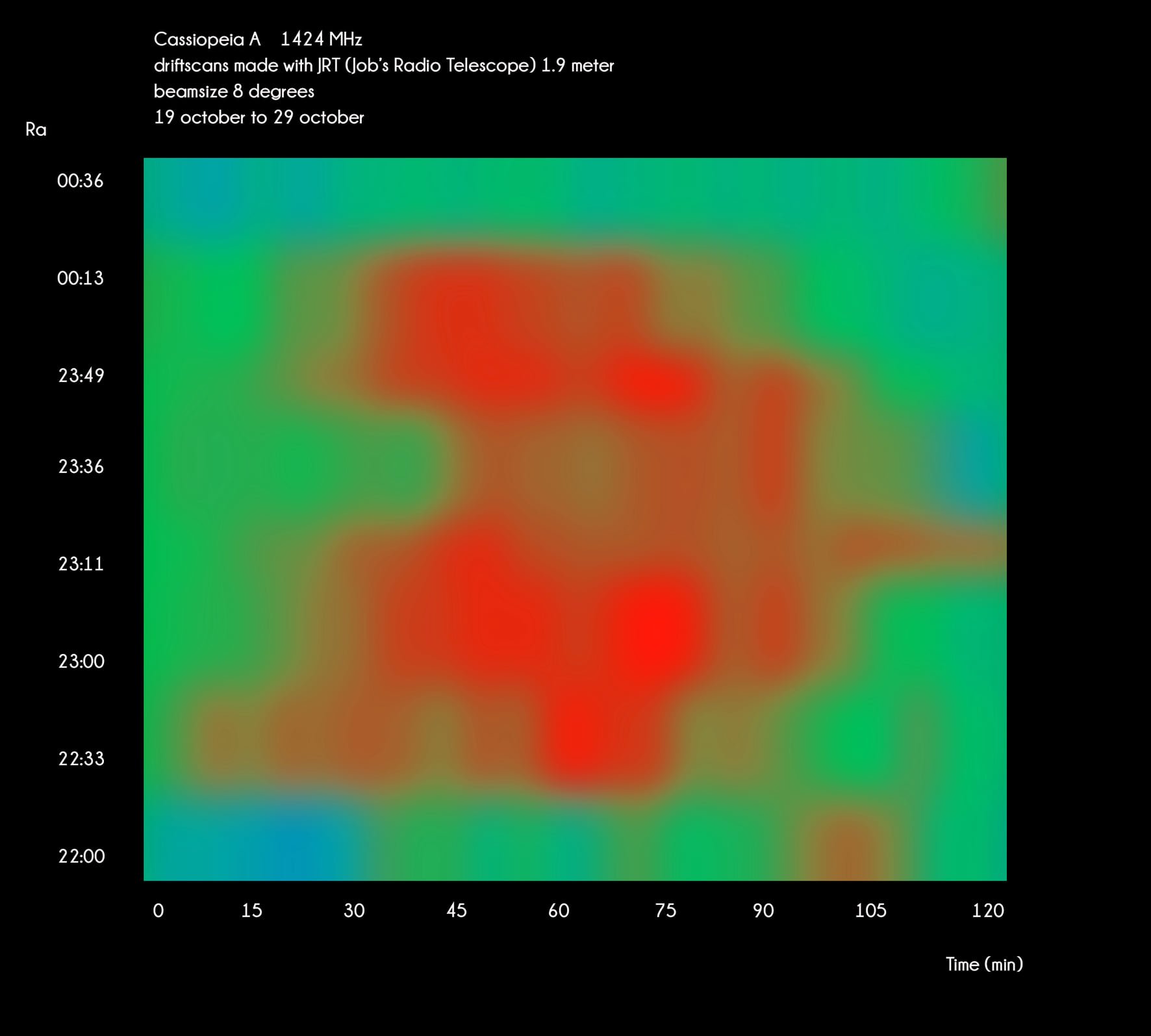
Now in his latest post on Facebook Geneniau has also shown that he has successfully imaged Cassiopeia A with the same equipment. Cassiopeia A is a supernova remnant known for being the "brightest extrasolar radio source in the sky at frequencies above 1 GHz" [Wikipedia]. Geheniau writes:
A new observation from JRT. These are driftscans of Cassiopeia A to make a radio plot. Several driftscans are made last week and combined. Always nice to see whats possible with a 1.5-1.9 meter dish. 2 LNA's and a bandpass filter, connected to a RTL-SDR at 1424 MHz. Happy that I got Cygnus complex and now Cassiopeia A which is the second radio source which is possible to receive with this dish.
The dish is fully remote controlled 50 km away.
Job Geheniau - The Netherlands
Cassiopeia A Radio Imaged with an RTL-SDR and 1.9m dishJob's Radio Telescope
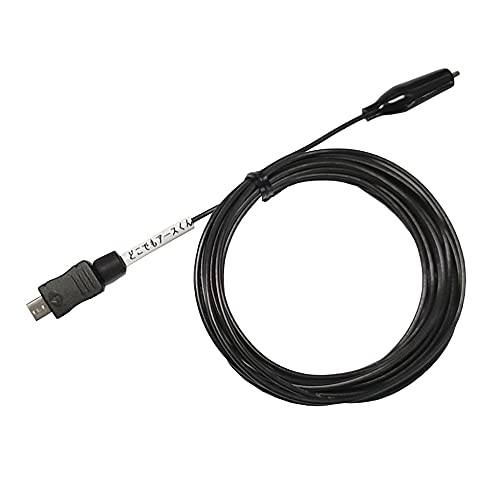
Thank you to Mitsonobu Saitou for writing in and sharing with us a product that he has created which improves reception on of the Malachite DSP software defined radio and other shortwave radios by up to 20dB by improving the grounding. It appears to work by using the negative USB line as a ground via a modified USB cable with grounding clip on the other end. The product is available via Amazon Japan with international shipping.
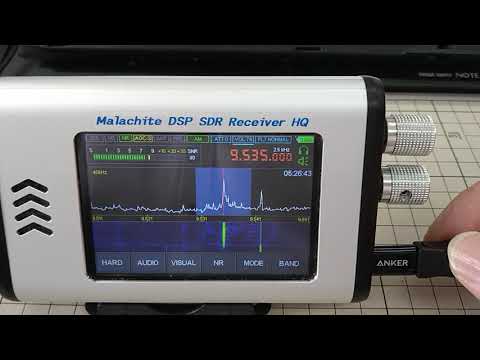
The Malachite DSP is a portable battery powered software defined radio with built in screen. It is popular amongst shortwave listeners.
Saitou writes the following summary, and full details about the product are available on his blog (link uses Google Translate to translate from Japanese to English):
Today's item is "Dokodemo Earth KUN". This is an item to pull the ground wire from the charging connector of DCL radios and Mlachite DSPs.
The sensitivity of the receiver will be improved by strengthening the grounding. This is how I applied it.
It is easy to connect by pulling out the ground wire from the charging connector instead of the antenna jack.
It can also be used as a loop antenna by connecting the ground to the antenna.
We have confirmed the effectiveness of this product outdoors. Users who have used this item have experienced a significant increase in sensitivity.
Malachite DSP and SWL Radio USB Grounding Enhancement Cable