Tagged: sdrplay

Testing out the SDRplay with SDRuno and Characterizing RF HF Filters

Over on YouTube user Mile Kokotov has uploaded a video showing him using the SDRplay on the recently released official software SDRuno. In the video he first shows reception of some HF signals, then goes on to show how he can characterize some HF filters using a noise source.

Mile also wrote in to use to expand on his video. We quote:

“SDRuno” is new specialized software for SDRplay – RSP1 receiver. Besides many others excellent features, the new one is 10 MHz spectrum span on the window screen. The 10 MHz frequency span you can use it for characterize the HF Band-pass, Low-pass, High-pass or Notch filters. All you need is one noise source (noise generator) which you can find on eBay for about 20 USD.

With addition of directional coupler (for another 20$ USD), you can using SDRplay and SDRuno for HF antenna analyzer, measuring SWR like poore-man`s HF Vector Network Analyzer!

An RF filter is an electrical circuit designed to have specific characteristics with respect to the transmission or attenuation of various frequencies that may be applied to it.

There are three general types of RF filters:

1. A high-pass filter (HPF) similarly has a cut-off frequency, above which there is little or no loss in transmission, but below which there is considerable attenuation. Its behavior is the opposite of that of the low-pass filter.

2. A low-pass filter (LPF) is one that will permit all frequencies below a specified one called the cut-off frequency to be transmitted with little or no loss, but that will attenuate all frequencies above the cut-off frequency.

3. A band-pass filter (BPF) is one that will transmit a selected band of frequencies with substantially no loss, but that will attenuate all frequencies either higher or lower than the desired band.

The Filter connected in the front end of the receiver can be very much useful and it can improve the reception of the weak signals rejecting all others unwanted signals that can produces interference, intermodulation and as a results, the weak signals can not be copied !

With bandpass filter for particular frequency band, Receiving weak signals on that band is much easier, without problems from out of band strong sugnals.

73,
Mile Kokotov
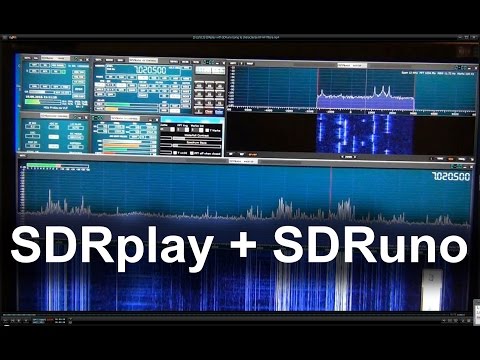
SDRplay with SDRuno Using to characterize RF HF filters

SDRplay Releases SDRuno: Free SDR Software for the RSP

The SDRplay is a $149 USD RX only software defined radio with a 12-bit ADC and up to 8 MHz of bandwidth that can tune from 10 kHz – 2 GHz. We consider it and it’s competitors the Airspy R2/Mini to be the best next step up from an RTL-SDR. See our previous post for a review comparing the Airspy and RSP.

One of the main drawbacks of the RSP has been that it does not have any official software associated with it. The closest competitor, the Airspy has the free official SDR# software, but the RSP relied only on third party programs like HDSDR and SDR-Console.

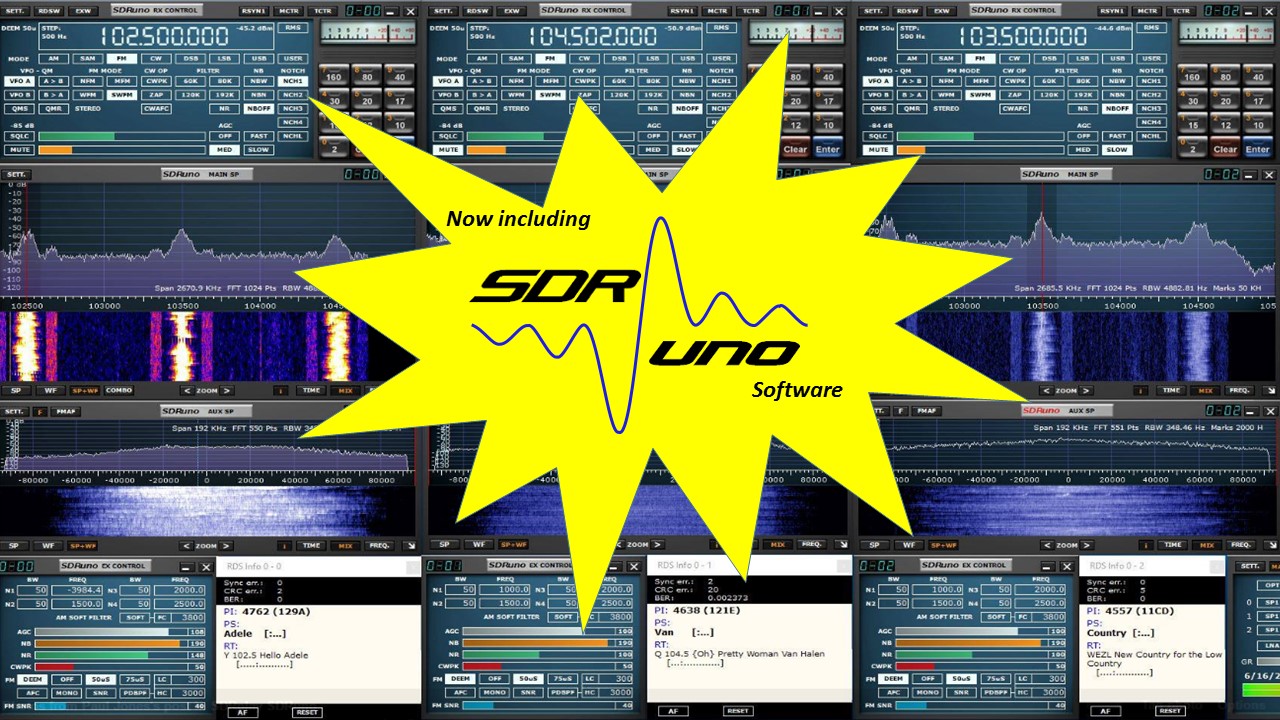
That is set to change today as SDRplay have announced the release of their SDRuno software, a free general purpose software defined radio program for the RSP. SDRuno is a customized version of the Studio1 software which SDRplay acquired the rights to last April. The full press release is quoted below:

SDRplay is pleased to announce the official release of SDRuno for the RSP. SDRuno is the new name for the RSP compatible version of Studio1, the rights to which we obtained and announced on 28th April. SDRuno contains native support for the SDRplay RSP and no extra plugins are required. Third party hardware can also be supported via the ExtIO interface, but with reduced functionality.

SDRuno provides a rugged and flexible, high performance SDR receiver capability and boasts some excellent features:

  • Multiple ‘Virtual Receivers’ which allow for simultaneous reception and demodulation of different types of signals within the same receiver bandwidth.
  • A selectivity filter with an ultimate rejection greater than 140 dB.
  • A unique distortion-free double stage AGC with fully adjustable parameters.
  • Multiple notch filters with BW adjustable down to 1 Hz, Notch Lock feature.
  • A unique synchronous AM mode with selectable/adjustable sidebands, dedicated PLL input filter, and selectable PLL time constants.
  • SNR (stereo noise reduction), featuring a proprietary noise reduction algorithm for stereo broadcast.
  • AFC for FM signals.
  • Calibration for receiver frequency errors.

Over time, we plan to add many more features to SDRuno to enhance the user’s experience of this very powerful piece of software. This software runs on Windows and we don’t yet know how easy it will be to migrate it to other platforms but this is something we will be investigating.

SDRuno will be made freely available to all current and future users of the RSP – to download a copy – simply go to http://www.sdrplay.com/windows.html

Our support for SDRuno in no way lessens our commitment to support HDSDR, SDR Console, Cubic SDR or ANY other software solution where the authors are willing to work with us. We fully recognise that many people have strong preferences for particular pieces of software and we do not want to do anything to undermine the options that people have to use their favoured software packages. Indeed, our view is quite the opposite. Our objective remains aim to have our hardware platforms support any and every SDR package out there. This of course may not be possible, but it is our philosophy and part of the ethos of our company.

About Studio 1:

Studio1 was developed in Italy by SDR Applications S.a.s. and has hundreds of happy customers around the world.

Studio 1 is known for its user friendly stylish GUI, CPU efficiency and advanced DSP capabilities, including features not available on other SDR software packages.

www.sdrapplications.it

About SDRplay:

SDRplay limited is a UK company and consists of a small group of engineers with strong connections to the UK Wireless semiconductor industry. SDRplay announced its first product, the RSP1 in August 2014

www.sdrplay.com

Email: [email protected]

The software can be downloaded at http://www.sdrplay.com/windows.html. SDRuno comes with a full manual (pdf) and SDRplay fans and beta testers of SDRuno have also released a free SDRuno cookbook guide (pdf). From the cookbook it appears that SDRuno is also compatible with any SDR that supports ExtIO modules, like the RTL-SDR, although as noted in the press release functionality for other radios may be reduced. We look forward to being able to test the software out, and post a review within the next few days.

sdruno_announcement

Using the SDRplay and SDRTouch on an Android Mobile Phone

A few months ago the popular SDRTouch software for Android added support for the SDRplay RSP. The RSP is a $149 USD software defined radio with a tuning range of 100 kHz to 2 GHz and a 12 bit ADC.

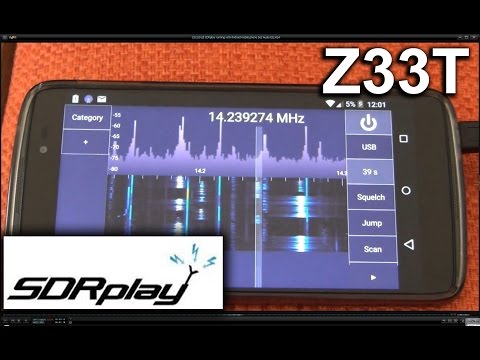
Over on YouTube user Mile Kokotov has uploaded a video showing the SDRplay RSP running in SDRTouch. He uses it to listen to the 14 MHz ham band in SSB mode and finds that reception is clear and that it is fairly easy to tune around.

In order to use the RSP with an Android device you will need a fairly modern phone and a USB OTG cable. Ideally try to get a USB OTG cable with an external power port as the battery can drain quite fast when using the SDR. SDRTouch also supports the RTL-SDR.

SDRplay running with Android mobile phone

SDRplay receiving a WPX CW CQ Contest

Over on YouTube user Mile Kokotov has uploaded a video showing him receiving a WPX CQ CW (morse code) contest on his SDRplay RSP. The SDRplay RSP is a $149 USD software defined radio with a tuning range of 0.1 – 2000 MHz, 8 MHz maximum bandwidth and 12-bit ADC.

In the video Mile shows that the SDRplay is capable of receiving many strong closely spaced CW signals at the same time as weaker ones without overloading. He uses the HDSDR software and a large 43.1m long delta loop antenna strung up in his backyard.

SDRplay receiving WPX CW Contest 2016

RTLSDR4Everyone Review: SDRplay RSP vs RTL-SDR

Akos of the rtlsdr4everyone blog has recently written up a comparison of the RTL-SDR and SDRplay. The SDRplay is a $149 USD software defined radio with a 100 kHz to 2 GHz frequency range, a 12-bit ADC, and up to 8 MHz of bandwidth. It now competes heavily with the $99 Airspy Mini which is a similarly specced SDR.

Akos compares the two units and comes to the conclusion that the RTL-SDR is still the best choice for beginners, but that the SDRplay is definitely a good choice if you have good antennas in place and if the receiver is the major bottleneck in your setup.

In his review he goes over several points covering the costs involved, aesthetics, customer support, PC hardware requirements, setup, operation and finally reviews the performance of the SDRplay. His results show that the SDRplay generally receives much better than the RTL-SDR, but has some problems with broadcast FM imaging.

Also check out our own previous review which compared the SDRplay, Airspy and HackRF here.

Akos' test shows that the RSP has some problems with FM broadcast imaging.
Akos’ test shows that the RSP has very good reception, but has some big problems with strong signal imaging.

SDRplay Updates: Android Support, ADS-B Decoder Upgrades and Acquisition of Studio1 Software

The SDRplay team have been hard at work during the last few weeks. First they announced beta support for Android via SDRtouch, then they announced an improved ADS-B decoder, and finally they have just announced their acquisition of Studio1. 

The SDRplay is a 12-bit software defined radio with tuning range between 100kHz – 2 GHz. Many consider it along with the Airspy to be the next stage up from an RTL-SDR dongle. 

Android Support

The author of SDRTouch on Android recently announced support for the SDRplay. SDRTouch is a Android program similar in operation to PC based software like SDR#. To access the beta you can sign up at this link. Currently there is support for up to 2 MHz of bandwidth.

SDR Touch demo on Android device using SDRplay RSP

Improved ADS-B Decoder

Back in March the SDRplay team released ADS-B decoder software for their SDR with the promise of improving its performance in the near future. 

Recently the SDRplay team released an updated version of their ADS-B decoder for the Raspberry Pi which now fully utilizes the full 12-bits of the ADC and takes advantage of the full 8 MHz bandwidth. Jon, the head of marketing at SDRplay writes the following:

We now have an updated beta version of ADS-B for both the Raspberry Pi 2 and 3. This is based upon the 16bit Mutability version of dump1090 developed by Oliver Jowett and unlocks the full 12 bit performance of the RSP1. People should see a significant performance improvement over the dump1090_sdrplus version, which was based upon 8 bit code. The latest beta version can be downloaded in binary form from http://www.sdrplay.com/rpi_adsb.html . Should anyone have questions or feedback, please contact [email protected]

We plan to eventually compare the SDRplay with the Airspy and RTL-SDR on ADS-B performance. If you are interested we previously did a review of the SDRplay, Airspy and HackRF here, but as the SDRplay did not have ADS-B back then, that particular test was not done.

Acquisition of Studio1 SDR Software

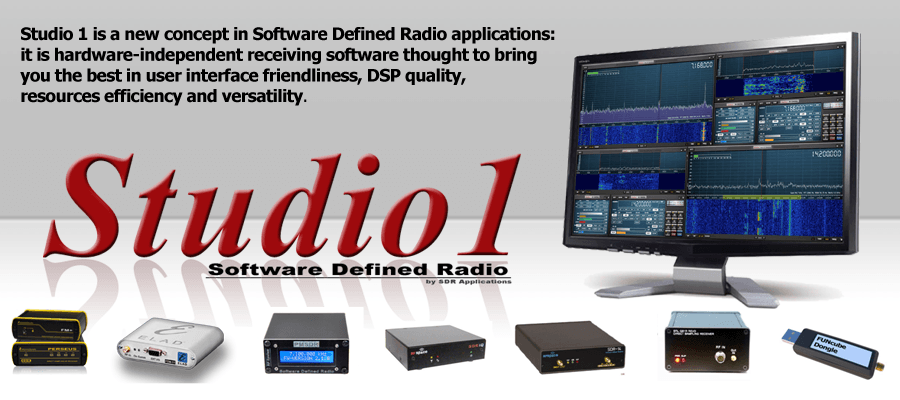
The last major piece of news is that SDRplay have now acquired the Studio1 SDR software. Studio1 is a paid SDR program, similar in nature to SDR#/HDSDR/SDR-Console. Like HDSDR, Studio1 is a spinoff from the old WinRad software. Their press release reads:

SDRplay Limited has today announced that it has reached an agreement with Sandro Sfregola, (formerly CEO of SDR Applications S.a.s.) to acquire all Rights, Title and Interest in Studio 1 a leading software package for Software Defined Radio applications.

Jon Hudson, SDRplay Marketing Director said: “We are delighted to have reached this agreement with Sandro to acquire Studio 1. Studio 1 is the perfect complement to our SDR hardware products and gives us the ideal platform to deliver a complete class leading SDR solution for our customers. We look forward to working with Sandro and further developing Studio 1 to unlock the full capability of our current and future products”.

Hudson added: “Studio1 has established a strong customer base with users of many other SDR hardware products. Studio 1 will continue to be available as a stand-alone product from WoodBoxRadio http://www.woodboxradio.com/studio1.html for the foreseeable future , but we also look forward to further developing Studio 1 to specifically benefit present and future owners of our products”

Sandro Sfregola added: “I am very pleased to have reached this agreement with SDRplay. The long term future for SDR lies in complete end to end solutions and I feel the SDRplay RSP combined with Studio 1 software gives users an outstanding combination of performance and affordability”.

About Studio 1:

Studio1 was developed in Italy by SDR Applications S.a.s. and has hundreds of happy customers around the world.Studio 1 is known for its user friendly stylish GUI, CPU efficiency and advanced DSP capabilities, including features notavailable on other SDR software packages.

www.sdrapplications.it

About SDRplay:

SDRplay limited is a UK company and consists of a small group of engineers with strong connections to the UK Wireless semiconductor industry. SDRplay announced its first product, the RSP1 in August 2014

www.sdrplay.com

We believe that this is a good move for SDRplay, as one of the major issues with the RSP SDR was the lack of decently supported software.

Studio1_banner2


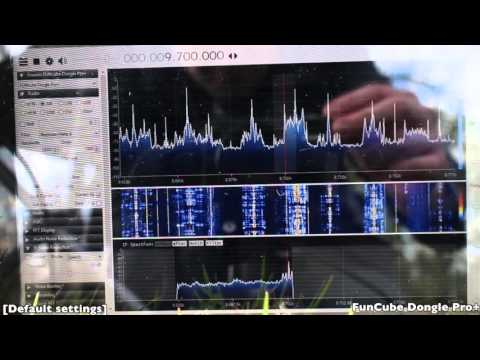
Comparing the FunCube Dongle Pro+, Airspy/SpyVerter and SDRplay on Shortwave

Over on YouTube user London Shortwave has uploaded a video showing a comparison of the FunCube Dongle Pro+, Airspy with SpyVerter upconverter and SDRplay on shortwave reception. The Funcube, Airspy and SDRplay are all $150 – $250 USD software defined radios that have much higher performance compared to the RTL-SDR.

In the video he tests the reception of Radio New Zealand International (RNZI) at 9400 kHz using a 6m copper wire dipole and 9:1 matching balun raised 2m off the ground. He did not use any external antenna preselectors. The RNZI station is weak and appears to be almost blocked by a stronger station so reception of the station is difficult.

In his results it appears that the FunCube and Airspy/SpyVerter are able to clearly receive the RNZI station, but the SDRplay has trouble with images of other stations mixing into the signal.

If you are interested in a comparison of the Airspy, SDRplay and HackRF we previously did our own review here.

Portable SDR Shootout Part 1

ADS-B Decoder for the SDRplay RSP Now Available

A new ADS-B decoder for the SDRplay RSP has recently been released by the SDRplay programmers. The SDRplay is a $149 USD software defined radio with a 0.1 – 2000 MHz range, 12-bit ADC and up to 8 MHz of bandwidth. In a previous review we compared it against the Airspy and HackRF.

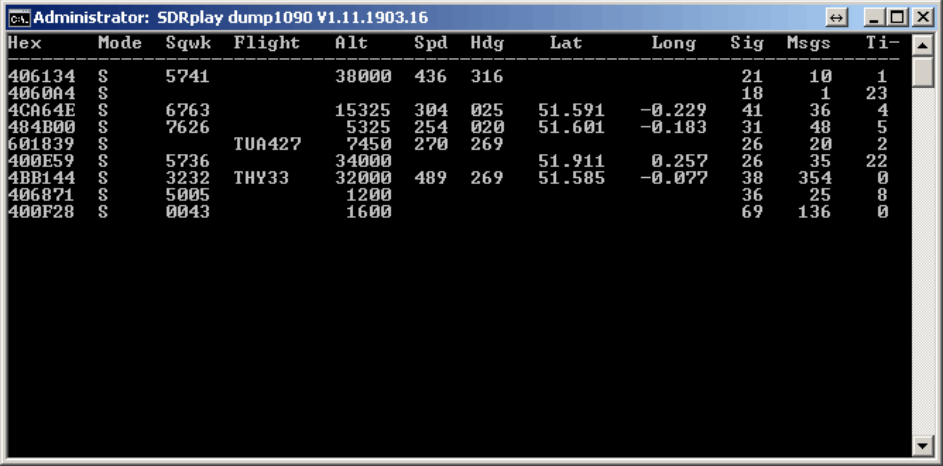
The SDRplay team have based their new decoder on the multi-platform compatible dump1090 code, which is an ADS-B decoder that was originally written for the RTL-SDR. The Windows version can be be downloaded from http://www.sdrplay.com/windows.html, and the code for other platforms can be downloaded from https://github.com/SDRplay.

To help with the installation procedure the SDRplay has also provided a manual (pdf) which shows exactly how to download and set up the required ADS-B software on a Windows system. They also write that the software is fairly new and is still being optimized for best performance.

In the future after the software is further optimized we hope to compare the RSP against the RTL-SDR and Airspy on ADS-B reception.

The SDRplay compatible version of dump1090 deceiving ADS-B data.