Over on his YouTube channel Crazy Danish Hacker has posted a new video that shows how to pick up amateur radio voice signals from the International Space Station (ISS).
Often astronauts on the ISS will schedule times to chat with schools via amateur radio frequencies. This provides an opportunity to learn about radio whilst at the same time allowing kids to talk directly to an astronaut.
If you live in an area that can 'see' the ISS at the same time as the school then you can easily pick up the downlink (astronaut to ground) portion of the conversation while the ISS passes over. The downlink signal is fairly strong, so only a simple antenna is required. In his video Crazy Danish Hacker uses a telescopic whip attached directly to his RTL-SDR which is placed outside with a view of the sky.
International Space Station - Software Defined Radio Series #29
Most police departments is the USA have now upgraded or are in the process of upgrading their radio systems to P25 Phase 2 digital radio. The frequencies can easily be received with an RTL-SDR, but a decoder is required to be able to actually listen to the voice. Software like SDRTrunk and DSDPlus can decode P25 Phase 1, but at the moment the only software that is capable of decoding P25 Phase 1 AND 2 is a program called OP25. However, OP25 has a reputation of being fairly difficult to set up as it does not have a simple to use GUI, and requires Linux.
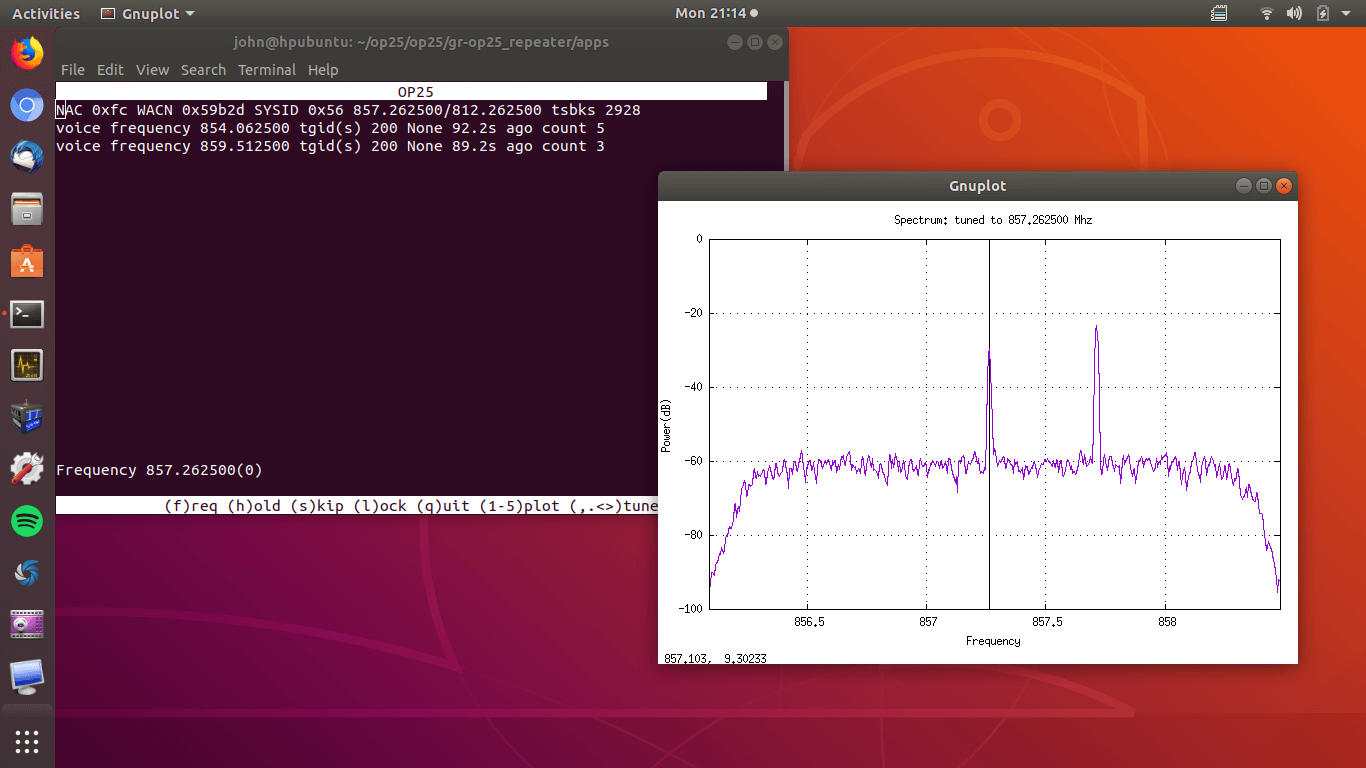
Over on John's Tech Blog, John has uploaded a very helpful step by step tutorial that should help with those trying to get OP25 to work. The tutorial assumes that you have Ubuntu 18.04 already installed, and then starts from downloading and installing OP25. The next steps involve setting up OP25 for the particular system in your area, which mostly involves just editing a spreadsheet to input frequency data from radioreference.com. John also mentions that he's been able to get OP25 running perfectly on a Raspberry Pi 3 B+ as well, with less than 40% CPU usage.
OP25 Running
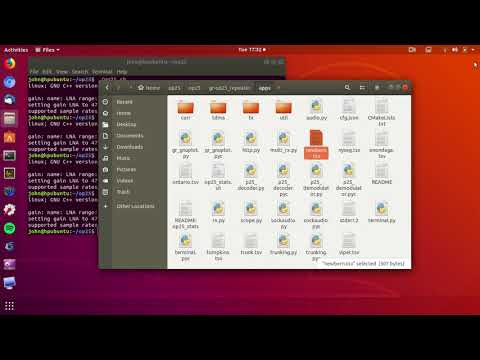
In the video below John reviews some of the steps, and shows OP25 running and decoding voice.
Over on our forums one user luc4sss has been discussing a method for using RTL-SDR's and perhaps other SDR dongles remotely which does not rely on rtl_tcp, SpyServer or other SDR specific server software. Using an SDR remotely is advantageous because it can allow you to position the SDR closer to the antenna, which results in less signal loss from long runs of lossy coax cable.
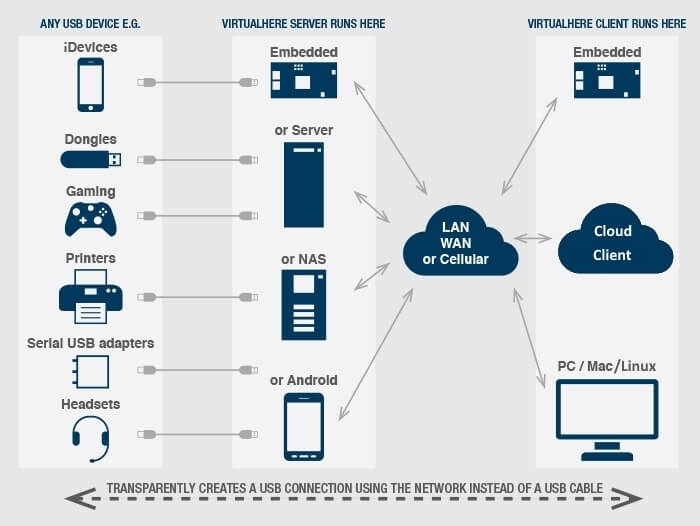
Instead of rtl_tcp, luc4sss uses a program called VirtualHere, which is a server that can work with any USB device. It essentially allows you to use USB devices over a network with the remote device acting as if it was plugged directly into your remotely operated PC. The server can run on single board Linux computers like the Raspberry Pi and luc4sss has been using an $8 Orange Pi Zero 256 MB as his server.
With the VirtualHere software and RTL-SDR running on his Orange Pi Zero, he's able to connect to a remote RTL-SDR over his network. He writes that data usage is about 5 - 6 MB/s so a wired Ethernet connection or high quality WiFi connection would be required. In comparison rtl_tcp should use about the same amount of data, but server software with some compression and data saving techniques implemented like SpyServer use much less data and is efficient enough to be used over the internet.
We can see the VirtualHere software being very useful for use with RTL-SDR compatible programs that don't have rtl_tcp support, which is most of them. It should also be useful for other SDRs that don't have streaming server software available.
VirtalHere is not free as a license costs $49. But it does have a 10-day trial period which supports 1 device being shared at a time.
VirtualHere USB Network Server
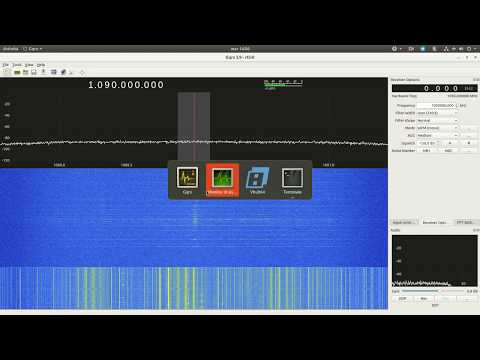
Luc4sss has also uploaded a video on YouTube that shows him running the VirtualHere server and client, and connecting to the remote RTL-SDR with GQRX and dump1090. He also shows the data usage which is about 6 MB/s when running the RTL-SDR at 2.8 MSPS. Operation appears to be problem free and with almost entirely no latency as well.
RTL-SDR over Ethernet with VirtualHere Client/Server
Over on YouTube user Jan de Jong has uploaded a few screenshots and sounds on a video which shows that he was able to receive the ultrasonic sound of bats by connecting a small piezo speaker to an SDRplay RSP1A.
The piezo speaker used in reverse as a microphone appears to pickup bat echolocation sound waves which are typically between 20 to 200 kHz. The piezo is resonant in the 40 - 55 kHz range and converts sounds from that range into electric pulses that can be received directly by the RSP1A.
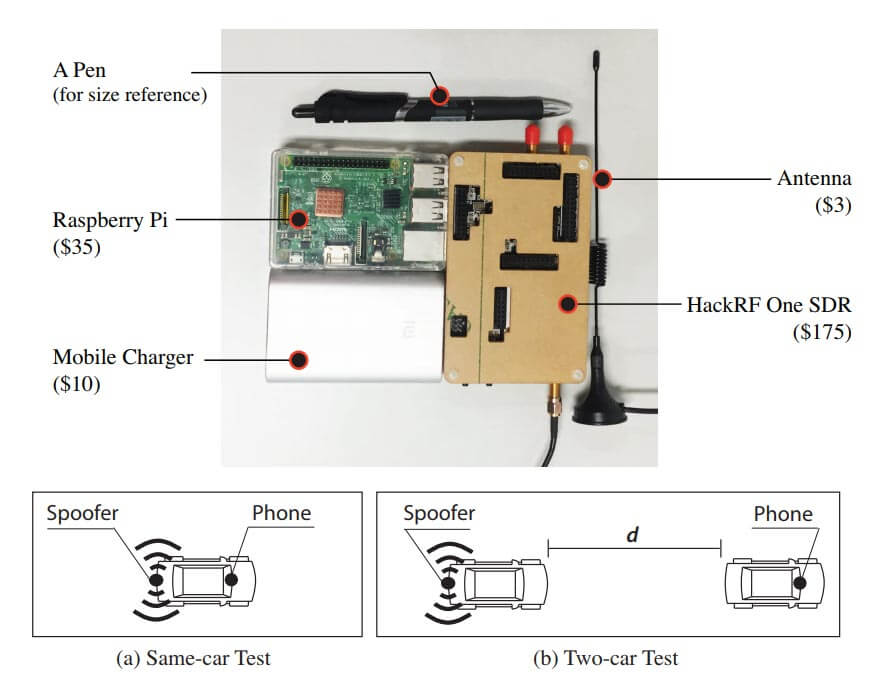
Researchers at Virginia Tech, the University of Electronic Science and Technology of China and Microsoft recently released a paper discussing how they were able to perform a GPS spoofing attack that was able to divert drivers to a wrong destination (pdf) without being noticed. The hardware they used to perform the attack was low cost and made from off the shelf hardware. It consisted of a Raspberry Pi 3, HackRF SDR, small whip antenna and a mobile battery pack, together forming a total cost of only $225. The HackRF is a transmit capable SDR.
The idea is to use the HackRF to create a fake GPS signal that causes Google Maps running on an Android phone to believe that it's current location is different. They use a clever algorithm that ensures that the spoofed GPS location remains consistent with the actual physical road networks, to avoid the driver noticing that anything is wrong.
The attack is limited in that it relies on the driver paying attention only to the turn by turn directions, and not looking closely at the map, or having knowledge of the roads already. For example, spoofing to a nearby location on another road can make the GPS give the wrong 'left/right' audio direction. However, in their real world tests they were able to show that 95% of test subjects followed the spoofed navigation to an incorrect destination.
In past posts we've seen the HackRF and other transmit capable SDRs used to spoof GPS in other situations too. For example some players of the once popular Pokemon Go augmented reality game were cheating by using a HackRF to spoof GPS. Others have used GPS spoofing to bypass drone no-fly restrictions, and divert a superyacht. It is also believed that the Iranian government used GPS spoofing to safely divert and capture an American stealth drone back in 2011.
Over on his YouTube channel Tech Minds has recently uploaded a video that demonstrates and shows how to use the rtl_433 software with an RTL-SDR to decode 433 MHz ISM band low power devices. Typically these devices include things like home wireless temperature and weather sensors, tire pressure sensors, remote controls, and other various sensors.
In the video he sets up an RTL-SDR and magmount antenna by his window and is able to receive data from several of his neighbors weather stations, and some car key remotes. He shows how to run the software on both Linux and on Windows.
How To Decode 433Mhz Low Power Devices Using RTL433 And A RTL-SDR Receiver
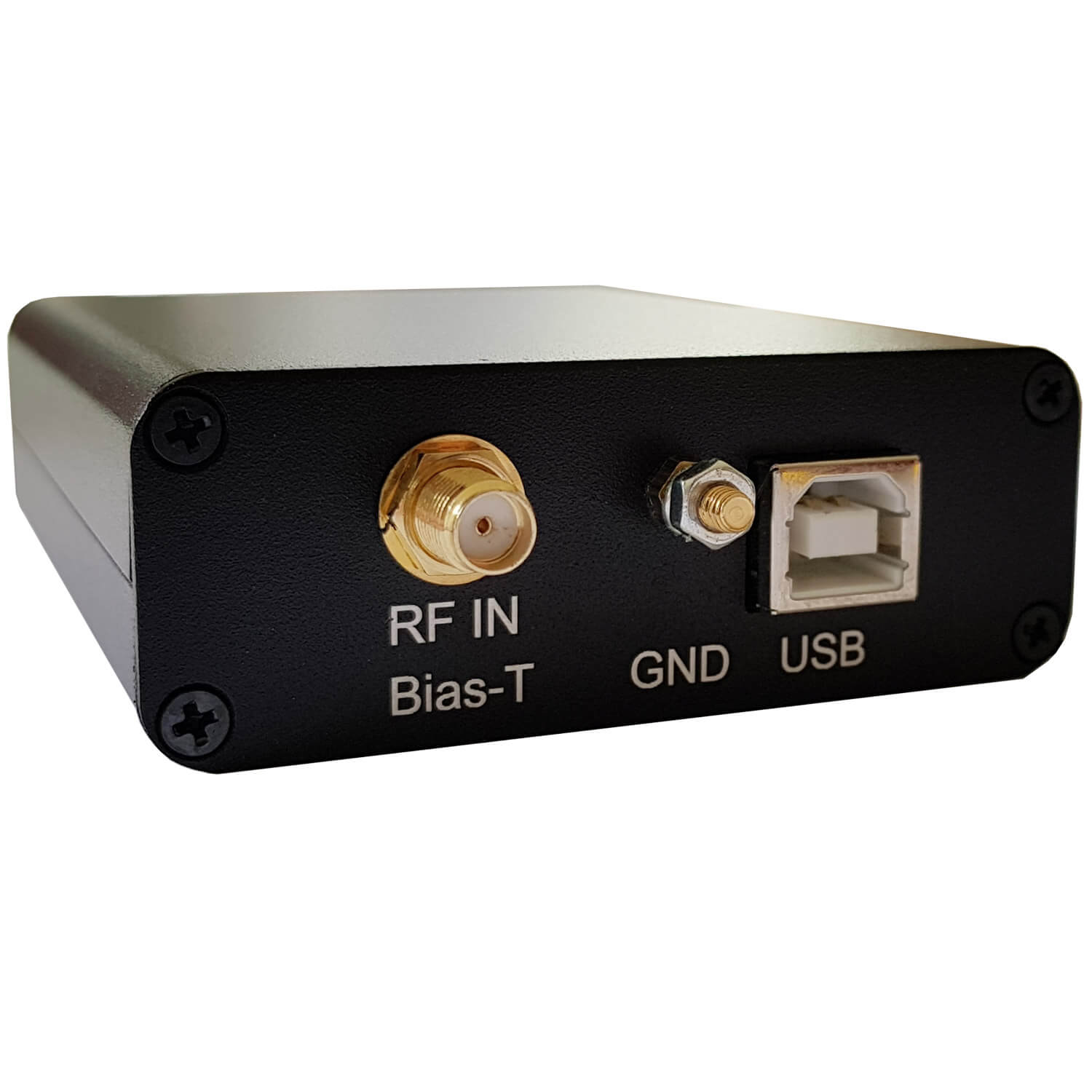
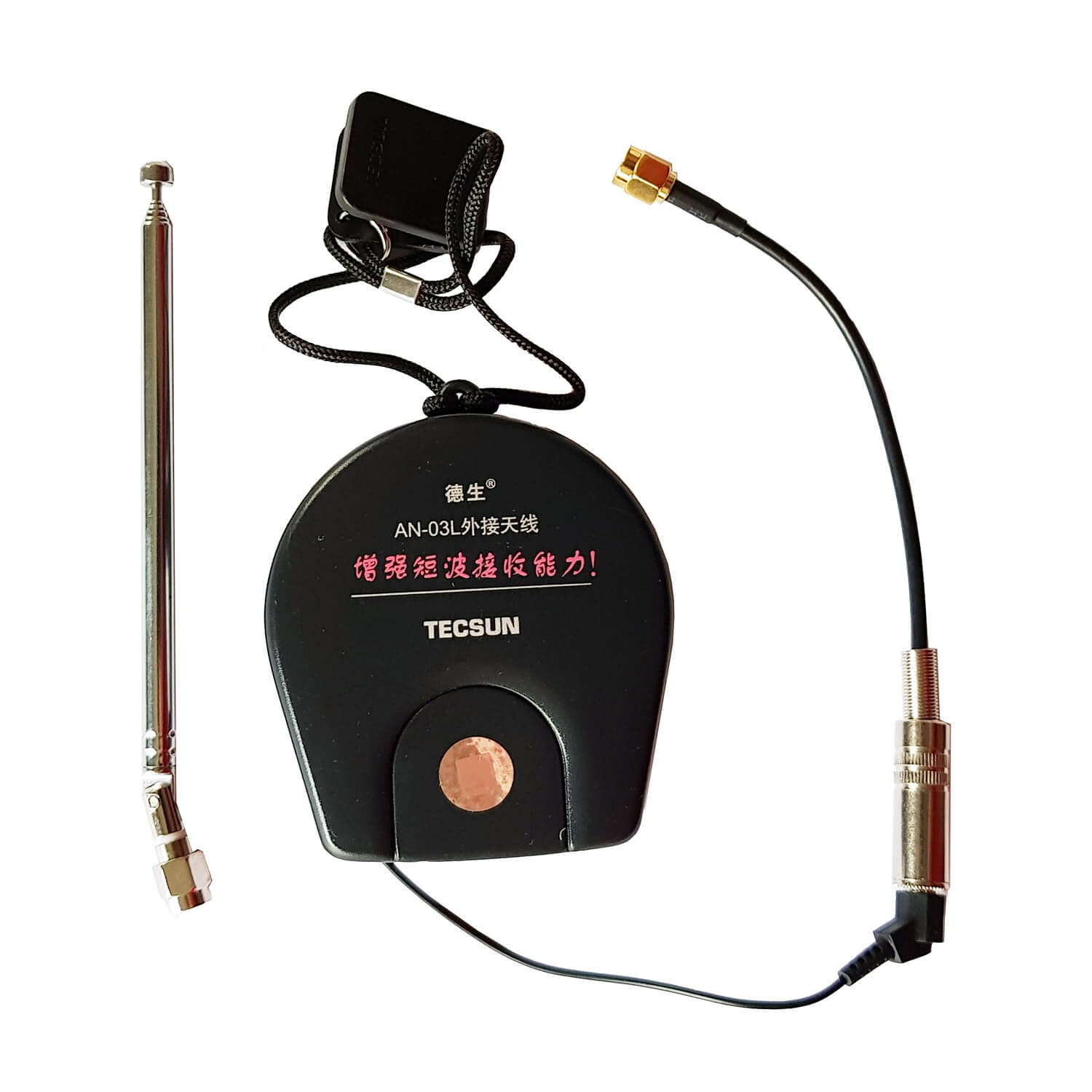
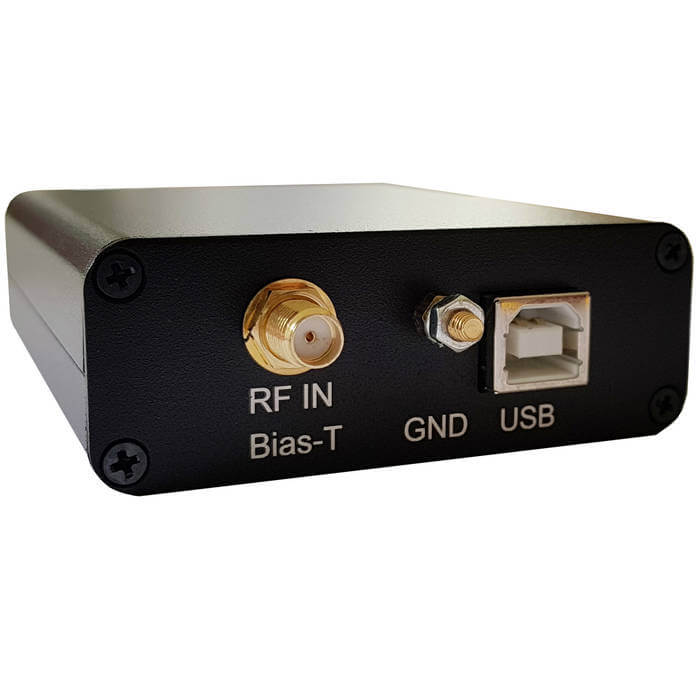
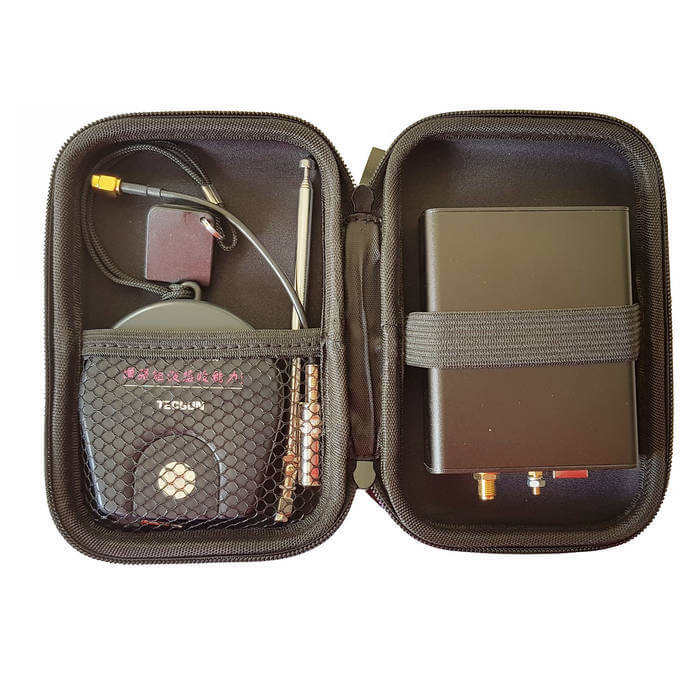
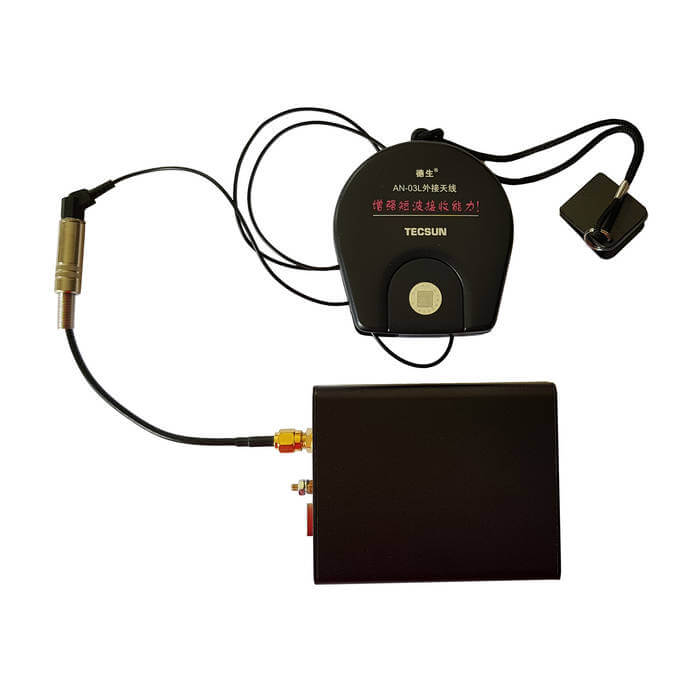
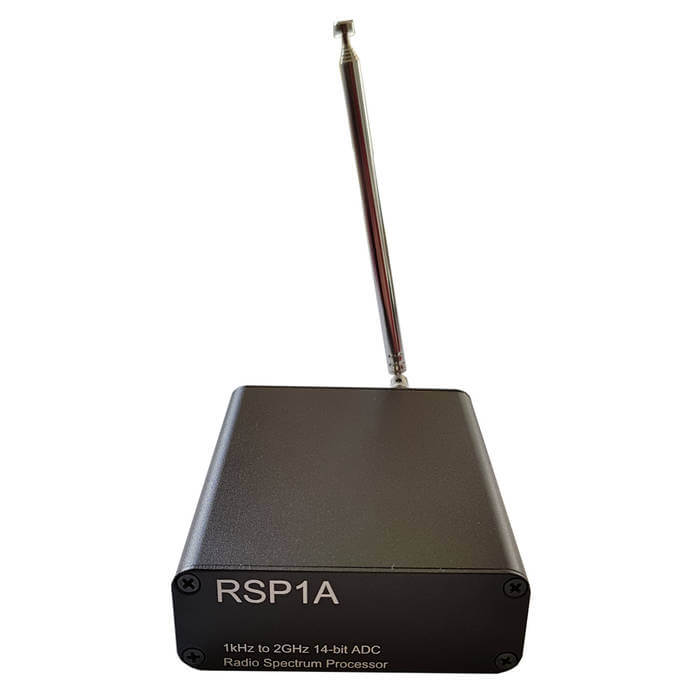
Over on our store we've just released two new products for sale. The first is a metal case upgrade kit for the SDRplay RSP1A. It is similar to the previous enclosure that we sold for the RSP1, but no longer comes with an included BCFM filter since the RSP1A has this filter built in as a software switchable option.
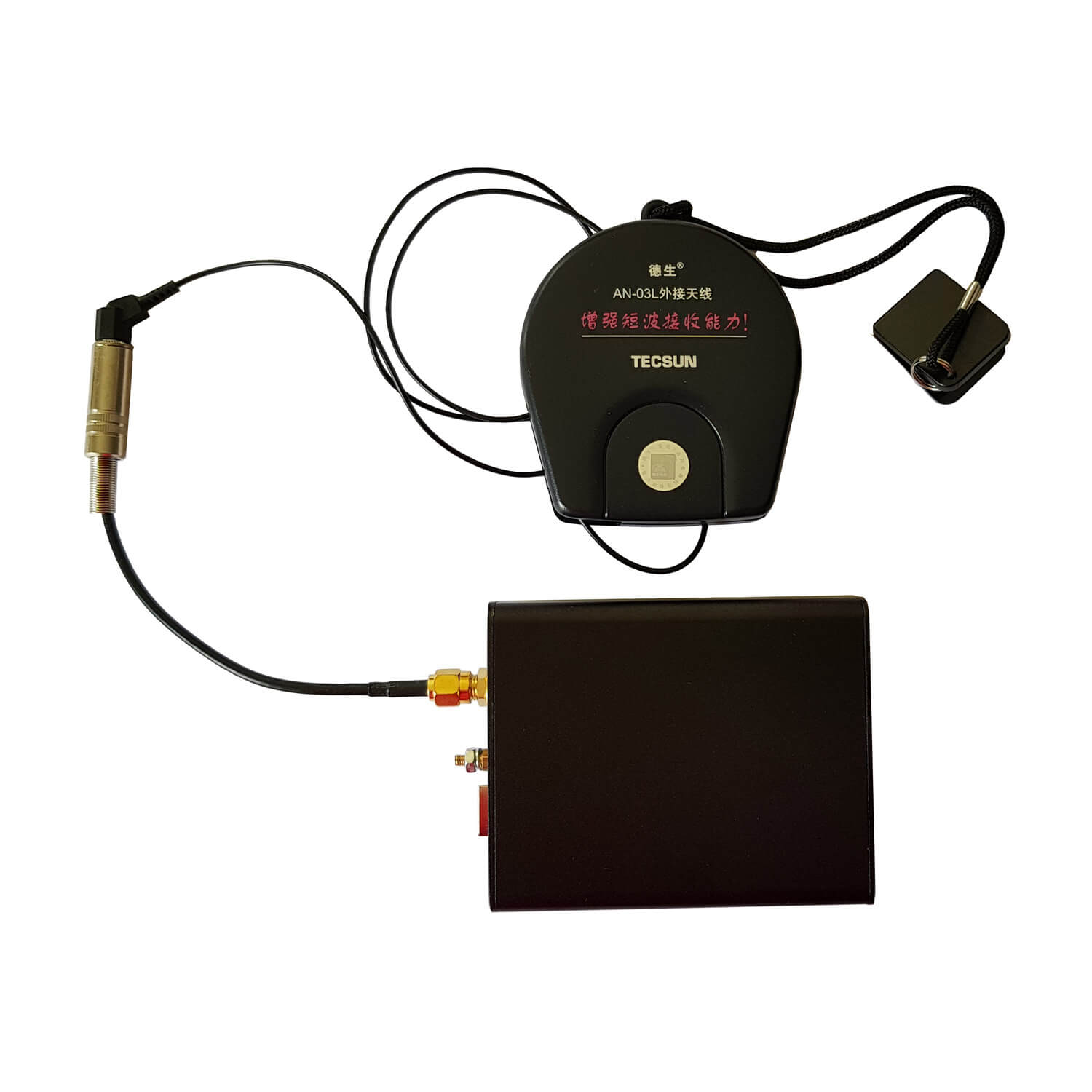
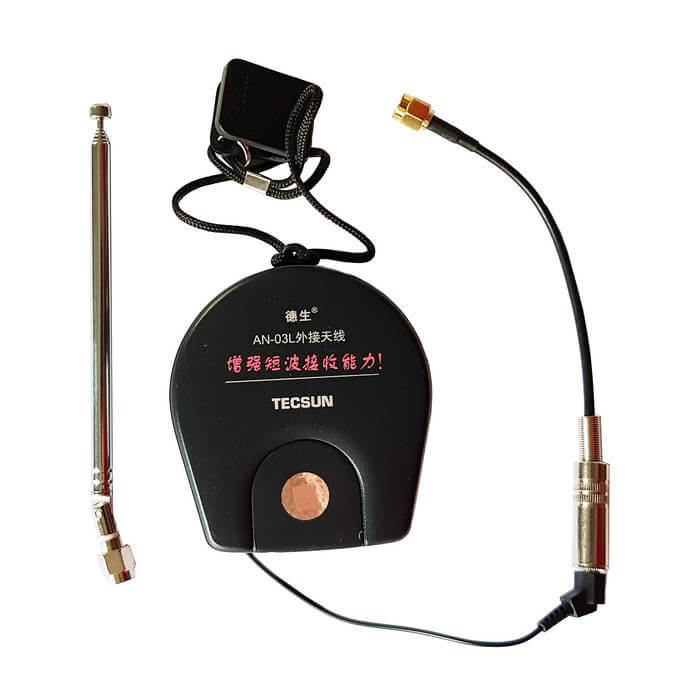
Instead we've included a portable 7 meter (23 feet) long wire antenna spool (Tecsun AN-03L) with SMA adapter, and an 11 cm to 48 cm adjustable SMA telescopic antenna. The 7 meter antenna is great for HF SWLing, and neatly rolls up into the spool for travelling. The telescopic antenna is a portable VHF/UHF antenna that can plug directly into the SMA port of the RSP1A. Both antennas fit neatly into the supplied semi-hardshell carry case. The set costs US$29.95 including shipping and is available on our store, and will be on US Amazon in a couple of weeks.
The second product is the portable antenna set just by itself. The set includes the 7m Tecsun AN-03L antenna spool, the mono plug to SMA adapter and the 11 cm to 48 cm telescopic antenna. It can be used on any SDR with SMA ports. The set costs US$11.95 and is also available on our store. It will also be on Amazon in a couple of weeks.
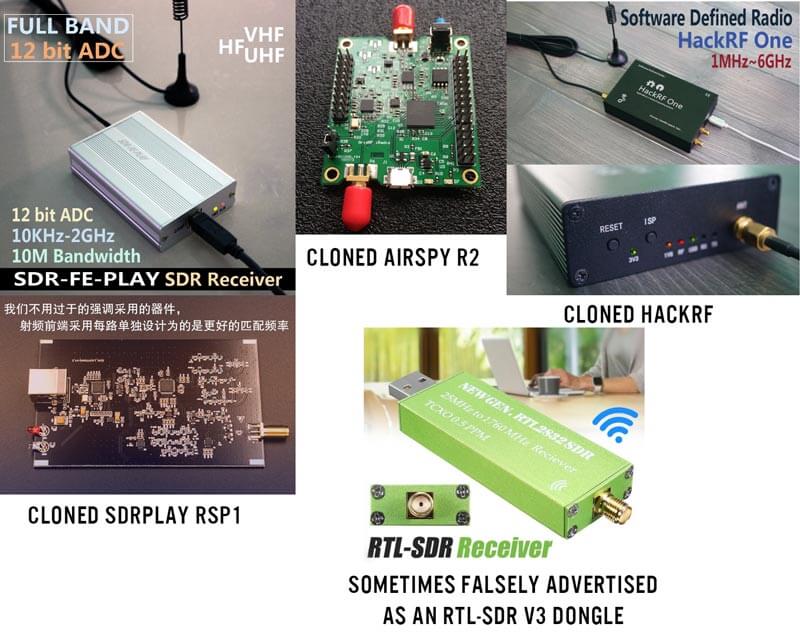
Recently we've found that there are now cloned units of SDRplay RSP1 and Airspy R2 units appearing on Aliexpress and eBay. (We won't link them here to avoid improving the Google ranking of the clone listings). This post is just a warning and reminder that these are not official products of SDRplay or Airspy, and as such you would not receive any support if something went wrong with them. The performance and long term software support of the clones also isn't known. Buying clones also damages the original developers abilities to bring out exciting new products like we've seen so far constantly with Airspy and SDRplay.
SDRplay
We've been in contact with SDRplay for a statement and they believe that the unit is a clone of the older and now discontinued RSP1, and not the RSP1A, despite the listings advertising RSP1A features such as additional filtering. SDRplay note from the pictures of the circuit board that the cloned unit's circuit board looks like an RSP1, and that the listing description is probably just blindly copied directly from the official RSP1A description.
Currently given that the price of the cloned RSP1 is $139, which is higher than the $109 cost of an original and newer model RSP1A, we don't see many taking up the offer.
Airspy
The Airspy R2 has also recently been cloned and now appears on Aliexpress with the lowest price being US$139 without any metal enclosure. Given that the price of an original Airspy R2 with metal enclosure is US$169, we again don't see many taking up the offer of the clone with such a small price difference.
HackRF
The HackRF is a different story in respect to clones. The HackRF design and circuits are open source, so unlike the closed source designs of the SDRplay and Airspy, in a way HackRF clones are actually encouraged and are legal. For some time now it's been possible to find cloned HackRF's on Aliexpress for only US$120 at the lowest, and from $150 - $200 including antennas and TCXO upgrades. This is quite a saving on the $299+ cost of the original HackRF. Reports from buyers indicate that the HackRF clones are actually decent and work well. The advantage of buying the original version is that you support Michael Ossmann, the creator of the HackRF, and may potentially get a better performing unit.
We've also seen clones of the HackRF Portapack on Aliexpress, which is an add-on for the HackRF that allows you to go portable. The clones go for $139 vs $220 for the original. No word yet on the quality.
RTL-SDR V3
We also note that recently there have been several green color RTL-SDRs released on the market with some being advertised as "RTL-SDR Blog V3" units. These are not our units, and are not even actual clones of the V3. These green units appear to just be standard RTL-SDRs without any real improvements apart from a TCXO. Some listings even advertise the V3's bias tee and HF features, but they are not implemented. Real V3 units come in a silver enclosure branded with RTL-SDR.COM.
Final Words
If you know how China works, you'll understand that it's highly unlikely that there is any legal recourse for SDRplay and Airspy to remove these products from sale. Once a product is popular it is almost a given that it will be cloned. It's possible that the clones might be able to be gimped via blacklisting official software, but that the companies would implement this is a stretch, and would probably be easy to get around. In the end while not ethical in a business fairness sense, these clones may be good for the consumer as they force the original designers to lower their prices and improve added value services.
If readers are interested in a comparison between the clones and original units, please let us know as we may consider an article on it.