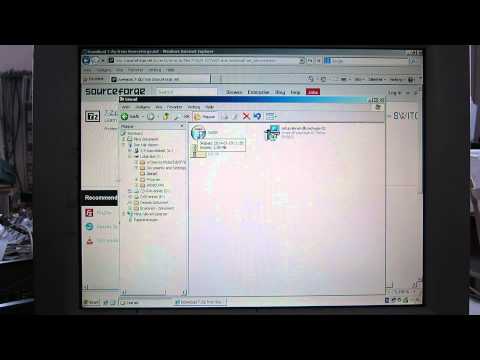
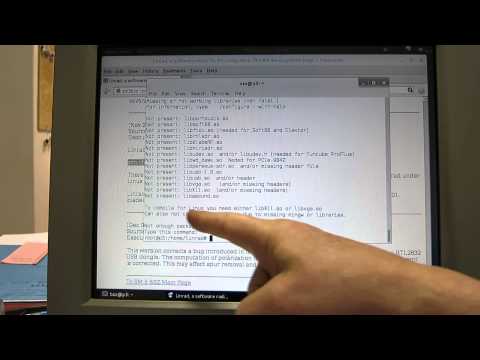
Linrad is an advanced SDR software program which supports the RTL-SDR. It is not as easy to use as the more popular SDR#, but some people prefer to use it as it has a very high information density GUI. The author of Linrad has uploaded two videos to YouTube that show how to install Linrad on Windows XP and Linux, which may be useful to those wishing to try Linrad out.
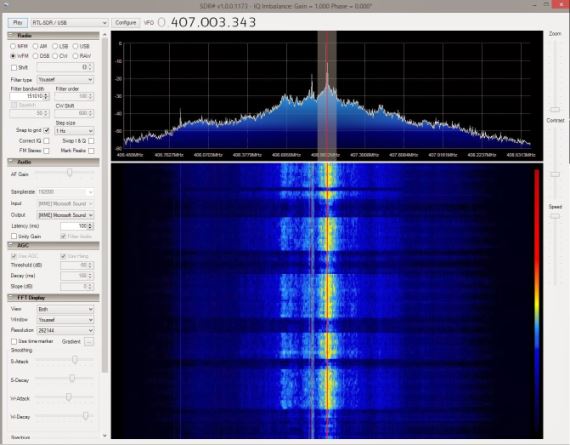
Since 2.4 GHz is out of any of the RTL-SDR’s receivable range, Omri used a cheap downconverter which he was able to buy from China using Aliexpress. The downconverter converts the 2.4 GHz signal into a lower frequency at around 400 MHz which is in the receivable range of the RTL-SDR.
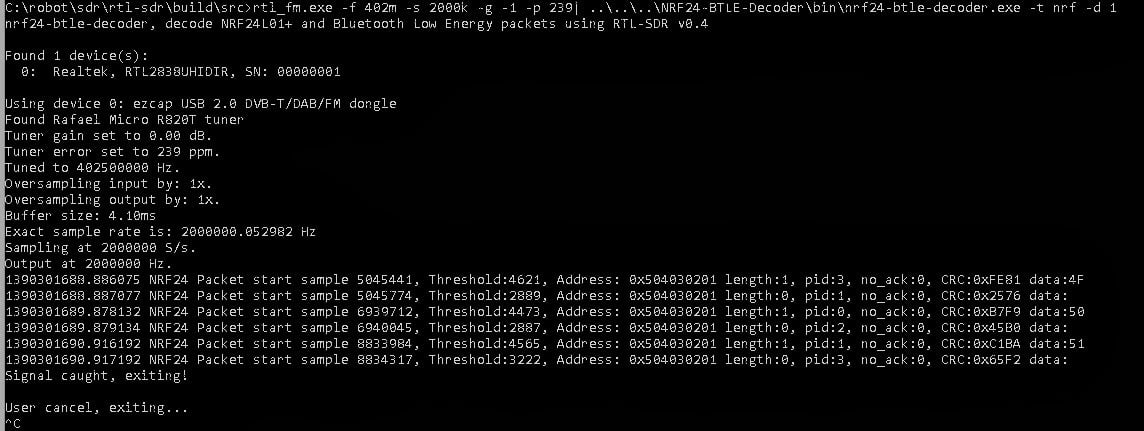
He was then able to use his NRF24-BTLE-Decoder software that he developed to convert the received data from the NRF24L01+ transceiver into a decoded packet by simply piping the output of RTL_FM into his program.
Since the NRF24L01+ uses hardware similar to the Bluetooth Low Energy (BTLE) protocol, Omri was able to modify his code to be able to also decode BTLE packets.
2.4GHz packet received on the RTL-SDR + downconverter from a Logitech mouseDecoded NRF24 Packets
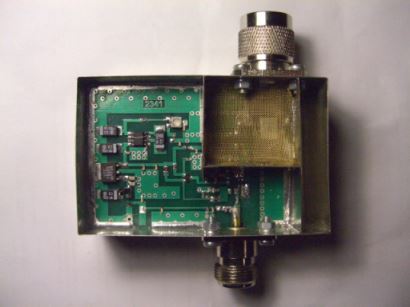
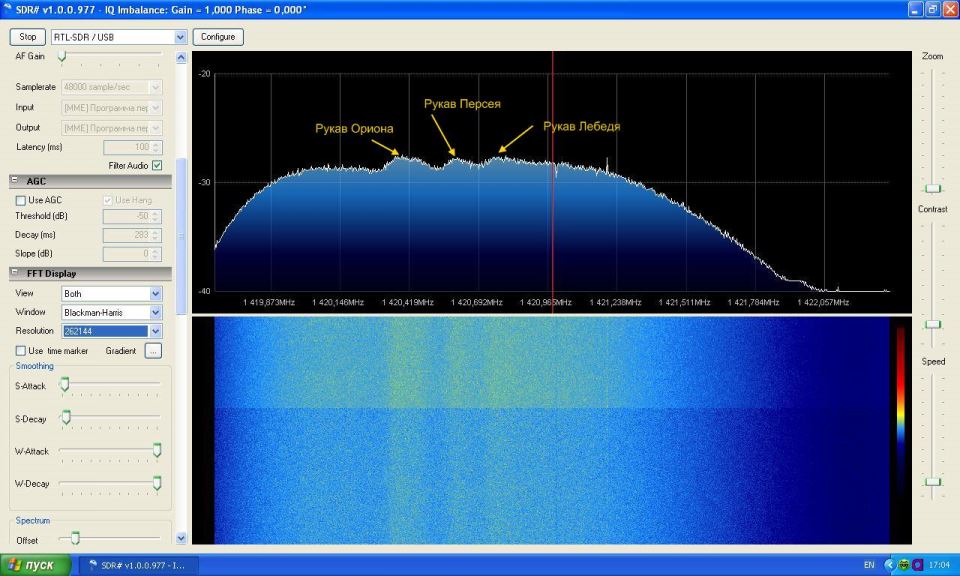
At the center of his system is an LNA with 40dB gain and a very low noise figure of 0.2dB. This LNA appears to be based on G4DDK’s VLNA, but modified to work with the 1420 MHz frequency used for radio astronomy. It seems the LNA can be ordered for 140 USD from the above link.
Note: The above Russian links are machine translated with Google to English.
Over on our Facebook page, member Александр has posted about a project he found by Georg Campana which involves using an RTL-SDR to capture signals from his TI Chronos watch which has a programmable 433 MHz RF transmitter built into it.
Georg used his TI Chronos watch to transmit a signal copied from remote controls which are used to open his house gate, garage door, light switches and set his house alarm. When he discovered that the watch signal was not transmitting properly, he used his RTL-SDR to compare the signal coming from the watch to the original signals from the remote controls to help him with debugging. In order to detect the bit stream from the RF signal, he used a GNURadio program for decoding wireless temperature sensors, which he modified slightly to work with his watch.
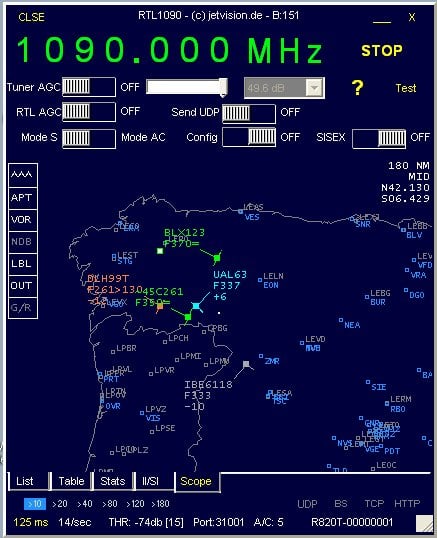
The beta version of the popular ADS-B decoding software RTL1090 has been updated to version 3. Version 3 comes with a simple radar visualization scope built into the software, which allows you to see aircraft directly in the RTL1090 software.
On YouTube Eric William has posted a video showing him unboxing two new antennas that he intends to use with his RTL-SDR. He unboxes a new QFH antenna for use with receiving NOAA weather satellite images, and a new Discone antenna for general wideband receiving. If you are interested in buying commercial antennas for use with your RTL-SDR, this video may be useful at giving you some idea of what’s available.
New Antennas for my SDR Setup- Mailbag Monday
Eric also recently posted a video showing an overview of his RTL-SDR setup which is also an interesting watch.
USB Software Defined Radio- PC Software & Cloud Storage
The High Performance Software Defined Radio (HPSDR) project is an open source SDR project that aims to create a modular SDR for ham radio use. The idea is that users only need to include the specific HPSDR hardware that they need for their particular application.
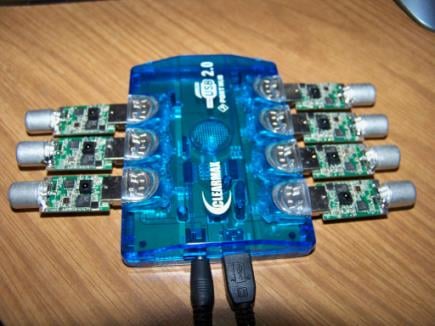
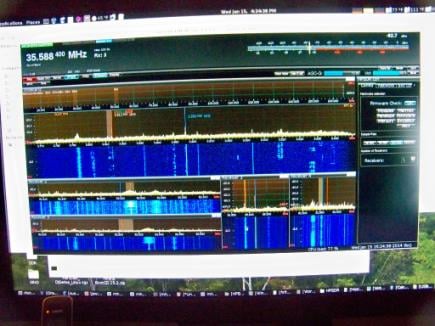
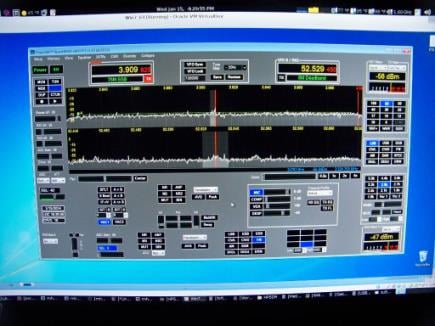
Using his tool Richard was able to get seven R820T RTL-SDR dongles running simultaneously on an EKB311 Quad core ARM Cortex A9 based mini-pc using a USB 2.0 hub with a modified power supply to provide 5V@2A.
Seven RTL-SDR USB SetupFive RTL-SDR Dongles used with RTL_HPSDR and csSDR64Two RTL-SDR dongles running on PowerSDR
The Communications System Toolbox in MATLAB 2013b now supports the RTL-SDR dongle. MATLAB is a scientific computing software product which scientists and engineers use for complex technical computations and simulations.
The RTL-SDR radio support package enables you to design wireless receivers using real world signals. Using Communications System Toolbox™ in conjunction with an RTL-SDR USB radio, you can design and prototype systems that process real-time wireless signals in MATLAB® and Simulink®.
Wireless engineers, students, and hobbyists can learn to receive and decode real-world radio signals using this low cost RTL-SDR hardware connected to your computer.
Key Features:
RTL-SDR radio as an I/O peripheral to receive streaming RF signals
Configurable center frequency and sample rate
NooElec™ NESDR Mini USB Stick (R820T) and NooElec NESDR Nano USB Stick (R820T) SDR devices with frequency range 30MHz – 1.8GHz
Compatible with other RTL-SDR USB radios (eg., Terratec T-Stick E4000)