Tagged: rtl2832

Crimean Resident Arrested under Accusation of Spying for Ukraine with RTL-SDR Dongles

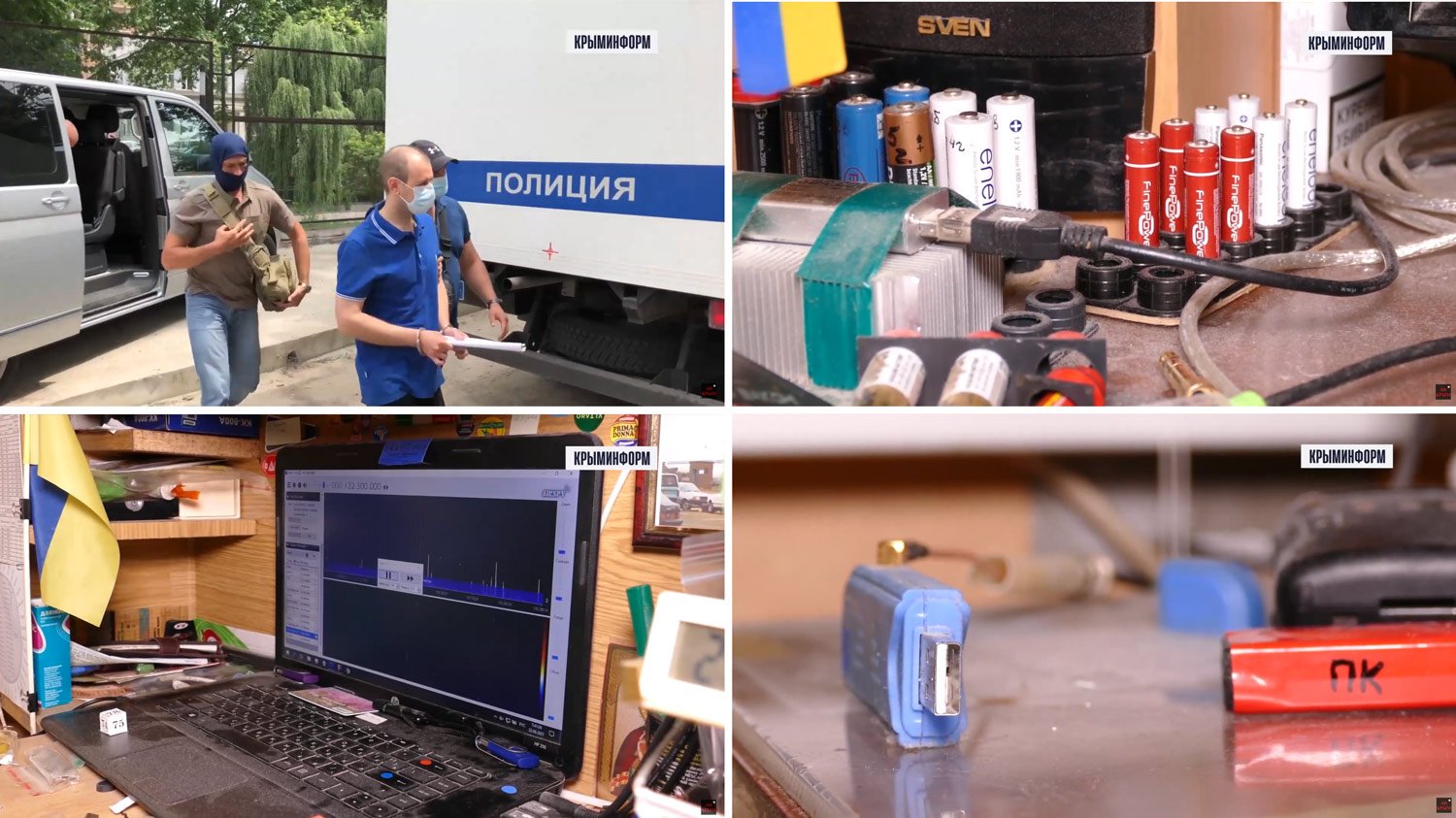
Back in early 2014 Crimea was annexed from the Ukraine by Russian forces. Recently we've heard news that a Crimean resident was arrested by the Russian Federal Security Service under the suspicion of being a Ukrainian informant who was intending to transfer, or was transferring military data abroad using RTL-SDRs.

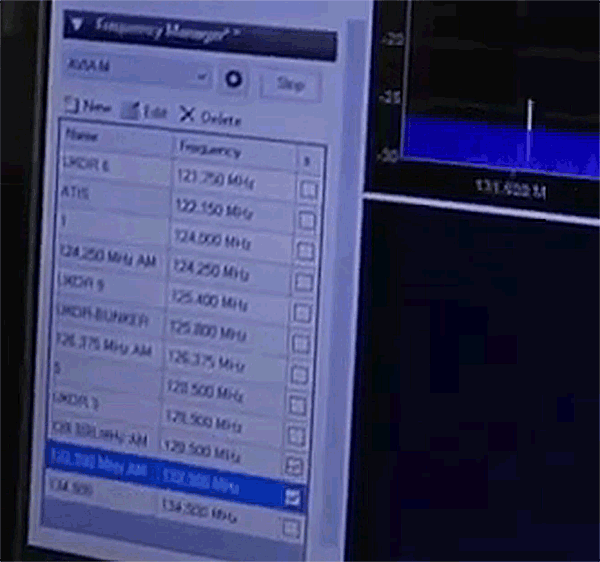
A video of the arrest has been uploaded to YouTube, and RTL-SDR dongles running with the Airspy SDR# software on his laptop can clearly be seen as having been photographed. The photos of the SDR# screen appear to show that he was monitoring the commercial aviation band with a scanner plugin.

The YouTube description is translated below:

Today it was reported about the arrest of a Crimean resident, either intending to transfer, or transferring military data abroad.

The FSB has published footage of the arrest. The time on the laptop caught on the video during the search of housing 07:40 date 06/22/21. The laptop is turned on, the AIRSPY radio frequency scanning program is running, the laptop is in the dust - only traces of pressing some keys are visible, and the touchpad was not used. There are many icons in the room, books on radio engineering, a Ukrainian flag, aircraft models, several pennants "Tavria 1958", an ICOM IC-R6 radio, maps.

The detainee transferred the information received to Ukraine on one basis, collected it on the other and intended to transfer it.

The court sent the man to the pre-trial detention center for 2 months. If his guilt is proven, then high treason "shines" and does not shine to see the will for 25 years.

According to an article on RadioFreeEurope, the man was detained as he was "collecting data on the flights of Russian military planes for Ukrainian intelligence".

It is unclear if the man was knowingly providing intelligence services, or is simply an aviation hobbyist caught up in politics. If anyone has more information about his story, please let us know in the comments.

UPDATE 29 June 2021: More information on the story at this link.
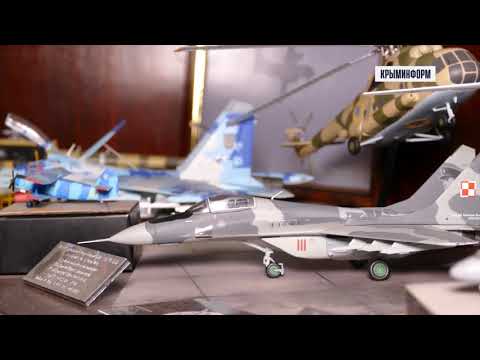
Украинский осведомитель был футбольным фаном. Болел за «Таврию»

Crimean resident arrested for using RTL-SDRs to monitor the airband
Commercial Aviation Frequencies Monitored

This is a reminder to those in politically dangerous situations to take care when using SDRs. In the past we have seen a Slovenian researcher almost jailed for performing University research with an RTL-SDR, a UN expert arrested for possessing an RTL-SDR in Tunisia, and SDRs come under fire when Trump tweeted a now-debunked conspiracy theory on how an RTL-SDR was being used as a close range scanner by the black lives matter protestor who was shoved to the ground on video by Buffalo police.
SDR4Space: Software Tools for SDR Based Satellite Ground Stations

Over on Reddit we've seen that SDR4Space, a provider of a satellite ground station receiver hardware and software has released a free feature limited lite version of their embedded software over on their GitHub page. In the Reddit comments the software is explained as follows:

It's a command-line tool using scripts, for SDR users. You can write your own scripts to: record IQ samples, predict satellite passes, start a record for a specific satellite and correct doppler at the same time.

It's also useful to record narrow subband IQ streams ( example: 48kHz wide instead of 2.048 MHz on rtlsdr, a single signal on HF is only few kHz wide).

You can work on IQ files: cut, resample, merge, convert formats and so on.

Having said that you can recognize features from predict, rx_sdr/rtl_sdr ,rtl_power/rx_power.

Regarding installation, a Debian package is provided, installing application and some examples in /opt/vmbase directory. Most of dependencies are installed by the package. But you should install SoapySDR and Soapy drivers for your SDR device first by yourself if not yet done !

To understand how it works, the best is perhaps starting download TLE and print a passes list, using scripts in ./sat/ directory.

For the next SSTV event I'd try to run unattended reception of ISS (from ./sat/sat_receiver directory).

From the examples, it appears that you can script a fully automated doppler corrected satellite signal receiver with the SDR interface connecting through Soapy, and all the DSP handled by the SDR4lite library.

SDR4Space Logo

Frugal Radio: How To Decode L band Satellite ACARS and CPDLC messages with JAERO and your SDR

In the latest episode of his YouTube series on Aviation monitoring Rob explores how to decode L-band satellite ACARS (Aircraft Communication Addressing and Reporting System) and CPDLC (Controller Pilot Data Link Communications) messages using JAERO, an SDR like an RTL-SDR, and a appropriate L-band antenna such as our RTL-SDR Blog Active L-Band Patch (currently out of stock).

In the video Rob shows examples of what you might receive such as CPDLC ATC instructions, digital ATIS information, arrival information and suggested landing data configuration instructions. He goes on to show satellite coverage maps, what hardware is required to receive these signals, and finally how to setup the receiving and decoding software.

How To Decode L band Satellite ACARS and CPDLC messages with JAERO and your SDR

Tech Minds: Testing the Pluto Plus SDR

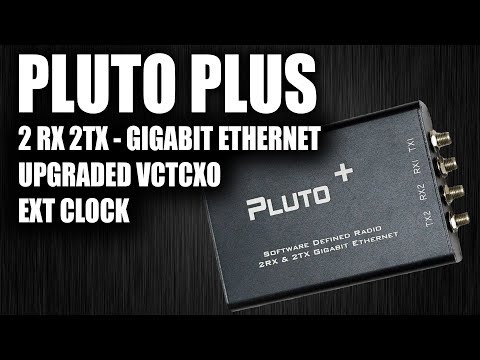
The "Pluto Plus" (aka Pluto+) is an unofficial and upgraded version of the Analog Devices ADALM Pluto SDR. It is currently available on Aliexpress and Banggood stores. In his latest video Tech Minds reviews a Pluto+ SDR that he has received, noting that it has all of the features that should have been in the original Adalm PlutoSDR.

He notes that the PlutoSDR+ has various improvements over the PlutoSDR such as that it comes in a metal enclosure, has four SMA connections (2x TX, 2x TX), a Gigabit Ethernet connection, a microSD slot, external clock input, 0.5PPM TCXO, fine tunable clock via resistor, a PTT key port and a DFU key.

In the video he goes on to show how to set up the PlutoSDR+ before testing it out on a QO-100 satellite setup, noting that it works perfectly and without any signal drift noticed.

Pluto Plus SDR - An Adalm Pluto Upgrade?

A KerberosSDR Based Radio Direction Finding RC Boat

If you weren't already aware KerberosSDR is our 4-channel phase coherent capable RTL-SDR unit that we previously crowdfunded back in 2018. With a 4-channel phase coherent RTL-SDR interesting applications like radio direction finding (RDF), passive radar and beam forming become possible. It can also be used as four separate RTL-SDRs for multichannel monitoring.

KerberosSDR is soon to be replaced with the upgraded KrakenSDR, which will begin crowd funding on Crowd Supply later this year. Please note that we have had some pandemic related delays finalizing the design, but progress is being made.

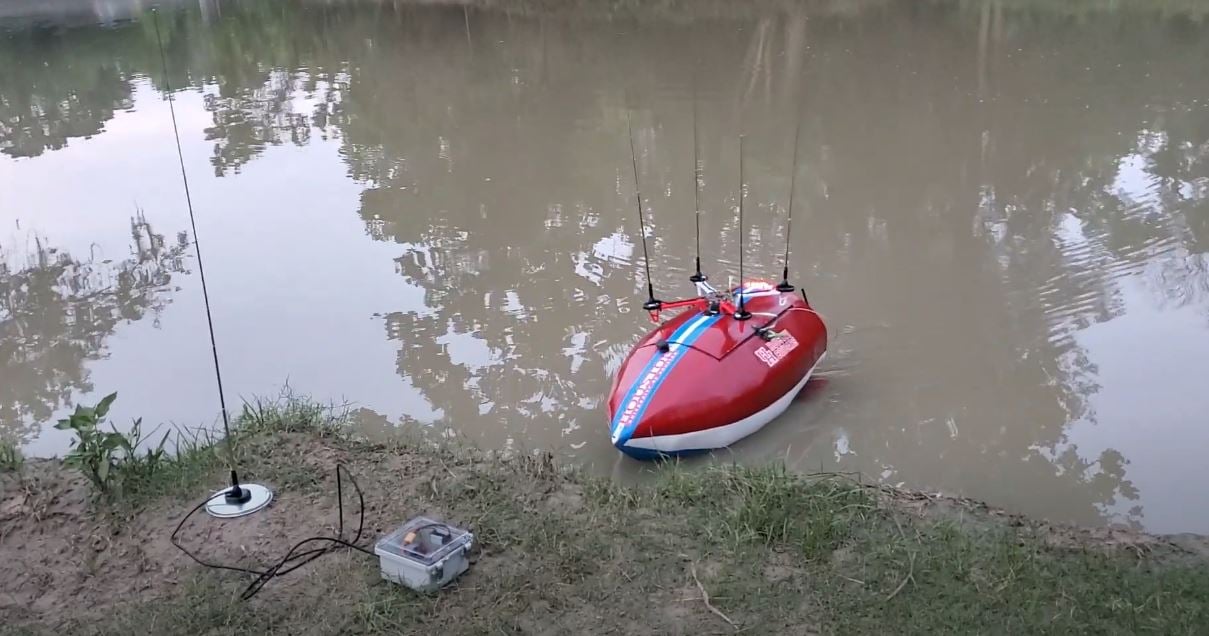
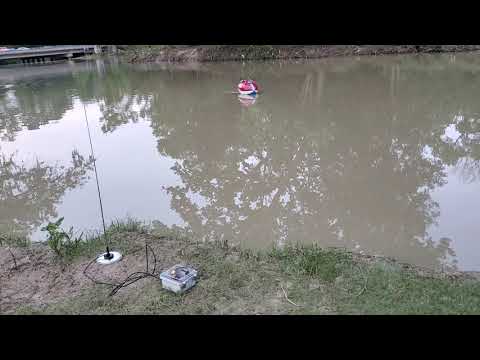
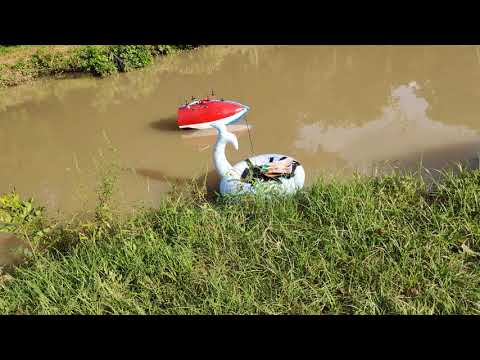
Recently we came across a brief demonstration video on YouTube where it appears that students have embedded a KerberosSDR into an RC boat. The boat carries four direction finding antennas connected to the KerberosSDR and autonomously navigates towards a signal source.

KerberosSDR Direction Finding RC Boat
Kerberos SDR project result

KerberosSDR direction finding #2

Decoding and Logging GPS Coordinates From Wireless Smart Meters

Back in April we posted about "Hash's" RECESSIM YouTube series on hacking electricity smart meters using a software defined radio. Recently his series continues with a video on decoding and logging the GPS coordinates sent by the smart meters used in his area. Using a car, SDR and laptop he was able to drive down the freeway collecting smart meter data as he travelled, decode the data, and plot it on a map. In his video Hash explains why there is GPS data in the signal, and how he was able to reverse engineer and determine the GPS data.

Smart Meter Hacking - Decoding GPS Coordinates

Tech Minds: Remote SDR V2 with Orange Pi and Transmit Capable

In his latest YouTube video Tech Minds explains and demonstrates Remote SDR V2, which is software that allows you to easily remotely access either a PlutoSDR, HackRF or RTL-SDR software defined radio. It is designed to be used with the amateur radio QO-100 satellite, but version 2.0 now include multiple demodulation modes, NBFM/SSB transmission capability, CTCSS and DTMF encoders, modulation compression and a programmable frequency shift for relays.

In his video Tech Minds shows how to install Remote SDR V2 onto an Orange Pi via the SD card image, how to access the web interface, and how to access and use the connected SDR.

Remote SDR V2 with Orange Pi and Transmit Capable

We note that the code is designed to be run on Orange Pi boards, which are low cost single board computers similar to Raspberry Pi's. However over on Twitter @devnulling has indicated that his own fork of the code should run on x86 systems. Aaron @cemaxecuter is also working on including it into a DragonOS release.

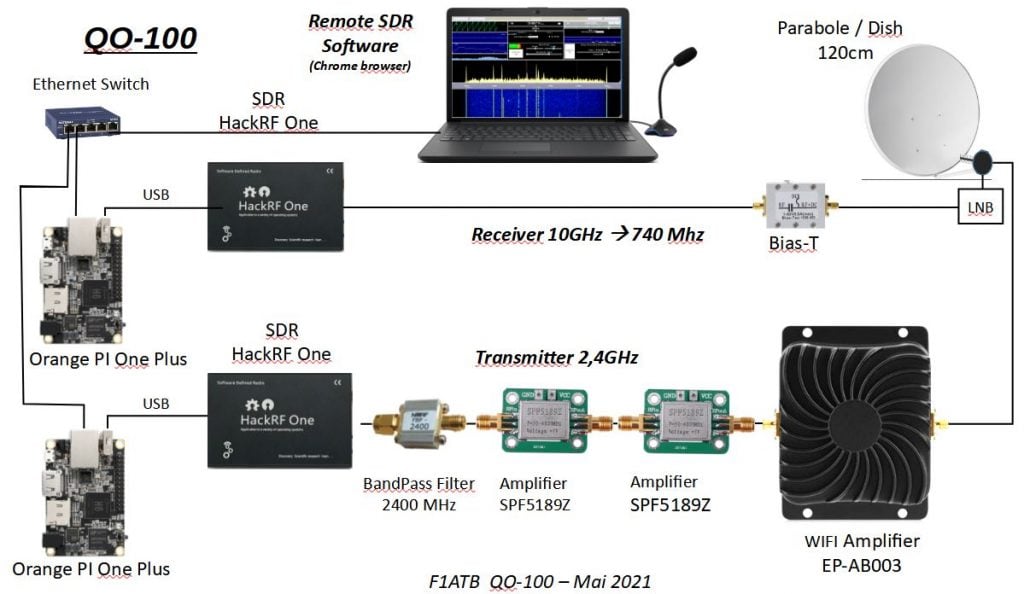
The image below demonstrates a typical Remote SDR V2 transceiver setup with two HackRFs.

A full QO-100 Transceiver Setup with Remote SDR V2 and two HackRF's.

Lessons Learned Using SDR in the Classroom

Recently SDR-Boston hosted an online panel titled "Lessons Learned – Using SDR in the Classroom", and the video is now up on YouTube. A presentation was given by three panelists and moderator on the topic of how software defined radio has been used in University curriculum. Many of the courses make use of RTL-SDR dongles, as well as more advanced transmit capable SDRs.

Software-defined radio (SDR) technology is extensively being used across a wide range of research activities to help demonstrate feasibility of new algorithms and approaches that are rapidly defining the new current state-of-the-art in emerging wireless technologies (e.g., 5G/6G, drone networks) as well as providing new opportunities to explore the electromagentic (EM) spectrum world around us (e.g., radio astronomy, satellite communications, radar). Although SDR has become mainstream in research activities, it has not been widely used in the classroom environment to help students leap from theoretical concepts to practical hands-on learning.

The following presentations were given (more information available on the panel website):

1,024 ways to teach with SDR: Dr. Fraida Fund, New York University

Educators who are considering using software defined radio in the classroom face a dizzying array of choices, including hardware, software, and curriculum decisions. In this presentation, I will describe my experiences using software defined radio in different ways for a range of audiences, from high school to graduate school. I will share the decisions I made in designing each course or curriculum module, and the tradeoffs associated with those decisions.

Teaching SDR and DSP to Undergrads within CS: Dr. Marc Lichtman, University of Maryland

Dr. Lichtman will briefly discuss the course he designed and taught at The University of Maryland within the CS dept, introducing students in their senior year to SDR and DSP, as an elective. The first half of the course acts as a DSP and wireless comms primer, essentially condensing several courses that are normally taught at the graduate level within ECE, providing students with the necessary background by teaching DSP theory using diagrams, animations, practical demos, and code examples rather than a mathematically rigorous theoretical approach. The remainder of the course focuses on using SDRs to implement the DSP techniques they had learned. He has recently created a free online textbook based on his course, teaching SDR and DSP with Python, https://pysdr.org.

Teaching Introductory Communication Systems using SDR: Challenges, Benefits, and Lessons Learned: Dr. Cory J. Prust, Milwaukee School of Engineering

Exposure to software-defined radio (SDR) technology is a valuable experience for undergraduate electrical and computer engineering students. Decreasing hardware costs and easy-to-use software tools have made SDR experimentation readily available to the undergraduate laboratory setting. However, especially for students who are still learning the fundamentals of communication systems, laboratory exercises must be carefully designed to reinforce foundational concepts, meaningfully engage and motivate students, and be presented at an appropriate technical level. This presentation will describe the development and deployment of hands-on SDR-based laboratories used in an introductory communication systems course. Lessons learned from multiple offerings of the course will be discussed.

Hands-On Wireless Communications Education: It’s More Than I/Q Representation: Dr. Alexander M. Wyglinski, Worcester Polytechnic Institute

In most undergraduate and graduate courses focusing on digital communication systems engineering, the concept of representing all information in terms of in-phase (I) and quadrature (Q) comes up and becomes the foundation for many other concepts taught throughout the rest of the course. However, the treatment of I/Q tends to be over idealized and the real-world effects affecting this very important source of information is saved “for the next course”. With SDR technology, those real-world effects that are impacting the successful recovery of I/Q samples are experienced right away and the true challenges of digital communication systems engineering are experienced first hand. This introduction will provide some initial insight on the practical considerations when extracting I/Q samples from over-the-air and attempting to decode them for the purposes of recovering binary information.

SDR-Boston Panel Event: "Lessons Learned - Using SDR in the Classroom"