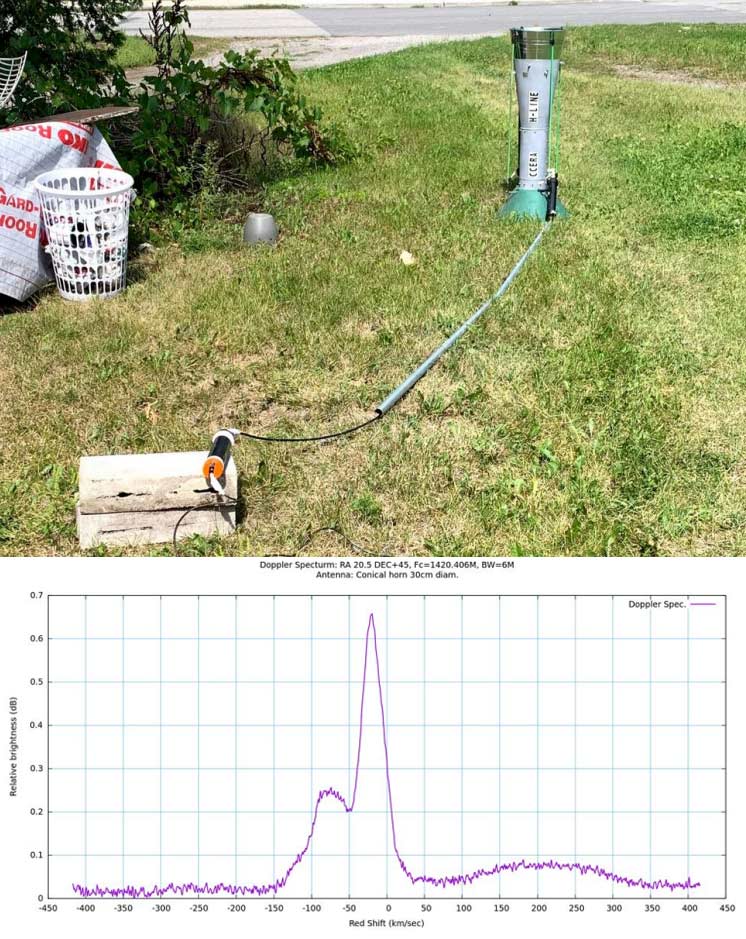
While these WiFi grids are relatively cheap, Marcus tests an order of magnitude cheaper solution based on a tall metal "Maple-Sap" bucket which are commonly found in Canada. A horn antenna is constructed out of the 24cm diameter bucket simply by attaching a feed (wire) connected to a type-N connector, fitted ~8.8cm from the bottom of the bucket. This results in a signal almost as strong as the 60cm WiFi grid. A second test with a larger 30cm bucket fitted onto an existing 24cm horn antenna yielded results on par with the WiFi grid. A third test was done with a 6-turn Helix antenna, however it resulted in poor performance.
Marcus notes that almost anything that is shaped like cone could be modified into a horn antenna with a little DIY construction. He mentions that one alternative to the maple-sap bucket which could be hard to find outside of Canada might be a "French Style" steel floral bucket.
A low cost bucket based horn antenna for hydrogen line observations
On this weeks Frugal Radio YouTube video, Rob explores how to decode Fire, Ambulance and Hospital pager data using SDR++ and PDW. In the video Rob first explains what applications pagers are used for in 2021 and how they're typically received with pager or MDT hardware terminals mounted in fire and ambulance trucks.
He then goes on to show how we can receive and decode these pager messages using an RTL-SDR, SDR++, VB-Cable and the PDW pager decoder. The tutorial shows how to set up SDR++ settings for pager reception, how to install and setup PDW and how to interface the two programs with VB-Cable. Finally Rob explains how to fully understand some of the messages that you might receive.
Decoding Fire & Ambulance MDT data & hospital pages with a $10 SDR Radio
With a 5-channel phase coherent RTL-SDR interesting applications like radio direction finding (RDF), passive radar and beam forming become possible. It can also be used as five separate RTL-SDRs for multichannel monitoring.
KrakenSDR Updates
Like many other projects we have been severely delayed by COVID work restrictions and the effects it's having on the supply chain, and I'd like to thank everyone who is keen to get a hold of a KrakenSDR for their patience. But the ball is rolling faster now and we have finally received our latest KrakenSDR prototypes! Testing has been ongoing for the last few days, and apart from a few minor issues everything is working brilliantly. At this stage we are confident in the design and are making plans to begin the crowdfunding campaign soon.
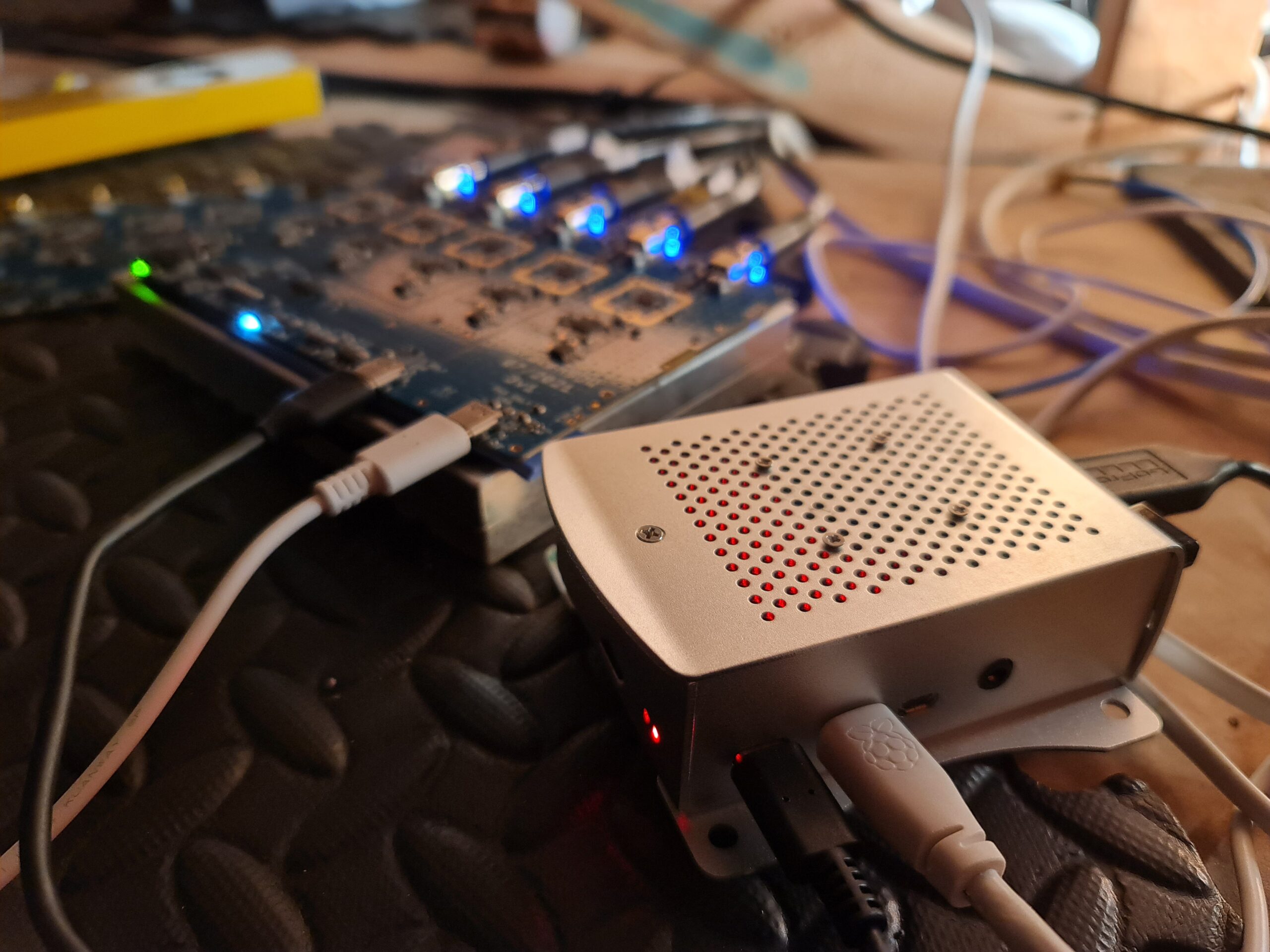
The latest KrakenSDR Prototype PCB running on a Pi 4.
Supply Chain Constraints
The first batch will unfortunately be limited to 1000 units maximum due to supply constraints and we expect this first batch to be ready 2-3 months after the campaign finishes. So if you are after a unit ASAP, please ensure you are on the CrowdSupply mailing list as we fully expect demand for the first batch to outstrip the supply.
But if you are willing to wait, batch 2 will be still be available at the campaign special price. we will have a second batch available for early preorder at a discount (sorry due to higher than expected shipping and skyrocketing component prices we can't discount the second batch at the moment). Please keep in mind that the second batch will be at least 6 months away due to the long supply chain resulting from the pandemic.
Next Steps
The next stages in hardware development will involve finalizing our custom milled aluminum enclosure, testing one last prototype, and beginning mass manufacturing when the crowd funding campaign is over.
Work on the software is ongoing, but the beta version of our new DAQ firmware and direction finding DSP software layer is stable and already available on the krakensdr GitHub at https://github.com/krakenrf. Everything resides in the development branches and there is full documentation on the code structure available in the Documentation folder. This code can also be used on the KerberosSDR by editing the configuration files to specify 4 receivers instead of 5.
By the time the units ship out we will have a ready to use SD card image for the Raspberry Pi 4 and a quickstart guide available.
KrakenSDR DAQ and DOA DSP Web Interface
Android App
We have also been working at improving the Android direction finding companion app. This app was made during the KerberosSDR release a couple of years ago, and is used to plot and log the direction finding bearings being generated by the Kerberos/KrakenSDR unit, combining it against the GPS and movement data generated by the Android phone. This Android phone + KrakenSDR combination results in a powerful multipath resistant radio direction finding tool, and once enough data has been collected (usually after a few minutes of driving) it is able to determine where the most likely transmitter location is.
The upgraded app makes use of the full 360 degrees of direction of arrival and multipath data that is generated by the KrakenSDR, resulting in a more accurate determination of the transmitter location, and a better understanding of the uncertainties. It also allows users to visualize multipath. There are also various bug fixes and improvements made overall. We are planning to transition this app into a paid app, but all KrakenSDR backers will receive a license for free and the older KerberosSDR app will remain free.
KrakenSDR Android App Improvements
KrakenSDR Antennas
To work as a radio direction finder, KrakenSDR needs five antennas. If you plan to use them in a circular array, they need to be omnidirectional antennas such as whips or dipoles. So to go along with the KrakenSDR we will be selling an optional set of five magnetic whip antennas which can be mounted on for example, the roof of a car. (Please note the magwhips shown in the photo may differ slightly from the final ones sold).
KrakenSDR Magnetic Whips on a Car Roof
We have also been working with Arrow Antennas in the USA, who are producing a KrakenSDR 5-element dipole array antenna which is great for use in fixed sites (for example on the roof of a house). The antenna will be sold by Arrow antennas (not by us), and the future link (not active yet) will be http://www.arrowantennas.com/arrowii/kraken.html. We expect them to generate this page within the next few days. This antenna has been used in all our fixed site experiments as you can see in some of the YouTube videos, and works very well. (The image below show a prototype, we're told the final version may look slightly different.)
Arrow Antenna 5-element antenna array for the KrakenSDR
Future Work
DAQ & Direction of Arrival (DOA / Radio Direction Finding) :
Work on the DAQ and DSP software is coming along well and this is mostly complete and runs stable on a Raspberry Pi 4. There are just now bug fixes and minor features being added. Intermittent 'bursty' signal handing is already working, but we are working on improving it's sensitivity to weak bursty narrowband CW signals which can still be problematic to detect. The Android app is also currently being field tested.
Passive Radar:
Work on new passive radar software is also ongoing and we expect to have something ready for experimentation and with quickstart guides before shipping. At the moment it is also still possible to use the older KerberosSDR software for passive radar, but we believe the new DAQ core software will run things much smoother. The goal for the new software is to not only plot a range-doppler map, but to combine it with direction finding and be able to plot radar detections on a map. This feature may require operation on a device faster than the Raspberry Pi 4, such as GPU based device like a NVIDIA Jetson.
Beam Forming, Interferometry:
One application we think the KrakenSDR would be great with is amateur radio astronomy via interferometry. The ability to combine multiple small hydrogen line dishes spread out over several meters of area should result in much greater radio imaging resolution, without needing to deal with a single huge dish. It may also allow for electrically steering a beam without needing to rotate the dishes.
Advanced Direction Finding + Advanced Log Management:
At the moment networked direction finding (direction finding via multiple fixed or mobile sites spread out around a city or area) is possible via the third party RDF Mapper software, but we aim to create our own advanced platform in the near future. The goal is to have software that will automatically log and alert when a signal of interest appears. For some examples we can see this being used to help coastguard locate distressed marine pleasurecraft that typically do not have AIS via their VHF radios, locate emergency beacons, for animal/wildlife/asset tracking, and monitoring for illegal/interference transmissions.
At this stage the core DAQ+DSP software will also be updated to support monitoring multiple simultaneous channels within the available 2.56 MHz bandwidth, and with a scanning and beacon ID detection feature.
Research into field applications:
One example we hope to test is the operation of KrakenSDR on a drone. With great line of sight from up in the sky, localizing a transmitter should be fast. Another example could be actually visualizing signals like light via augmented reality.
Some of our previous KerberosSDR and KrakenSDR posts might also be of interest.
Over on YouTube TechMinds has recently released a video where he overview SDR++, dubbed as the "bloat free SDR software". We've been following the development of SDR++ for a while, and recently posted about the release of version V1.0.0. SDR++ is an open source, cross platform, C++ based GUI general receiver program for various SDRs including the RTL-SDR. In another recent post we also saw a video review from Sarah at SignalsEverywhere.
The the video TechMinds gives an overview of the SDR++ features and GUI, and also shows DSD+ and WSJT-X running together with it. He notes that SDR++ lives up to it's expectations and lives up to it's bloat free tagline.
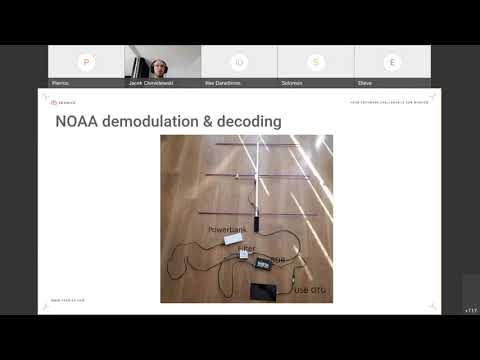
Libre Space Foundation ( Greece) and the Institute of Reconfigurable & Embedded Digital Systems(REDS) of the Haute Ecole d’Ingénierie et de Gestion du Canton de Vaud – HEIG-VD (Switzerland) have been implementing a number of smaller projects as part of an Software Defined Radio MakerSpace of the European Space Agency.
This activity is part of the ARTES programme of ESA that supports innovation in satellite communications.
The findings were presented in three 2-hour slots in the afternoon at 15:00 CEST (for which you are requested to register separately) on Mon 6, Tue 7 and Wed 8 September 2021.
Monday 6 Sep was focused on the evaluation of various SDR boards and FPGA tools chains. High-rate direct sampling by SDR’s and SDR on Android will also be presented.
Tuesday 7 Sep was dedicated to building blocks that have been implemented as open source developments for Gnuradio, such as gr-leo, gr-ccsds, gr-soapy etc.
Wednesday 8 Sep was mainly about the combination of SDR and AI/ML to do signal detection and classification. In addition, an SDR testbed and spectrum monitoring will be presented.
The talks cover various SDR topics related to satellite observing. Some talks we were interested in are highlighted below, but the full list can be found on the SDRMakerspace website, or the SDRMakerspace playlist on the Libre Space Foundation YouTube channel.
Last week SDRplay released version 1.41 of their SDRUno software platform. SDRuno is the official software for the SDRplay line of low cost software defined radio devices. The main new feature is the addition of the scheduler facility which allows users to easily schedule recordings. This is great if for example you wish to automatically record a shortwave programs playing overnight.
SDRuno V1.41 was fully released today. It includes the much requested full scheduler facility which allows you to set up numerous recording events for your RSP. As well as providing all the expected calendar options (time of day, date, start and stop times, repeating options and so on), you can also set the ‘profile’ for each recording – this allows you to pre-set frequencies, bandwidths, demodulator options (AM/FM/USB/LSB etc.), choice of filters and antenna port selection. Additionally you can choose the settings for connectivity to other third party software or the running of a specific plugin.
Introduction to SDRuno 1 41 - Scheduler & Profiles (VID597)
The new version also includes a finalized version of their ADS-B aircraft tracking plugin. Last month TechMinds tested the ADS-B plugin beta, noting that it worked well, but there were bugs with the built in mapping feature. In the official tutorial video the ADS-B plugin is demonstrated and shows that the mapping problem is fixed.
HamSCI is an organization dedicated citizen radio science and specifically the "publicity and promotion of projects that advance scientific research and understanding through amateur radio activities". Back in March they held their HamSCI 2021 workshop online, and the videos from presentations and posters are now all available on the Ham Radio 2.0 YouTube channel.
Most of he presentation videos were released back in June, but the poster talks were just released in the past few days. Many of the projects mentioned in the talks involve the use of software defined radios.
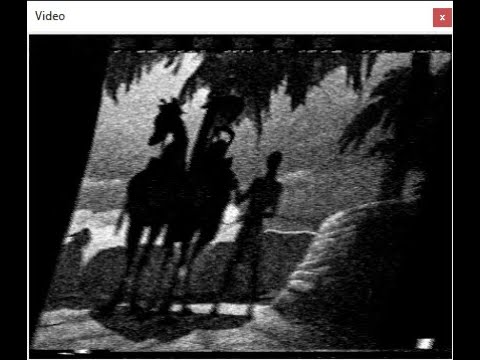
Over on YouTube use Scelly has uploaded a video showing how he has used an RTL-SDR dongle and the TVSharp SDR# plugin to decode video from the RF output of an old VCR (videocassette recorder). VCR players were designed to output the same PAL or NTSC signal that old analog TV transmissions used, and the RF output of the VCR was connected directly to the TV's antenna input.
The TVSharp plugin for SDR# can be used to decode these signals, however as the bandwidth of PAL/NTSC signals is much larger than the 2.4 MHz provided by the RTL-SDR, only a black and white image can be received. Scelly writes:
RF Output from VCR connected directly to input of my RTL-SDR. The RF output is tuned to channel 22 (487.25 MHz), and as the signal is so wide, my RTL-SDR can only display the luminance data (black and white video) and audio, although not at the same time. If I had two RTL-SDRs or an SDR with a larger bandwidth, I could have both audio and video playing at the same time.
The video playing is "The Prince of Egypt" on VHS Video Cassette.