Category: Digital Signals

Decoding RDS in GNU Radio with the RTL-SDR

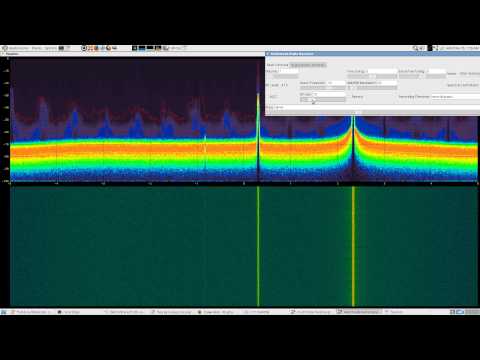
DangerousPrototypes.com have brought to attention a GNU Radio RDS decoding project from the website at Anotherurl. Check out the original post here. Anotherurl uses a GNU Radio Companion flowgraph and a .NET program to decode FM RDS messages. RDS is an acronym for Radio Data System, which is used in FM radio transmissions to embed information such as radio station and programme/song information. Some conventional FM radios display this information on an LCD screen. The popular SDRSharp SDR receiver also has RDS decoding built into it’s FM receiver already, but a GNU Radio implementation is very useful for learning how RDS works.

GNU Radio RDS Decoder

via dangerousprototypes.com

Combining Multiple RTL-SDRs for Improved ADS-B Reception

Over on Gough’s Tech Zone blog, Lui has posted a writeup about his experiences with combining multiple remote RTL-SDR ADS-B receivers to privately obtain ADS-B aircraft data from multiple antenna’s at multiple locations. His setup is shown in a diagram below. He has one remote antenna connected to a Raspberry Pi, one to a remote PC and one to his main PC.

Combining Multiple ADSB Receivers

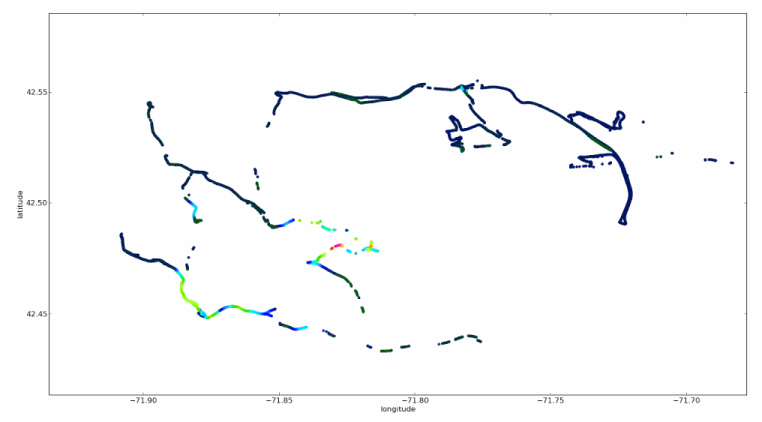
In order to do this he used the Linux based dump1090 ADSB-B decoder and hub software on his main PC. Lui was even able to compile and run the ADS-B hub portion of dump1090 on his Windows PC using Cygwin, but was unable to get the decoder part to work. It doesn’t matter though because the dump1090 hub can receive data from any ADSB decoder, such as ADSB#. His results look very promising as can be seen by the timelapse of plane traces in the image below.

nearairport

Lui also has some other interesting ADS-B + RTL-SDR posts that you should check out where he tests ADS-B reception with a Mini R820T dongle.

HackRF Decoding PICO High Altitude Balloons (HAB)

Blogger g0hww shows us how he used his HackRF to decode Pico high altitude balloon (HAB) transmissions using gqrx and dl-fldigi. Pico balloons are small party sized high altitude balloons, typically launched by hobbyists. They have enough lift to carry a small sized ~60g payload. Since they are so small, they are usually exempt from requiring permission from the authorities, unlike full sized weather balloons.

The cheaper RTL-SDR could also be used to track these balloons.

PICO High Altitude Ballo0n Recevied with HackRF

Decoding Pagers on the Raspberry Pi with RTL-SDR

Hackaday has brought to attention a tutorial written on the Raspberry Pi forums by Sonny_Jim showing how to decode pager transmissions on the Raspberry Pi. In the tutorial he also shows how to set up a web server to be able to view the decoded transmissions in a web browser.

He uses a RTL-SDR and Raspberry Pi and pipes the output of rtl_fm into the multimonNG software to decode the messages.

Tutorial: HF Decoding Tour with the FUNcube Dongle Pro+

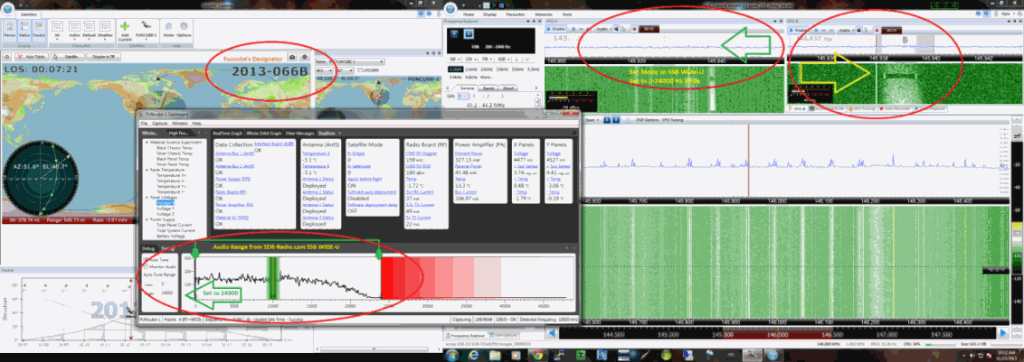
On the FUNcube Dongle blog/store amateur radio enthusiast DK80K (a.k.a Nils) has sent in a link to a 16 page pdf file showing a comprehensive tour on the FUNcube Dongle Pro+’s capabilities on the HF spectrum.

He gives an overview of many digital ham and HF utility modes including DRM, WSPR, RTTY, Olivia, MFSK16, PSK31, Pactor, Packet, Hellschreiben, ROS, SSTV, HF ACARS, SSB, CW, DSC/GMDSS, SITOR-A/B, Globe Wireless, Time Signals, ALE, Baudot, FAX and Stanag 4285.

The FUNcube is a software defined radio similar to the RTL-SDR, but with better sensitivity and noise performance, but at a higher price (around $200 USD). These modes can also be received with the RTL-SDR and an upconverter such as the Nooelec Ham-It-Up upconverter.

Download his pdf here (Mirror)

Receiving SSTV with RTL-SDR

Over on the Radio Antics blog fellow RTL-SDR enthusiast Andrew has been using the RTL-SDR to receive Slow Scan Television (SSTV) amateur signals. SSTV is a method ham radio enthusiasts use to send small images to one another. The images often contain their ham call sign overlaid on the image.

Andrew was able to receive several SSTV images using an R820T dongle tuned to the 27 MHz (11 meter) band. He also used a Funcube Dongle+ and got similar results.

Check out his post for some of the images he received, and his video below for an example of the receiving process.

RTL-SDR Tutorial: Receiving Weather Balloon (Radiosonde) Data with RTL-SDR

Around the world meteorological weather balloons are launched twice daily, and continuously transit weather telemetry to a ground station using something called a radiosonde. The RTL-SDR software defined radio combined with a decoding program can be used to intercept this telemetry, and display it on your own computer. You will be able to see real time graphs and data of air temperature, humidity, pressure as well as the location and height of the balloon as it makes it's ascent.

Note that if you are in the USA, then this tutorial may not be applicable for you as different radiosondes are used. Instead have a look at this post which shows how to use the SkySonde software from NOAA. You can also try an alternative command line based decoder called RS available on GitHub.

This tutorial is also applicable to other software defined radios such as the Funcube dongle, Airspy, HackRF, BladeRF or even hardware radios with discriminator taps, but the RTL-SDR is the cheapest option that will work.

Examples

In this example YouTube user Superphish shows a radiosonde being received and decoded using a RTL-SDR, SDRSharp and SondeMonitor.

Weather Balloon (Radiosonde) tracking with RTL SDR (RTL2832), Sondemonitor and SDR Sharp

Continue reading