Category: Antennas

IndiaRocketGirl Receives FengYun-2H S-VISSR Satellite Images

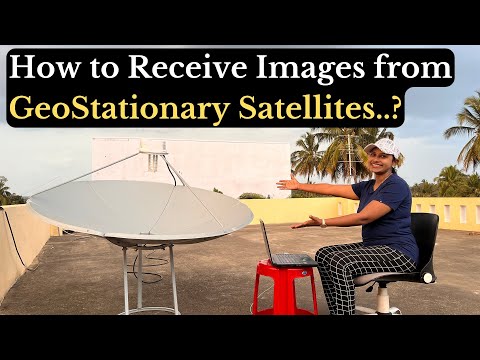
Over on her YouTube channel IndiaRocketGirl has posted a video showing how she was able to build a satellite dish and feed to receive FengYun-2H S-VISSR signals and get beautiful full disk images of the earth.

In the US and other countries RTL-SDR fans will be familiar with how to receive images from the GOES geostationary weather satellite. However from countries like India most GOES satellites will not be visible. Fortunately there are alternative satellites like the Chinese FengYun-2H satellite which is visible from India. FengYun-2H is a geostationary satellite that sends down a S-VISSR signal containing full disk images of the earth.

In her video IndiaRocketGirl uses a 1.8 meter diameter antenna, a homemade helical feed, an LNA+filter and an RTL-SDR as her hardware. For software she uses SatDump.

How to receive Real Time Images from Geostationary Satellites | Best Satellite Project

WXCorrector: Updating Keplers for Linux users of WXtoIMG

Thank you to Hamdy Abou El Anein for submitting news about the release of his software called "WXCorrector".  

WXCorrector is a dedicated solution designed specifically for Linux users who face challenges with the handling of Kepler elements in Wxtoimg. This tool addresses a critical issue where incorrect or outdated Keplerian elements can cause disruptions in tracking software, leading to inaccurate predictions and potential data loss.

It work on Linux, it needs sudo rights and Python3 installed.

https://github.com/hamdyaea/wxcorrector-for-linux

WXtoIMG is a commonly used piece of software for decoding images from NOAA APT weather satellites. However,  WXtoIMG is now considered abandonware as the original website has gone, and the main author has not updated the program in many years. The latest versions from 2017 can be downloaded from Archive.org. An alternative download site is https://www.wraase.de/wxtoimg, where they also provide a way to update Keplers for Windows machines.

Due to it's abandonment, certain features like Kepler updates from the internet appear to have broken over time with changes to the way Kepler files are served. Up to date Kepler files are required for the software to know exactly where satellites are in the sky for tracking and scheduling.

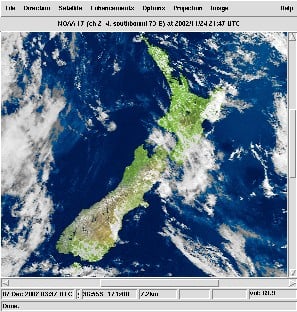
A modern alternative to WXtoIMG is SatDump, which now supports NOAA APT satellites.

WXtoIMG

Marine Vessel AIS and AirNav ShipXplorer

AirNav systems are a company that run radarbox.com, one of the big ADS-B aggregation tracking sites for tracking aircraft around the world. They also run a similar platform called ShipXplorer for tracking marine vessels using AIS data. The team at AirNav have provided us with a nice explanation of what AIS is and how it works. They note that they also sell a modified RTL-SDR with AIS filters and an LNA built in.

Presumably AirNav are seeking feeder volunteers for their ShipXplorer service with the submission of this post. We receive no compensation for this post and do not endorse one aggregator over another.

Below is the text from AirNav:

How Does the Automatic Identification System (AIS) Work

Introduction

Automatic Identification System (AIS) is a crucial technology used for monitoring and tracking the movements of vessels at sea. It has become an essential tool for ensuring maritime safety, security, and efficiency. In this blog post, we will explore how AIS vessel tracking works, its benefits, limitations, and future prospects.

How Does AIS Vessel Tracking Work?

AIS is an automatic tracking system that uses transceivers installed on ships to transmit vital information such as position, speed, course, name, call sign, type of ship, and destination. This data is then received by terrestrial or satellite-based AIS receivers and transmitted to various stakeholders, including shore-based authorities, other ships, and online platforms. The information is displayed in real-time, allowing users to monitor the movement of vessels with pinpoint accuracy.

There are two types of AIS messages: Class A and Class B. Class A messages are mandatory for all ships over 300 gross tons, while Class B messages are optional but recommended for smaller vessels. Class A messages have a higher transmission power and update rate than Class B messages, making them more reliable for long-range detection.

AIS operates principally on two dedicated frequencies or VHF channels: AIS 1: Works on 161.975 MHz- Channel 87B (Simplex, for the ship to ship) AIS 2: 162.025 MHz- Channel 88B (Duplex for the ship to shore), which provide a range of up to 20 nautical miles for terrestrial stations and up to 1,000 nautical miles for satellite systems. The system uses Time Division Multiple Access (TDMA) technology to avoid signal collisions and ensure seamless communication between multiple vessels and base stations.

Benefits of AIS Vessel Tracking

AIS vessel tracking offers numerous benefits, including enhanced safety, improved operational efficiency, and better decision-making capabilities. Some of these benefits include:

  1. Improved Collision Avoidance
    By providing accurate information about a vessel's location, speed, and direction, AIS helps prevent collisions and reduces the risk of accidents. Ships can use this information to maintain safe distances from each other and navigate crowded waterways safely.
  2. Increased Efficiency
    AIS enables ships to optimize their routes and fuel consumption, leading to increased efficiency and cost savings. By sharing their positions and intentions, vessels can coordinate their movements and avoid wasting time and resources on unnecessary maneuvers.
  3. Enhanced Search and Rescue Operations
    In case of emergencies, AIS provides critical information that helps search and rescue teams locate and assist distressed vessels quickly. The real-time data provided by AIS allows responders to make informed decisions and allocate resources effectively.
  4. Better Decision Making
    AIS data can be integrated with other systems, such as weather forecasting tools, to help shipping companies make informed decisions about their operations. For example, they can adjust their schedules based on predicted weather conditions or reroute their vessels to avoid congested areas.

Limitations of AIS Vessel Tracking

While AIS vessel tracking is a powerful tool, it does have some limitations. These include:

  1. Limited Coverage
    Although AIS signals can travel up to 20 nautical miles via terrestrial stations, this coverage may not be sufficient in remote or offshore areas where there are no base stations. Satellite-based AIS systems address this limitation but come at a higher cost.
  2. Potential Security Risks
    Since AIS transmissions are unencrypted, there is a potential risk of interception and misuse by malicious actors. However, measures such as frequency hopping and encryption can mitigate these risks.

Future Prospects of AIS Vessel Tracking

As technology advances, AIS vessel tracking is expected to evolve and offer even greater benefits.

  1. Integration with Autonomous Shipping
    Autonomous ships rely heavily on sensor data for navigation and collision avoidance. AIS integration with autonomous shipping systems could enhance situational awareness and improve overall safety.
  2. Real-Time Cargo Monitoring
    AIS could be used to track individual cargo containers in real-time, enabling logistics companies to monitor their shipments more accurately and efficiently.
  3. Environmental Monitoring
    AIS-equipped vessels could collect environmental data, such as water temperature, salinity, and pollution levels, helping researchers and policymakers better understand and manage marine ecosystems.

Conclusion

AIS vessel tracking is an indispensable tool for enhancing maritime safety, security, and efficiency. While it has some limitations, advancements in technology continue to expand its capabilities and applications. As shipping becomes increasingly digitalized, AIS will remain a cornerstone of maritime communications and surveillance.

The SHipXplorer AIS Optimized RTL-SDR

Canada Moves to Ban Flipper Zero and Possibly Software Defined Radios

Dominic LeBlanc, Canada's Minister of Public safety has recently declared that they plan to ban devices "used to steal vehicles by copying the wireless signals for remote keyless entry, such as the Flipper Zero". The text specifically calls out the Flipper Zero, however the wording appears to imply that any device that can copy a signal will be banned. This means the ban could extend to RX/TX SDRs like the HackRF and possibly even RX only SDRs like RTL-SDRs.

The Flipper Zero is an affordable handheld RF device for pentesters and hackers. It is not based on SDR technology, however it uses a CC1101 chip, a digitally controlled RX/TX radio that is capable of demodulating and modulating many common digital modulations such as OOK/ASK/FSK/GFSK/MSK at frequencies below 1 GHz. There are many CC1101 devices on the market, but the Flipper Zero has gained huge popularity on social media because of it's excellent software support, as well as its cute marketing tactic. In the past it was even featured on the popular Linus Tech Tips YouTube channel.

Flipper Zero has had a long line of setbacks including PayPal freezing 1.3M of its cash, and US customs temporarily seizing its shipments, then passing a $70,000 bill on to them for storage fees and Amazon banning the product on their marketplace.

In our opinion, we believe that the ban appears to be misguided. The Flipper Zero is a basic device that can only perform a simple replay attack, which is to record a signal, and replay it at a later time. These sorts of attacks do not work on vehicles built after the 90's which now use rolling codes or more sophisticated security measures. To defeat rolling code security, a more sophisticated attack called Rolljam can be used. A Rolljam device can be built for $30 out of an Arduino and two cheap transceiver modules.

However, according to arstechnica the biggest cause for concern in terms of car theft is a different sort of attack called "signal amplification relay".

The most prevalent form of electronics-assisted car theft these days, for instance, uses what are known as signal amplification relay devices against keyless ignition and entry systems. This form of hack works by holding one device near a key fob and a second device near the vehicle the fob works with. In the most typical scenario, the fob is located on a shelf near a locked front door, and the car is several dozen feet away in a driveway. By placing one device near the front door and another one next to the car, the hack beams the radio signals necessary to unlock and start the device.

This sort of attack is a lot less sophisticated in many ways as all you are doing is amplifying a signal, and no clever hardware like the Flipper Zero or a software defined radio is even required. The X video below demonstrates such a hack where a criminal holds up a loop antenna to a house. The loop antenna is connected to a signal amplifier which amplifies the keyfob signal, tricking the car into thinking the keyfob is nearby, and allowing the door to be unlocked by touching the handle, and then turned on with the push to start button.

Flipper zero note that they have not been consulted about the ban, and replied on X stating that they are not aware of the Flipper Zero being used for car theft.

FOSDEM 2024 Videos now Available: Synthetic Aperture WiFi RADAR, GPU DSP Acceleration and more

FOSDEM (Free and Open Source Developer’s Meeting) is a yearly conference that took place in Brussels, Belgium on 3 - 4 February 2024. This conference featured a room on Software Defined Radio and Amateur Radio.

Recently the videos of most the talks have been uploaded to their website. Some interesting talks include:

Covert Ground Based Synthetic Aperture RADAR using a WiFi emitter and SDR receiver

Link to Talk Page

Using a WiFi emitter as radiofrequency source illuminating a scene under investigation for slow movement (e.g. landslides), a Ground-Based Synthetic Aperture RADAR (GB-SAR) is assembled using commercial, off the shelf hardware. The dual-channel coherent Software Defined Radio (SDR) receiver records the non-cooperative emitter signal as well as the signal received by a surveillance antenna facing the scene. Spatial diversity for azimuth mapping using direction of arrival measurement is achieved by moving the transmitter and receiver setup on a rail along a meter-long path -- the longer the better the azimuth resolution -- with quarter wavelength steps. The fully embedded application runs on a Raspberry Pi 4 single board computer executing GNU Radio on a Buildroot-generated GNU/Linux operating system. All development files are available at https://github.com/jmfriedt/SDR-GB-SAR/

Synthetic Aperture RADAR with WiFi and USRP SDR

Using GPU for real-time SDR Signal processing

Link to Talk Page

GPU processors have become essential for image or AI processing. Can they bring anything to real-time signal processing for SDR applications? The answer is yes, of course, but not all classic algorithms (FIR, DDC, etc.) can be used "as is", sometimes a different approach must be taken. In this presentation, I will share the solutions that I implemented to achieve multi-channel DDC on NVIDIA Jetson GPU and will make a comparison with "classic CPU" approaches.

Using GPU's for Real Time Signal Processing

Maia SDR: an open-source FPGA-based project for AD936x+Zynq radios

Link to Talk Page

Maia SDR is an open-source project with the main goal of promoting FPGA development for SDR and increasing the collaboration between the open-source SDR and FPGA communities. Currently it provides a firmware image for the ADALM Pluto and other radios based on the AD936x and Zynq. This firmware can display a real-time waterfall at up to 61.44 Msps in a WebSDR-like interface using WebGL2 rendering, and record IQ data in SigMF format in the SDR DDR. The FPGA design is implemented in Amaranth, an Python-based HDL, and the software stack is implemented in Rust, targetting the embedded ARM CPU and WebAssembly.

The first firmware version was released in February 2023, and the project was presented in June in the Software Defined Radio Academy. In this talk we cover the progress since the summer, including the addition of support for devices such as the Pluto+ and AntSDR. We focus on the technical details of the project and the possibilities for re-using some of the components in other projects.

Maia SDR

DAPNET: Bringing pagers back to the 21st Century

Link to Talk Page

When talking about pagers, most of us will think about an object of the past, often seen in TV shows from the 90s, used by medical staff and businessmen. However, they're an interesting way to get simple data broadcast over amateur radio frequencies, with receivers that can be built for less than 20€. We'll explore this and understand how an extensive network can be deployed with simple equipment and using open source hardware and software.

DAPNET Talk

Multiple Comprehensive Tutorials on Weather Satellite Decoding

Over on his website "Jacopo's Lair" IU1QPR (@original_lego11) who is also a developer for SatDump has written up many tutorials about weather satellite decoding that involve the use of SatDump. SatDump is a popular piece of software often used with RTL-SDRs and other low cost SDRs for decoding weather satellite images.

With a small satellite dish, feed, RTL-SDR and LNA+filter and the SatDump software it's possible and download beautiful images of the earth from many geostationary and polar orbiting weather satellites. We note that we are currently taking pre-orders on Crowd Supply for our Discovery Dish system, which is low cost hardware designed to help users get started with weather satellite reception.

Over on Reddit IU1QPR has created a listed summary of all the tutorials he's written. These are currently the most up to date and comprehensive tutorials that we have found on this topic. The tutorials cover everything from what satellites are available, what dish sizes you need, what SDRs can be used, what LNA+filter and other hardware you need, and how to use the SatDump software.

Satellite reception and decoding

Automated stations

SatDump usage

All have been moved to SatDump's documentation page

Satellite data processing and usage

From the HRPT tutorial: What various HRPT signals look like on the spectrum.
From IU1QPR's HRPT tutorial: What various HRPT signals look like on the spectrum.

A Tribute to Amateur Radio Astronomer Job Geheniau (Job’s Radio Telescope)

Job Geheniau was someone whose amateur radio astronomy projects were often featured on RTL-SDR Blog (often referred to as Job's Radio Telescope). It with great sadness that we have recently learned that Job Geheniau passed away from cancer in late December 2023. We would like to take the time share this post to highlight some of his achievements in the amateur radio astronomy field.

Back in 2020 Job first surprised us with one of his first radio astronomy results (Part 1, Part 2) where he was able to image the Milky Way in neutral hydrogen by using a 150cm dish, RTL-SDR, LNA and motorized mount. Over eight nights he recorded hydrogen line readings throughout the Milky Way and ended up creating a 2D Excel sheet that showed an image of the Milky Way at the 1420 MHz hydrogen line frequency. 

Job would go on, rapidly evolving and each time showing us that low cost hardware set up in a backyard could be used to unlock many of the secrets of the universe. Using a satellite dishes less than two meters in diameter, RTL-SDRs, LNAs and filters he was able to:

Job's Radio Astronomy website remains up at https://jgeheniau.wixsite.com/radio-astronomy, and many results and writeups of his other experiments can be found there. We will sorely miss posting about Job's achievements, but we hope that his life has inspired you to take a closer look at the amateur radio astronomy hobby.

A tribute to Job will also be published in the next membership journal from the Society of Amateur Radio Astronomers.

Building a Drone Tracking Radar with the ADALM-PHASER and PlutoSDR

The ADALM-PHASER is a kit designed to provide experience with phased array beamforming and radar concepts. The kit consists of a PlutoSDR, mixers, LO synthesizer, ADAR1000 beamformer chip, LNAs and array of patch antennas. It operates between 10-11 GHz, has 500 MHz BW FMCW chirps, and has 8 receive channels and 2 transmit channels. It is an open source kit that costs US$2800, and it is produced and available from Analog Devices. Currently the kit appears to not be in stock, but they note that they are working on getting more stock in soon.

The ADALM-PHASER a phased array kit for implementing radar and other phased array experiments.

Over on YouTube, Jon Kraft who appears to be affiliated with Analog Devices, is working on a series of videos that will ultimately result in a drone tracking radar being built with the ADALM-PHASER. Currently two videos have been released.

The first is an overview of radar concepts, giving an explanation of pulsed vs CW radar, and the various hardware options we have to implement low cost versions of these methods.

The second video covers more radar concepts like range resolution and shows us how to build a CW radar with the ADALM-PHASER system.

The three remaining videos are yet to be released, so keep an eye on his channel for updates.

Build Your Own Drone Tracking Radar: Part 1

Build Your Own Drone Tracking Radar: Part 2 CW Radar