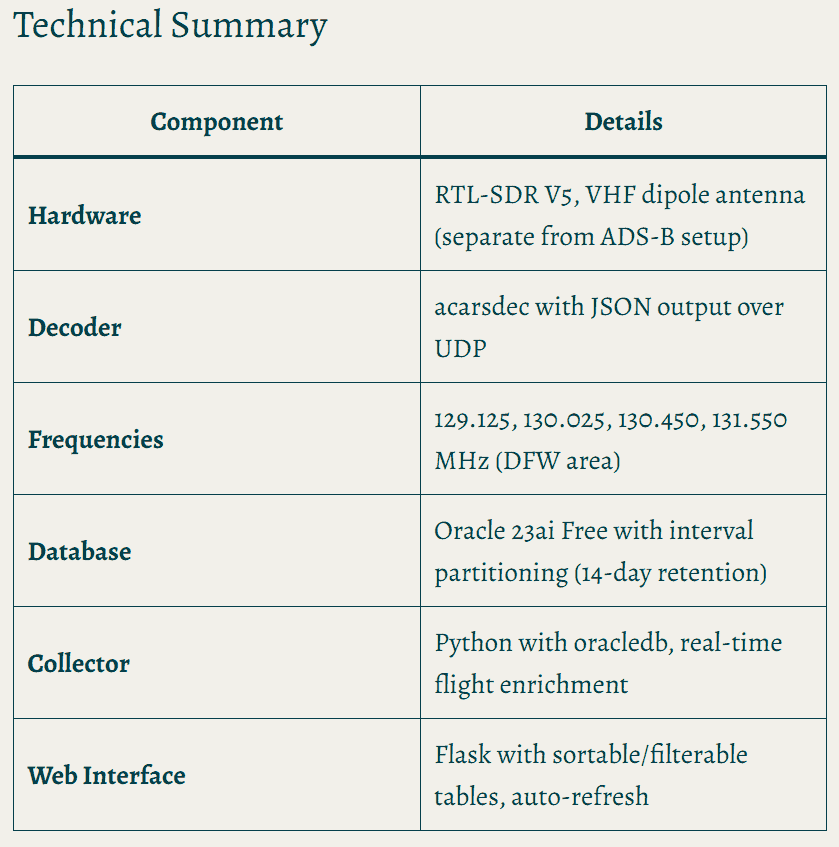
Over on his blog, cynicalGSD has written a detailed post about how he extended his home ADS-B flight tracking setup to also decode ACARS. His existing system runs an RTL-SDR dongle on a Raspberry Pi feeding a database and Flask web app. Adding ACARS required a second RTL-SDR and a separate VHF dipole antenna tuned for 129–131 MHz.
ACARS (Aircraft Communications Addressing and Reporting System) is a text-based datalink that has been in use since 1978, carrying short messages between aircraft and ground stations. It includes messages such as OOOI events (Out of gate, Off ground, On ground, Into gate), pilot weather reports, maintenance fault codes, and gate and fuel data. The key feature of their implementation is cross-referencing ACARS messages with existing ADS-B records via aircraft registration and ICAO hex address, enriching flight records with precise departure and arrival timestamps from the airline's own reporting system.
The full write-up covers the database schema, Python integration using acarsdec, gain tuning tips, and the Flask web interface. cynicalGSD mentions that the code is available for anyone interested, but we didn't see a link, so please comment on his post if you are interested.
Technical Summary of cynicalGSD's ACARS + ADS-B implementation.
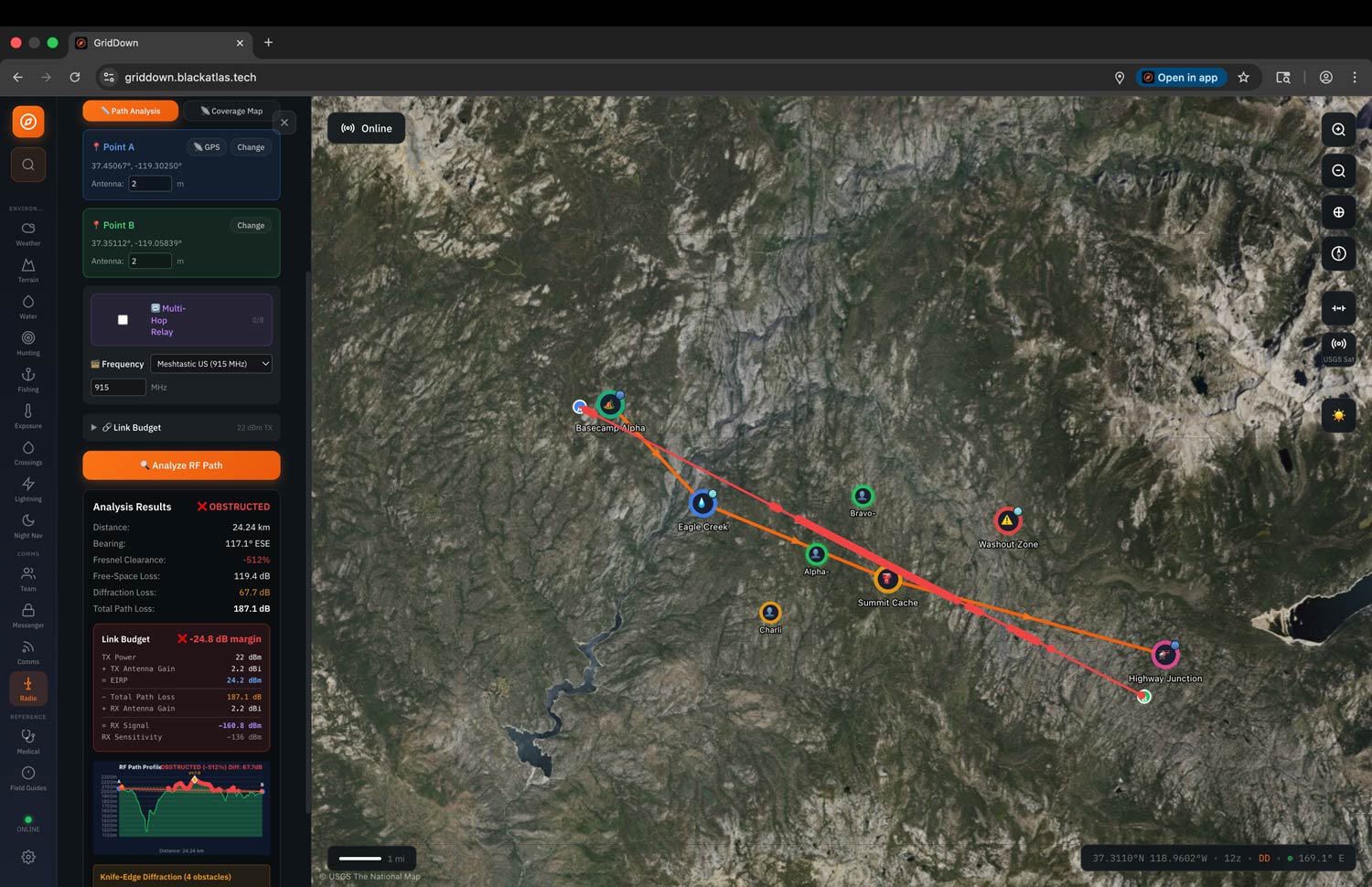
Thank you to Cameron from BlackAtlas LLC for submitting their project GridDown, which is an open source Android tablet-based situational awareness system designed to operate without an internet connection. At its core, it appears to be a tablet with custom software, and then you can add sensors such as an RTL-SDR for ADS-B+Remote ID, a SARSAT receiver, and a Meshtastic ESP32-S3+SX1262 device. A demonstration of the UI can be found at https://griddown.blackatlas.tech.
Cameron writes:
[GridDown is] an offline-first situational awareness platform built for emergency preparedness, field response, and tactical operations in infrastructure-degraded environments — designed to work when cell towers are down, internet is unavailable, and operators are fully off-grid.
The platform is a Progressive Web App (~120,000 lines of vanilla JavaScript, no frameworks) that runs on Samsung Galaxy tablets, laptops/PCs, and works completely offline after initial setup. It's built by BlackAtlas LLC and is available for trial at https://griddown.blackatlas.tech.
The system has many facets to it, including:
Encrypted voice and text messaging via an ESP32-S3 with SX1262 LoRa transceiver
Passive RF sensing with the ESP32-S3 and SX1262.
Three passive drone detection methods: WiFi fingerprinting, FAA Remote ID reception, and 900 MHz control/telemetry link detection
Automatic gunshot detection via a ES7210 quad-channel I2S microphone on the ESP32-S3.
Automatic RF jamming detection
SARSAT beacon receiver
SSTV Encode/Decode
Meshtastic integration
APRS via Bluetooth TNC
ADS-B reception
RadioCode gamma spectrometer integration
Offline maps
ADS-B detection is handled by a Raspberry Pi 5 running an RTL-SDR Blog V4 dongle. Cameron writes:
The Pi connects to the tablet's built-in WiFi hotspot (no internet required — the hotspot functions as a local network only), and a Node.js bridge reads aircraft data from readsb and subscribes to the Remote ID receiver's MQTT output, then serves a unified WebSocket and REST API to the tablet. GridDown renders aircraft and drone tracks as heading-rotated silhouette icons on its offline map with altitude labels, age-based alpha fade, and emergency squawk alerting (7500/7600/7700). A 10,000 mAh USB-C PD battery provides approximately 5 hours of field runtime for the Pi.
The full setup script, hub bridge, and hotspot connection scripts ship with the project.
The software is dual-licensed, with it being open source GPL v3 (note that the GitHub link appears to be broken - we have asked for clarification) for non-commercial use, or a commercial licence for hardware bundles and business deployments.
Alternatively, BlackAtlas LLC is selling ready-to-use kits, with the core tablet coming in at $799. Other bundles include the Tablet + SARSAT receiver for $1,299, the Tablet + Meshtastic bundle for $1,299, and the Tablet + ADS-B/Remote ID bundle for $1,999.
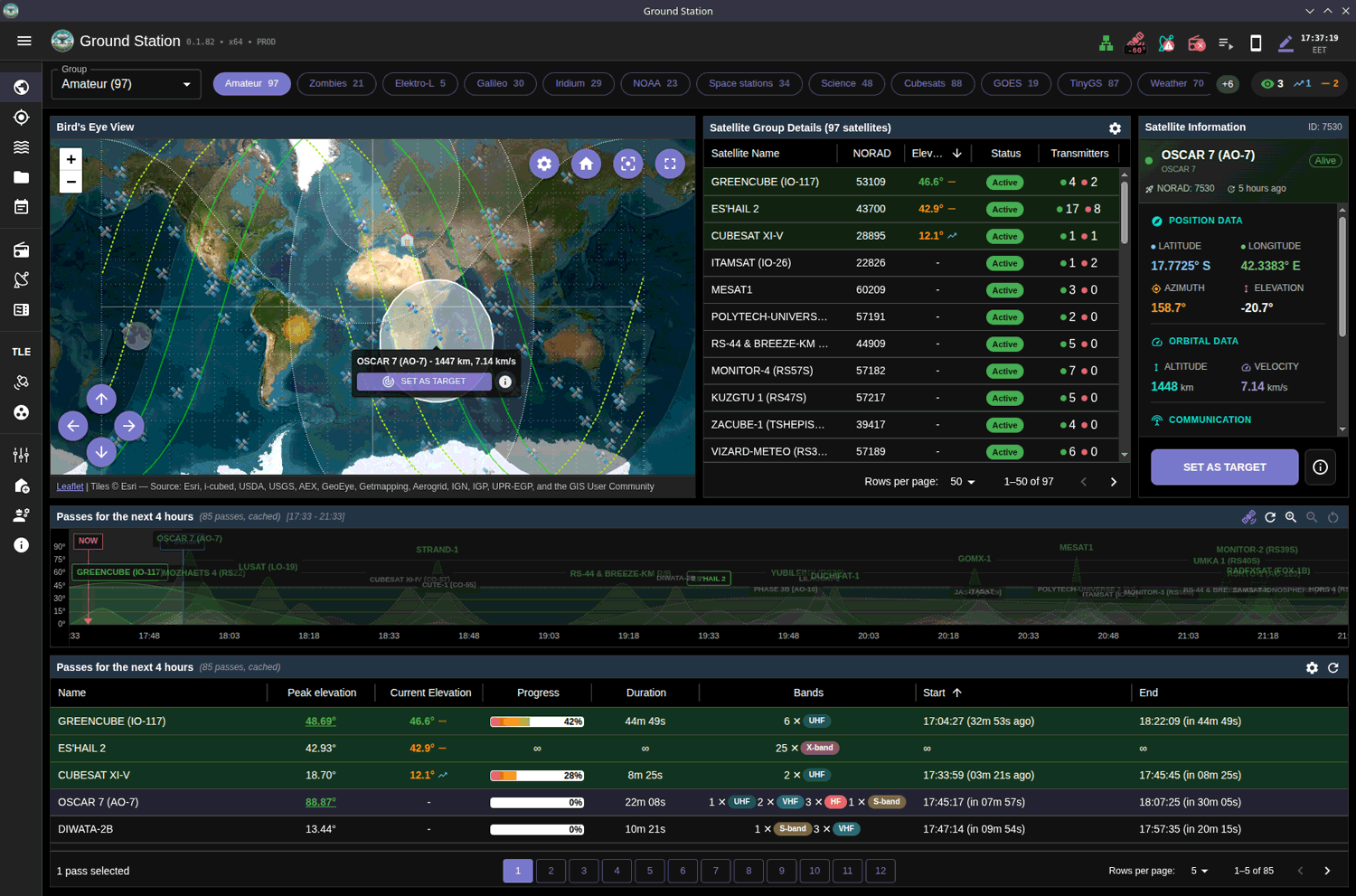
The software presents as a web-based UI that allows users to manage satellite passes, view SDR waterfall data, decode basic signals such as GMSK telemetry, view telemetry packets, synchronize TLEs, manage multiple SDR devices, browse downloaded weather imagery, monitor DSP performance, and interface with antenna rotators.
Unlike tools such as SatDump, which focus primarily on signal processing and decoding, Ground Station acts as a higher-level orchestration platform. It automates the full workflow, handling pass prediction, SDR control, recording, and decoding, and integrates with SatDump for more complex protocols like weather satellite image decoding.
While SatDump does include some tracking and automation features, Ground Station takes this further with support for multiple SDRs, coordination across multiple stations, and a centralized management interface. It also includes an interesting AI-based speech-to-text feature for transcribing amateur satellite voice communications.
Thank you to Trevor Unland for submitting his AI machine learning project called "RTL-ML" which automatically recognizes and classifies eight different signal types on low-power ARM processors running an RTL-SDR.
Trevor's blog post explains the machine learning architecture in detail, the accuracy he obtained, and how to try it yourself. If you try it for yourself, you can either run the pre-trained model or train your own model if you have sufficient training data.
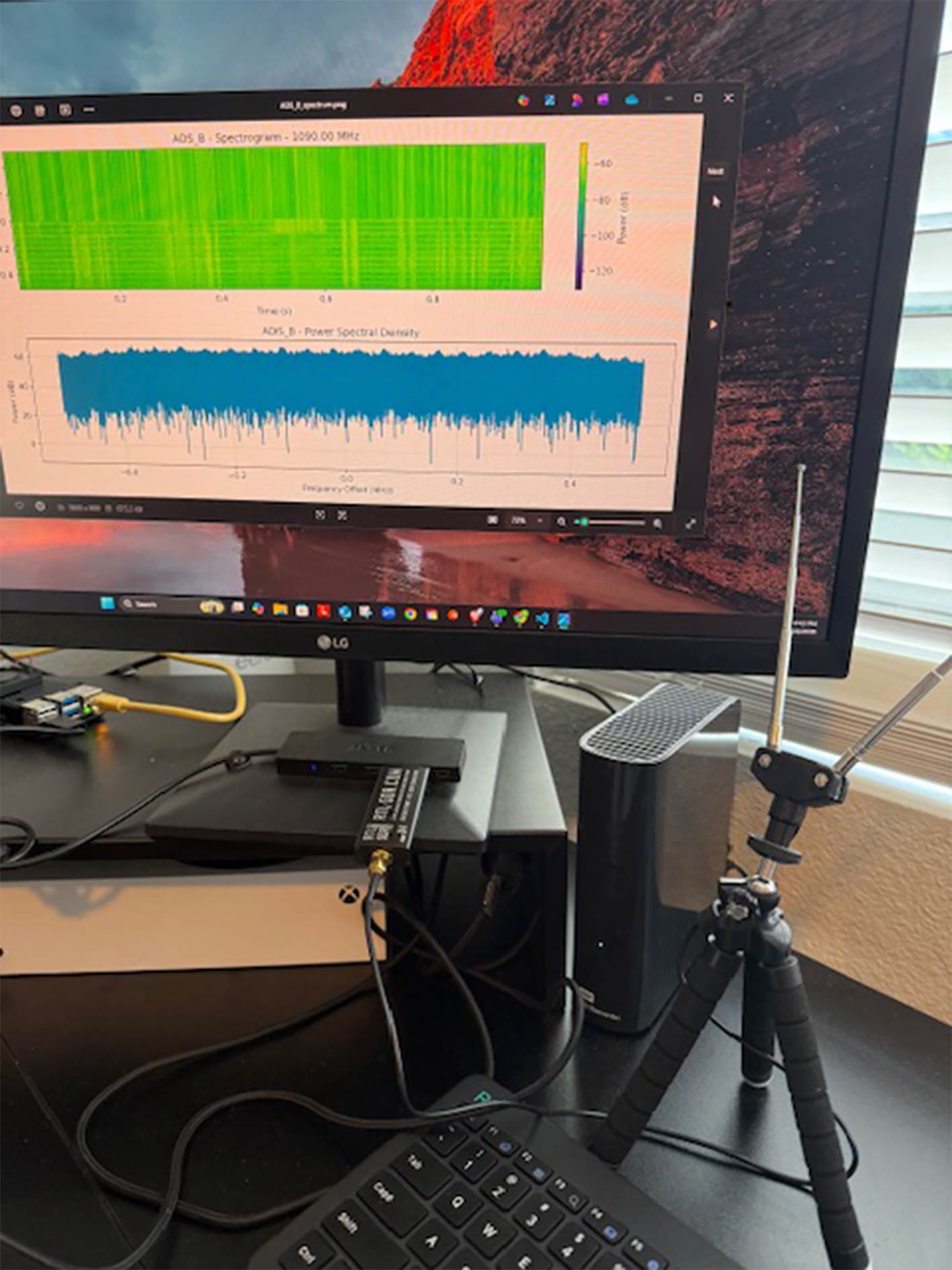
RTL-ML is an open-source Python toolkit for automatic radio signal classification using machine learning. It runs on ARM single-board computers like the Raspberry Pi 5 or Indiedroid Nova paired with an RTL-SDR Blog V4, achieving 87.5% accuracy across 8 real-world signal types including ADS-B aircraft transponders, NOAA weather satellites, ISM sensors, FM broadcast, NOAA weather radio, pagers, and APRS.
The project provides a complete pipeline from signal capture to trained classifier. Unlike academic approaches that rely on synthetic data or expensive GPU hardware, RTL-ML uses real signals captured from actual antennas and runs entirely on edge hardware with no cloud dependency. The Random Forest model is 186KB and processes signals in around 120ms on a Pi 5.
The GitHub repository includes the full capture and training scripts, a pre-trained model, 8 validated spectrograms, and documentation for adding new signal types. It works out of the box on both Raspberry Pi 5 and Indiedroid Nova with identical code and accuracy.
RTL-ML Setup: RTL-SDR Blog V4, Dipole Antenna and Indiedroid Nova ARM Computer.
We're extremely pleased to announce that our campaign for our Discovery Drive automatic antenna rotator is now live on Crowd Supply! Pricing is reduced during the campaign period, so check it out soon!
Discovery Drive is an automatic antenna rotator designed for use with our Discovery Dish product, as well as similarly sized antennas such as Wi-Fi grid and Yagi antennas.
A motorized rotator, such as Discovery Drive, enables precise tracking of fast-moving polar orbiting satellites using a satellite dish or directional antenna. Examples of polar orbiting weather satellites include METEOR-M2, METOP, and FENGYUN. Depending on your location, you may also have access to other interesting satellites that dump data over specific regions.
In addition to public weather data, operators and enthusiasts might be interested in using Discovery Drive to track CubeSats, and amateur radio operators may wish to track amateur radio satellites.
Amateur radio astronomy hobbyists can map the galaxy in the hydrogen line spectrum using Stellarium, or custom software to aim a Discovery Dish with H-Line feed, allowing you to scan multiple parts of the sky in one night.
Discovery Drive - A Motorized Antenna Rotator Engineered for Discovery Dish
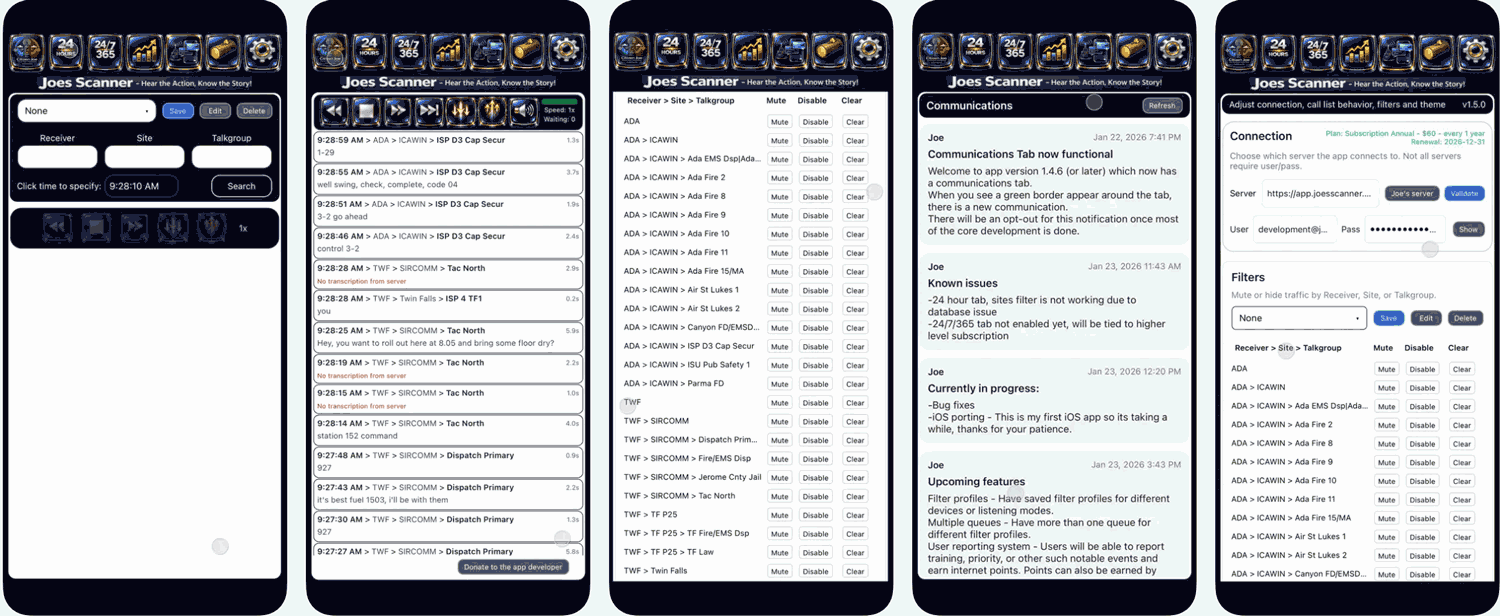
Thank you to Joe for submitting news about the release of his project called "JoesScanner". JoesScanner is an app for Windows, Android, and iOS that provides a modern frontend for Trunking Recorder, for listening to, browsing, and downloading trunked radio calls.
A trunked radio call uses dynamically assigned frequencies from a shared pool, so tracking a conversation requires trunking software (e.g., Unitrunker, SDRTrunk, DSDPlus) and typically two RTL-SDRs, one for the control channel and one for the voice channel.
Trunking Recorder is a Windows application for recording/importing audio from trunked radio systems monitored by Unitrunker, SDRTrunk, ProScan, or DSDPlus. While Trunking Recorder already has a web-based browser front-end viewer, Joe was not happy with it and decided to build his own.
Joe writes:
Joe’s Scanner is a Windows, Android, and iOS app that connects to a Trunking Recorder (TR) backend and provides a modern front end for listening, browsing, and downloading calls. The idea is to make TR based setups easier for end users, especially on mobile, while staying lightweight and ad free.
Key features:
- Connects to any Trunking Recorder server over HTTP or HTTPS, with or without username/password - iOS background audio support - History browsing with downloadable calls - If the TR installation provides transcriptions, the app can enable address detection and what3words detection - Free to use with no ads, and no data harvesting or resale
Background:
I built it because I run my own TR servers and was not happy with the existing client options, so I created what I wanted for my customers.
I am also making it available for anyone to use with their own TR servers for free.
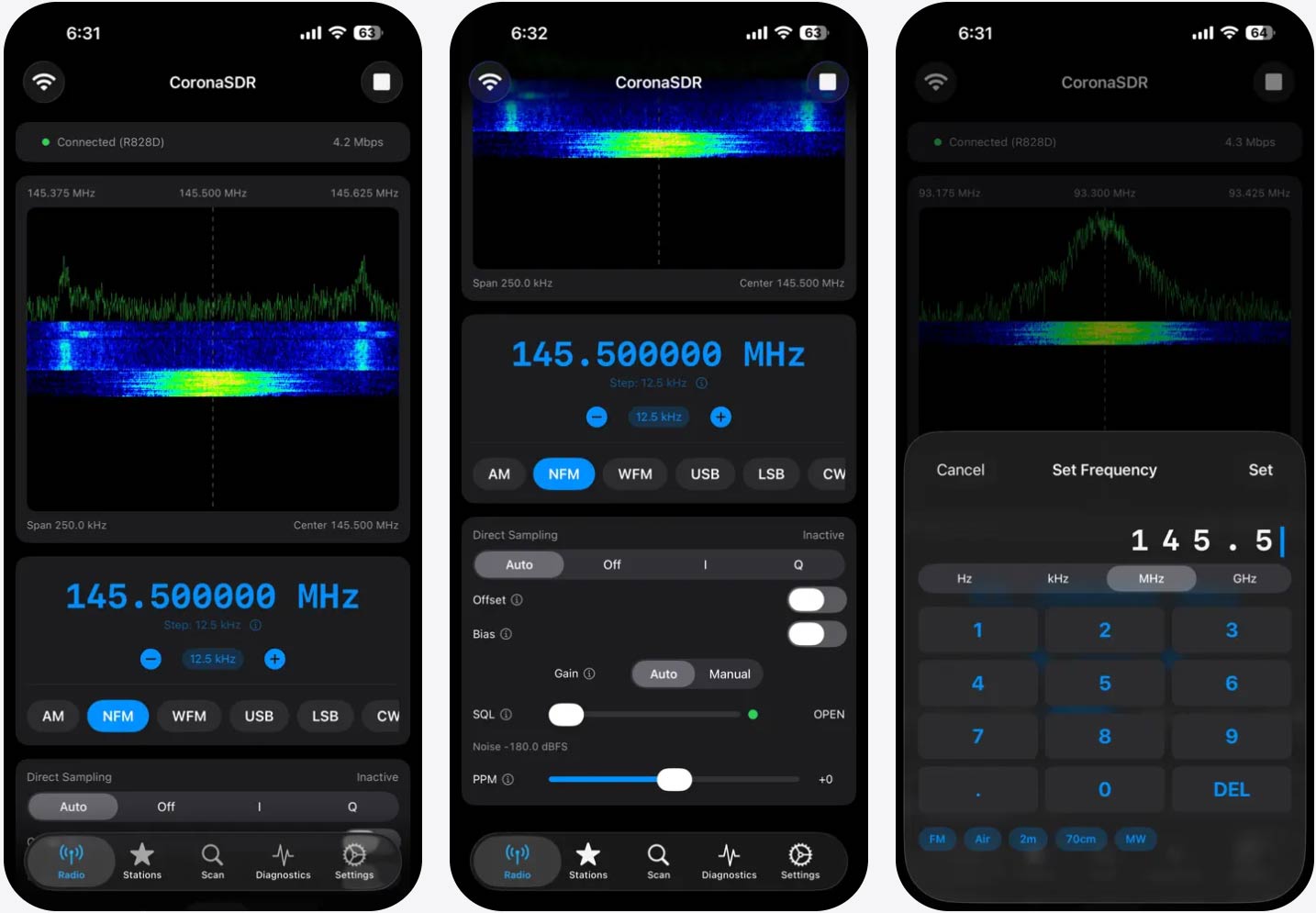
Thank you to Silviu YO6SAY for writing in and sharing with us news about the release of his iOS App called "CoronaSDR" which is a native client for receiving from rtl_tcp servers. rtl_tcp is a server program for RTL-SDRs that streams raw IQ data over a network connection.
Unlike Android, iOS does not allow third-party USB devices like the RTL-SDR to run on its devices. But you can set up an rtl_tcp server on a networked PC or Raspberry Pi in your home, and connect to the data stream with an iOS app like CoronaSDR.
Silviu writes:
CoronaSDR is a free, native iOS app that connects to an rtl_tcp server on your local network (no cloud, no subscription).
Current features • Live spectrum + waterfall (Metal / GPU-accelerated) • Demod modes: AM / NFM / WFM / USB / LSB / CW • RF controls: gain, PPM, direct sampling, offset tuning, bias-tee • Stations with tags + CSV/TSV import/export • List/range scanning with squelch hold/skip • Background audio + lock screen controls
Known limitations (early build) • Built solo so far — no external testers yet • Most real-world testing to date has been NFM and WFM • Other modes are implemented, but I’d consider them early until more field feedback comes in
Tested with an RTL-SDR Blog V4 (R828D) on a Raspberry Pi running rtl_tcp.
I’d really appreciate detailed feedback (device + iOS version, tuner type, rtl_tcp command, mode/frequency, and steps to reproduce any issues).
Tire Pressure Monitoring System (TPMS) privacy concerns are a topic that comes up every now and then. Most modern vehicles have wireless tire pressure sensors that communicate with the vehicle's computer to alert the driver when tire pressure falls below a safety threshold.
The privacy issue is that these TPMS sensors each transmit a unique identifier, so the computer can know which tire is being measured, and not read other vehicles' sensors by mistake. As TPMS is not encrypted in any way, anyone with an RTL-SDR or other similar radio can receive and decode TPMS messages, including the unique identifier. This raises privacy concerns as this can be used to log the presence and movement of individual vehicles.
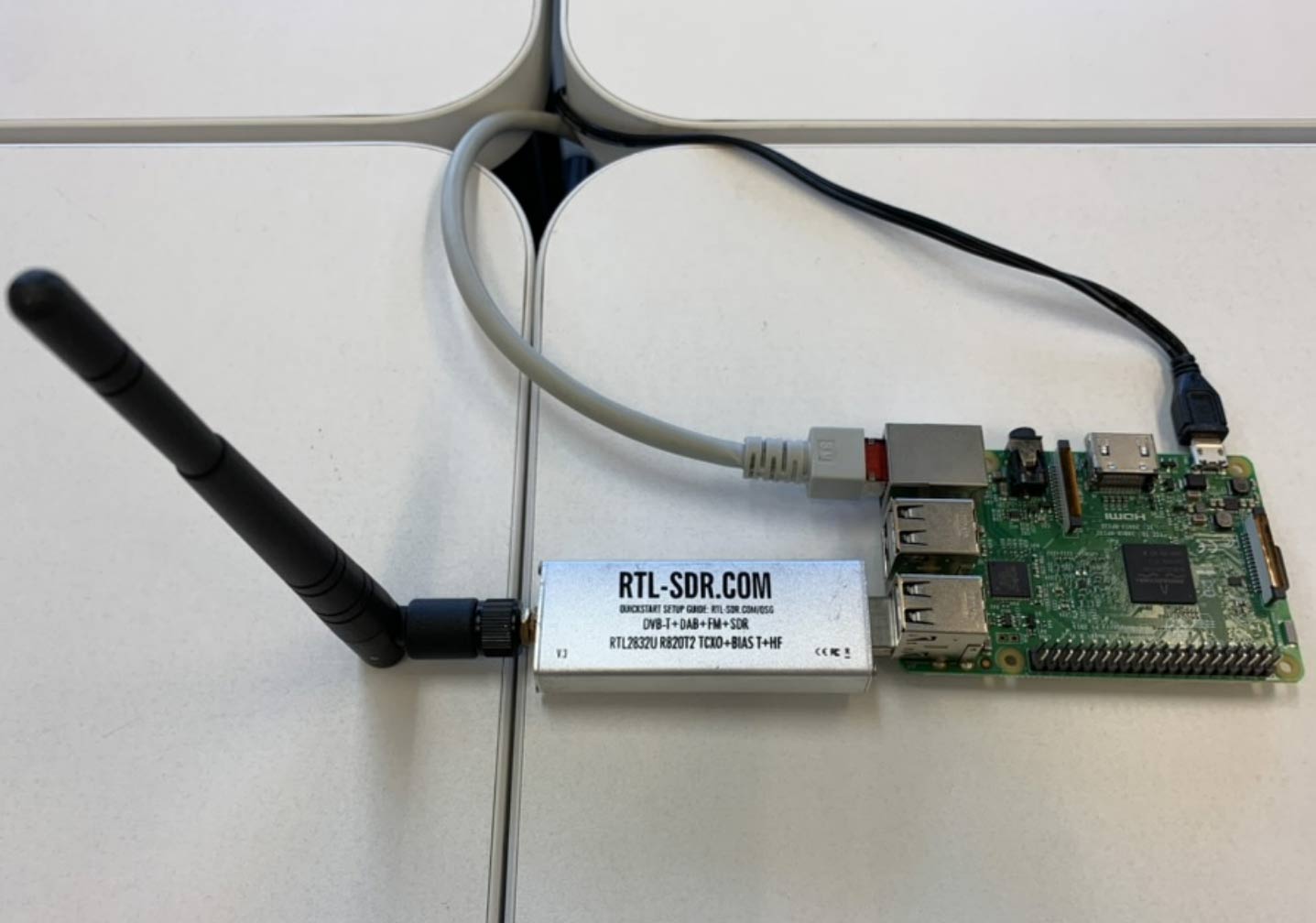
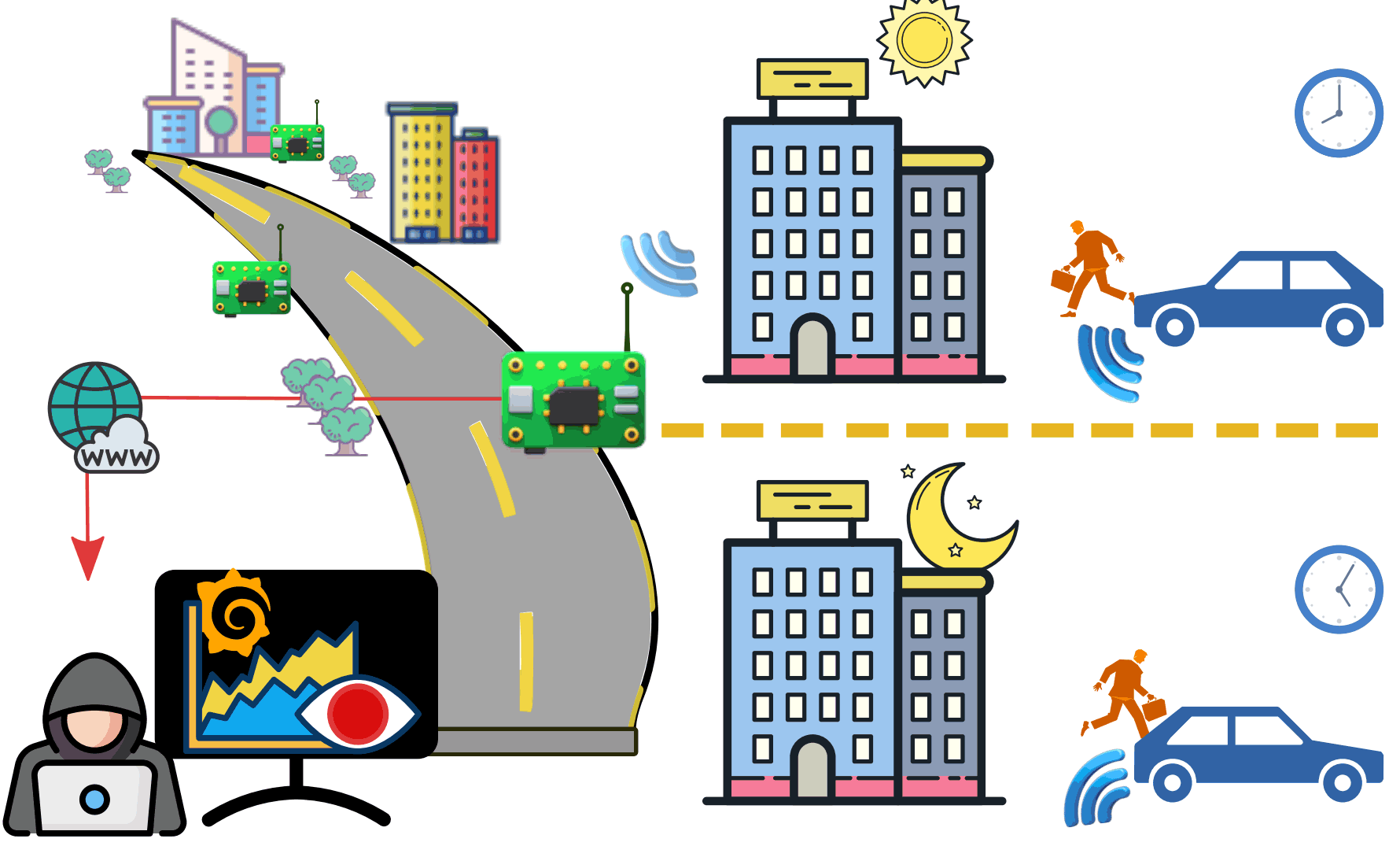
A recent academic paper by university researchers showed how researchers deployed simple RTL-SDR + Raspberry Pi-based receivers along a road over a period of 10 weeks. They showed that TPMS transmissions can not only be used to identify, track, and detect the presence and daily routines of individual vehicles, but also to determine the type and weight of the vehicle via pressure readings. Interestingly, they also note that variations in the weight of an identified vehicle could indicate, for example, whether a truck is loaded or unloaded, or whether there are additional passengers in a car.
The researchers highlight privacy concerns, noting that such data could be collected and sold by data mining companies without the driver's knowledge.
RTL-SDR + Raspberry Pi for TPMS MonitoringThe TPMS Monitoring Setup