Category: Security

Running rtl_tcp over the TOR Network

Over on his DragonOS YouTube tutorial channel Aaron has uploaded a video showing how it is possible to run rtl_tcp over the TOR network. TOR is an "anonymity network" which routes your internet traffic through thousands of volunteer nodes in order to make tracing your internet activity more difficult.

Aaron's tutorial shows how to route rtl_tcp traffic through a TOR connection on his Linux distribution DragonOS (although it should work on any Linux distro), and connect to it with GQRX.

However, a major caveat is that the data streaming result is rather poor with there being lots of data drops, probably due to the slowness of the TOR network. Perhaps running a smaller sample rate, or using a more efficient server like Spyserver might work better.  

DragonOS LTS Remote access RTL-SDR over TOR network (Gqrx, rtl_tcp, OpenWRT)

Performing a Side Channel TEMPEST Attack on a PC

TEMPEST refers to a technique that is used to eavesdrop on electronic equipment via their unintentional radio emissions (as well as via sounds and vibrations). All electronics emit some sort of unintentional RF signals, and by capturing and processing those signals some data can be recovered. For example the unintentional signals from a computer screen could be captured, and converted back into a live image of what the screen is displaying. We have tutorials on how to do this with a program called TempestSDR available on a previous post of ours.

Recently Mikhail Davidov and Baron Oldenburg from duo.com have uploaded a write up about their TEMPEST experiments. The write up introduces the science behind TEMPEST eavesdropping first, then moves on to topics like software defined radios and antennas.

At the end of their post they perform some experiments like constantly writing data to memory on a PC, and putting the PCs GPU under varying load states. These experiments result in clear RFI bursts and pulsing carriers being visible in the spectrum, indicating that the PC is indeed unintentionally transmitting RF. They note that machine learning could be used to gather some information from these signals.

Their write up reminds us of previous TEMPEST related posts that we've uploaded in the past. One example is where an RTL-SDR was used to successfully attack AES encryption wirelessly via the unintentional RF emitted by an FPGA performing an encryption algorithm. Another interesting post was where we saw how a HackRF was used to obtain the PIN of a cyprocurrency hardware wallet via TEMPEST. Search TEMPEST on our blog for more posts like that.

TEMPEST PC Side Channel Setup: RF pulses from writing to memory and a GPU.

YouTube Tutorial: Building a Passive IMSI Catcher with an RTL-SDR

Thank you to M Khanfar for submitting his YouTube tutorial on how to build a passive IMSI catcher with an RTL-SDR. He writes:

In this video im processes of easy step by step building a passive IMSI catcher. The purpose of this video is to be educational - to highlight the ease of which these devices can be built, and to practically show how privacy is already being compromised today ! easy step by step install and running under virtual machine Ubuntu 18.04 and cheap SDR dongle! .

Intro
An IMSI catcher is a device commonly used by law enforcement and intelligence agencies around the world to track mobile phones. They are designed to collect and log IMSI numbers, which are unique identifiers assigned to mobile phone subscriptions. Under certain circumstances, IMSI numbers can be linked back to personal identities, which inherently raises a number of privacy concerns.

The purpose of this video is to be educational - to highlight the ease of which these devices can be built, and to practically show how privacy is already being compromised . Nothing in this video is necessarily new, and those with less than honest intentions are most certainly already using these (or similar) devices.

This video walks through the processes of building a passive IMSI catcher, which is distinctly different from traditional IMSI catchers in that it does not transmit nor does it interfere with cellular networks in any way.

Traditional IMSI catchers are illegal in most jurisdictions due to the fact that they transmit on cellular frequencies (which requires a license), and that they essentially perform a man-in-the-middle attack between a phone and mobile base station (which breaks all sorts of anti-hacking laws). A passive IMSI catcher does neither of these.

How it works
The passive IMSI catcher works by capturing IMSI numbers when a phone initializes a connection to a base station. The IMSI is only disclosed during this initial connection. In an effort to protect privacy, all subsequent communication to that base station is done with a random Temporary Mobile Subscriber Identity (TMSI) number.

This means you will only collect IMSI numbers for devices as they move between base stations. Traditional IMSI catchers work differently, by spoofing a legitimate base station and forcing subscribers to connect to itself. They have the added ability to collect data about stationary devices, and can potentially have a more targeted range.

The only hardware required is a PC and SDR receiver that supports GSM frequencies. Generally this means 850/900/1,800/1,900 MHz. Most of the inexpensive RTL2832U based receivers have an upper-frequency range of about 1,700 MHz. You can get by with one of these, but of course, you won't be able to listen to stations at 1,800 or 1,900 MHz.

--- you can easy search GSM towers around you and show its frequencies then select specific tower then access its HLR data, then you can locate tower location in google map when you have specific data collected from SDR in terminal like :
MCC,MNC,LAC,CELLID , then you can easy add these data in this website: https://cellidfinder.com/cells  then locate it on map, and you can use IMSI number that you sniff to collect details info from database that have access with subscription to full database from this website :https://www.numberingplans.com

Building a Passive IMSI Catcher


Opening a Parking Barrier with a HackRF Portapack and a Replay Attack

Over on YouTube user kwon lee has uploaded a video demonstrating a replay attack against a parking barrier arm. The tools he uses are a HackRF and Portapack running the Havok firmware. A replay attack involves recording a control signal with the HackRF+Portapack, and then replaying it later with the transmit function of the HackRF. If no wireless security mechanism like rolling-codes are used, simply replaying the signal will result in the transmission being accepted by the controller receiver.

As he has access to the remote control he records the transmission that is sent when the open button is pressed on the remote. Later once outside he shows how transmitting with the HackRF+Portapack results in the barrier arm opening.

This reminds us of a previous post where we noted how a HackRF was used to jam a garage door keyfob to prevent people from leaving in the TV show "Mr. Robot".

RF Replay Attack _ Parking-Breaker via HackRFone+Portapack+havoc

Gaining Access to Windows on the Flex 6500 SDR Transceiver and Installing Other Programs

The Flex 6500 is a now discontinued (only refurb units available for US$2,600) transceiver SDR made for amateur radio use. Together with the optional Maestro control panel, it forms a fully standalone SDR based transceiver, with built in SDR software available on the Maestro's LCD screen. The system runs embedded Windows and is locked down to prevent the user from getting outside the Flex radio software.

However, a Norwegian University radio club found the Flex radio to be very inflexible as they could not connect the radio to their Universities WiFi system, which requires users to authenticate first via a web browser. What should be a simple task on any Windows system was unfortunately not supported by the radio software, and Flex radio themselves were unable to help.

Fortunately the students were able to hack the Windows filesystem via a backdoor found in the built in software, allowing them full access to the Windows desktop. The hack is fairly simple, consisting of gaining access to Notepad and thus the filesystem and command prompt via a "view source" right click menu on the web login interface. Once hacked, the students were able to install custom software like the N1MM+ contest logger, and WSJT-X for WSPR decoding. They were also able to connect a Bluetooth keyboard and mouse which was not supported by default.

[Also seen on Hackaday]

FlexRadio 6500 hacked to gain access to Windows.

Bypassing Chamberlain myQ Garage Doors with a Jamming SDR Attack

McAfee Advanced Threat Research have recently uploaded a blog post describing how they investigated Chamberlain’s MyQ Hub, a “Universal” IoT garage door automation platform.  Such a device allows you to operate and monitor the status your garage door remotely via an app. This can allow you to open and close the garage door for couriers, or for couriers to do it themselves if they are on the app.

Whilst they found that the internet based network side was secure, they discovered a flaw in the way that the MyQ hub communicates with the remote sensor over RF radio frequencies.

Although the system utilizes rolling codes for security,  McAfee researchers made use of the "rolljam" technique, which is one well known method for breaking rolling code security. The basic idea is to use an SDR or other RF device to jam the signal, collect the second rolling code after two key presses, then play back the first. Now the attacker has the second unused rolling code ready to be played back at any time.

McAfee Researchers Jam the actual signal (red) with a jamming signal (black)
McAfee researchers jam the actual MyQ signal (red) with a jamming signal (black)

In their threat demonstration they utilized a SDR running GNU Radio on a computing platform which sits outside the target garage door. The method used in the demonstration actually only involves jamming and not the use of a replay. It exploits a method that confuses the state of the MyQ device, allowing the garage door to be mistakenly opened by the owner when he thinks that he is closing it. They write:

With our jamming working reliably, we confirmed that when a user closes the garage door via the MyQ application, the remote sensor never responds with the closed signal because we are jamming it. The app will alert the user that “Something went wrong. Please try again.” This is where a normal user, if not in direct sight of the garage door, would think that their garage door is indeed open, when in reality it is securely closed. If the user believes the MyQ app then they would do as the application indicates and “try again” – this is where the statelessness of garage doors comes into play. The MyQ Hub will send the open/closed signal to the garage door and it will open, because it is already closed, and it is simply changing state. This allows an attacker direct entry into the garage, and, in many cases, into the home.

McAfee Advanced Threat Research Demo Chamberlain MyQ

Using a HackRF for GPS Spoofing on Windows

Over on the TechMinds YouTube channel a new video titled "GPS Spoofing With The HackRF On Windows" has been uploaded. In the video TechMinds uses the GPS-SDR-SIM software with his HackRF to create a fake GPS signal in order to trick his Android phone into believing that it is in Kansas city.

In the past we've seen GPS Spoofing used in various experiments by security researchers. For example, it has been used to make a Tesla 3 running on autopilot run off the road and to cheat at Pokemon Go. GPS spoofing has also been used widely by Russia in order to protect VIPs and facilities from drones.

GPS Spoofing With The HackRF On Windows

SignalsEverywhere: The Ethics of Decoding and Sharing Private Information with SDRs

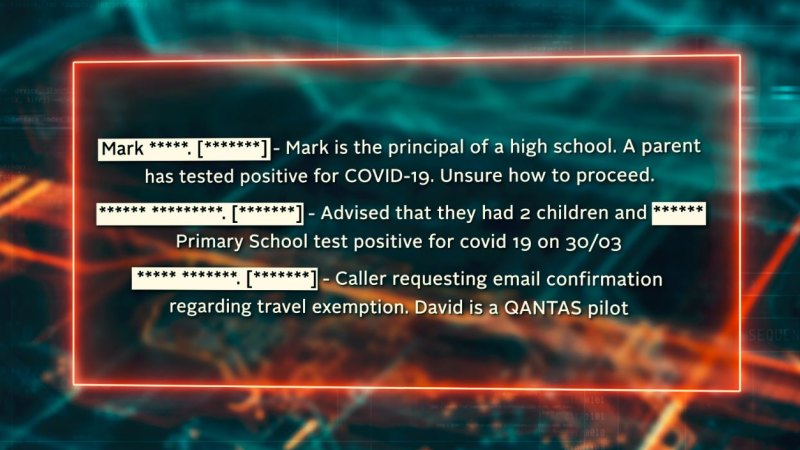
Over on the SignalsEverywhere YouTube Corrosive has uploaded a new video that addresses the ethics about decoding private information with SDRs. The radio spectrum is full of private communications with little to no security around it. For example hospital pagers in many countries and cities are completely unencrypted and easily decoded by anyone who can run a radio and install software on Windows. These messages often contain very private patient data. Another example he gives is Inmarsat AERO Medlink voice communications, and how he's seen full phone calls being shared online.

In the video Corrosive discusses the ethics about publicly sharing these private communications, even if they may be legal to receive and share in your country. He argues that sharing someones private data and phone calls on the internet is in poor taste and is not okay, which I think is something everyone should be able to agree with.

However, on the other side of the coin several responses to his video on Reddit share a different point of view. On that forum several expressed disagreement, noting that it's because these services are so insecure, that we should actively be sharing intercepted messages and trying to raise outrage and awareness about these privacy flaws. The argument stems from the idea that many information security researchers seem to take: if the public is not aware about their lack of privacy, only the bad guys will be taking advantage, and nothing will end up being properly secured by companies.

We've seen this approach taken by information security artists in the past like the Holy Pager art installation in New York. The temporary installation used a HackRF to continuously print out all pager messages being broadcast in an attempt to raise awareness about what private information is being sent for anyone to read. However, it may be one thing to share private data with a few art gallery patrons, versus the entire internet.

I think we should all at least agree on a middle ground. If you are listening/decoding radio services that are meant to be private but are unsecure for all to listen to, at least keep it to yourself, and don't share peoples private conversations/data on the internet. If you want to raise awareness about the lack of security to put pressure on companies, censor peoples private information and only mention generally about what you are hearing.