Back in September 2025 we posted about Anders Nielsen's PhaseLoom, an SDR based on the MOS Technology 6502 chip - the chip behind the early age of home computing, powering iconic systems like the Apple I & II, Commodore 64, Atari, and Nintendo Entertainment System.
Anders has now moved on and created PhaseLatch, which combines the 6502 with a modern ADC that can be memory-mapped directly onto the 6502's data bus. Although achieving the theoretical max ADC bandwidth of 20 MSPS is not possible with the underpowered 6502, Ander's notes that when combined with some external RAM he was still able to perform some DSP on the 6502 such as tone detection.
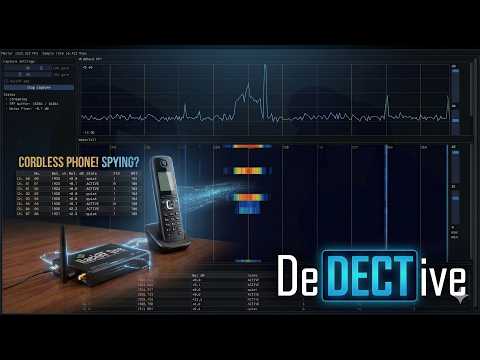
Over on GitHub and YouTube, we've seen the release of Sarah Rose's new program called DeDECTive, a DECT 6.0 scanner and voice decoder for the HackRF running on Linux systems. DECT (Digital Enhanced Cordless Telecommunications) is a digital wireless protocol typically used by modern cordless phones.
Back in 2019, Sarah (previously known as Corrosive) demonstrated how to use gr-dect2 to decode DECT in a previous video. In her latest work, she's ported gr-dect2 to C++ and written a nice GUI for the decoder. This makes running and setting up the decoder a significantly better experience. The GUI has a wideband scanner and the ability to tune for a single DECT channel for full voice decoding. There is also a CLI version that will automatically tune to the first active voice channel.
We note that many DECT cordless phones use encryption, so this software may not work with those devices. In any case, please be aware that intercepting phone calls may be illegal in many jurisdictions.
Over on YouTube, Gabe from the saveitforparts channel has uploaded a new video testing a prototype of our upcoming Discovery Drive Az/El antenna rotator, which is now live for crowdfunding on Crowd Supply.
In the video, Gabe unboxes the Discovery Drive and sets it up with a Discovery Dish. He then tests it on various weather satellites, including Meteor M2-4, Meteor M2-3, DMSP, Metop-B, and Metop-C. Later in the video, Gabe shows that you can also attach an Arrow Yagi antenna to the mount and notes that in a future video, he hopes to test CubeSat and Amateur radio satellite reception with the Yagi.
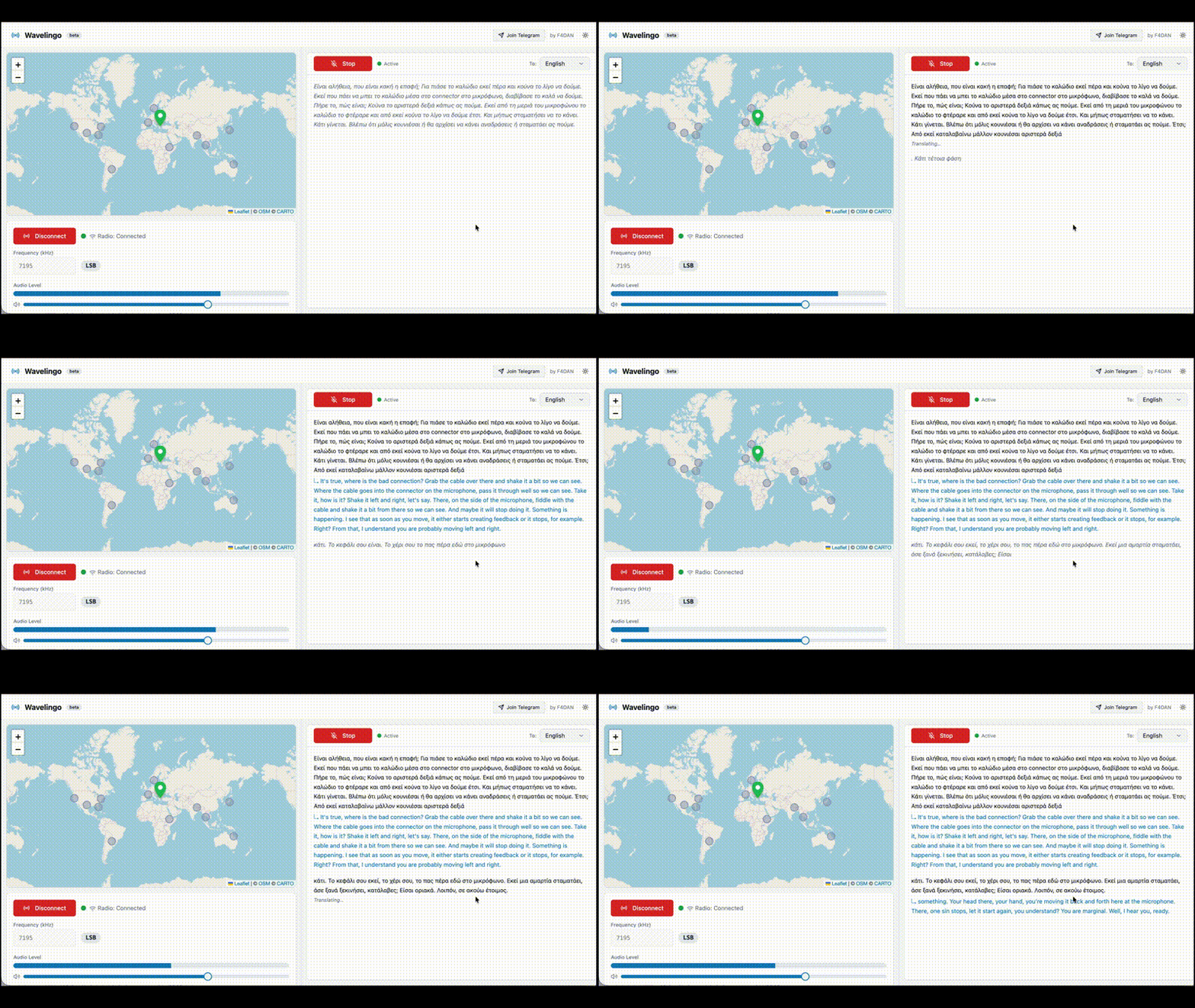
Thank you to Christophe (F4DAN) for writing in about his new project called Wavelingo, an AI real-time shortwave radio translator. The software currently works with the KiwiSDR web SDR network. Christophe has a live public example running at wavelingo.app, however, with a 60-second timeout due to hosting cost constraints. Christophe writes:
Are you listening to a QSO in a foreign language on your transceiver? Click on the closest SDR (KiwiSDR fleet for now, more SDR to come in the future), and get real-time translations.
I opened a telegram channel to share updates and feedbacks on this projects - and provide support.
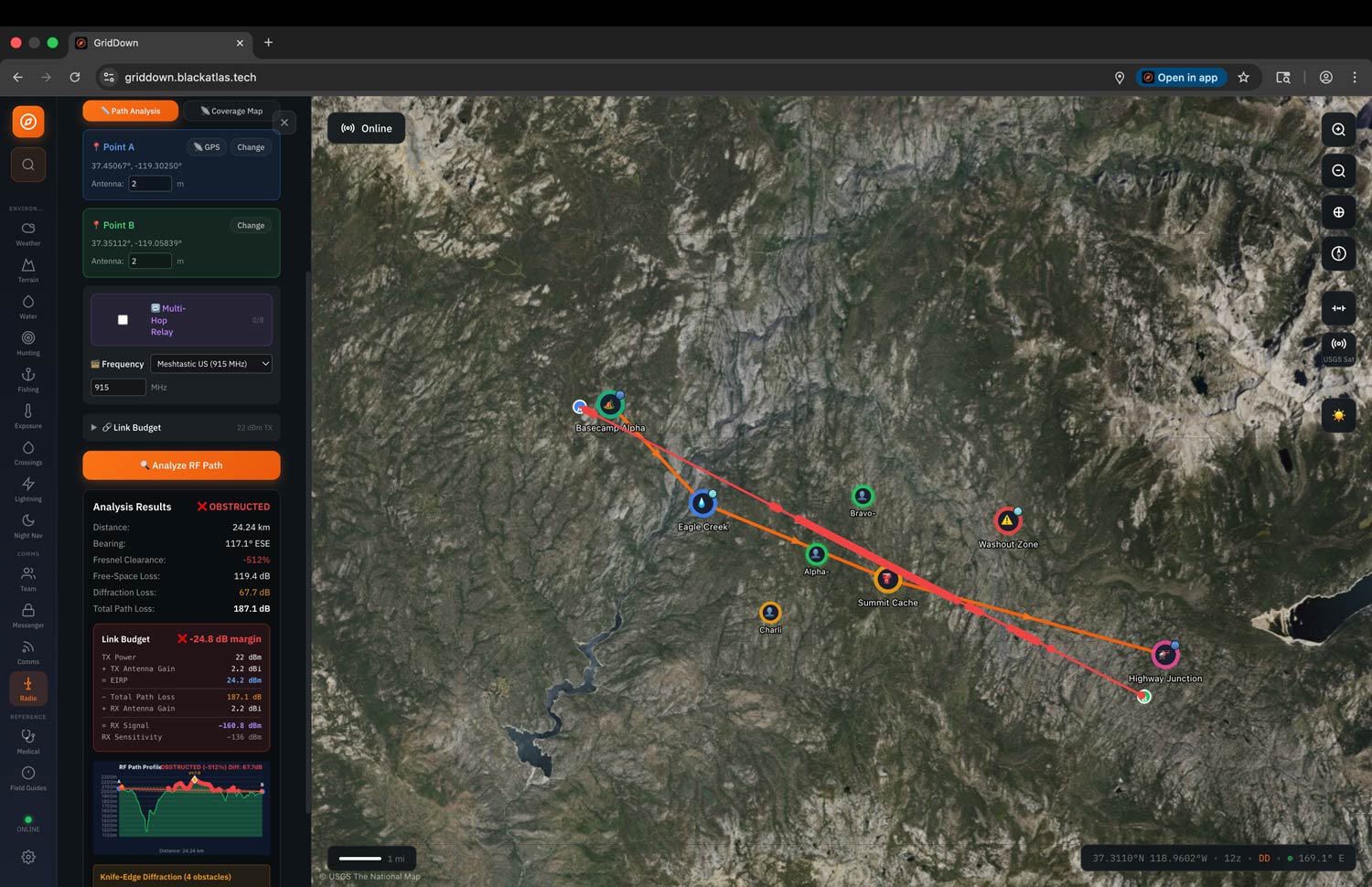
Thank you to Cameron from BlackAtlas LLC for submitting their project GridDown, which is an open source Android tablet-based situational awareness system designed to operate without an internet connection. At its core, it appears to be a tablet with custom software, and then you can add sensors such as an RTL-SDR for ADS-B+Remote ID, a SARSAT receiver, and a Meshtastic ESP32-S3+SX1262 device. A demonstration of the UI can be found at https://griddown.blackatlas.tech.
Cameron writes:
[GridDown is] an offline-first situational awareness platform built for emergency preparedness, field response, and tactical operations in infrastructure-degraded environments — designed to work when cell towers are down, internet is unavailable, and operators are fully off-grid.
The platform is a Progressive Web App (~120,000 lines of vanilla JavaScript, no frameworks) that runs on Samsung Galaxy tablets, laptops/PCs, and works completely offline after initial setup. It's built by BlackAtlas LLC and is available for trial at https://griddown.blackatlas.tech.
The system has many facets to it, including:
Encrypted voice and text messaging via an ESP32-S3 with SX1262 LoRa transceiver
Passive RF sensing with the ESP32-S3 and SX1262.
Three passive drone detection methods: WiFi fingerprinting, FAA Remote ID reception, and 900 MHz control/telemetry link detection
Automatic gunshot detection via a ES7210 quad-channel I2S microphone on the ESP32-S3.
Automatic RF jamming detection
SARSAT beacon receiver
SSTV Encode/Decode
Meshtastic integration
APRS via Bluetooth TNC
ADS-B reception
RadioCode gamma spectrometer integration
Offline maps
ADS-B detection is handled by a Raspberry Pi 5 running an RTL-SDR Blog V4 dongle. Cameron writes:
The Pi connects to the tablet's built-in WiFi hotspot (no internet required — the hotspot functions as a local network only), and a Node.js bridge reads aircraft data from readsb and subscribes to the Remote ID receiver's MQTT output, then serves a unified WebSocket and REST API to the tablet. GridDown renders aircraft and drone tracks as heading-rotated silhouette icons on its offline map with altitude labels, age-based alpha fade, and emergency squawk alerting (7500/7600/7700). A 10,000 mAh USB-C PD battery provides approximately 5 hours of field runtime for the Pi.
The full setup script, hub bridge, and hotspot connection scripts ship with the project.
The software is dual-licensed, with it being open source GPL v3 (note that the GitHub link appears to be broken - we have asked for clarification) for non-commercial use, or a commercial licence for hardware bundles and business deployments.
Alternatively, BlackAtlas LLC is selling ready-to-use kits, with the core tablet coming in at $799. Other bundles include the Tablet + SARSAT receiver for $1,299, the Tablet + Meshtastic bundle for $1,299, and the Tablet + ADS-B/Remote ID bundle for $1,999.
Thank you to Janble for writing in and sharing with us their new software called "RDF-J / ECM-J SYSTEM". These are two distinct programs in a package.
The software is not open source, and it appears that Janble wishes to sell the software to interested parties. Currently, they do not have a website, and they wish to refer interested parties to their X post for more information on pricing and how to obtain the software. As with any closed-source software, we can only recommend that interested parties do their own due diligence on the safety of the software.
RDF-J is a Time Difference of Arrival (TDoA) and signal strength-based radio direction finding program, which utilizes multiple HackRF software-defined radios spread out over an area. Janble writes that the radio direction finding system can operate using either TDoA and signal strength methods independently or together, with a minimum of three nodes being required, and ideally five.
We clarified with Janble that the TDoA system uses a GPS synchronization approach to achieve the required timing accuracy.
The second program, part of the same package, is ECM-J, which is an electronic countermeasure system. It appears to use a HackRF to transmit a jamming signal. Obviously, jamming is illegal in most countries, so this is to be used at your own risk.
Janble has sent us a PDF showing the software in more detail, and they have uploaded a YouTube video, shown below.
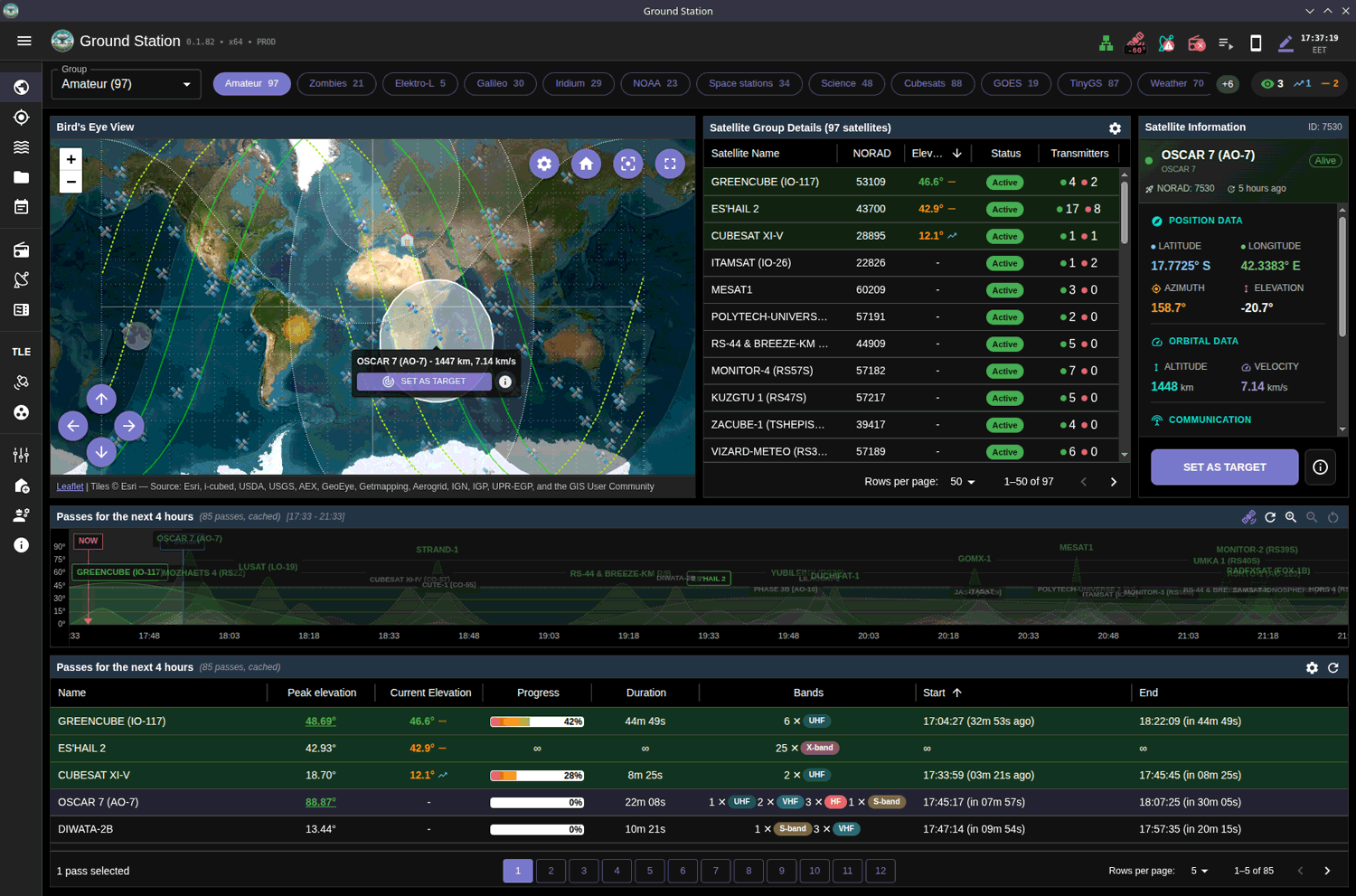
The software presents as a web-based UI that allows users to manage satellite passes, view SDR waterfall data, decode basic signals such as GMSK telemetry, view telemetry packets, synchronize TLEs, manage multiple SDR devices, browse downloaded weather imagery, monitor DSP performance, and interface with antenna rotators.
Unlike tools such as SatDump, which focus primarily on signal processing and decoding, Ground Station acts as a higher-level orchestration platform. It automates the full workflow, handling pass prediction, SDR control, recording, and decoding, and integrates with SatDump for more complex protocols like weather satellite image decoding.
While SatDump does include some tracking and automation features, Ground Station takes this further with support for multiple SDRs, coordination across multiple stations, and a centralized management interface. It also includes an interesting AI-based speech-to-text feature for transcribing amateur satellite voice communications.
Thank you to Trevor Unland for submitting his AI machine learning project called "RTL-ML" which automatically recognizes and classifies eight different signal types on low-power ARM processors running an RTL-SDR.
Trevor's blog post explains the machine learning architecture in detail, the accuracy he obtained, and how to try it yourself. If you try it for yourself, you can either run the pre-trained model or train your own model if you have sufficient training data.
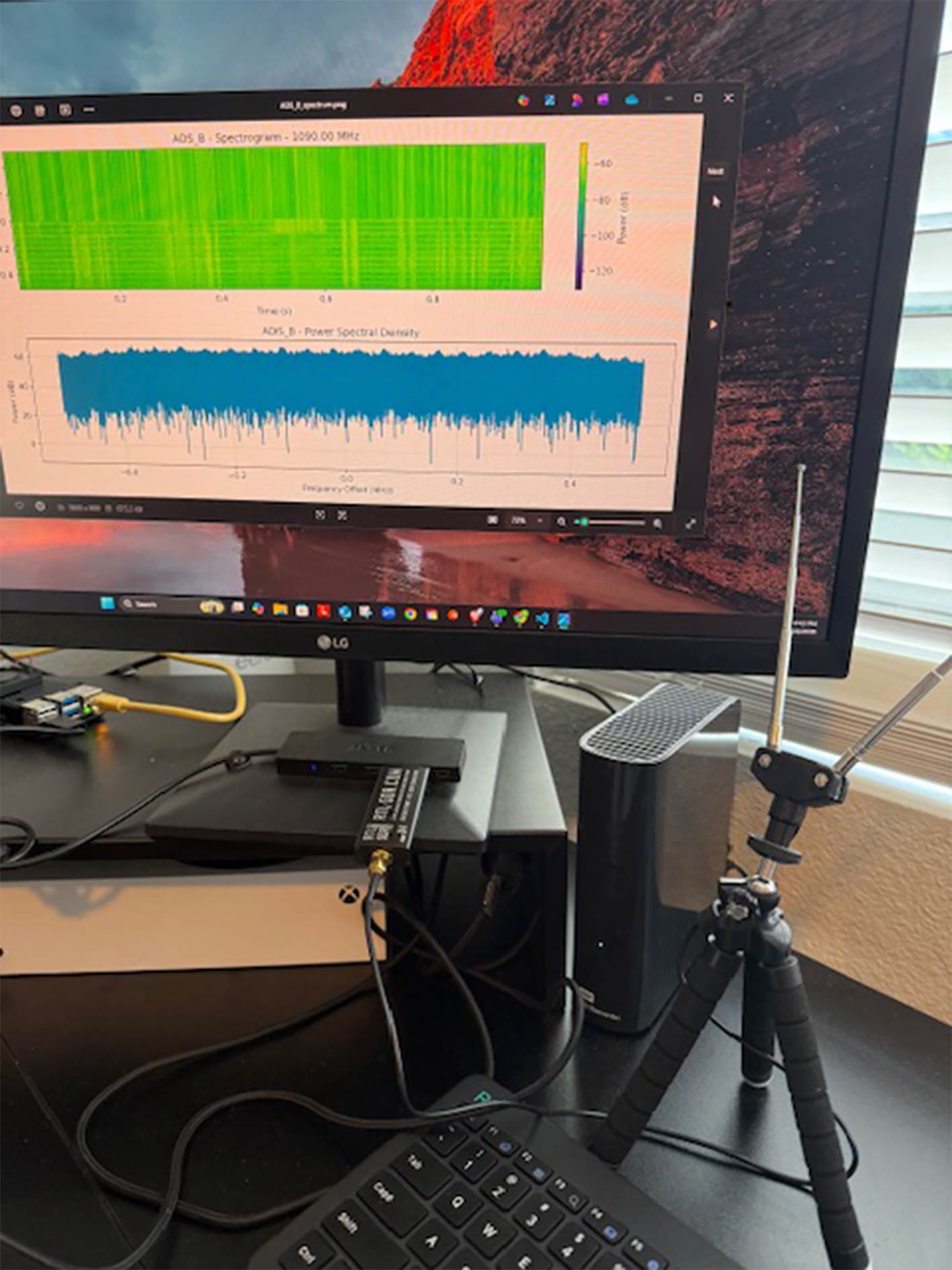
RTL-ML is an open-source Python toolkit for automatic radio signal classification using machine learning. It runs on ARM single-board computers like the Raspberry Pi 5 or Indiedroid Nova paired with an RTL-SDR Blog V4, achieving 87.5% accuracy across 8 real-world signal types including ADS-B aircraft transponders, NOAA weather satellites, ISM sensors, FM broadcast, NOAA weather radio, pagers, and APRS.
The project provides a complete pipeline from signal capture to trained classifier. Unlike academic approaches that rely on synthetic data or expensive GPU hardware, RTL-ML uses real signals captured from actual antennas and runs entirely on edge hardware with no cloud dependency. The Random Forest model is 186KB and processes signals in around 120ms on a Pi 5.
The GitHub repository includes the full capture and training scripts, a pre-trained model, 8 validated spectrograms, and documentation for adding new signal types. It works out of the box on both Raspberry Pi 5 and Indiedroid Nova with identical code and accuracy.
RTL-ML Setup: RTL-SDR Blog V4, Dipole Antenna and Indiedroid Nova ARM Computer.