The BIG List of RTL-SDR Supported Software
There are now dozens of software defined radio packages that support the ultra cheap RTL-SDR. On this page we will attempt to list, categorize and provide a brief overview of each software program. We categorize the programs into general purpose software, single purpose software, research software and software compatible with audio piping.
If you know of a program that is missing please leave a comment in the comments section at the bottom of the page.
13/02/2014 - Added Sodira, gr-wmbus, rtlsdr-waterfall, QTRadio, multimon, sdrangelove, lte-scanner, rtl_tcp, rtl_sdr_FS20_decoder.
17/02/2014 - Updated the Linrad description.
28/04/2014 - Added Modesdeco and Trunk88.
30/05/2014 - Added RTL Panorama, RTL SDR Panoramic Spectrum Analyzer, Chrome Radio Receiver, SeeDeR, DAB Player, RTL SDR Installer, PD/Max Wrapper, SDRWeather, LTR Analyzer, softEOT/softDPU and ScanEyes.
26/07/2014 - Added PiAware, OOK-Decoder, rtl_fm_python, rtl_power heatmap viewer, RTL Bridge, threejs-spectrum, CANFI Software, PNAIS, FLARM Decoder, Xastir, RTLSDR-Airband, SDRTrunk.
13/11/2014 - Added Touchstone, RFAnalyzer, RTL1090 XHSI Interface, Parus Decoder, PlotRTL1090, LRPT Decoder.
05/02/2015 - Added rtl_tool_kit, CubicSDR, OregonWeather, FreqWatch.
15/04/2015 - Added ADSBox, YouSDR, FlightAware Flight Feeder, Frequensea, Track your flight EUROPE, QSpectrumAnalyzer, Doppler & Demod, Redsea, rtl_heatmap, gr-gsm, driveby, SDRecord.
23/12/2015 - Added Remote rtl_udp, AISRec, dump978, AISDeco2, SDRrecorder, OpenWebRX, dsame, RTL-Widespectrum, rtl_ais, rtl_gopow, ham2mon, rtl_ais_android, inmarsatdecoder, spektrum, qtcsdr, rtl_power_fftw, JAERO, GNSS-SDRLIB, SVxLink.
8/09/2017 - Added inspectrum, gr-isdbt, telive, tetra-listener, gr-iridium, SDRuno, luaradio, rx_tools, kukuruku, chronolapse, cloud-sdr, natpos, d3-waterfall, SDRDue, gqrx-ghostbox, ships, rtlmic, tsl-sdr, universal radio hacker, dumpvdl2, re-dected, aerial-tv, questasdr, welle.io, spyserver, dspectrumgui, atcsmonitor, NRSC5 HD Radio Decoder, leandvb, imsi-catcher, block stream receiver, salamandra, deinvert, RS.
6/11/2017 - qradiolink
15/06/18 - Zeus Radio
11/01/19 - SCEPTRE
13/01/20 - VDLM2DEC, Blockstream Satellite, TempestSDR, rtlsdr-wsprd, rtl_map, Radwave, radiosonde_auto_rx, XRIT Decoder, SATNOGS, SigintOS, RadioCapture, EMI_Mapper, xrit-rx (KOMSAT 2A), RTLion, WSJT-X, noaa-apt, rtlSpectrum, fingerprinting_radios_w_ML, mySdrPlayback, QO-100_SSB-WebSDR_DATV-WebSpectrum, goestools, SigDigger, Tekmanoid EGC, Scytale-C, PEPYSCOPE, iridium-toolkit, Electrosense, ORBCOMM-receiver, r2cloud, coole-radar, vor-python-decoder, IridiumLive, radio_analyser, DSDPlusUI, retrogram-rtlsdr, vortrack, rtl_power-fm-multipath, glrpt, Spektrum SV Mod, gammaRF, SegDSP, rtl-ultrasound, radiosondy.info, OP25, RS41 Tool, TETRA Trunk Tracker, meteor_demod, FreqShow, rtl_tcp SDR, PLSDR, SDR Receiver, Echoes, rtlmm, FM2TXT, cnn-rtlsdr, Meteor Logger.
04/03/21 - SDR++
General Purpose RTL-SDR Software
We define general purpose SDR software as programs that allow the RTL-SDR to work like a normal wideband radio receiver.
SDR# (Windows) (Free)
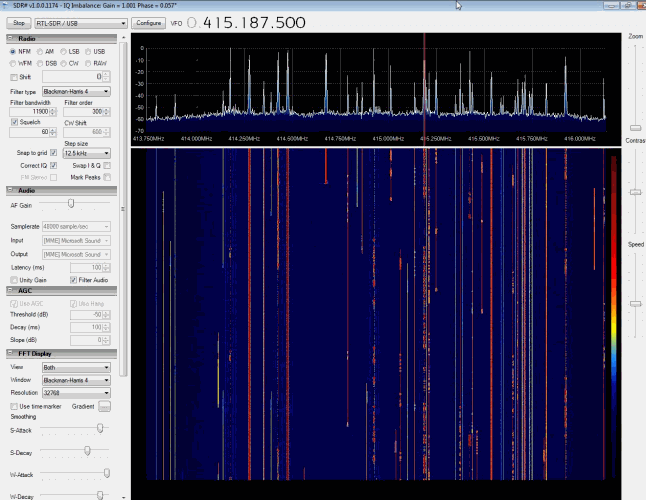
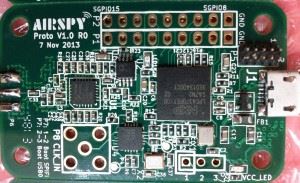
SDR# (pronounced "SDR Sharp") is the most popular free RTL-SDR compatible software in use at the moment. It is relatively simple to use compared to other SDR software and has a simple set up procedure. We have a full overview of the installation procedure on our Quick Start Page. SDR# is designed to be use with the $199 Airspy SDR, but works just fine with the RTL-SDR.
SDR# is a simple to use program that also has some advanced features. It has a useful modular plugin type architecture, and many plugins have already been developed by third party developers. The basic SDR# download without any third party plugins includes a standard FFT display and waterfall, a frequency manager, recording plugin and a digital noise reduction plugin. SDR# also decodes RDS signals from broadcast FM.
HDSDR (Windows) (Free)
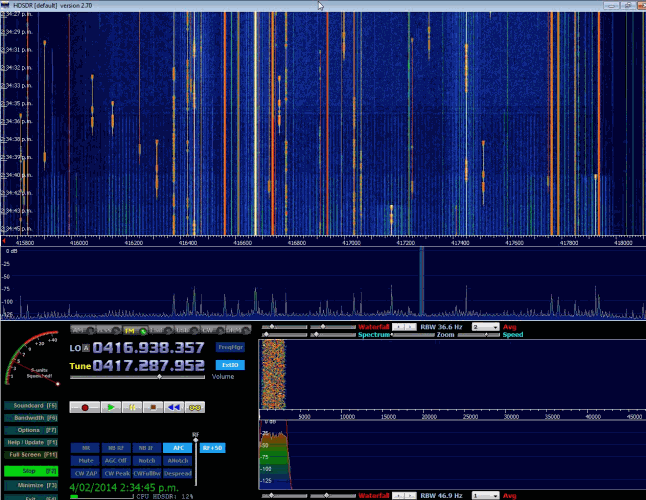
HDSDR is based on the old WinRAD SDR program. HDSDR supports the RTL-SDR through use of an ExtIO.dll module. To install HDSDR, download the program from the link on the main HDSDR page, then to use the RTL-SDR you will need to download the ExtIO_RTL2832.dll file an place it into the HDSDR folder. When opening HDSDR, select the newly copied ExtIO_RTL2832.dll. The other dlls that come with HDSDR will not work with the RTL-SDR, even though they have RTL-SDR in their filename. The official installation instructions can be found here.
Along with a FFT display and waterfall, HDSDR has some extra advanced features. Users will also find an Audio FFT and waterfall display on the bottom of the screen. The output audio can also be bandpass filtered by dragging the filter borders on the display. Bandpass filtering the audio can really help clean up a noisy signal. The audio processing also supports placing of notch filters either manually or automatically. There are also noise reduction and noise blanker features and an automatic frequency centering algorithm which will automatically center the signal, so you don't need to click exactly in the center of a signal. Traditional ham radio users will also enjoy the S-units signal strength meter and the built in frequency manager.
SDR-RADIO.COM V2/V3 (Windows) (Free)
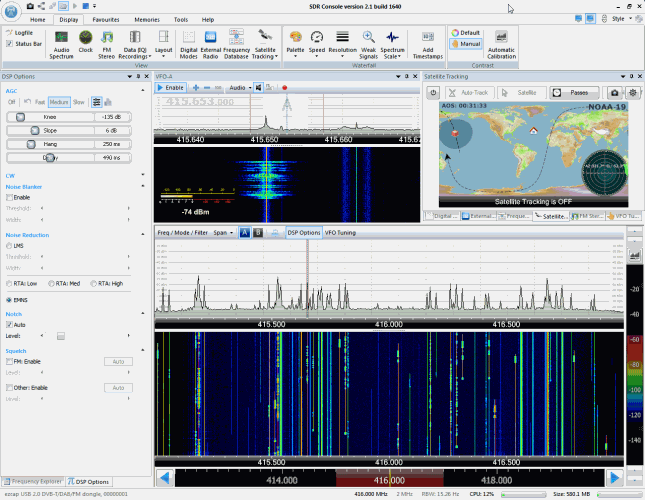
SDR-RADIO.COM V2 and the newer V3 is a popular SDR program with many advanced features. As such is it a fair amount more difficult to learn and use compared to SDR# and HDSDR. Be sure you install version 2 and not V1.5 as only V2 has RTL-SDR support.
Once sdr-radio is installed, to get it working with the RTL-SDR you will need to compile or download three .dll files (SDRSourceRTL2832U.dll, rtlsdr.dll and libusb-1.0.dll) and place them into the sdr-radio folder. To compile your own dlls see the instructions here, otherwise download the dlls directly from the bottom of this link. If the dlls were placed in the correct folder you will be able to add your RTL-SDR as a receiver by clicking on the +Definitions button, and then finding and adding the RTL SDR (USB) option under the search drop down menu.
Like HDSDR, not only does sdr-radio have a RF FFT signal and waterfall display, but also an optional audio spectrum FFT and waterfall display. Built in are also several DSP features like a noise blanker, noise reduction filter, notch filter and squelch options. The EMNS noise reduction filter is particularly good at automatically cleaning up and clarifying voice signals.
To add to the feature list, sdr-radio also has built in PSK, RTTY and RDS decoders, and also comes with a satellite tracker. Furthermore, sdr-radio V2 (not V3 yet) has an excellent remote server which will allow you to easily set up and connect to a remote RTL-SDR server over a network or the internet. Finally, sdr-radio is capable of listening to up to 6 signals in the same chunk of visible spectrum at a time.